2027 Comparing Online BS in Business Administration Options for Adults Returning After an Industry Layoff
Audited and Verified:
Our Editorial and Data Verification Process
Research.com uses government datasets, official education statistics and primary institutional information to support its career and degree guides. Our review process checks factual accuracy, occupational definitions, source dates and the requirements associated with the credentials discussed.
How This Article Was Fact-Checked
Our editorial team verifies salary estimates, employment projections, education requirements and program information against original data providers and official organizations. Salary figures are checked against the relevant occupational definitions and reporting periods. Information about licensure, accreditation and required in-person training is reviewed separately.
Fact-checked and verified on:

Co-Founder and Chief Data Scientist
An industry layoff can change both your career plans and what you can afford to spend on school. If you have college credits or substantial work experience, an online BS in Business Administration may help you finish a degree and move toward a different business function—but the wrong program could leave you repeating courses or paying for a schedule you cannot sustain.
This guide compares completion pathways, online requirements, costs, and career value so you can decide whether to enroll now, choose a different credential, or focus on finding your next job.
Key Things You Should Know
- Compare programs using an official degree audit: credits accepted are not necessarily credits that satisfy business requirements, and the remaining courses determine your time and cost.
- After a layoff, favor a schedule and payment plan you can sustain while job searching; "online" does not guarantee self-paced courses or fewer total tuition charges.
- A degree may remove a hiring barrier, but it does not guarantee a management role. The U.S. Bureau of Labor Statistics reports a $75,940 May 2025 median wage for human resources specialists—an occupation-wide figure, not a starting salary for business graduates.
What is an online bachelor's degree in business administration?
An online BS in Business Administration is an undergraduate degree covering how organizations manage people, money, customers, information, and operations. Coursework is delivered primarily online, although a school may still require live meetings, supervised activities, or occasional campus visits. The "BS" label does not establish a uniform curriculum: a BBA or BA in Business may offer comparable general preparation, while a specialized bachelor's may go deeper in one function.
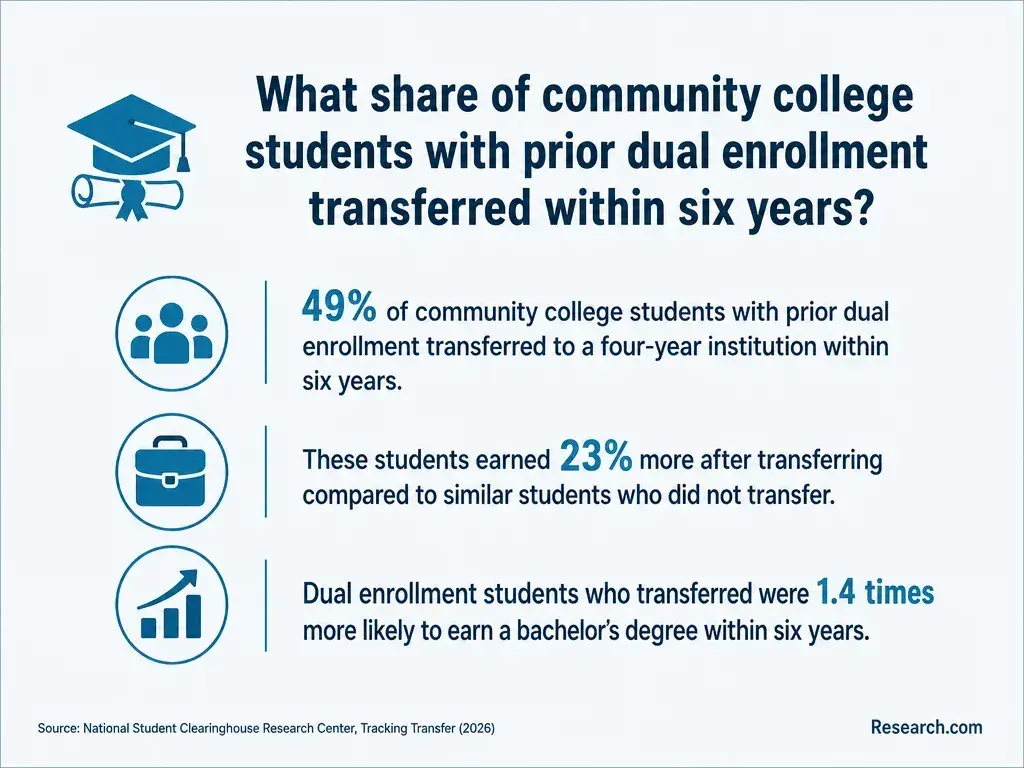
For a laid-off worker, the useful distinction is between starting a bachelor's degree and completing one with previous credit. A program designed for transfer students may be attractive if your earlier courses satisfy substantial requirements. If you expect to return to employment soon, examine programs that let you study business administration without leaving your job; confirm that the actual course timetable will also work during a job search.
Is an online business administration degree worth it after a layoff?
It can be worth pursuing if a bachelor's requirement repeatedly blocks you from roles that build on your industry experience, and a school can show a manageable route to graduation. Begin with the work you have actually done—such as scheduling crews, resolving customer problems, tracking inventory, or reporting results—then identify the target role and the missing qualification. A degree is more compelling when it closes a documented gap than when it is a response to uncertainty about the job market.
If your goal is a nearby operations or supervisory-support role, an approved workplace project and relevant business coursework may strengthen your existing experience. If you want a substantial switch into accounting, analytics, or another specialized function, check whether the general BS provides enough depth. A targeted course, certificate, employer training, or specialized degree could be more direct. Compare an organizational leadership route only if leadership coursework matches the jobs you seek; fast-track online colleges for leadership majors are an alternative to investigate, not evidence that a shorter advertised timeline will fit your transfer record.
Postpone enrollment if tuition would threaten essential expenses, you lack a credible completion plan, or relevant openings primarily require experience you could gain without another degree. Reassess after obtaining job postings, a transfer evaluation, and a written cost estimate.
How do you compare accredited online business administration programs?
Compare the remaining path to graduation, not just the advertised degree or tuition rate. The following differences matter, especially when a layoff has made time, cash flow, and the ability to accept a new job uncertain.
| Program feature | Potential advantage | Potential limitation |
| Transfer-focused, term-based program | Existing courses may fill requirements; predictable academic calendar | Fixed term dates and prerequisite sequences may delay a required class |
| Accelerated course format | Frequent starts may help maintain progress | Compressed deadlines can conflict with interviews or new-job onboarding |
| Competency-based format | May allow faster progress through familiar material | Assessment rules, term charges, and transfer policies may differ substantially |
Request an official or school-approved degree audit showing which prior credits apply to general education, the business core, a concentration, and electives. Then confirm the courses still needed, how often they run, the total charges at your realistic pace, and what happens if you pause after accepting a job. Lists of shorter undergraduate business programs across the US can identify candidates, but an advertised completion time is not your personal graduation date.
First, verify that the institution holds accreditation from an accreditor recognized by the U.S. Department of Education. Check the institution and accreditor directly, including the school's current status; do not rely solely on a program advertisement. Institutional accreditation matters when evaluating federal student-aid eligibility and future credit-transfer or graduate-school options, though receiving schools still make their own decisions.
AACSB, ACBSP, and IACBE are forms of business-school or business-program accreditation. They are distinct from institutional accreditation, and their coverage is not interchangeable: verify whether the specific business unit or degree you are considering falls within the accreditor's stated scope. Business accreditation can be a useful quality signal, but it does not prove that a program will accept your credits or produce a particular career outcome. Apply the same checks to schools found through cost-effective paths to a business degree; a low listed price is not an accreditation test.
Online study can remove a commute and widen your choice of schools. Campus study may provide easier access to in-person recruiting, tutoring, and classmates. Neither format is inherently more flexible or more valuable to employers; what matters is the program's requirements and how you will demonstrate relevant skills.
Ask for a sample course calendar before enrolling. Check live attendance, weekly deadlines, group presentations, exam proctoring, required software, internships, and any campus visits. A laid-off student may be able to study full-time now but need part-time enrollment after reemployment. Online degrees with accelerated terms may provide more start dates, yet shorter classes can concentrate assignments into weeks when you are interviewing or starting a job. Confirm whether the school permits a change of pace without disrupting course sequences or financial aid.
Most programs combine general education with business foundations such as accounting, economics, marketing, finance, management, statistics, information systems, and operations. A strategy course or capstone may ask you to connect these subjects. Catalogs differ in required mathematics, course order, and the depth of each subject, so compare the actual courses still remaining after transfer—not just the catalog's full list.
Choose electives or an official concentration to address a specific gap. Someone leaving a manufacturing industry might pair prior production experience with operations and analytics coursework; someone moving from customer service toward marketing might need research and campaign-measurement practice. If supply chain is the clear target, compare the general BS with an online supply chain bachelor's fast-track guide and check which curriculum has the required functional courses. An elective cluster is not automatically a formal concentration, and a classroom project is not proof of professional results.
Requirements vary by school and by whether you enter as a first-year, transfer, or returning student. Typically, expect an application and official transcripts from prior colleges; a school may also require secondary-school records, a minimum academic standing, or completion of prerequisites before entry to the business major. An enrollment gap or non-business background does not automatically disqualify you.
Gather transcripts, syllabi for courses whose equivalency is unclear, and any documentation the school accepts for military or other prior learning. Ask admissions which requirements govern entry, then ask the transfer office or registrar which credits apply to the degree. Only the institution can approve equivalencies, substitutions, and any credit for prior learning. When comparing application requirements, online college application fee savings can reduce an upfront expense, but a waived fee should not outweigh poor credit applicability.
Your timeline depends on applicable transfer credit, remaining prerequisites, course availability, and whether you can continue at the same pace after finding work. A school may accept a prior course as elective credit without letting it replace a required accounting or statistics course. Get a degree audit before relying on a completion estimate.
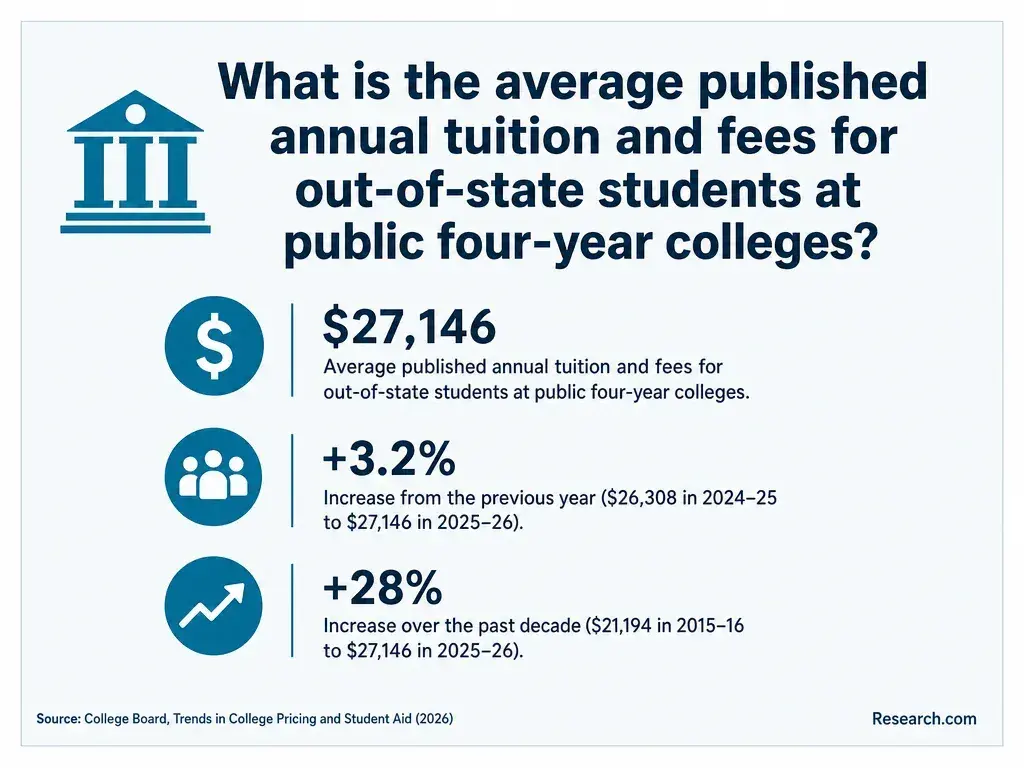
For each candidate, calculate the cost of remaining required courses at the pace you can sustain. Include tuition, mandatory and technology fees, books or software, proctoring or travel, and potential additional terms if a required course is unavailable. Compare payment timing as well as total cost: loans must be repaid, employer reimbursement may arrive after a course ends, and aid eligibility depends on the school and your circumstances. Use the same audited credit assumptions when you compare the least expensive business administration schools.
If your layoff has reduced household income, ask the financial-aid office whether your circumstances qualify for a review of the income information used for aid. The office, not an advertised tuition figure, can explain your available options and enrollment requirements. Do not count on a grant, accelerated finish, or future employer reimbursement until it is confirmed.
A business administration BS may support applications for operations coordinator, administrative specialist, project coordinator, sales operations, or HR roles, depending on your prior responsibilities and the posting's requirements. To change functions after a layoff, translate your industry experience into evidence: for example, inventory coordination is relevant to purchasing and operations, while training new colleagues may support an HR application. Specialist and management jobs can require additional functional experience.
For salary context, the U.S. Bureau of Labor Statistics reports a $75,940 median annual wage for human resources specialists in May 2025 and projects 6% employment growth from 2025 to 2035. Those are occupation-wide figures, not expected pay or a hiring forecast for new BS graduates. Compare local postings for your target role, industry, and experience level before assigning a financial return to the degree.
If your strongest experience is in logistics, a specialized route may deserve comparison with general business study. You can explore lower-cost supply chain completion routes, then check whether their required courses and available entry roles better match your background. A management title is not an automatic next step from either degree.
What certifications can strengthen a business administration career?
A certification is most useful when it matches tasks in your target job postings and you can meet the issuing organization's eligibility rules. Project management, HR, supply chain, and software credentials serve different purposes; none is automatically awarded with a BS. Before paying, check the credential's required education or experience, exam and renewal obligations, and whether employers in your intended role request it.
If project coordination is your goal, compare the value of an eligible certification with a course and documented project work. A course may build knowledge without satisfying a certification's separate requirements. If additional undergraduate study is necessary, undergraduate project management grants and scholarship planning can help frame funding questions but confirm aid for the specific school and program. After a layoff, avoid buying a credential solely because its title sounds broadly employable.
Other Things You Should Know About Business Administration
Possibly. Rules on availability for work, reporting, and approved training vary by state. Ask your state unemployment agency before enrolling and continue meeting its reporting requirements.
Some laid-off workers may qualify for workforce-funded training, but eligibility, approved programs, and available funding vary. Contact your local American Job Center before assuming a degree or particular school is covered.
State the employment dates accurately. List current coursework when relevant, and use project examples or prior accomplishments to show how your experience fits the role. You need not present the degree as a substitute for work experience.
Do not publish confidential records, customer information, or proprietary materials without permission. Ask the school about acceptable alternatives, such as a project using public information or a clearly labeled hypothetical dataset.
- School-Determined Requirements | 2024-2025 Federal Student Aid Handbook https://fsapartners.ed.gov/knowledge-center/fsa-handbook/2024-2025/vol1/ch1-school-determined-requirements
- How Do Transfer Credits Work When You Go Back to School? | Whitworth Online https://online.whitworth.edu/news-articles/how-do-transfer-credits-work-when-you-go-back-to-school/
- Transfer Policies and Prior Learning Assessment for Advanced Standing | Columbia-Greene Community College https://catalog.columbiagreene.edu/transfer-policies-and-prior-learning-assessment-for-advanced-standing
- Credits for Prior Learning | Broward College Catalog https://catalog.broward.edu/academic-affairs/credits-prior-learning/
- Marketing vs. Human Resources vs. General Business Degree | NMSU Global Campus https://global.nmsu.edu/blog/business-and-marketing/marketing-vs-hr-vs-general-business-degree/
- What are Asynchronous Classes? | University of Bridgeport https://www.bridgeport.edu/news/what-are-asynchronous-classes/
- Asynchronous Learning: An overview and benefits - UIC Online https://onlineprograms.uic.edu/news-stories/asynchronous-learning-an-overview-and-benefits/
- What Degree Do You Need for Human Resources? | snhu.edu https://www.snhu.edu/about-us/newsroom/business/what-degree-do-you-need-for-human-resources
- MBA Accreditation - ACBSP, AACSB or IACBE? | Northwest Missouri State University https://online.nwmissouri.edu/programs/business/mba/acbsp-aacsb-iacbe-accreditation/
- Undergraduate Admission Policies | George Mason University Catalog https://catalog.gmu.edu/admissions/undergraduate-policies/