2027 Can a BS in Business Administration Prepare You for a Business Operations Specialist Role? Skills and Entry Requirements
Audited and Verified:
Our Editorial and Data Verification Process
Research.com uses government datasets, official education statistics and primary institutional information to support its career and degree guides. Our review process checks factual accuracy, occupational definitions, source dates and the requirements associated with the credentials discussed.
How This Article Was Fact-Checked
Our editorial team verifies salary estimates, employment projections, education requirements and program information against original data providers and official organizations. Salary figures are checked against the relevant occupational definitions and reporting periods. Information about licensure, accreditation and required in-person training is reviewed separately.
Fact-checked and verified on:

Co-Founder and Chief Data Scientist
A BS in Business Administration can build the analytical and organizational skills used in business operations, but the degree alone may not make a new graduate competitive for every specialist job. Employers use "business operations specialist" for roles ranging from process coordination to experienced operational analysis. If you are choosing a degree or preparing to apply, this guide shows how to match coursework and work samples to actual job duties, identify realistic entry points, and decide whether a general business degree or a more focused path fits your goal.
Key Things You Should Know
- Yes, with practical evidence: A BS in Business Administration can prepare you for operations work when its courses and projects develop spreadsheet analysis, process improvement, budgeting, and cross-team communication.
- Titles vary: Some specialist postings are accessible to new graduates; others require substantial experience, industry knowledge, or responsibility for complex systems. Check duties and qualifications, not the title alone.
- Use salary data carefully: The Bureau of Labor Statistics reports a $101,860 May 2025 median wage and 10% projected 2025-2035 growth for management analysts, a related but distinct occupation - not a starting salary or outlook for all operations specialists.
Can a BS in Business Administration Prepare You for Business Operations Specialist Roles?
Yes. A BS in Business Administration provides a broad foundation for understanding how an organization plans work, uses resources, measures results, and coordinates people. A business operations specialist may track workflow, maintain reports, investigate delays, document procedures, or help teams implement changes. The exact mix depends on the employer and industry.
The strongest degree-to-job connection is a completed project: for example, a process map paired with a spreadsheet that identifies bottlenecks and explains a feasible improvement. That demonstrates more than familiarity with operations terminology. It does not, however, prove that you have managed a live implementation or supervised staff.
A general BS is a sensible choice if you want flexibility across business functions. If you already know you want procurement, supply chain, or technical systems work, compare the relevant specialized curriculum before enrolling. Online business school comparisons across the United States can help you identify programs to investigate, but the deciding evidence is each program's actual courses and applied opportunities.
What Education and Skills Do Business Operations Specialists Need?
There is no single educational requirement attached to the title "business operations specialist." Employers may accept a business-related bachelor's degree, equivalent experience, or a different field of study. They may also expect familiarity with their industry, software, purchasing rules, or reporting processes.
Across postings, the useful skill combination is operational judgment and evidence: organizing a workflow, interpreting data, communicating findings, and recognizing what a proposed change might cost or disrupt. Spreadsheet formulas and charts are often more immediately useful to an entry-level applicant than an unsupported claim of "strategic leadership." Experience coordinating schedules, resolving customer issues, or maintaining records can also be relevant when you explain the operational result.
Related functions require different preparation. Someone interested primarily in employee records and hiring processes should examine HR coursework and experience instead of assuming every operations role leads there. For a student with prior college work, using existing credits in a human resources degree may be a more direct option if HR - not general operations - is the target.
What Business Administration Courses Build Operations Specialist Skills?
Course titles differ by school, so compare assignments and learning outcomes rather than relying on the degree name. The following connections show what to look for in a BS curriculum and what you should be able to demonstrate afterward.
| Course area | Operations application | Useful evidence of learning |
| Operations or process management | Mapping work, identifying delays, and evaluating capacity | A process map with documented assumptions |
| Statistics and business analytics | Interpreting performance measures and uncertainty | A spreadsheet or dashboard with a clear explanation |
| Managerial accounting and finance | Understanding costs, budgets, and trade-offs | A budget comparison that distinguishes costs from savings estimates |
| Project management and communication | Coordinating deadlines, stakeholders, and changes | A project plan and concise recommendation |
Operations or analytics electives can add depth, but an elective cluster is not necessarily a formal concentration. If your goal is specifically supply chain work, compare purchasing, logistics, and inventory content as well as scheduling; supply chain undergraduate programs with shorter terms are worth examining only if the accelerated sequence still includes the skills and applied work you need.
Entry-level requirements are employer-specific. A posting may ask for a bachelor's degree, spreadsheet proficiency, reporting experience, and clear written communication; another may expect prior operations work despite using the same title. Read the duties first. Ownership of a department-wide improvement initiative signals a different level of responsibility from maintaining a tracker and supporting a supervisor.
If you have limited experience, target operations coordinator, business support, project coordinator, or administrative operations openings as well as specialist roles that explicitly welcome recent graduates. An internship, campus job, volunteer assignment, or supervised workplace project can supply examples for interviews. Describe what you personally did, what information you used, and what remains unverified; do not claim a proposed improvement produced savings.
Applicants who already have college credit should also compare the cost of reaching the target role through different degrees. Project management bachelor's completion using existing credits may be more relevant if the postings you favor center on schedules and deliverables, but request an official credit evaluation before assuming a faster route.
There is no universal license to work as a business operations specialist. Some employers prefer credentials related to project management, process improvement, analytics, or a particular software platform. Eligibility for a professional certification may depend on experience or other requirements set by its issuing organization; completing a business course does not automatically qualify you.
Choose a credential only after checking the postings you intend to pursue. If employers mainly ask for spreadsheet analysis and reporting, a credible work sample and targeted training may be more useful initially than an additional degree or broad certification. If your goal has shifted toward dedicated project management, use project management degree tuition comparisons to assess that longer educational route against shorter training - not as evidence that another degree is required for operations jobs.
Yes, if the online program provides meaningful practice with data, collaborative work, and operational decisions. An online case, simulation, or approved workplace project can help you build evidence of skill. It is not equivalent to an internship unless the school formally treats it as one, and employer data should be used only with appropriate permission.
Before enrolling, ask whether courses have live meetings, group-project deadlines, proctored exams, campus visits, or required internships. These details matter if you work shifts or need predictable study hours; online does not necessarily mean self-paced. Compare business administration programs for advancement while working against your actual weekly availability and the courses offered in each term.
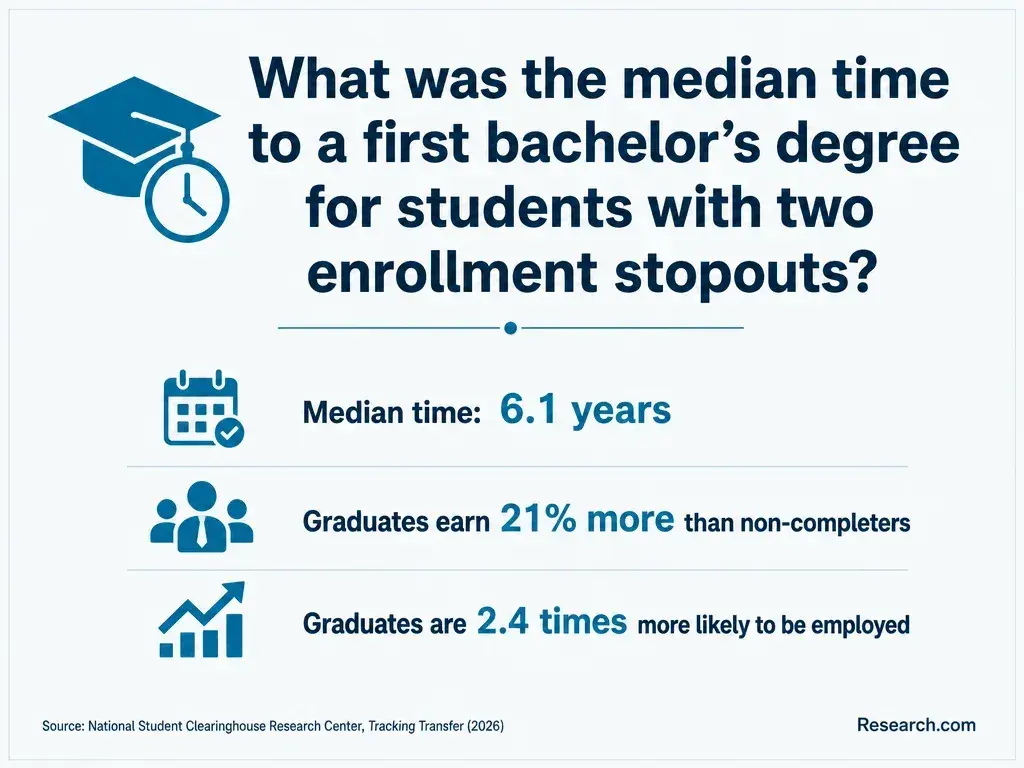
A full-time bachelor's degree typically takes about four years from the beginning of undergraduate study. Your remaining time could be shorter or longer depending on applicable transfer credit, prerequisites, course availability, enrollment pace, and residency requirements. Accepted credits do not always satisfy business-core requirements.
There is no responsible single price for this degree: schools charge differently, and the amount you pay depends on aid and the courses you still need. Compare total completion cost - remaining tuition and fees, books, software, possible travel, financing costs, and time away from paid work - rather than advertised tuition alone. Lower-priced accredited business administration study options can provide a starting shortlist, but request a program-specific degree audit and aid estimate before comparing totals.
First, confirm the institution's accreditation with the accreditor or an authoritative accreditation directory. Then check whether any advertised AACSB, ACBSP, or IACBE accreditation covers the business school or program you are considering; institutional and business-specific accreditation are different claims.
For this career goal, examine required operations and analytics courses, access to relevant software, applied-project rules, internship support, and evidence of career services for entry-level business roles. Ask an adviser which courses are offered regularly and whether a portfolio project can use public or appropriately approved workplace data. An application-fee waiver may reduce the cost of exploring options, and colleges that waive online application costs can be useful to compare, but that benefit should not outweigh curriculum fit or total completion cost.
A graduate might pursue operations coordinator, administrative operations specialist, project coordinator, procurement assistant, or business support roles. Some business operations specialist openings are also realistic first jobs; others require demonstrated industry experience. Read each posting for its actual duties, tools, and level of independent responsibility.
These paths are not interchangeable. Procurement focuses on purchasing processes and suppliers; project coordination focuses on schedules and deliverables; operations support focuses on recurring workflows and reporting. A management role usually calls for a record of responsibility beyond earning the degree. If supervising people is your longer-term aim, online leadership bachelor's programs with compressed schedules offer a curriculum comparison, not a shortcut to managerial authority.
What Salary and Job Outlook Can Business Operations Specialists Expect?
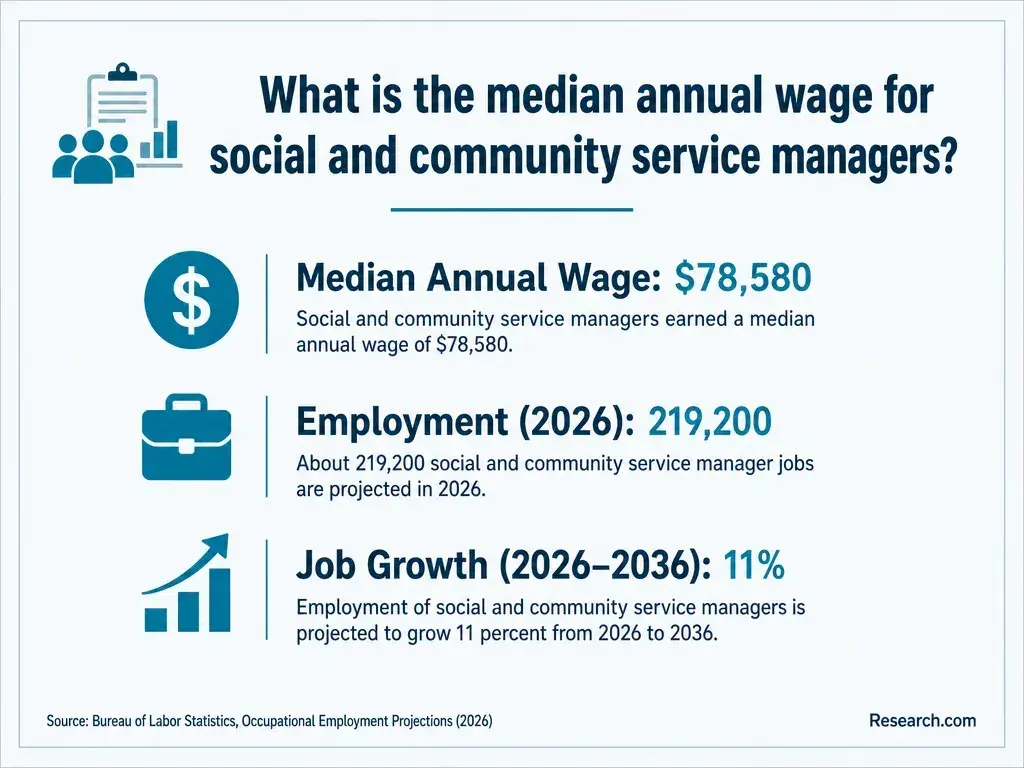
"Business operations specialist" covers too many job designs to treat a related occupation's national median as its salary. For context, the U.S. Bureau of Labor Statistics reports that management analysts earned a median annual wage of $101,860 in May 2025, with employment projected to grow 10% from 2025 to 2035. Management analysts study organizational problems and recommend improvements, but many positions expect experience; those figures are not an offer or an entry-level operations specialist forecast.
For a realistic pay estimate, compare local postings with similar duties, experience requirements, industries, and work arrangements. A specialized supply chain path has different work and labor-market measures, so supply chain college costs versus potential career outcomes is useful only if those roles genuinely interest you. Weigh the likely entry route against your remaining education cost rather than using a national median as a promised return.
Other Things You Should Know About Business Administration
Bring a concise example of a workflow you organized or analyzed. Explain your task, the information available, your recommendation, and its limitations. Remove confidential employer or customer information.
Yes. Scheduling, inventory tracking, customer issue resolution, and coordinating people or supplies can be relevant. Translate the work into specific responsibilities rather than relying on your former job title.
No. A healthcare employer may emphasize privacy and service processes, while a manufacturer may emphasize inventory and production flow. Learn the target industry's constraints before applying.
Not necessarily. Increasing responsibility, measurable work, and targeted skills may be more useful than an immediate graduate degree. Consider further education when the roles you want consistently require it and its cost fits your goals.
- Soft Skills: The Competitive Edge | dol.gov https://www.dol.gov/agencies/odep/publications/fact-sheets/soft-skills-the-competitive-edge
- Business Operations Specialist Career | Western Governors University https://www.wgu.edu/career-guide/business/business-operations-specialist-career.html
- 17 types of business degrees and the jobs they can lead to | ASU Online https://asuonline.asu.edu/newsroom/online-learning-tips/types-business-degrees-jobs/
- Top Business Operations Manager Skills Needed in 2026 | Edgewood College https://online.edgewood.edu/blog/business-operations-manager-skills/
- The business analytics skills employers are looking for | wiley.com https://onlinelibrary.wiley.com/doi/10.1111/dsji.70004
- What is Business Operations and How Does It Work? | MDC Online https://online.mdc.edu/blog/what-is-business-operations/
- Everything you need to know before choosing an undergraduate business degree - Penn State World Campus https://www.worldcampus.psu.edu/about-us/news-and-features/choosing-a-business-degree-program
- Top Excel Skills Employers Look For in Business Graduates | SCU https://www.scu.edu/business/blog/business-concepts/excel-skills/
- What Does an Operations Manager Do? | snhu.edu https://www.snhu.edu/about-us/newsroom/business/what-does-an-operations-manager-do
- Operations Analyst Job Description & Career Insights | analyst1.com https://analyst1.com/operations-analyst-job-description/