2027 Choosing an Online BS in Business Administration Around A Screen Reader Accommodation
Audited and Verified:
Our Editorial and Data Verification Process
Research.com uses government datasets, official education statistics and primary institutional information to support its career and degree guides. Our review process checks factual accuracy, occupational definitions, source dates and the requirements associated with the credentials discussed.
How This Article Was Fact-Checked
Our editorial team verifies salary estimates, employment projections, education requirements and program information against original data providers and official organizations. Salary figures are checked against the relevant occupational definitions and reporting periods. Information about licensure, accreditation and required in-person training is reviewed separately.
Fact-checked and verified on:

Co-Founder and Chief Data Scientist
An online business degree is only workable if you can use its courses, assessments, and required software, not just its admissions website, with your screen reader. For a prospective BS in Business Administration student, an inaccessible spreadsheet exercise or proctored exam can disrupt progress even when lectures are online.
This guide explains what to test before enrolling, how accommodations interact with business coursework, and which questions to put to disability services and academic staff. It also covers the admissions, time, cost, and career considerations needed to decide whether a particular program fits.
Key Things You Should Know
- Choose based on demonstrated access to the learning platform, business software, third-party course tools, and exams, not a general claim that a program is "accessible."
- Ask disability services for an individualized accommodation process and confirm how instructors will provide accessible charts, spreadsheets, simulations, and group-work materials.
- Compare the credits and courses you still need with the program's actual schedule and total cost; an online or accelerated label does not establish that you can complete it on your terms.
What is an online BS in Business Administration with screen reader accommodations?
It is a bachelor's program in broad business subjects delivered primarily online, with access arrangements that let an eligible student participate in courses and demonstrate the required learning. A screen reader converts digital text and interface information into speech or braille output. Accommodations may address inaccessible materials or assessment methods, but they do not remove essential academic requirements.
The degree is generally the same academic credential awarded to other students in that program. "Online" describes delivery; it does not mean every class is asynchronous, self-paced, or free of campus visits. If employment is part of your schedule, guidance on how to balance employment and business administration college study can inform the scheduling side of your decision. Confirm the specific program's live attendance, group meetings, internships, and exam arrangements separately.
How do screen reader accommodations support online business administration students?
Effective accommodations make course content and assessment usable without changing what a student must learn. Depending on the barrier and the school's individualized process, support might include accessible versions of readings, properly labeled charts, keyboard-operable course tools, an accessible exam format, or an alternative way to access a simulation's information. Extra time alone will not fix a control that a screen reader cannot identify.
Business courses introduce particular access challenges: financial statements rely on row and column relationships; dashboards use visual trends; and group projects may move between documents, spreadsheets, and presentation software. The crucial test is whether you can interpret the information and complete the required task using the tools available to you.
Before committing, request a sample course site and representative accounting, analytics, and exam activities. Test them with the screen reader, browser, and device you expect to use. Ask disability services who handles a barrier in a third-party product, how quickly a usable alternative can be arranged, and whether the solution will be ready when the assignment opens. This check is especially important when considering undergraduate programs with faster pacing: a delayed accessible file can consume a substantial part of a short course.
How can you find an accessible and accredited online business administration program?
First, verify the institution's accreditation through the accreditor and a recognized U.S. accreditation directory; check that the status applies to the institution offering the degree. If a school advertises AACSB, ACBSP, or IACBE business accreditation, verify its scope and whether the program you are considering is covered. Institutional accreditation and business-specific accreditation answer different questions, and neither proves that an online course is screen-reader accessible.
Then compare access using evidence from the courses you would actually take. Ask to speak with disability services and a program adviser, and request the following information in writing:
- The learning platform, required screen-reader-tested tools, third-party applications, and any software alternatives.
- How accessible textbooks, charts, spreadsheets, simulations, and exam materials are prepared - and when students receive them.
- Who resolves an access problem during a timed exam or near an assignment deadline.
- Whether required courses, live sessions, internships, or campus visits create additional access or travel needs.
Apply the same scrutiny to price comparisons. Lists of budget-friendly online business schools can help identify candidates, but a lower advertised tuition rate does not establish that required tools are usable or that timely support is available. Compare written answers, not promises made only in marketing copy.
A BS in Business Administration usually combines general education with accounting, economics, finance, marketing, management, operations, quantitative reasoning, and business communication. Requirements vary by school; a BS label does not establish a particular level of mathematics or analytics. Review the catalog and sample assignments, not just course titles, to identify access needs.
The table shows why the format of an assignment matters as much as the subject. It describes common learning activities, not requirements at every institution.
| Course area | Common activity | Potential screen-reader issue |
| Accounting and finance | Analyze statements or build a spreadsheet model | Unlabeled cells, unclear table relationships, or inaccessible templates |
| Analytics and operations | Interpret charts or use a simulation | Visual-only results or controls that cannot be reached by keyboard |
| Marketing and management | Review a case and present recommendations | Scanned readings without usable text or inaccessible group documents |
A concentration adds focused coursework only if the school formally offers one; electives alone do not create a credential. If you are weighing operations or supply chain study, compare its required tools and added courses alongside supply chain education costs and career prospects. A specialized path may be worthwhile if it develops skills for your target role, but it can also introduce software that needs separate access testing.
Schools commonly ask first-year applicants for secondary-school records and transfer applicants for official college transcripts. A program may also set GPA, mathematics, or business-course prerequisites, or require a separate application to the major. Admission to the university is not necessarily admission to the BS in Business Administration.
If you have prior college work, ask for an official evaluation showing which credits satisfy general education, business core, concentration, elective, and residency requirements. Accepted credits that count only as electives may do little to shorten the path. For a student considering HR, HR bachelor's programs with flexible transfer pathways offer a related comparison, but only the receiving school can determine how your courses apply to its degree.
You can contact disability services before enrolling to discuss the accommodation process and the technology you use. Ask what documentation its process requires; do not assume that an admissions decision itself approves a particular accommodation or that you must disclose a disability in your academic application.
Your timeline depends on remaining degree requirements, enrollment intensity, prerequisite order, and when required courses are offered. An accelerated calendar may shorten the interval between terms while making each week more demanding. Part-time study can leave more room to learn unfamiliar software and resolve access issues, but it may extend the time before graduation.
For each finalist, request a term-by-term plan based on your evaluated credits. Identify courses offered only in certain terms, group projects with fixed meeting times, and any exam or internship that requires advance coordination. When comparing online business bachelor's degrees with shorter timelines, ask whether the advertised pace is possible with your remaining courses and whether accessible materials will be available at the start of each term.
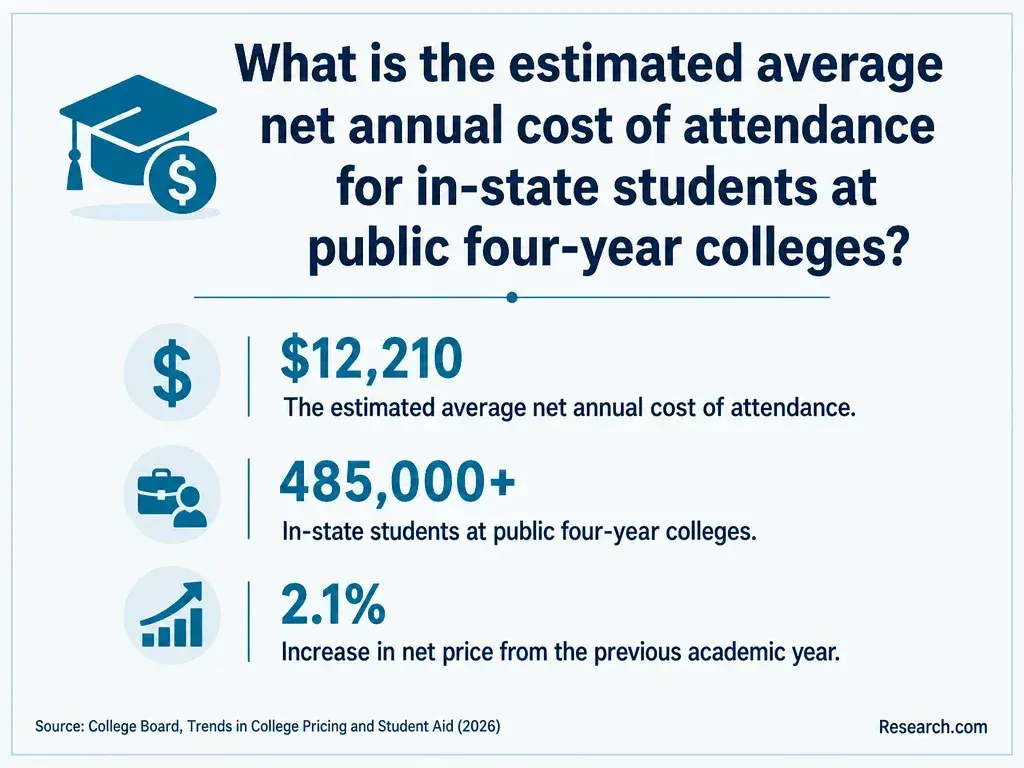
Without a school, transfer evaluation, and enrollment plan, there is no responsible single price for this degree. Calculate your likely cost from the tuition charged for remaining courses plus mandatory fees, books, software, proctoring, and any required travel. Ask whether accessible formats or approved alternative tools create charges, and resolve unexpected charges with the school before enrolling.
Compare costs over the full path to graduation rather than by advertised tuition alone. An inaccessible required tool can cause a delay or course repeat; a cheaper per-credit option may cost more if fewer of your credits apply. Federal aid eligibility also depends on the institution, program, and your circumstances. A guide to business administration tuition budgets using federal student aid can support price research, but obtain an individualized aid offer and written degree audit before estimating what you must pay or borrow.
The degree can build broad preparation for work involving budgets, customers, processes, teams, and business data. Depending on your experience and the employer's requirements, plausible starting points include operations coordinator, HR assistant, marketing coordinator, project coordinator, or administrative specialist. A business degree alone does not confer a management position or qualify someone for regulated accounting or financial practice.
Choose applied work that matches a target role: a clearly documented process review for operations, an accessible spreadsheet analysis for a budget-support role, or a marketing brief that explains its evidence and limitations. Internships and capstones may help, but confirm their approval requirements and protect employer or customer information. If a supply chain role is your specific goal, compare the BS curriculum with shorter completion timelines for supply chain bachelor's students; a more focused degree may be a better fit when its required skills and accessible tools align with the jobs you want.
There is no single salary or growth rate for BS in Business Administration graduates: employers hire for occupations, and pay varies with responsibilities, experience, industry, and location. As one relevant example, the U.S. Bureau of Labor Statistics reports a May 2025 median annual wage of $75,940 for human resources specialists and projects 6% employment growth for that occupation from 2025 to 2035. Those figures describe workers in the occupation - not the starting pay or job prospects of every new graduate.
Use the occupation matching your intended tasks when evaluating a return on education. A comparison of business administration degrees compared by cost duration and outlook can help frame that trade-off, but test any salary figure against realistic entry roles and the experience you already have. Managerial occupation wages are particularly poor substitutes for a new graduate's likely offer.
Which certifications or professional standards benefit business administration graduates?
There is no universal professional certification required to hold a BS in Business Administration. A role-specific credential may become useful later in HR, project management, analytics, or another function, but each issuer sets its own eligibility, examination, and experience rules. An undergraduate course or concentration does not automatically satisfy them.
For now, look for coursework and projects that demonstrate sound business practice: accurate analysis, clear communication, ethical judgment, and responsible handling of organizational data. If project management is your intended direction, examine the credential issuer's current requirements before paying for preparation. Funding research such as scholarship search options for project management majors may help if you are comparing degree pathways, but a scholarship for a major is not the same as funding for a professional certification.
Other Things You Should Know About Business Administration
Accommodations ordinarily do not change the degree title shown on a diploma. Ask the registrar about the school's diploma and transcript policies if you need confirmation.
Yes. Contact the office coordinating commencement early to discuss the ceremony venue, materials, navigation, and any participation needs. Graduation-event arrangements may be handled separately from classroom accommodations.
Ask the instructor and disability services before the assignment is due. An alternative may be possible if it provides access while preserving the presentation skills the course is assessing; approval is not automatic.
Ask about the institution's recording policy and your individual accommodation approval. Rules may address classmates' privacy, distribution of recordings, and when files must be deleted.
- Accessible Educational Materials (AEM) | azed.gov https://www.azed.gov/specialeducation/aem
- ADA Requirements: Testing Accommodations https://www.ada.gov/resources/testing-accommodations/
- Accessibility | Social Security Administration https://www.ssa.gov/accessibility/
- Getting Started with Digital Accessibility in Teaching and Learning - UCLA Teaching & Learning Center https://teaching.ucla.edu/resources/teaching-guides/getting-started-with-digital-accessibility-in-teaching-and-learning/
- How screen readers work | University accessibility https://accessibility.wayne.edu/news/how-screen-readers-work-60460
- Guidelines for Accessible Course Materials and Online Courses - USM https://www.usmd.edu/it-accessibility/guidelines/course-materials
- Assistive Services Technologies | MySonoran https://my.sonoran.edu/ICS/Students/Accessibility_Office_(ADA_Accommodations)/Assistive_Services__Technologies.jnz
- Creating Accessible Course Materials (Faculty) | upenn.edu https://support.wharton.upenn.edu/help/creating-accessible-course-materials-faculty
- E-Learning Accessibility - UGA DASH - University of Georgia https://dash.uga.edu/create-accessible-content/e-learning-accessibility/
- 4.1.18 Credit Earned through Transfer, Examination, and Prior Learning | Illinois State https://policy.illinoisstate.edu/academic/4-1-18/