2027 Paying for an Online BS in Business Administration: Vocational Rehabilitation Education Funding
Audited and Verified:
Our Editorial and Data Verification Process
Research.com uses government datasets, official education statistics and primary institutional information to support its career and degree guides. Our review process checks factual accuracy, occupational definitions, source dates and the requirements associated with the credentials discussed.
How This Article Was Fact-Checked
Our editorial team verifies salary estimates, employment projections, education requirements and program information against original data providers and official organizations. Salary figures are checked against the relevant occupational definitions and reporting periods. Information about licensure, accreditation and required in-person training is reviewed separately.
Fact-checked and verified on:

Co-Founder and Chief Data Scientist
An online BS in Business Administration may be a workable route to employment, but vocational rehabilitation funding is not automatic just because a student has a disability or a college admits them.
State vocational rehabilitation agencies and the VA's Veteran Readiness and Employment program make separate decisions about eligibility, employment goals, training needs, and covered expenses. This guide helps prospective and returning students build a defensible education plan, compare programs and costs, and obtain approval before committing to tuition.
Key Things You Should Know
- Vocational rehabilitation may fund an online business degree when an eligible student needs the training for an approved employment goal; admission alone does not authorize payment.
- State vocational rehabilitation and VA Chapter 31 VR&E are separate programs with different eligibility and approval processes. Ask which program will authorize each expense before enrolling.
- Many business bachelor's degrees require about 120 semester credits, but accepted transfer credits do not necessarily satisfy major requirements. Get a degree audit and a written funding plan before estimating your share of the cost.
What Is Vocational Rehabilitation Education Funding for an Online Business Degree?
Vocational rehabilitation, or VR, is an employment-focused service. A state VR agency may support postsecondary training when it is needed for an eligible person to reach an agreed employment outcome. The degree is a means to that outcome - not a general college scholarship. The student and counselor document the goal and necessary services in an individualized plan for employment, commonly called an IPE.
Veterans may instead be considering the Department of Veterans Affairs' Veteran Readiness and Employment program, or VR&E, under Chapter 31. VA VR&E has its own eligibility rules, counseling process, and rehabilitation plan. A state VR approval does not establish VA approval, or vice versa. Advice about funding an online project management bachelor's degree may help compare ordinary student-aid options, but those options should not be mistaken for a VR authorization.
Online delivery can make training accessible, yet the counselor still needs to assess whether the particular program is suitable. Live meetings, group assignments, proctored exams, internships, and required campus visits can affect whether the plan is feasible.
Who Qualifies for Vocational Rehabilitation Funding for College?
For state VR, a disability diagnosis alone does not establish a right to college funding. The agency determines whether a physical or mental impairment creates a substantial impediment to employment, whether the applicant can benefit from VR services toward employment, and whether those services are needed. Eligibility for services is a separate decision from approval of a particular degree. If an agency operates under an order of selection because resources are limited, some eligible applicants may face a wait for services.
College training must also fit the employment goal and the applicant's existing qualifications. Someone moving from physically demanding work into business operations might need new academic preparation; someone who already has relevant coursework and experience may have a shorter route. For example, an applicant with prior HR study can evaluate transfer-friendly online HR colleges before arguing that an entire new bachelor's program is necessary. The receiving school, not the VR counselor, decides how credits apply to its degree.
VA VR&E is for veterans and certain service members who meet VA program requirements, including applicable service-connected disability and employment-handicap determinations. Veteran status by itself does not establish Chapter 31 eligibility. Apply to the appropriate agency rather than assuming that a disability, benefit award, or school acceptance answers the funding question.
How Can Vocational Rehabilitation Pay for an Online Business Administration Degree?
When authorized as part of the employment plan, VR support can address more than tuition. The exact services, spending limits, payment method, and treatment of other aid depend on the state agency or VA plan. This comparison separates potential coverage from expenses a student should not assume are included.
| Cost component | Possible VR treatment | Important limitation |
| Tuition and mandatory fees | May be authorized for approved courses | School choice, course load, and payment limits may apply |
| Books, software, and required equipment | May be covered when necessary for approved training | Optional upgrades and personally preferred devices may not qualify |
| Disability-related or training support | May include services or technology needed to participate | Responsibility may be coordinated with the college's accessibility office |
| Living or other related expenses | May be addressed under applicable program rules | Do not assume a stipend or full household-cost coverage |
Ask for a written breakdown showing who pays the school, when funds arrive, what happens if a course is dropped, and which costs remain yours. Agencies may coordinate available grants and other benefits; do not assume that taking a student loan is required to qualify for state VR services. To test whether a program fits the authorized budget, compare lower-cost business degree options using remaining required credits and total fees, not advertised tuition alone.
Start before paying a deposit or registering for classes. A sensible sequence gives the counselor evidence of both the employment need and the program's actual cost.
- Contact your state VR agency or, if applicable, apply for VA VR&E; ask about eligibility, documentation, and the process for requesting college training.
- Describe a realistic target role and how your disability-related employment barriers affect your current or previous work. Provide requested records, or ask how the agency can help obtain or assess them.
- Collect transcripts, a preliminary degree evaluation, the program catalog, course schedule, accessibility information, and a full estimate of remaining tuition and fees.
- Work with the counselor to compare the degree with shorter training and document why the selected program, delivery format, and pace support the employment goal.
- Confirm the approved employment plan, covered courses and expenses, payment arrangements, and rules for changing schools or course loads in writing before enrolling.
Program speed matters only if its schedule is sustainable. Use information about accelerated study schedules for business majors to frame questions about term length, weekly workload, and course sequencing; do not assume a faster schedule will be approved or will reduce the total bill. If the agency declines the requested training, ask for its written decision and available review or appeal procedures.
First verify that the institution holds recognized institutional accreditation and that the specific online BS in Business Administration is offered to students in your location. AACSB, ACBSP, and IACBE are business-focused accreditors, but their coverage varies; check whether the relevant school or program is included rather than treating a logo as proof. Accreditation does not guarantee VR payment, credit transfer, or a job.
Then examine the conditions that could disrupt an approved plan: live attendance, exam proctoring, group work, technology requirements, disability accommodations, course availability, and any internship or campus obligation. Request an official transfer evaluation showing credits applied to general education, the business core, electives, and residency requirements. A list of ranked US college pathways in online business can provide candidates to investigate, but the counselor and student still need a program-specific cost and accessibility comparison.
The strongest choice is not necessarily the least expensive per credit. It is a program that can deliver the required courses, approved supports, and credible preparation for the stated employment goal at a manageable remaining cost.
A BS in Business Administration usually combines general education with accounting, finance, economics, marketing, management, operations, and quantitative decision-making. Coursework may involve spreadsheets, financial-statement interpretation, presentations, case analyses, and a capstone. The exact requirements - and whether an internship is mandatory - belong to the school's current catalog.
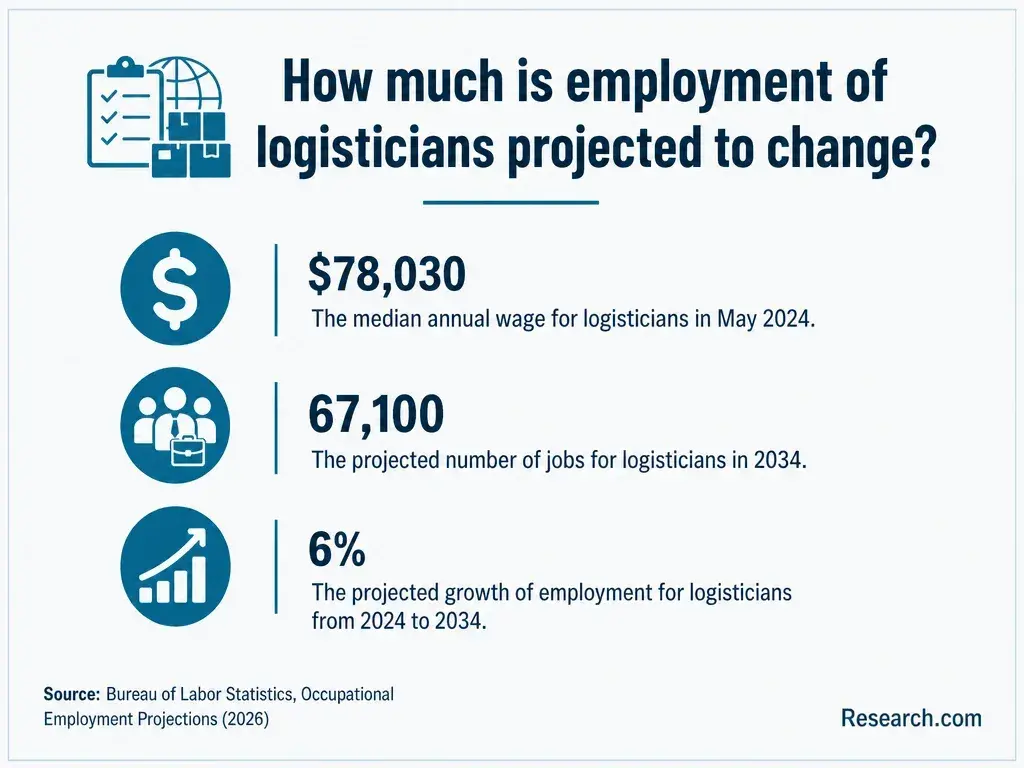
For a VR plan, connect courses to tasks in the target role. Operations coursework may support process coordination; accounting and spreadsheet work may support budget tracking; marketing research may support customer analysis. A formal supply chain concentration could provide more focused preparation than a general elective, but it may add requirements or delay graduation. An affordable supply chain degree planning guide offers a useful comparison if logistics is the actual employment goal.
Course exposure is not the same as work experience. Ask whether supervised projects can produce nonconfidential work samples, and obtain faculty and employer permission before using workplace data. If a shorter certificate or targeted training addresses the documented skill gap, it may be easier to justify than a full bachelor's degree.
Schools typically ask first-year applicants for evidence of secondary-school completion and transfer applicants for transcripts from previous colleges. Individual programs may set GPA standards, require prior coursework, or admit students to the institution before admitting them to the business major. Requirements for mathematics, statistics, accounting, and economics vary, so check the specific school rather than assuming that non-business coursework rules you out.
Review the school's prerequisites for a business administration degree alongside its transfer-credit and residency policies. Ask admissions which records are required, the registrar how previous courses apply, and an academic adviser which prerequisites must be completed before upper-level business courses. An admission offer does not establish how quickly you can graduate - or whether VR will fund the program.
Many bachelor's programs total about 120 semester credits, but the useful number for a returning student is the remaining credits that satisfy the degree audit. Part-time enrollment, prerequisite chains, limited course offerings, and required residencies can extend the calendar. An accelerated format may shorten it without reducing the credits, work hours, or total charges.
Build a completion estimate from the school's written evaluation: remaining tuition-bearing credits or terms, mandatory fees, books, software, equipment, proctoring, and any travel. Then separate the amount VR has authorized, other confirmed aid, immediate out-of-pocket payments, and costs that might arise if a course must be repeated or enrollment pauses. Compare fast-track business bachelor's schools on those same assumptions; a shorter advertised timeline is not a reliable net-cost estimate.
Before each term, confirm that the proposed courses remain in the approved VR plan and degree audit. A schedule change can affect both graduation timing and payment authorization.
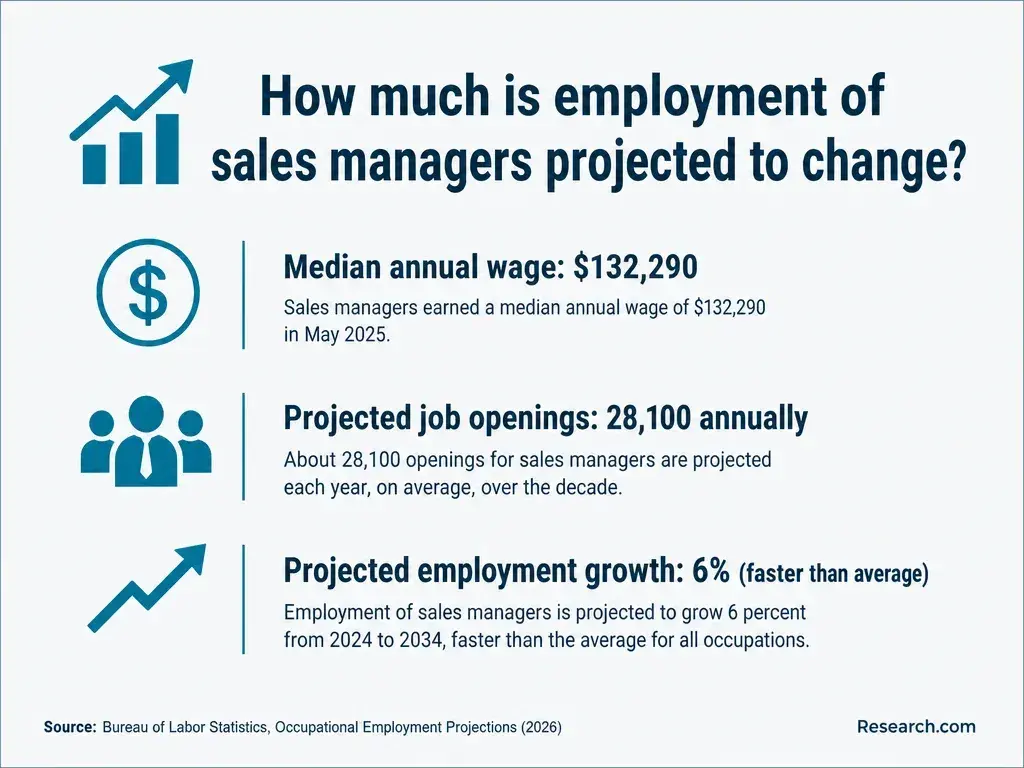
The employment goal should be specific enough to test against job requirements. Depending on previous experience and chosen coursework, graduates may pursue operations coordinator, HR assistant or specialist, marketing coordinator, procurement support, or project coordinator roles. Supervisory and specialist jobs often require additional functional experience; the degree alone does not confer a management position.
For context, the U.S. Bureau of Labor Statistics reports a $78,760 median annual wage in May 2025 for market research analysts and projects 7% employment growth from 2025 to 2035. Those are occupation-wide figures, not starting salaries or earnings promised to business graduates. Market research roles can also require stronger analytical and research skills than a general business curriculum supplies.
Compare the proposed degree with your existing experience and local job postings. If postings call primarily for a completed bachelor's and demonstrable spreadsheet, communication, or coordination skills, a BS may close a meaningful gap. If they require specialized software or years of experience, plan for projects or relevant work alongside study. Affordable business administration study and earnings considerations can inform the financial comparison, but projected wages should not be treated as a personal return on investment.
Do Business Administration Graduates Need Licenses or Certifications?
There is no general license required simply to hold a BS in Business Administration or apply for most business-support jobs. Requirements depend on the occupation and duties. Accounting licensure, regulated financial-services activities, and some other specialized work have separate rules; a general business degree does not automatically satisfy them. Voluntary HR or project-management certifications may have their own education and experience requirements.
If the VR employment goal is HR, a human resources program selection guide can help distinguish relevant coursework from an independently awarded professional credential. Ask target employers which qualifications they actually require before adding a certification's exam fees or preparation costs to the education plan.
Other Things You Should Know About Business Administration
Often, yes. Employment does not automatically rule out VR services. The agency assesses whether disability-related barriers and the proposed employment goal justify services in your circumstances; report schedule or job changes that affect the plan.
Do not assume education funding has the same effect as wages. Benefit treatment depends on the payment and your circumstances. Ask the funding agency and Social Security how to report assistance and any earnings from work.
Not ordinarily. If you need academic accommodations, contact the college's disability services office about its documentation and notification process. You generally do not need to share a diagnosis with every instructor to explain your funding source.
Tell your VR counselor before moving. State VR authorization may not transfer automatically, and continued services could require coordination with or an application to the new state's agency. Also confirm that the college can continue enrolling you from your new location.
- State Vocational Rehabilitation Services Program | ed.gov https://rsa.ed.gov/about/programs/vocational-rehabilitation-state-grants
- Packaging Aid | 2025-2026 Federal Student Aid Handbook https://fsapartners.ed.gov/knowledge-center/fsa-handbook/2025-2026/vol3/ch3-packaging-aid
- Eligibility Requirements | Federal Student Aid https://studentaid.gov/understand-aid/eligibility/requirements
- Veteran Readiness And Employment (Chapter 31) | Veterans Affairs https://www.va.gov/careers-employment/vocational-rehabilitation/
- Veteran Readiness and Employment (VR&E) Home | va.gov https://www.benefits.va.gov/vocrehab/
- Veteran Readiness and Employment (VR&E) | The Official Army Benefits Website https://myarmybenefits.us.army.mil/Benefit-Library/Federal-Benefits/Veteran-Readiness-and-Employment-(VRandE)
- eCFR:: 34 CFR Part 361 Subpart B - Provision and Scope of Services https://www.ecfr.gov/current/title-34/subtitle-B/chapter-III/part-361/subpart-B/subject-group-ECFR8c5f55ccf5c0da2
- College Funding for Students with Disabilities - DO-IT https://doit.uw.edu/brief/college-funding-for-students-with-disabilities
- Is ASU Online Accredited? https://asuonline.asu.edu/about-us/accreditation/