2027 BS in Business Administration for Veterinary Practices: Which Business Courses Should You Prioritize?
Audited and Verified:
Our Editorial and Data Verification Process
Research.com uses government datasets, official education statistics and primary institutional information to support its career and degree guides. Our review process checks factual accuracy, occupational definitions, source dates and the requirements associated with the credentials discussed.
How This Article Was Fact-Checked
Our editorial team verifies salary estimates, employment projections, education requirements and program information against original data providers and official organizations. Salary figures are checked against the relevant occupational definitions and reporting periods. Information about licensure, accreditation and required in-person training is reviewed separately.
Fact-checked and verified on:

Co-Founder and Chief Data Scientist
A veterinary clinic needs more than sound clinical care to run well: someone must manage payroll, appointment capacity, inventory, client communication, and the budget. If you work in a practice - or hope to manage one - a BS in Business Administration can build those skills, but its electives will not all be equally useful.
This guide identifies the courses to prioritize, shows how to judge their practical value, and explains when clinic experience or targeted training may be a better investment than additional degree coursework.
Key Things You Should Know
- Prioritize managerial accounting and budgeting, operations and inventory, people management, and client-facing marketing; choose electives that address the work you actually expect to do.
- A business degree does not authorize veterinary clinical work or guarantee a management job; supervised clinic experience and evidence of sound decisions matter.
- The closest broad BLS management category, administrative services managers, had a May 2025 median annual wage of $114,130, but that occupation-wide figure is not a veterinary practice manager starting salary.
What is a BS in Business Administration for Veterinary Practices?
It is usually a general business bachelor's degree applied to veterinary practice operations - not a standardized degree title or a clinical qualification. A school might offer a BS in Business Administration with relevant electives, a formal healthcare or small-business concentration, or a separately named veterinary practice management program. Check the catalog: an informal elective cluster is not an awarded concentration.
The business core typically supplies accounting, management, marketing, economics, and quantitative reasoning. Veterinary relevance comes from how you apply those subjects to a clinic's staffing, service capacity, purchasing, and client experience. A BS, BBA, and specialized management bachelor's may cover similar ground, but their requirements and transfer-credit rules differ. If speed is important, explore fast-track online business programs while checking whether their course sequence still leaves room for the operations and accounting work you need.
For an experienced clinic employee who already has a bachelor's degree, selected business courses, employer training, or mentorship may be more direct than earning a second undergraduate degree. The BS is more compelling when you need a bachelor's credential for advancement and have substantial business skill gaps to fill.
Which business courses should veterinary practice managers prioritize?
Start with managerial accounting and budgeting, then operations, human resources, and client-facing marketing. This order fits the decisions many practice managers help make: whether services cover their costs, where scheduling bottlenecks occur, how to support staff, and how to retain clients. Required courses may determine the sequence; use electives and projects to build depth where your experience is weakest.
The following priorities connect coursework to practice decisions. Look for assignments that require interpretation and recommendations, not just vocabulary tests.
- Managerial accounting and finance: Learn to distinguish revenue, operating costs, profit, and cash flow. A useful assignment might assess the assumptions behind a proposed equipment purchase without treating a forecast as a guaranteed return.
- Operations and inventory management: Study appointment capacity, workflow, purchasing, stockouts, and waste. A process map can reveal where a proposed scheduling change would affect clinicians, technicians, and clients.
- Human resources and organizational behavior: Develop skills in staffing plans, onboarding, feedback, and conflict resolution. Employment-law instruction is valuable, but managers must still follow applicable law and employer policy.
- Marketing and customer experience: Focus on service communication, client research, and ethical measurement rather than assuming that more advertising solves a retention problem.
- Statistics and business information systems: Practice using spreadsheets and interpreting trends while recognizing small samples, incomplete records, and limits on access to client or employee information.
Choose a project-management elective if you expect to coordinate a software rollout, facility change, or multi-location initiative; it should not displace foundational accounting if you cannot yet read an operating report. If you are considering a separate project-management degree instead of an elective, compare its additional time and cost using affordability checks for accredited project management programs. Neither one course nor a degree substitutes for permission to lead a clinic project or for experience delivering one.
What career paths can a veterinary practice management degree prepare you for?
For someone with veterinary clinic experience, the most direct progression may be from client-service lead, inventory coordinator, or administrative supervisor into broader practice-operations responsibility. A practice manager may oversee schedules, vendors, budgets, hiring processes, and client-service systems while clinical decisions remain with appropriately licensed professionals. The title and scope vary substantially by employer.
Without clinic experience, a business graduate may be better positioned to seek an administrative or operations-support role first and learn practice workflows under supervision. Larger veterinary organizations may also have centralized purchasing, recruiting, or operations roles. A degree can help establish business preparation, but hiring managers can still ask for evidence of staff coordination, financial judgment, and familiarity with a clinical setting.
If your strongest interest is purchasing across multiple locations rather than managing one clinic, a supply chain pathway may offer deeper preparation. Compare supply chain college costs versus potential career outcomes against the broader business degree before committing to a specialization.
Delivery format changes how you practice skills, not whether the accounting or management concepts matter. For a clinic employee, the decisive issue is whether required attendance, group work, and projects fit unpredictable shifts - not whether a program is labeled "online."
This comparison highlights the obligations to investigate in either format; actual policies belong to the specific program and enrollment term.
| Format | Potential advantage | Constraint to verify |
| Online | Can reduce commuting and allow study around clinic hours | Live sessions, fixed deadlines, proctored exams, group meetings, and required site visits |
| Campus-based | Provides in-person discussion and access to local projects | Travel, class times, and whether needed electives run often enough |
| Hybrid | Combines remote study with in-person work | Frequency and location of mandatory meetings or residencies |
Ask for a recent syllabus in the accounting and operations courses, not just a program-format description. Compare online business administration programs with work-compatible schedules against the shifts you actually work. Online does not necessarily mean self-paced.
First verify that the degree-awarding institution holds recognized institutional accreditation. Then check whether its business school or the particular program is covered by business-specific accreditation, if that matters to you. AACSB, ACBSP, and IACBE have different scopes; the presence of an accreditor's name elsewhere on a university website does not establish that your proposed degree is covered.
Accreditation does not certify that a curriculum teaches veterinary operations or that graduates obtain clinic jobs. Review the required courses alongside the accreditation record. Likewise, when you compare ranked accelerated undergraduate business schools, treat speed or ranking as a starting point for investigation - not evidence of the accreditation scope, elective availability, or career outcomes you need.
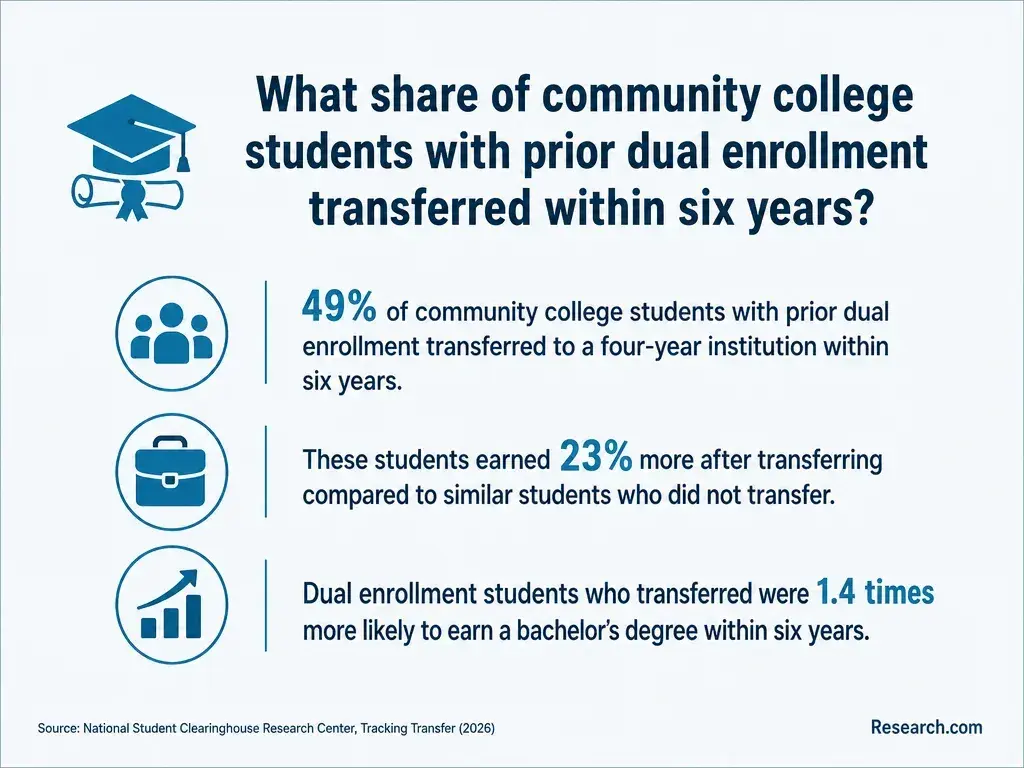
Requirements depend on the institution and degree. A first-time undergraduate applicant may need secondary-school records; a transfer applicant generally needs official college transcripts. Some business majors impose separate entry or progression requirements, including specified accounting, economics, mathematics, or statistics courses. Prior veterinary employment can strengthen your preparation without automatically satisfying an academic prerequisite.
Before applying, compare the published business administration degree entry requirements with the school's current catalog and ask whether admission to the university also admits you to the business major. If you have previous college credit, request an evaluation showing which courses satisfy general education, the business core, electives, and any residency requirement. Accepted credits are not necessarily applied credits, and the school makes the final equivalency decision.
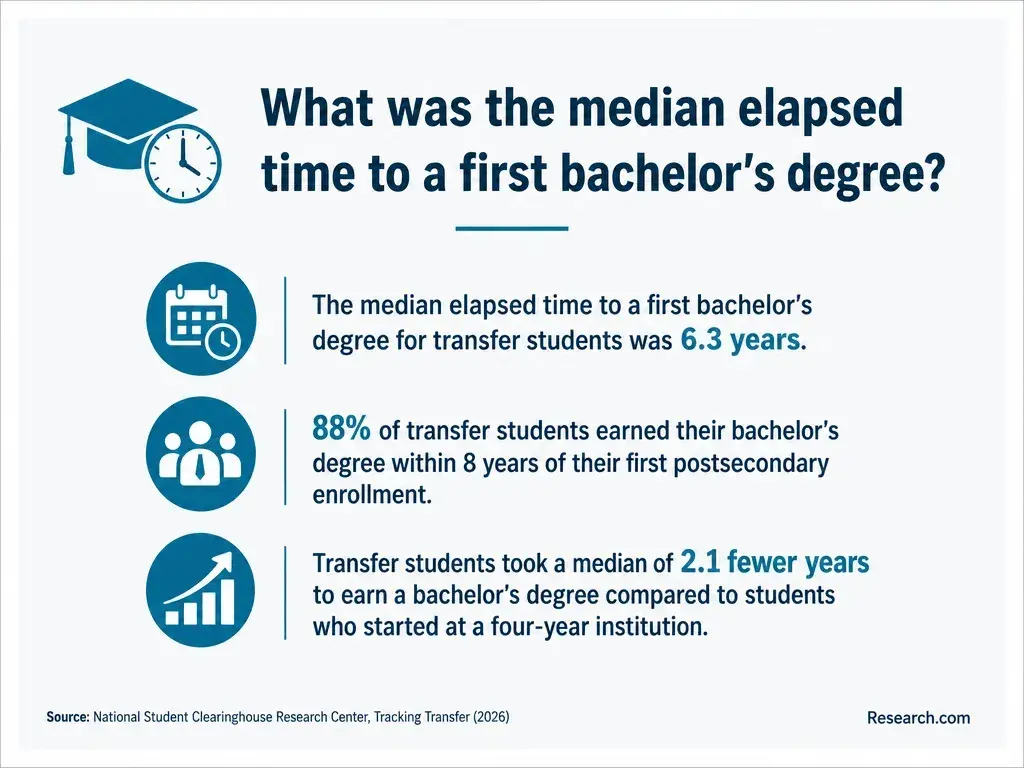
A conventional bachelor's path is commonly planned over four academic years of full-time study, but a transfer student's remaining time depends on the official degree audit, required-course sequence, enrollment pace, and when electives are offered. Accelerated terms may shorten calendar time without reducing required work. No single tuition figure reliably describes these programs.
Build a completion estimate from the credits still required and the school's actual charges. Include tuition, mandatory fees, books or software, possible travel or proctoring, and income you would give up to attend. Compare inexpensive online business administration colleges on remaining completion cost, not advertised tuition alone. Ask the financial-aid office how your planned course load affects aid and ask your employer whether reimbursement requires advance approval or a qualifying grade.
The U.S. Bureau of Labor Statistics does not publish a national wage or growth series specifically for veterinary practice managers. Its broader administrative services manager occupation had a May 2025 median annual wage of $114,130, with employment projected to grow 5% from 2025 to 2035. That category spans industries and experienced managers; neither figure predicts pay or openings at veterinary clinics or for a new graduate.
Assess local veterinary postings by duties, required clinic experience, location, and compensation rather than mapping a broad occupational median onto your prospects. For the education decision, compare likely job requirements with your own degree-completion expense and current opportunities. A business administration degree return and completion planning approach is more useful than assuming a salary increase upon graduation.
Administrative practice management is distinct from licensed veterinary medicine. A business degree does not permit someone to diagnose animals, prescribe treatment, or perform duties reserved for licensed professionals. State rules and employer policies determine which tasks can be delegated, so clarify the proposed job's boundaries before accepting responsibility.
Voluntary practice-management credentials may help experienced professionals document knowledge, but eligibility, examinations, experience requirements, and continuing education must be checked with the issuing organization. A credential is not a substitute for clinical licensure or a universal hiring requirement. If you are weighing a separate undergraduate project-management pathway rather than a practice-management credential, an online project management undergraduate funding guide can help frame that distinct education-cost decision; do not assume funding for a degree applies to a professional certification.
How can you choose a reputable veterinary business administration program?
Choose for the decisions you want to handle at work. Request the catalog and sample syllabi, then compare accounting depth, operations assignments, HR instruction, and whether an approved project can address a veterinary practice problem. Confirm who supervises projects and what you can do if an employer will not release internal data. A classroom simulation can still be useful; it should not be presented as a completed clinic improvement.
Get an official transfer evaluation and a written remaining-course plan before comparing total costs or graduation dates. Ask how often priority electives run, whether the program publishes outcomes with clear cohort definitions, and whether career services have relevant employer connections. If you plan to apply to several schools, options that reduce upfront college application expenses can lower the cost of comparing them - but a waived application fee says nothing about curriculum quality or final price.
Other Things You Should Know About Business Administration
Only with the required employer and academic permissions. Protect client, employee, and proprietary information; if access is denied, use a simulation or appropriately public data instead.
Ownership and professional-control rules vary by state. Check the state veterinary board and obtain qualified legal advice before making an ownership plan; a business degree does not authorize clinical practice.
Familiarity helps, but it is not a substitute for understanding budgets, workflows, and data quality. Software training is most valuable when tied to tasks you are authorized to perform.
Ask the program whether it requires an internship and whether an external placement, simulation, or approved capstone is permitted. Current employment does not automatically earn internship credit.
- Veterinarian burnout demographics and organizational impacts | nih.gov https://pmc.ncbi.nlm.nih.gov/articles/PMC10352684/
- Veterinary Practice Management | Manor College https://manor.edu/academics/bachelordegree/business-administration/veterinary-practice-management/
- Taking Care of Business in Veterinary Medicine | VetCat Insider https://vetmed.arizona.edu/news/taking-care-business-veterinary-medicine
- Tips for Owning a Veterinary Practice | Ross Vet https://veterinary.rossu.edu/about/blog/guide-to-owning-a-veterinary-practice
- How to Create a Successful Veterinary Practice | ucdavis.edu https://www.vetmed.ucdavis.edu/news/how-create-successful-veterinary-practice
- What Is Veterinary Practice Management? | Carrington College https://carrington.edu/blog/what-is-veterinary-practice-management/
- Ideas for Marketing Your Veterinary Practice | Zoetis https://www.zoetisus.com/petcare/blog/marketing-ideas-for-vet-practice/
- Financial Fundamentals for Veterinary Leaders | VHMA https://www.vhma.org/education/financialfundamentalsprogram
- Understand your practice's cash flow? | dvm360 https://www.dvm360.com/view/understand-your-practices-cash-flow
- How to Improve Veterinary Client Retention Through Better Communication | IDEXX Software https://software.idexx.com/resources/blog/how-to-improve-veterinary-client-retention-through-better-communication