2027 Choosing a BS in Business Administration: How to Check a Program Housed Outside a Traditional Business School
Audited and Verified:
Our Editorial and Data Verification Process
Research.com uses government datasets, official education statistics and primary institutional information to support its career and degree guides. Our review process checks factual accuracy, occupational definitions, source dates and the requirements associated with the credentials discussed.
How This Article Was Fact-Checked
Our editorial team verifies salary estimates, employment projections, education requirements and program information against original data providers and official organizations. Salary figures are checked against the relevant occupational definitions and reporting periods. Information about licensure, accreditation and required in-person training is reviewed separately.
Fact-checked and verified on:

Co-Founder and Chief Data Scientist
A BS in Business Administration can be housed in a college of arts and sciences, a professional studies division, or another academic unit rather than a traditional business school. That arrangement is not automatically a weakness, but it changes what you need to check.
If you are comparing programs or returning to finish a degree, this guide will help you verify who oversees the major, what accreditation covers, how courses and support work in practice, and whether the degree's cost and preparation fit your goals.
Key Things You Should Know
- A program's academic home does not determine its quality. Verify the institution, the exact degree, and which unit controls its curriculum and student support.
- Institutional accreditation and business-specific accreditation are different; AACSB, ACBSP, or IACBE recognition applies only within its stated scope.
- Compare the courses you will actually take, credits that apply to graduation, total remaining cost, and evidence of applied learning before choosing.
What is a BS in Business Administration outside a traditional business school?
It is a bachelor of science degree in business administration offered by an institution that places the program outside a stand-alone business school. A professional studies college, interdisciplinary division, or department of management might administer it. The degree may still have a substantial business core; the organizational chart alone does not establish its rigor or employer value.
Find the program's official catalog entry and identify its academic owner. That unit may determine faculty assignments, advising, course scheduling, internship approvals, and graduation requirements. A BS, BBA, and BS in Management are distinct degree titles, even when courses overlap.
If the alternative's appeal is faster completion, compare its actual remaining requirements rather than assuming that shorter routes to an online bachelor's will preserve the business preparation you want.
How can you verify accreditation for a business administration degree program?
Start with institutional accreditation: confirm the institution's current status with its accreditor and the U.S. Department of Education's accreditation database. Then check any claimed business-specific accreditation with AACSB, ACBSP, or IACBE. A university's accredited business school does not necessarily mean a business administration program housed elsewhere is included.
Because accreditation claims can refer to different entities, use this sequence before relying on a program page:
- Match the catalog's exact institution, campus or online division, degree name, and administering unit to the accreditor's listing.
- Check whether business-specific accreditation covers that degree and unit, rather than another school or a different academic level.
- Ask the institution's accreditation office for written clarification if the listing or program page leaves the scope unclear.
Business-specific accreditation can be a useful quality signal, but its absence does not by itself establish that a degree is unsuitable. Evaluate the curriculum and outcomes separately. When comparing accredited online colleges without application fees, confirm accreditation for each institution rather than treating a fee policy as evidence of academic quality.
What should you compare in a business administration curriculum?
Compare required learning, not just course titles. Look for accounting and financial statements, economics, marketing, management, operations, quantitative reasoning, business communication, and ethics. Then inspect course descriptions and prerequisites: an introductory analytics class is not the same preparation as a sequence involving statistics, spreadsheets, and applied analysis.
Check who teaches upper-level courses, how often required classes run, and whether students complete supervised projects, internships, simulations, or a capstone. If a program advertises a concentration, confirm that it is an official catalog designation, which courses fulfill it, and whether they add credits or delay graduation. An elective cluster is not necessarily a credential recorded on a transcript.
The better choice depends on your target function. A general business core can suit a student exploring operations or administrative roles; someone committed to procurement or logistics may prefer deeper supply chain coursework.
Compare that depth with supply chain undergraduate programs with shorter terms, while checking whether the faster calendar depends on heavier course loads or fewer transferable credits.
Either format can provide a credible degree when the institution, curriculum, assessment, and student support meet your needs. Delivery mode does not establish whether you can participate fully.
An online course may still require live meetings, group presentations, proctored exams, or an in-person internship; a campus program may offer stronger access to local employers but require commuting.
Ask for recent syllabi for required upper-level courses, not just a general description of "flexibility." Check live-session times, deadlines, software access, faculty office hours, career services, and whether online students can use the same internship and recruiting resources.
For students balancing employment or caregiving, online business administration programs with work-compatible schedules are worth comparing against your actual weekly availability. Online does not mean self-paced.
Requirements vary by institution and by whether you apply as a first-year or transfer student. Schools commonly request prior academic records and may set GPA or prerequisite rules. Admission to the university may also be separate from admission to the business administration major, even when the major is outside a business school.
For transfer or returning students, request an official evaluation showing where accepted credits apply: general education, business core, concentration, electives, or no remaining requirement. Ask whether accounting, economics, mathematics, or statistics must be completed before certain upper-level courses, and check residency and course-recency policies.
The receiving institution makes the final equivalency decision. If you are also considering a specialized degree, compare project management bachelor's credit transfer rules separately; the same transcript can produce different remaining requirements in different majors.
A first-time, full-time student typically plans around a four-year bachelor's pathway, but actual completion depends on enrollment pace, required credits, course availability, and prior coursework.
A transfer student needs an approved degree audit, not a count of accepted credits, to estimate time remaining. Sequential prerequisites or an upper-level course offered infrequently can matter more than the program's advertised pace.
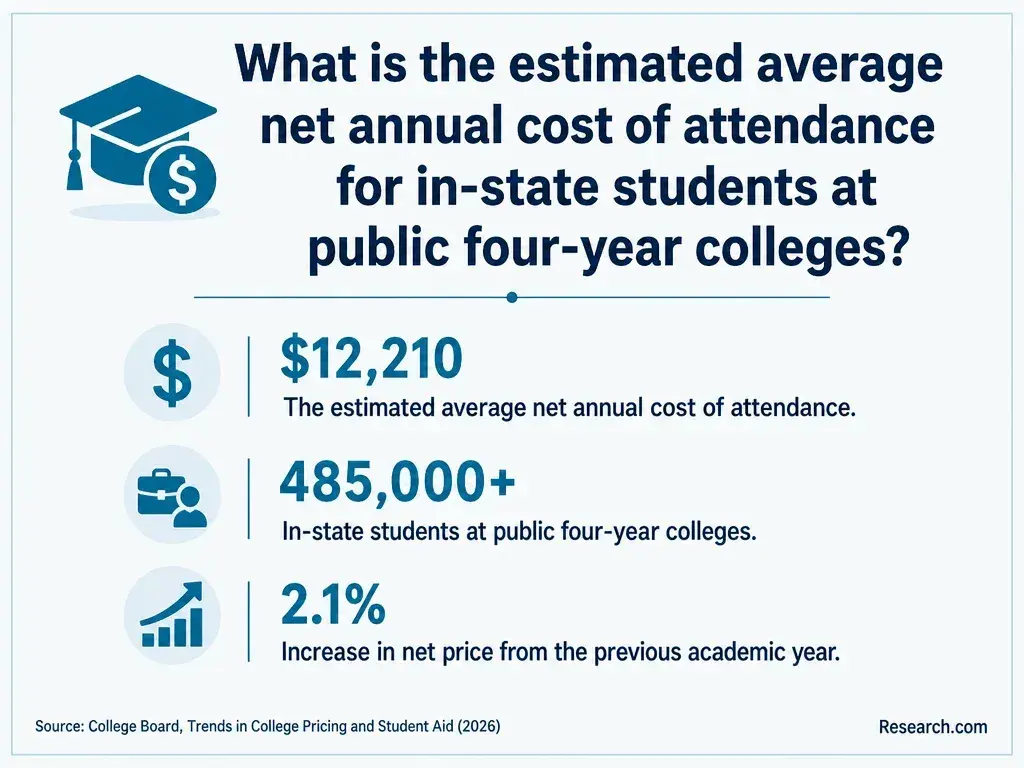
Compare costs using the credits and terms you would need. Include tuition, mandatory fees, books or software, proctoring, travel, and any earnings you would give up to attend.
Ask the financial-aid office about eligibility at your planned enrollment intensity and calculate borrowing separately from grants or employer reimbursement. Low-cost online business degree programs are a useful starting set, but the lowest advertised tuition may not produce the lowest cost to finish your particular degree.
The degree can support applications for roles in operations, administrative services, sales support, marketing, human resources, and project coordination. It does not automatically qualify a new graduate to manage people or budgets. Employers may prioritize relevant work, industry knowledge, spreadsheets, communication, and examples of decisions you helped carry out.
These role distinctions can help you judge whether a broad program offers enough preparation for your intended starting point:
| Possible role | Typical work | Preparation beyond a general business core |
| Operations coordinator | Tracks workflows, schedules, or vendors | Process documentation and spreadsheet practice |
| Marketing coordinator | Supports campaigns and reporting | Customer research and campaign work samples |
| Project coordinator | Tracks tasks, timelines, and communication | Project tools and experience supporting a team |
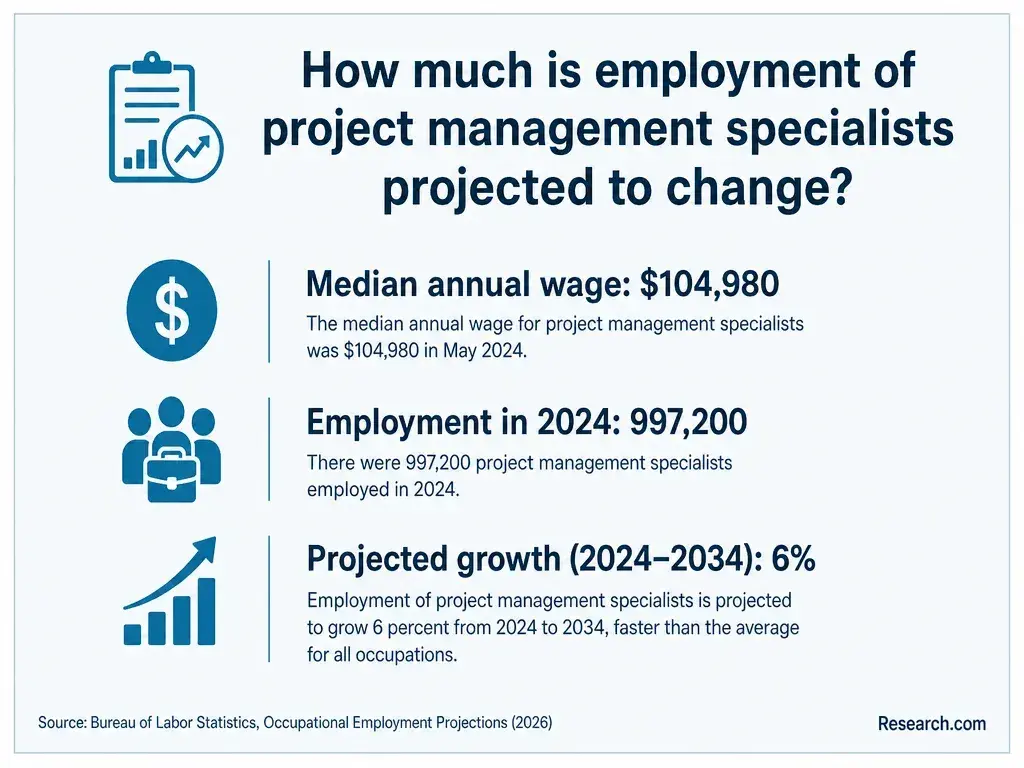
If project delivery is your specific goal, compare the required courses and work-based opportunities in online degree options in project management at lower cost. A more specialized degree may help, but relevant project experience can matter more than the degree title alone.
There is no single salary for this degree: pay follows the occupation, responsibilities, experience, employer, and location. The U.S. Bureau of Labor Statistics reports a May 2025 median annual wage of $75,940 for human resources specialists. That is an occupation-wide median, not an expected starting salary or a measured outcome for business administration graduates.
For a useful financial comparison, examine entry-level postings for roles you could realistically pursue and ask each institution for outcomes specific to its program, including the graduation cohort and survey response rate. Weigh that evidence against your remaining education costs.
Comparisons of business administration college costs and potential career outcomes can frame the trade-off, but no degree title or advertised salary figure establishes your personal return.
Labor forecasts track occupations, not everyone who holds a business administration degree. For example, the Bureau of Labor Statistics projects 7% employment growth for market research analysts from 2025 to 2035. That points to opportunity in one business-related occupation, but it does not mean every graduate can enter that field without research and analytical skills.
Use outlook figures after identifying the work you want to do. Compare local job postings, required experience, and whether the program provides relevant projects or internships. If your target is project work instead, weigh its role-specific prospects against project management college costs after financial aid; growth alone is not a reason to pay for a second or more specialized degree.
Does a BS in Business Administration require certification or licensure?
The degree itself generally does not require an occupational license. Particular jobs may have separate rules: accounting licensure, certain financial-services activities, and other regulated work can require specified education, examinations, experience, or state approval. Voluntary HR or project management certifications also set their own eligibility standards. A concentration or individual course does not grant those credentials.
Before paying for additional study, check the requirements published by the relevant licensing board or certifying organization and ask whether your intended job actually calls for that credential. If you are comparing a project-focused bachelor's with later certification, distinguish the cost of a degree from the cost of exam preparation and experience.
Guidance on grants versus loans for project management bachelor's study can help clarify financing, but financial aid for a degree should not be assumed to cover a separate certification.
Other Things You Should Know About Business Administration Programs
Degree records usually identify the institution and awarded degree; transcript details vary. Ask the registrar for a sample transcript or diploma description if the distinction matters for an application.
Access is institution-specific. Ask career services whether your program's students can attend business recruiting events, use employer databases, and receive business-focused advising.
Possibly, but a change of major or academic unit may require a separate application and different prerequisites. Get a written comparison of how your completed courses would apply.
A bachelor's degree may meet a basic eligibility requirement, but MBA admissions standards vary. Check each graduate program's academic, work-experience, and other requirements rather than assuming your undergraduate program's academic home decides admission.
- Helping Transfer Students Achieve Their Education Goals | THECB Data https://databridge.highered.texas.gov/helping-transfer-students-achieve-their-education-goals/
- DAPIP | Homepage - Office of Postsecondary Education (OPE) https://ope.ed.gov/dapip/
- Fast Facts: Undergraduate graduation rates (40) | ed.gov https://nces.ed.gov/fastfacts/display.asp
- MBA Accreditation Types and Benefits | Freeman News https://freemannews.tulane.edu/2026/08/06/mba-accreditation-types-and-benefits
- Student Achievement Data | Data, Academic Planning & Institutional Research https://data.wisc.edu/student-achievement-data/
- AACSB vs. ACBSP vs. IACBE: Business School Accreditation | Pittsburg State University https://degree.pittstate.edu/online-programs/mba/general/aacsb-accreditation-explained/
- Bachelor of Science in Business Administration (BSBA) | William Howard Taft University https://taft.edu/bachelor-of-science-in-business-administration-bsba-degree-completion/
- BSBA vs BBA - What's the Difference? https://post.edu/blog/bsba-vs-bba-whats-the-difference/
- How Colleges Can Simplify Transfer Credit Policies | American College of Education https://ace.edu/blog/how-the-college-credit-transfer-process-works-and-how-it-can-be-improved/
- Experiential Learning Opportunities | wisc.edu https://obe.wisc.edu/ways-to-partner/student-engagement/experiential-learning/