2027 Should You Choose a BS in Business Administration or Microsoft Excel Expert Certification for Your Next Career Step?
Audited and Verified:
Our Editorial and Data Verification Process
Research.com uses government datasets, official education statistics and primary institutional information to support its career and degree guides. Our review process checks factual accuracy, occupational definitions, source dates and the requirements associated with the credentials discussed.
How This Article Was Fact-Checked
Our editorial team verifies salary estimates, employment projections, education requirements and program information against original data providers and official organizations. Salary figures are checked against the relevant occupational definitions and reporting periods. Information about licensure, accreditation and required in-person training is reviewed separately.
Fact-checked and verified on:

Co-Founder and Chief Data Scientist
If your next career step requires stronger business judgment, sharper spreadsheet skills, or both, a bachelor's degree and an Excel credential solve different problems. This comparison is for early-career employees, career changers, and experienced workers deciding where to invest their time and money.
It explains what each qualification demonstrates, how employers may use it, and when a shorter skills pathway is more sensible than enrolling in a degree. You'll leave with a way to match the choice to a specific job goal - not just a credential name.
Key Things You Should Know
- Choose a BS in Business Administration when your target role calls for a bachelor's degree or broad preparation in finance, operations, management, and business decisions; choose Excel Expert certification to document a specific spreadsheet skill.
- Neither credential guarantees a job. The U.S. Bureau of Labor Statistics reports a May 2025 median annual wage of $75,940 for human resources specialists, but that occupation-wide figure is not a starting salary for degree holders or Excel-certified workers.
- Check target job postings before paying for either option: a degree requirement, an Excel-heavy work sample, and relevant experience are three different hiring signals.
What Is the Difference Between a Business Administration Degree and Excel Certification?
A BS in Business Administration is an undergraduate academic degree covering multiple business functions. Microsoft Office Specialist: Excel Expert is a software certification earned by passing an exam for a specified Excel version. The degree assesses learning across a program; the certification validates defined spreadsheet tasks. Neither substitutes for relevant workplace experience.
The distinctions below matter most when a job posting asks for both a bachelor's degree and advanced Excel ability.
| Decision factor | BS in Business Administration | Excel Expert certification |
| What it demonstrates | Completion of a broad undergraduate curriculum | Performance on a version-specific Excel skills exam |
| Best fit | Roles requiring a bachelor's degree or cross-functional business preparation | Roles with substantial spreadsheet work or a specific Excel skills gap |
| What it does not prove | Expert use of Excel or readiness to manage staff | Business judgment, a bachelor's degree, or expertise in every analytics tool |
If your goal is a defined function rather than general business preparation, compare the curriculum with a specialized pathway such as college pathways into human resources. A business degree's HR course and an HR-focused degree need not provide the same depth.
Which Career Path Offers Better Job Opportunities and Salary Potential?
Neither credential has a meaningful standalone salary: employers pay for occupations and responsibilities, not possession of a credential alone. A business bachelor's may help you meet degree requirements for roles such as HR specialist, project coordinator, or operations analyst. Excel Expert can strengthen an application for spreadsheet-intensive work, particularly when you can also explain the business decisions behind a model or report.
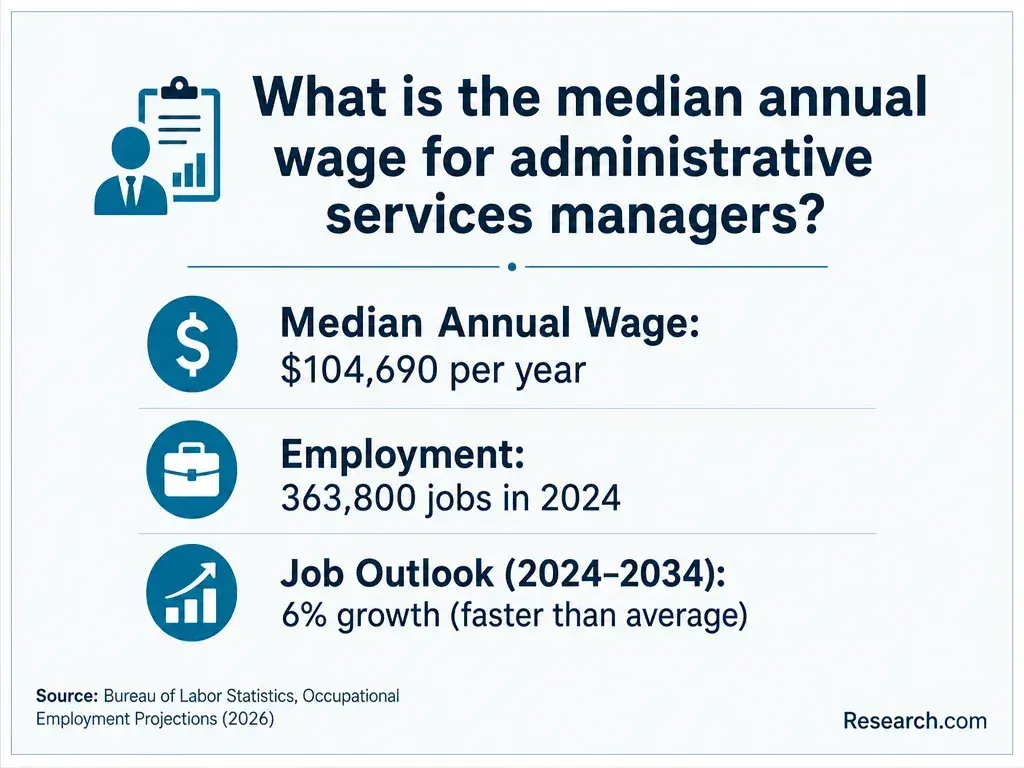
For context, the U.S. Bureau of Labor Statistics reports a May 2025 median annual wage of $102,320 for project management specialists and projects 7% employment growth from 2025 to 2035. Those are occupation-wide figures, not expected earnings or job prospects for new graduates or Excel-certified applicants. Project roles typically require evidence of planning, stakeholder coordination, and delivery - not just spreadsheets. If that is your target function, compare the business BS with affordable online project management degrees and the experience requirements in actual postings.
For a career change, start with your existing evidence. Customer service, scheduling, budgeting, and process improvement may support an adjacent business move; a substantial move into finance or analytics may call for additional coursework, supervised projects, or technical training. Review several local postings and separate "required" qualifications from "preferred" ones before inferring that either credential will improve your pay.
Should You Choose a BS in Business Administration or Excel Expert Certification?
Choose the BS if a bachelor's degree is a recurring requirement for your target jobs and you need broader grounding in business decisions. Choose Excel Expert first if you already meet the education requirements, use spreadsheets regularly, and need a focused way to verify your skills. Consider both when employers want a degree and strong Excel performance; you can pursue the certification before or during the degree rather than waiting until graduation.
The recommendation changes with your starting point. Someone with substantial business experience but no bachelor's may be limited by degree requirements. Someone who already holds a bachelor's and needs better forecasting spreadsheets may gain more from targeted Excel practice than from a second undergraduate degree.
If cost or time is the barrier, compare your remaining requirements with economical business administration degrees with quicker study routes; a shorter advertised calendar is useful only if required courses and accepted credits make it achievable. Write down one target role, its degree requirement, its spreadsheet tasks, and the experience you can already document. Fund the option that closes the most consequential gap first.
A typical BS introduces accounting and financial statements, economics, marketing, operations, organizational behavior, quantitative reasoning, and business communication. Many programs also include electives or an applied project. The exact mix - and whether Excel is taught or assessed at an advanced level - depends on the institution. A spreadsheet-heavy course does not confer Microsoft certification.
Look beyond course titles. For an operations goal, a project that compares process measures and explains a recommendation is more relevant than an unrelated elective. For an analyst goal, check whether you will clean data, build models, test assumptions, and communicate limitations. An internship, simulation, and employer-approved project offer different kinds of evidence; none should be assumed to fulfill a graduation requirement without program approval.
Course sequencing also affects when you can finish. If you have prior college work, use an official degree audit - not a count of accepted credits - to assess remaining business-core courses and residency rules. Business bachelor's rankings focused on completion speed can provide comparison candidates, but your own audit and the school's course schedule determine a realistic timeline.
Microsoft Office Specialist: Excel Expert focuses on advanced use of a specified Excel version. Depending on the exam version, assessed tasks may include managing workbook settings, formatting and managing data, applying advanced formulas, and creating charts or tables. Check the current official exam objectives before buying training: a course labeled "advanced Excel" may omit tested tasks or use a different version.
The exam tests software performance, not whether a sales forecast is plausible or whether confidential customer data may be used. Employers may still ask you to explain assumptions, spot errors, and present a result. Practice with a nonconfidential work sample that you can discuss, such as a model built from public or invented data clearly labeled as illustrative.
If Excel is already a strength but a bachelor's requirement is holding you back, examine faster undergraduate completion pathways instead of collecting another spreadsheet credential.
Excel certification is generally the shorter commitment: preparation depends on your current proficiency, followed by an exam appointment. A BS requires completion of an institution's general education, business, elective, and residency requirements. Prior applicable credits and course availability can substantially change the remaining time. Do not treat an advertised completion estimate as a personal graduation date.
Compare total cost to your goal, not an exam fee with one term of tuition. For Excel, check the current exam price, any retake charges, preparation materials, and software access. For the BS, obtain a written estimate covering remaining tuition, mandatory fees, books, technology, possible travel, and borrowing costs. Also consider work hours you might need to reduce. Undergraduate project management grants and scholarship planning illustrates aid questions worth asking if you are comparing a specialized bachelor's with business administration; eligibility and awards must be confirmed for the particular program.
Federal aid, institutional aid, and employer reimbursement can change the calculation, but none should be counted until you confirm eligibility, payment timing, and conditions. An exam may be the lower-cost experiment when your immediate goal is to test or improve Excel readiness.
For Excel preparation, choose the format that lets you practice in the version relevant to the exam and get feedback on mistakes. Online lessons can work well if you have reliable software access; an in-person class may help if you need scheduled instruction. In either case, confirm that the provider teaches the current exam objectives rather than promising certification merely for attending.
For a BS, delivery format matters less than whether you can complete the actual assignments and obtain useful support. Ask about live sessions, group work, proctored exams, course availability, internships, and campus visits. An online program may still have fixed deadlines and scheduled meetings. Compare those obligations against work and caregiving commitments, then investigate low-cost online business administration pathways using the same requirements and total-cost assumptions you would apply to campus programs.
Business bachelor's admission rules vary by institution and may differ from entry rules for the business major. Schools may request secondary-school or college transcripts and may set GPA or prerequisite requirements. Transfer applicants also need an evaluation showing where accepted credits apply; admission alone does not settle remaining degree requirements. Review qualifying for a business administration college program, then verify the selected school's current catalog and admissions instructions.
Excel Expert certification is exam-based rather than a college admissions process. Verify the authorized testing provider's registration, identity, software-version, and exam policies. A preparatory course may have its own enrollment rules, but enrolling in it is not the same as earning certification. If you already know Excel, an exam-objective self-assessment can help you decide whether a course is necessary.
For the BS, confirm that the institution holds recognized institutional accreditation and that the degree is the one named in its catalog. Some business schools or programs also hold accreditation from AACSB, ACBSP, or IACBE; check the accreditor's scope rather than assuming every business offering is covered. Accreditation is an important quality and eligibility check, but it does not promise placement or promotion. When comparing schools, compare business administration tuition and FAFSA eligibility while confirming each institution's current status and your individual aid eligibility.
For Excel Expert, verify that the exam leads to the official Microsoft Office Specialist credential for the stated Excel version and is delivered through an authorized testing channel. A training provider's certificate of completion is not the same credential. Employers may value either signal, but a hiring assessment or discussion of your work can still carry substantial weight.
How Can You Evaluate a Reputable Business or Excel Program?
Ask each provider for evidence tied to the outcome you want. For a degree, request the current catalog, a personalized degree audit if you have prior credits, a course schedule, an itemized cost estimate, and details about career support. For Excel training, match the syllabus and software version to official exam objectives, check instructor feedback and practice opportunities, and distinguish course completion from the certification exam.
Then test the claim against your circumstances: Can you attend required sessions? Will your remaining courses run when you need them? Will you have a work sample that shows more than a credential name? If you are applying to several colleges, reduce upfront college application expenses where appropriate, but do not let an application-fee policy outweigh curriculum fit, accreditation, or total completion cost.
The strongest next step is a small evidence check: collect target job postings, obtain the school's written answers or the current Excel exam objectives, and choose the path that resolves your documented qualification gap.
Other Things You Should Know About Business Administration
Yes, if you can perform the tasks you claim. Name relevant functions or models and be ready to explain a nonconfidential example. Certification offers an additional, standardized signal.
No. It validates defined Excel skills for a particular exam version. Check each job posting for separate requirements involving dashboards, databases, statistics, or other software.
Retakes are generally possible, but waiting periods, fees, and registration rules can change. Check the authorized testing provider's current policy before scheduling or budgeting.
Not automatically. First compare the target role's requirements with your existing degree, experience, and skill gaps. Targeted coursework or work experience may be more direct; ask schools about second-degree rules if a business BS still appears necessary.
- Accreditation in the U.S. | ed.gov http://www.ed.gov/laws-and-policy/higher-education-laws-and-policy/college-accreditation/accreditation-in-the-us
- Education vs Experience: What Matters More for Your Career | monash.edu.my https://www.monash.edu.my/news-and-events/trending/education-vs-experience-career-guide
- What Jobs Can You Get With a Business Degree? | snhu.edu https://www.snhu.edu/about-us/newsroom/business/what-jobs-can-you-get-with-a-business-degree
- Bachelor of Science in Business Administration, Management | Academics | UNLV https://www.unlv.edu/degree/bsba-management
- IT Certifications vs. IT Degrees: What Employers Actually Prefer - Florida National University (FNU) https://www.fnu.edu/it-certification-vs-it-degree-employer-preference/
- 21 Jobs You Can Get With a Business Management Degree | indeed.com https://www.indeed.com/career-advice/career-development/business-management-degree-jobs
- Microsoft Excel Expert Certification (MOS) - Certstaffix Training https://training.certstaff.com/certstaffix/Microsoft-Excel-Expert-Certification-(MOS).asp
- Exam MO 211: Microsoft Excel Expert (Microsoft 365 Apps) https://learn.microsoft.com/en-us/credentials/certifications/exams/mo-211/
- Microsoft Office Specialist (MOS) certification program - Certiport https://certiport.pearsonvue.com/Certifications/Microsoft/MOS/Overview.aspx
- Microsoft Office Certification: Benefits + How to Get Started | Coursera https://www.coursera.org/articles/microsoft-office-certification