2027 Is a BS in Business Administration Useful for Running A Tax Preparation Business? Degree Fit and Opportunity Cost
Audited and Verified:
Our Editorial and Data Verification Process
Research.com uses government datasets, official education statistics and primary institutional information to support its career and degree guides. Our review process checks factual accuracy, occupational definitions, source dates and the requirements associated with the credentials discussed.
How This Article Was Fact-Checked
Our editorial team verifies salary estimates, employment projections, education requirements and program information against original data providers and official organizations. Salary figures are checked against the relevant occupational definitions and reporting periods. Information about licensure, accreditation and required in-person training is reviewed separately.
Fact-checked and verified on:

Co-Founder and Chief Data Scientist
Preparing tax returns and running a tax preparation firm require different skills. A BS in Business Administration can strengthen pricing, budgeting, marketing, and operations, but it does not teach every tax rule or grant authority to represent clients before the IRS. For prospective owners, career changers, and current preparers considering a degree, the decision is whether those broader skills justify the tuition and time away from paid work.
This guide separates the credentials needed to prepare returns from the education that may help a practice grow, then shows how to compare the alternatives.
Key Things You Should Know
- A BS in Business Administration can help you run a tax preparation firm, but it is not a federal requirement to prepare returns for compensation and does not confer tax credentials.
- Paid federal return preparers generally need an IRS Preparer Tax Identification Number (PTIN); an Electronic Filing Identification Number (EFIN) is a separate requirement for a firm that originates electronic filings. State rules may add requirements.
- Compare the degree's total cost and foregone work time with targeted tax training, supervised experience, and credentials. The BLS median of $83,680 for accountants and auditors in May 2025 is not an expected salary for tax preparers or new firm owners.
Is a BS in Business Administration useful for running a tax preparation business?
A tax preparation business must deliver accurate, timely, confidential work while acquiring clients, setting fees, managing cash during an uneven year, and supervising any staff. A business administration degree can address the second set of responsibilities. Tax instruction and hands-on return preparation address the first.
The distinction matters most when choosing what to learn next. An experienced preparer who struggles with capacity planning or profitability may benefit from business coursework. Someone who has managed a small business but never prepared returns should prioritize tax training and supervised practice before investing in another broad degree. If you already hold a bachelor's degree, a second one may add less value than accounting courses or a tax credential.
Evaluate the degree as an investment in specific gaps, not as a prerequisite to ownership. Compare its remaining credits, cost, and schedule with the narrower training you need; a broader comparison of business administration degrees compared by cost duration and outlook can help frame that calculation. Neither a degree nor a polished business plan substitutes for competent tax work and client trust.
What credentials and licenses are required to prepare taxes professionally?
Federal rules distinguish preparing a return, electronically filing it through a firm, and representing a client before the IRS. A paid preparer generally needs a current PTIN, which identifies the preparer on returns. A firm that originates electronic returns needs an EFIN through the IRS e-file application process; a PTIN alone is not an EFIN. Check the IRS's current application, suitability, and renewal rules before opening.
Federal law does not generally require a business administration degree, CPA license, or enrolled agent credential simply to prepare returns for compensation. CPAs and enrolled agents have separate qualification and continuing-education rules and broader IRS representation rights. An attorney's professional status is separate as well. Other preparers may have limited or no representation rights, depending on their status and the matter. State preparer registration, licensing, education, and business requirements can add obligations, so check the jurisdictions where you will work.
Budget for compliance before spending on optional education: investigate applicable state rules, business registration, client-data safeguards, professional liability coverage, and the cost of maintaining your chosen credentials. If you later decide a degree fills a management gap, federal aid options at accredited business administration colleges may affect how you finance it; aid eligibility does not make the degree a tax-preparer license.
Which degree or training pathway best prepares you for tax preparation?
Choose a pathway based on whether your immediate goal is competent return preparation, deeper tax expertise, or operating a firm. The comparison below separates those outcomes; program curricula and credential eligibility must still be checked individually.
| Pathway | Best fit | Principal limitation |
| Focused tax courses and supervised preparation | Learning return workflows and building practical accuracy | Does not by itself provide broad business training or unrestricted IRS representation |
| Accounting degree or substantial accounting coursework | Developing accounting depth alongside tax study | A degree alone does not confer CPA licensure; state board rules control eligibility |
| Enrolled agent pathway | Pursuing a federal tax credential and broader IRS representation rights | Requires meeting IRS qualification and maintenance rules; offers less general management education |
| BS in Business Administration | Building finance, operations, marketing, and management skills for a practice | May offer too little tax coursework for the intended preparation work |
For a new preparer, focused training plus supervised work is usually the most direct starting point. For someone aiming at complex tax matters or representation, examine the enrolled agent route and, if relevant, CPA eligibility. For an owner who needs both sets of skills, combine tax-specific preparation with selected business courses or a degree that fits an established education goal.
Project-management education may help someone coordinating a multi-location practice, but even cheapest accredited online project management options should be compared on that operations goal - not mistaken for tax training. The same test applies to every alternative: identify the work you need to do, then pay for instruction that teaches it.
Relevant coursework may include financial accounting for reading statements, managerial accounting for understanding service costs, marketing for client acquisition, and operations for scheduling and quality control. Business law, information systems, and management can also support contracting, secure workflows, and staff supervision. Actual coverage varies: an introductory accounting course is not a tax course, and an entrepreneurship elective is not necessarily a formal concentration.
Look for assignments you can apply without exposing client information. A useful project might model seasonal staffing needs using hypothetical demand, compare fee structures under stated assumptions, or map a secure document-intake process. Such work demonstrates planning, not proven business results. Never put identifiable returns or confidential client records into a classroom project without appropriate authorization and safeguards.
If your main gap is supervising people rather than managing firm finances, compare the curriculum with organizational leadership degrees with faster completion options. Check remaining credits and actual course availability before assuming that a program advertised as faster will finish sooner for you.
An online BS can be effective for learning business concepts if it provides credible instruction, feedback, and applied assignments. Delivery mode does not supply the supervised tax-return experience a new preparer needs. Pair coursework with appropriate tax training and practice, whether through an employer, a supervised placement, or another legitimate training setting.
Tax season makes scheduling unusually important. Ask whether classes require live sessions, group meetings, proctored exams, internships, or fixed weekly deadlines during your busiest months. An asynchronous course may still impose deadlines. Check part-time enrollment, leave rules, and the availability of required classes before committing; fast-track business degree options are worthwhile only if the pace leaves room for accurate client work and sustainable study.
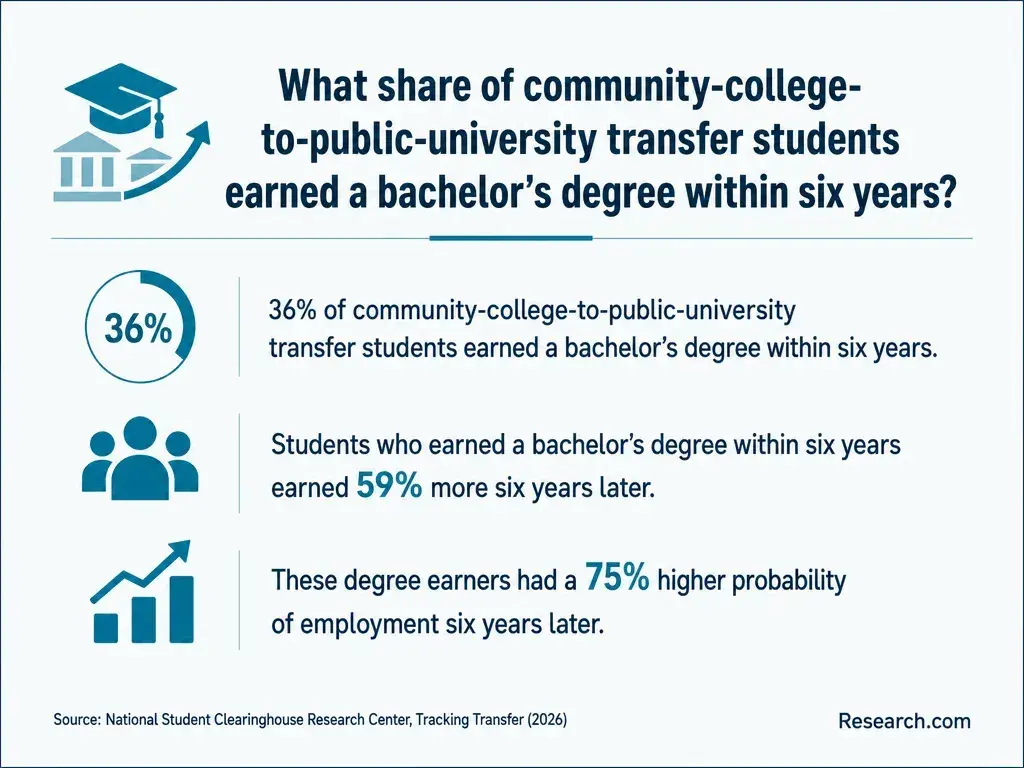
A bachelor's degree is commonly planned as roughly four years of full-time undergraduate study, but the time remaining for a transfer student depends on which credits satisfy general education, business-core, major, and residency requirements. Tuition also varies by school and enrollment pattern. Without an official credit evaluation and school-specific charges, a precise completion price would be misleading.
For a tax business owner, opportunity cost includes more than tuition: fees, books, software, borrowing costs, and paid work displaced by classes all matter. Consider whether a required course falls during filing season and whether a lighter schedule would delay completion. Compare lower-tuition online business administration programs using the price of your remaining required courses, not just an advertised per-credit rate.
A practical comparison is to request written degree audits and itemized cost estimates, then weigh each against targeted tax courses, an enrolled agent pathway, or individual business classes. Include the value of skills you can use beyond tax preparation, but do not assume a degree will raise revenue by a particular amount.
Requirements depend on the institution and whether you apply as a first-year, transfer, or returning student. Schools commonly review prior education and transcripts; some business majors have separate entry standards or prerequisite courses in subjects such as mathematics, accounting, or economics. Admission to the university is not necessarily admission to the major, and accepted transfer credits do not necessarily satisfy business requirements.
If you already have college credit, ask the admissions or transfer office for an official evaluation and an adviser for a degree audit showing what remains. If you already hold a bachelor's degree, ask about second-degree rules before applying. The business administration applicant eligibility checklist is a starting point; the school's current catalog and written decisions control your case.
A business administration graduate can seek entry-level tax preparer work after obtaining the required preparer identification and role-specific training. With demonstrated experience, possible directions include client-service coordination, office operations, or managing the workflow of a tax practice. Ownership adds responsibility for compliance, hiring, quality control, and finances; a degree alone does not establish readiness for those duties.
Accounting and tax advisory positions may require substantially more accounting coursework, experience, or professional credentials. Human resources work at a growing firm is another distinct function, not a tax-preparation qualification. If staffing becomes your intended career rather than a duty of ownership, compare specialized study and HR bachelor's transfer policies before changing degrees. For tax work, employers and clients will place particular weight on accuracy, confidentiality, communication, and relevant experience.
How should you choose an accredited business administration program for tax preparation?
Start with the curriculum, not the degree label. Confirm the exact program name and whether it offers accounting, entrepreneurship, small-business operations, and relevant electives. Ask whether applied projects can address a tax practice without using confidential client data. Compare those opportunities with the tax instruction you would still need outside the degree.
Verify recognized institutional accreditation and, if a school advertises AACSB, ACBSP, or IACBE accreditation, check its stated scope rather than assuming every program is covered. Then request a written transfer evaluation, degree audit, total-cost estimate, and course schedule. Application fees matter at the margin; application-cost-free online school options should still pass the same curriculum, accreditation, and completion-cost checks.
Decision rule: Choose the BS when its remaining coursework fills meaningful management gaps at a cost and pace you can sustain. Choose focused tax training or a tax credential first when technical preparation or representation rights are the immediate objective.
Other Things You Should Know About Business Administration
Possibly. Ask the faculty member what work qualifies and what approvals are needed. Use hypothetical or properly authorized, de-identified information rather than assuming client records are available for coursework.
Not necessarily. If filing-season work is your priority, a part-time schedule may be more practical. Check when required courses run and whether enrollment can be reduced during busy months.
Do not assume so. Review course descriptions and obtain separate training in the software and filing workflows you intend to use.
Only if the school officially awards that concentration and your records show you completed it. Otherwise, describe the individual tax or accounting courses you took.
- PTIN requirements for tax return preparers | Internal Revenue Service https://www.irs.gov/tax-professionals/ptin-requirements-for-tax-return-preparers
- What Can You Do With a Business Administration Degree? | LSU Online https://online.lsu.edu/newsroom/articles/what-can-you-do-business-administration-degree/
- Bachelor's Degree in Business: Administration or Accounting? | Bay Path University https://www.baypath.edu/news/bay-path-university-blogs/post/bachelor-s-degree-in-business-administration-or-accounting/
- How a Business Administration Degree Can Prepare You for Entrepreneurship - Missouri Baptist University (Mobap) https://www.mobap.edu/news/how-a-business-administration-degree-can-prepare-you-for-entrepreneurship/
- 10 Key Subjects Taught in a Bachelor of Business Administration Program | Carson-Newman University https://www.cn.edu/cps-blog/10-key-subjects-taught-in-a-bachelor-of-business-administration-program/
- How to become a tax preparer: Your complete guide | Thomson Reuters https://tax.thomsonreuters.com/en/insights/articles/how-to-become-a-tax-preparer
- How to Become a Tax Preparer: Your Career Guide | accounting.com https://www.accounting.com/careers/tax-preparer/how-to-become/
- AFSP Exemption - ACAT https://acatcredentials.org/afsp-exemption/
- What Do You Learn in a Business Administration Degree? | Rowan Blog https://rowanblog.com/2026/07/what-do-you-learn-in-business-administration-degree/
- Choosing a Tax Professional | Angolano & Company https://angolanoandcompany.com/blog/2020/1/9/choosing-a-tax-professional