2027 BS in Business Administration for Distribution Centers: Which Business Courses Should You Prioritize?
Audited and Verified:
Our Editorial and Data Verification Process
Research.com uses government datasets, official education statistics and primary institutional information to support its career and degree guides. Our review process checks factual accuracy, occupational definitions, source dates and the requirements associated with the credentials discussed.
How This Article Was Fact-Checked
Our editorial team verifies salary estimates, employment projections, education requirements and program information against original data providers and official organizations. Salary figures are checked against the relevant occupational definitions and reporting periods. Information about licensure, accreditation and required in-person training is reviewed separately.
Fact-checked and verified on:

Co-Founder and Chief Data Scientist
A distribution center manager must keep inventory moving while controlling costs, meeting service targets, and supervising people safely. If you are choosing courses in a BS in Business Administration, the useful question is not whether a class sounds relevant, it is whether it prepares you for those decisions.
This guide is for students and employees planning a move into warehouse or distribution operations. It ranks the most useful coursework, explains when a supply chain specialization is worth choosing, and shows how to pair a degree with the experience needed to manage a facility.
Key Things You Should Know
- Prioritize operations and supply chain management, managerial accounting, analytics, and people management. Look for assignments using inventory, labor, cost, and service measures, not course titles alone.
- Choose a supply chain concentration when it adds substantial distribution coursework and applied work without unnecessary extra time or cost. A general business degree plus relevant electives and facility experience can also be effective.
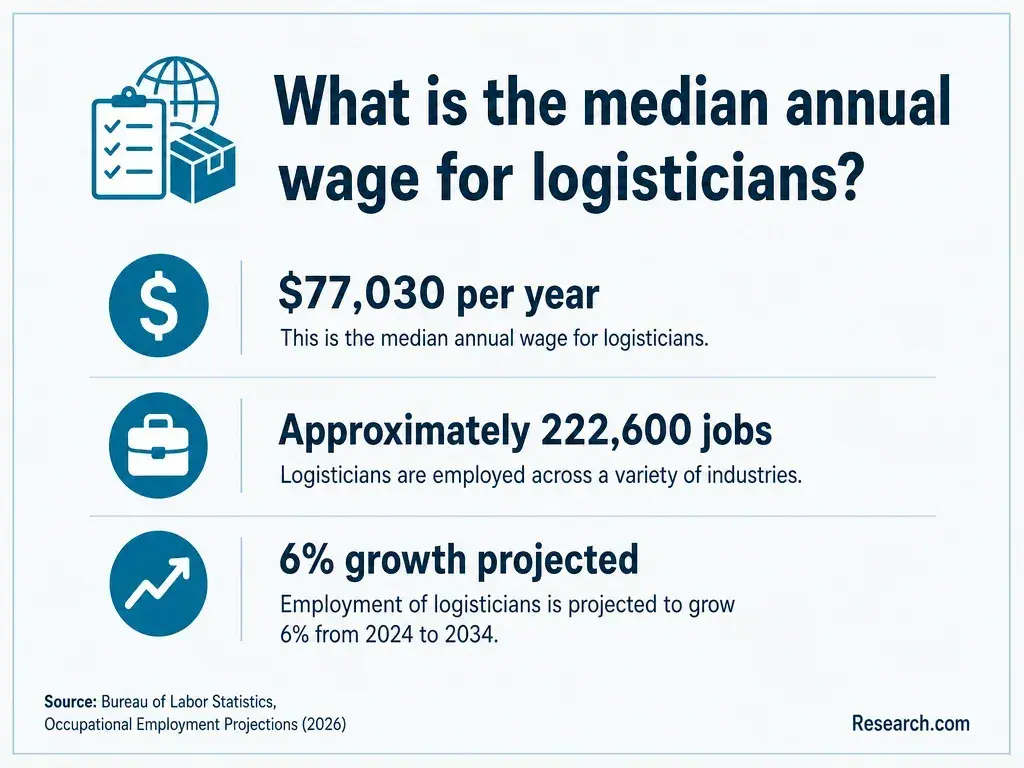
- A degree is not a direct ticket to managing a distribution center. The Bureau of Labor Statistics reports a May 2025 median annual wage of $82,320 for logisticians, a related occupation, not an expected starting salary for graduates or the median for distribution center managers.
What Is a Business Administration Degree for Distribution Centers?
A BS in Business Administration is a broad undergraduate business degree, not usually a credential specifically titled "distribution center management." Its accounting, management, quantitative, and operations courses can support decisions about inventory, staffing, transportation handoffs, and operating costs. The value depends on the actual curriculum and opportunities to apply it in a facility.
Distribution centers receive, store, pick, pack, and ship goods. Their managers balance throughput and order accuracy against labor capacity, safety, customer requirements, and budget limits.
That makes the role different from both a purely analytical supply chain job and a human resources job. If recruiting and employee relations interest you more than inventory flow, consider HR education costs and career planning before selecting a distribution-focused path.
A BBA or specialized supply chain bachelor's degree may cover similar ground, but titles do not establish equivalence. Compare required courses, quantitative depth, electives, and work-based opportunities at each school.
Which Business Courses Best Prepare You for Distribution Center Management?
Put operations and supply chain courses first, then build the financial, analytical, and supervisory skills needed to make their recommendations workable.
The table connects common subjects to the decisions a distribution center leader makes; actual course content varies by school:
| Course area | Distribution center decisions it supports | Useful evidence of learning |
| Operations and supply chain management | Receiving, storage, fulfillment, capacity, and transportation handoffs | A process map or capacity analysis that identifies trade-offs |
| Managerial accounting and finance | Labor budgets, unit costs, equipment proposals, and cost-versus-service choices | A budget with stated assumptions and sensitivity analysis |
| Statistics, business analytics, and information systems | Interpreting order accuracy, inventory records, throughput, and demand variation | A spreadsheet or dashboard that defines measures and flags data limitations |
| Management, HR, and organizational behavior | Staffing, training, communication, performance, and workplace conflict | A staffing or training plan that accounts for operational constraints |
| Project management | Coordinating a layout, systems, or process change | A scoped project plan with milestones, risks, and owners |
Within supply chain electives, inventory management, procurement, transportation, and warehouse systems are especially relevant. Sequence quantitative and accounting prerequisites early so they do not block later operations courses.
If your main goal is to lead improvement projects rather than run facility operations, compare the curriculum with low-cost project management degree options instead of assuming the broadest business degree is the best fit.
For an applied assignment, a hypothetical pick-and-pack capacity model is more useful than an unexamined claim of savings. State the demand assumptions, labor constraints, error measures, and limits of the data. Use employer records only with permission, and do not present a classroom proposal as an implemented result.
What Degree Path Leads to a Career Managing Distribution Centers?
The best path depends on what you already do. An employee who has trained pickers or coordinated receiving may need broader budgeting and analytics knowledge; a student without facility experience needs a way to learn how operations work on the floor. Neither a BS nor a concentration substitutes for a record of managing processes and people.
A general BS in Business Administration makes sense if you want flexibility across operations roles and can choose relevant electives. A formal supply chain or operations concentration is stronger when it adds meaningful inventory, logistics, and systems work without delaying graduation.
A specialized supply chain bachelor's may offer greater functional depth but less room for other business interests. Compare an official degree audit, not just advertised course lists, before deciding whether additional requirements are worthwhile.
Students seeking a specialized, potentially quicker route can examine accelerated undergraduate supply chain programs, while confirming their own transfer evaluation and course schedule.
A realistic progression might begin in inventory control, dispatch, receiving coordination, or shift leadership, then move toward responsibility for labor plans, service targets, and budgets. Already have substantial supervisory experience?
Check whether the target employer requires a bachelor's degree or instead values specific systems knowledge and documented results. Employer training or targeted courses may be a more direct next step.
For a shift worker, the deciding factor is whether required classes fit the actual work schedule. Online delivery can remove commuting but does not necessarily remove live sessions, fixed deadlines, proctored exams, or group meetings.
Campus study may offer easier access to classmates, faculty, and local employers, but required travel can be difficult during peak operating periods.
Ask each program for sample schedules for the operations, analytics, and capstone courses, not just the business core. Confirm live-attendance rules, exam windows, software access, internship requirements, and whether courses run when you need them.
Part-time enrollment may protect work hours while extending completion time. For options designed around continued employment, see how to balance employment and business administration college study; verify each program's current policies yourself.
Requirements differ between first-year admission, transfer admission, and entry to a business major. Schools commonly review prior academic records; some business programs also specify mathematics, accounting, economics, or GPA requirements before students can take upper-level courses. An admissions offer does not establish that previous credits satisfy the operations electives you want.
Send official transcripts and ask the admissions or transfer office for an evaluation, then request a degree audit from a business adviser. Check which credits meet general education, business core, concentration, and residency requirements.
If an application charge matters, fee-free applications for online college can help narrow options, but an application-fee policy says nothing about total degree cost or course fit.
A bachelor's degree is commonly planned as four years of full-time study, but the remaining time for a transfer or working student depends on credits that apply to the degree, prerequisite sequences, course availability, and enrollment pace. An accelerated calendar is not necessarily less work or less expensive.
To compare costs, request an individualized estimate of remaining tuition and mandatory fees, then account for books, software, travel or proctoring, and any reduction in paid work hours. Ask when employer tuition reimbursement arrives and what grades or continued employment it requires.
Compare the full cost to finish rather than a per-credit headline: a low advertised rate can lose its advantage if required courses do not transfer. Use compare the least expensive business administration schools as a starting point, not as a substitute for your own degree audit and financial-aid offer.
First, verify the institution's recognized accreditation and confirm that it covers the school awarding the degree. Then check whether the business school or program holds additional accreditation from AACSB, ACBSP, or IACBE, and whether the specific program is within that accreditor's scope.
Institutional accreditation and business accreditation answer different questions; neither proves that a program has strong distribution-center coursework or job placement.
When reviewing budget-friendly online business schools, confirm accreditation directly with the institution and relevant accreditor. Also examine the current catalog for operations electives, faculty access, and completion policies.
A recognized, affordable degree with the right courses and schedule may serve you better than an attractive accreditation label attached to a poor curriculum fit.
Entry routes include inventory control, receiving or shipping coordination, transportation coordination, operations analysis, and shift supervision. Tasks differ: an inventory employee investigates stock discrepancies; a coordinator manages handoffs and exceptions; a supervisor directs a team and responds to safety and service issues.
A distribution center manager typically carries broader responsibility for staffing, performance, costs, and cross-shift decisions.
Match coursework to evidence an employer can assess: a well-documented process analysis, spreadsheet model, or supervised improvement project can show how you reason through an operational problem.
Pair it with facility experience where possible. If you need a bachelor's degree to advance and already have credits, ranked online business bachelor's completion routes may help you find candidates to evaluate; confirm that their remaining courses support your target operations role.
There is no single wage figure that describes every distribution center manager job. Facility size, industry, location, shift responsibility, and experience affect pay, while employers use titles differently.
For context, the U.S. Bureau of Labor Statistics reports a May 2025 median annual wage of $82,320 for logisticians and projects 18% employment growth from 2025 to 2035. Logisticians are a related supply chain occupation, not a substitute salary category for distribution center managers or new graduates.
Use local postings for roles matching your experience to assess compensation and required skills. Then compare the likely value of completing a degree with its remaining cost and time away from other opportunities.
A guide to compare cost-to-finish for shorter business administration programs can support that comparison, but no occupation-wide median establishes your personal return on investment.
Which Certifications Improve Distribution Center Career Prospects?
A certification is most useful when it addresses a gap visible in your target job postings. Supply chain and inventory credentials may help demonstrate specialized knowledge; project management credentials may be relevant to systems rollouts or facility changes.
Neither replaces supervised operating experience, and a business course alone does not establish certification eligibility.
Before paying for preparation, check the issuing organization's current eligibility, exam content, renewal rules, and fees. Ask employers whether they recognize the credential and whether they will fund it.
If your interest is primarily project work, estimate the cost of accredited project management study as a separate education decision; a degree program and a professional certification are different credentials.
Other Things You Should Know About Business Administration
They can. Compare major assignment and exam dates with your facility's peak periods, and ask about extension and leave policies before enrolling.
No. Equipment operation requires appropriate employer-provided training and evaluation under applicable workplace safety requirements.
The core priorities remain, but courses covering contracts, customer service measures, and transportation may be especially useful when a provider manages operations for clients.
Add training relevant to the products, temperature controls, records, and applicable regulations. General business coursework does not replace facility-specific compliance training.
- Soft Skills: The Competitive Edge | dol.gov https://www.dol.gov/agencies/odep/publications/fact-sheets/soft-skills-the-competitive-edge
- Experiential Learning Assures Workforce Readiness | AACSB https://www.aacsb.edu/insights/articles/2025/12/experiential-learning-assures-workforce-readiness
- Supply Chain Fundamentals: Warehousing Operations | Georgia Tech Professional Education https://pe.gatech.edu/courses/supply-chain-fundamentals-warehousing-operations
- Organizational Behavior and Human Resources Management | Mitch Daniels School of Business https://business.purdue.edu/undergraduate/academics/organizational-behavior-and-human-resource-management.php
- Careers in Global Supply Chain Management | Rider University https://www.rider.edu/academics/colleges-schools/norm-brodsky-college-business/faculty-departments/information-operations/careers
- Top Skills Employers Look for in Business Professionals | Lasell University https://www.lasell.edu/academics/lasell-insights/top-skills-employers-look-for-in-business-professionals.html
- Experiential Learning Requirements - College Of Business https://business.oregonstate.edu/programs/admission-aid/advising/academic-planning/experiential-learning-requirements
- 21 Jobs You Can Get With a Business Management Degree | indeed.com https://www.indeed.com/career-advice/career-development/business-management-degree-jobs
- Logistics Career Path: Skills, Jobs, Education and More | ascm.org https://www.ascm.org/ascm-insights/logistics-career-path/
- Logistics and Supply Chain Management [+ Key Differences] | modula.us https://modula.us/blog/logistics-supply-chain-management/