
2027 Is an Online BS in Business Administration the Right Next Step for Veterinary Practice Managers?
Audited and Verified:
Our Editorial and Data Verification Process
Research.com uses government datasets, official education statistics and primary institutional information to support its career and degree guides. Our review process checks factual accuracy, occupational definitions, source dates and the requirements associated with the credentials discussed.
How This Article Was Fact-Checked
Our editorial team verifies salary estimates, employment projections, education requirements and program information against original data providers and official organizations. Salary figures are checked against the relevant occupational definitions and reporting periods. Information about licensure, accreditation and required in-person training is reviewed separately.
Fact-checked and verified on:

Co-Founder and Chief Data Scientist
Managing a veterinary practice means balancing staffing, client service, inventory, and budgets while keeping the clinical team supported. If you already do that work, an online BS in Business Administration may strengthen your decision-making and open doors - but it also requires time and money that targeted training might not. This guide helps veterinary practice managers assess the degree against their next career goal, compare it with shorter options, and check whether a program can fit around the demands of a working clinic.
Key Things You Should Know
- An online business degree is most useful when a target role calls for a bachelor's degree or stronger finance, operations, and people-management skills - not simply because you already hold a manager title.
- Compare your remaining degree requirements and total cost with veterinary-specific training or certification before enrolling; accepted transfer credit may not satisfy business-core requirements.
- The U.S. Bureau of Labor Statistics reports a $114,130 median annual wage for administrative services managers in May 2025, but that occupation-wide figure is not a veterinary practice manager salary or a predicted return on this degree.
Is an online BS in Business Administration right for veterinary practice managers?
It can be a good next step if your advancement goal requires a bachelor's degree or broader business responsibility, and you can complete the program without taking on disproportionate cost or scheduling pressure. It is less compelling if your immediate gap is a specific clinic procedure, software skill, or veterinary management credential that shorter training could address.
Start with the work you do and the work you want. A manager who already supervises schedules but wants responsibility for multi-site budgets may benefit from accounting, finance, and operations courses. Someone trying to improve appointment reminders or inventory counts may get a faster return from a focused course and a supervised workplace project.
For each program, compare the official degree audit, required courses, online attendance rules, and support for working students - not just its description as "flexible." You can use explore online business degree school rankings in America as a starting point, then verify the features that matter for your clinic schedule and career goal directly with each school.
What education does a veterinary practice manager need?
There is no single bachelor's degree required for every veterinary practice manager job. Employers may value veterinary-team experience, demonstrated responsibility for staff and finances, and formal business education in different combinations. Clinical qualifications and authority to make veterinary medical decisions are separate from business management preparation and depend on the role and applicable state rules.
A BS in Business Administration provides broad undergraduate business study. A BBA may serve a similar goal, but its actual requirements depend on the school. A management or organizational leadership degree may emphasize supervising people more than accounting or quantitative operations; compare course requirements rather than degree titles alone. Managers considering that narrower direction can review organizational leadership degrees with faster completion options while checking what finance and operations coursework each includes.
If you already hold a bachelor's degree, a second undergraduate degree may add less value than selected business courses, employer-supported training, or a relevant certification. Ask prospective employers which qualification they expect for the position you want; the answer matters more than a general claim that managers "need" a particular degree.
How can a business administration degree advance a veterinary management career?
The degree's strongest potential benefit is helping you take responsibility for decisions beyond daily coordination. Financial coursework can support budget discussions; operations study can help you assess appointment flow and purchasing; and management courses can improve how you document staffing decisions. None of those courses, by itself, proves you can run a clinic or guarantees a promotion.
Make the benefit visible through work you are authorized to do. For example, a manager might propose a purchasing review that compares ordering frequency, stockouts, and carrying costs. The output could demonstrate analytical judgment without claiming savings before the practice implements and measures a change. Seek employer permission before using supplier prices, employee information, or client records in coursework.
If your target is mainly coordinating larger initiatives across sites, compare general business study with a more focused project pathway. Online project management bachelor's programs accepting transfer credits may merit comparison if you have prior college work, but ask each institution how those credits apply to required courses before assuming a shorter path.
Programs commonly combine accounting, economics, marketing, management, operations, and quantitative reasoning, but the depth and sequence vary. For a veterinary manager, the useful question is whether assignments develop skills you can apply to a practice - not merely whether a course title sounds relevant.
Look for accounting work that goes beyond reading a revenue total to examine expenses and cash needs; operations work that addresses capacity and purchasing; and people-management study that covers communication and employment responsibilities. A formal concentration requires an institutionally defined set of courses. A few electives do not necessarily create a separately recognized concentration.
If inventory and vendor management are your main development goals, compare the general business curriculum with more specialized supply chain study. Shorter completion timelines for supply chain bachelor's students are worth investigating only if the specialized courses and your applicable credits make that route a better fit; an advertised fast timeline is not an individual completion estimate.
Online study can remove a commute, which helps when staffing problems make departure times unpredictable. It does not necessarily remove fixed obligations: courses may require live meetings, group presentations, scheduled exams, or weekly deadlines. Campus programs can offer more predictable face-to-face contact, but their travel and class times may be harder to reconcile with clinic hours.
Request sample course schedules and ask how often required courses are offered, whether exams are proctored, and how group work is arranged. Check whether a capstone can use an employer-approved practice problem and whether a campus visit is required. Compare part-time and accelerated schedules against the hours you can reliably study during busy seasons, not an ideal week.
Resources that compare fast-track business bachelor's schools can help identify formats to investigate. Confirm each school's actual course sequence and attendance policies before treating a shorter advertised calendar as more flexible.
Requirements vary by institution and by whether you apply as a first-year, transfer, or returning student. Schools generally review prior academic records; some business majors also have specific mathematics, accounting, or GPA conditions. Professional experience in a clinic can strengthen your application, but it does not automatically meet an academic prerequisite or earn credit.
If you have previous college study, send official transcripts for evaluation and request a degree audit showing which credits meet general education, business-core, elective, and residency requirements. Ask whether an associate degree, prior veterinary technology coursework, or previously earned bachelor's degree changes the remaining requirements. The admitting institution has the final authority to make those determinations.
For a closer look at possible preparatory courses, consult the business administration admissions preparation guide, then confirm the current rules with the program you intend to enter.
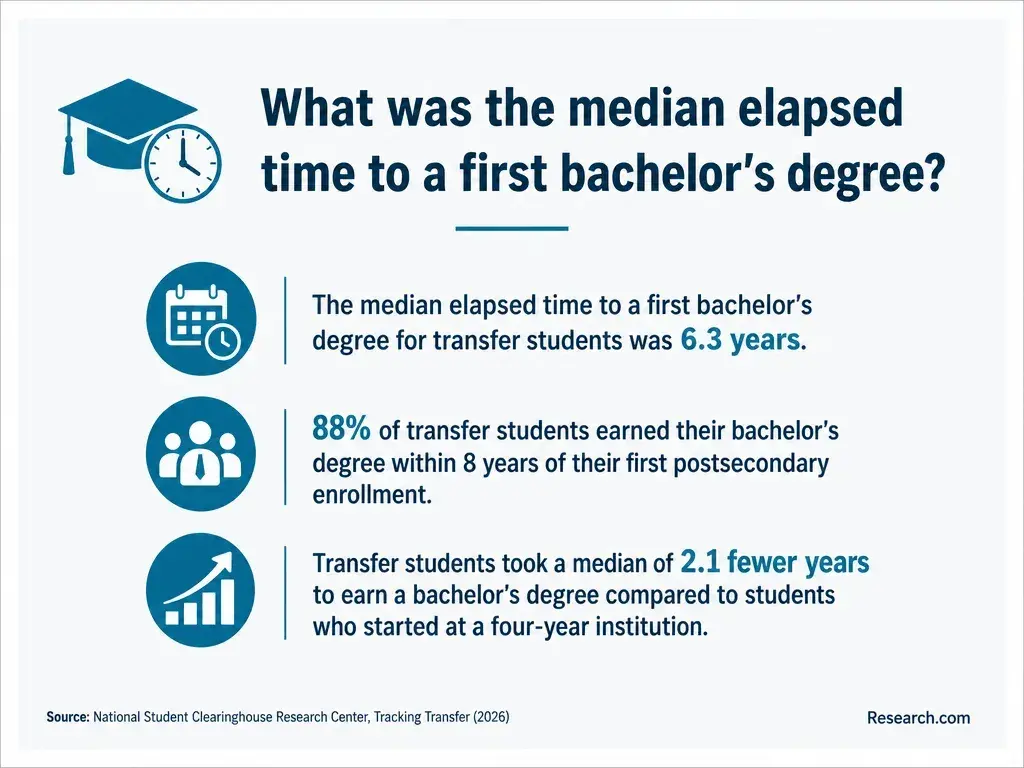
Your timeline depends chiefly on credits that apply to the degree, the number of courses you take each term, prerequisite sequences, and when required classes are available. Accepted credits that count only as electives may do little to shorten the business core. A manager studying part time may preserve income and clinic continuity while taking longer to graduate.
Ask an adviser for a term-by-term plan based on an official credit evaluation. Include courses that cannot be taken together, any capstone requirement, and a fallback if a required class is unavailable. Compare that plan - not a promotional completion claim - with the business administration education length and salary outlook guide. A faster schedule is worthwhile only if you can sustain it and its total cost fits your budget.
There is no useful single price without a school-specific degree audit. Your total depends on tuition for remaining courses, mandatory fees, books or software, any proctoring or travel costs, and the financing charges on loans. Time also has a cost if coursework reduces paid hours or requires you to change jobs.
Request a written estimate using your evaluated credits and intended pace. Compare the amount due each term with grants, scholarships, loans, and any employer reimbursement; reimbursement may arrive only after you pay and meet the employer's conditions. Ask your practice whether education assistance covers a general business degree and whether it requires a continued employment period.
The online project management undergraduate funding guide explains funding categories that can also prompt useful questions for a business-degree financial-aid office. Confirm your own program's aid eligibility and terms rather than assuming another degree's funding arrangements apply.
An experienced manager might seek broader responsibility within a veterinary group, such as regional operations support, training coordination, purchasing, or practice administration. A move outside veterinary care could involve administrative operations or project coordination, but employers may expect evidence that your skills transfer to their setting. Match the target job posting to budgets you have managed, processes you have improved, and staff responsibilities you can document.
The U.S. Bureau of Labor Statistics reports a May 2025 median annual wage of $114,130 and projected 2025-2035 employment growth of 5% for administrative services managers. This is a broad occupation, not a wage report for veterinary practice managers, and its median includes experienced workers. Use local veterinary job postings and employer pay ranges - not that median alone - to judge whether a degree could support your next move.
If your goal is a move beyond clinic operations, fast-track bachelor's degree options can provide a wider set of programs to compare. Evaluate them against the actual responsibilities of the role you want rather than assuming any bachelor's degree leads directly to management.
What certifications support veterinary practice management careers?
The Certified Veterinary Practice Manager (CVPM) designation is a veterinary-specific credential administered by the Veterinary Hospital Managers Association. It is distinct from a bachelor's degree: candidates must check the association's current eligibility, examination, and maintenance requirements directly. A general business degree does not automatically confer the designation or satisfy every requirement.
If you need to demonstrate veterinary-specific management knowledge, compare the CVPM path and targeted professional development with the coursework, time, and cost of a degree. If the jobs you want explicitly require a bachelor's degree, certification alone may not meet that requirement. Managers who decide they need both should sequence them around clinic workload and available employer support, rather than pursuing both at once by default.
You can explore fast-track online business programs if a bachelor's requirement makes the degree route necessary. Check that an accelerated schedule leaves enough time for your existing responsibilities and any separate certification preparation.
Other Things You Should Know About Business Administration
Diploma wording is set by the institution. Ask the registrar for a sample or written policy rather than assuming the delivery format will - or will not - appear.
Ask the school before moving. Its authorization to enroll online students and provide any required activities may differ by state.
Do not assume they will. Check the credential administrator's current continuing-education rules and obtain any needed approval before relying on a course for credit.
Ownership and professional-control rules vary by state. Review the applicable veterinary board's rules and obtain qualified legal advice before using a business degree as the basis for an ownership plan.
- Understanding competency development of the management workforce in veterinary clinical practice: A scoping review - PMC https://pmc.ncbi.nlm.nih.gov/articles/PMC12089072/
- Accreditation in the U.S. | ed.gov http://www.ed.gov/laws-and-policy/higher-education-laws-and-policy/college-accreditation/accreditation-in-the-us
- Veterinary Practice Management for Organizations | pennfoster.edu https://www.pennfoster.edu/programs/veterinary/veterinary-practice-management-certificate/for-organizations
- Online Bachelor of Science Degree in Business Administration | Purdue Global https://www.purdueglobal.edu/degree-programs/business/bachelor-business-administration/
- MBA in Healthcare Management vs. Administration | EWU https://online.ewu.edu/degrees/business/mba/healthcare-administration/management-vs-administration/
- What Are the Pros and Cons of Online Vet Tech School? | Purdue University College of Veterinary Medicine https://vet.purdue.edu/vettech/articles/what-are-the-pros-and-cons-of-online-vet-tech-school.php
- Online Degrees That Pay Well: Compare Career Paths | American National University https://an.edu/online-degrees-that-pay-well-career-paths/
- Credit for Prior Learning, Credit by Examination, and Transfer Credit | University of Vermont Catalogue https://catalogue.uvm.edu/graduate/academicenrollment/transfercredit/
- Transfer credit policies - Office of Admissions https://admit.washington.edu/apply/transfer/policies/
- Healthcare Management vs. Healthcare Administration | snhu.edu https://www.snhu.edu/about-us/newsroom/health/healthcare-management-vs-healthcare-administration


