
2027 Paying for an Online BS in Business Administration: An Employee Assistance Education Grant
Audited and Verified:
Our Editorial and Data Verification Process
Research.com uses government datasets, official education statistics and primary institutional information to support its career and degree guides. Our review process checks factual accuracy, occupational definitions, source dates and the requirements associated with the credentials discussed.
How This Article Was Fact-Checked
Our editorial team verifies salary estimates, employment projections, education requirements and program information against original data providers and official organizations. Salary figures are checked against the relevant occupational definitions and reporting periods. Information about licensure, accreditation and required in-person training is reviewed separately.
Fact-checked and verified on:

Co-Founder and Chief Data Scientist
An employer's education grant can make an online BS in Business Administration more affordable, but the advertised benefit may not cover every course - or arrive before tuition is due. For employees considering degree completion, the decision depends on eligibility rules, remaining credits, payment timing, and whether the degree supports a realistic next career step. This guide explains how to compare an employer award with federal aid and other funding, estimate your own completion cost, and check the program and workplace policies that could change the value of the benefit.
Key Things You Should Know
- An employee education grant is an employer-defined benefit, not a universal award: confirm eligible schools and majors, annual limits, grade rules, payment timing, and any repayment obligation.
- Under federal tax rules, up to $5,250 of qualifying employer educational assistance can generally be excluded from an employee's income per calendar year; confirm the applicable tax-year rules and your plan's treatment.
- Compare the cost of remaining required credits, not the advertised full-degree price, and account for fees and any tuition you must pay before reimbursement.
What Is an Employee Assistance Education Grant for an Online Business Degree?
An employee assistance education grant is money an employer makes available for eligible education expenses. Employers use different names - education grant, tuition assistance, tuition reimbursement, or scholarship - and the name alone does not tell you whether payment goes to the school, comes to you after grades are posted, or must be repaid if you leave your job.
Ask human resources for the written plan and identify who administers it. A grant may be restricted to approved schools, job-related study, particular degree levels, or a fixed benefit period. It may also cover tuition but exclude books, technology fees, and previously attempted courses. An employer award is separate from federal student aid; for a comparison of aid types in another undergraduate business-related field, see this guide to federal aid for undergraduate project management study.
The IRS generally permits an exclusion of up to $5,250 per calendar year for qualifying assistance under an employer educational assistance program. That is a tax-rule limit for the exclusion, not a promise that your employer offers that amount or that every payment qualifies. Check the plan and current IRS guidance, particularly if the employer offers more than the exclusion limit.
How Can Employees Pay for an Online BS in Business Administration?
Employees can combine an employer benefit with personal savings, eligible scholarships, federal grants, and federal loans when the school and student qualify. The important distinction is between net cost and cash needed at registration: reimbursement may lower your eventual cost while leaving you responsible for the initial bill.
Use this sequence before accepting an offer of admission:
- Request a written evaluation showing which prior credits satisfy general education, business-core, elective, and residency requirements.
- Get the school's itemized estimate for the courses still required, including mandatory fees and materials.
- Obtain written employer confirmation of the program's eligibility, payment process, benefit limits, and any service or repayment condition.
- Submit the FAFSA if you may qualify for federal aid, then tell the financial-aid office about employer funding so it can explain how awards interact.
- Build a payment plan around actual tuition deadlines and reimbursement dates; borrow only after comparing the remaining gap and loan terms.
If your employer funds only certain job-related majors, compare the eligible degree's total price and curriculum rather than assuming a business administration award will be approved. For example, employees considering a narrower alternative can compare aid and tuition at online project management schools. Ask the financial-aid office whether outside awards change other aid or require reporting; do not assume every source can be stacked without adjustment.
How Much Does an Online BS in Business Administration Cost?
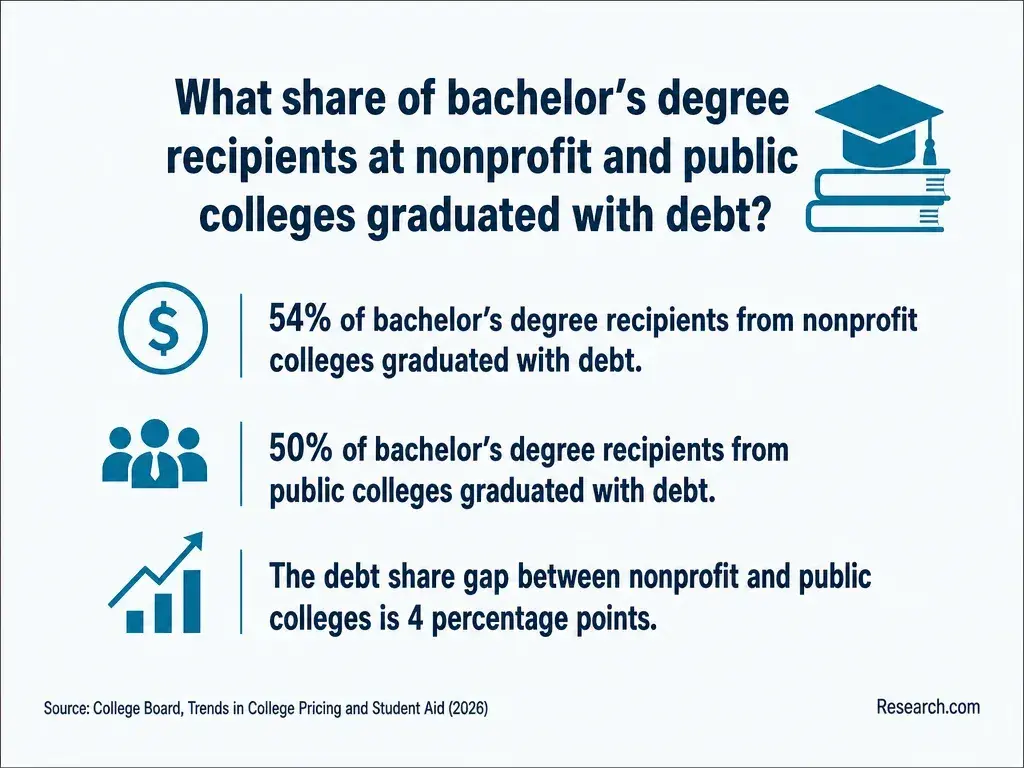
There is no reliable single price for an online BS in Business Administration. Schools may charge by credit, course, or term, while an employee's remaining cost depends on the official degree audit and the employer's actual award. A lower advertised tuition rate can still produce a higher completion bill if fewer transfer credits apply to required courses.
The following components show why two programs with similar tuition rates can have different costs for the same employee.
| Cost component | What can change the amount |
| Required tuition | Credits or terms remaining, course availability, and the school's charging method |
| Mandatory expenses | Technology, course, proctoring, books, software, or required travel charges |
| Employer payment | Approved expenses, benefit limits, reimbursement timing, and any repayment rule |
| Financing and time | Loan interest, additional terms, and work hours reduced to make room for study |
Compare each school's estimated completion cost after confirmed aid and its upfront payment requirement. Do not subtract a possible grant or unapproved transfer credit as though it were guaranteed. Lists of value-focused online business college choices can help identify schools to investigate, but request a personalized audit and current fee schedule before deciding.
It can, but coverage depends on the employer's written policy - not simply on whether a college offers the BS online. Some plans accept accredited online study on the same terms as campus study; others limit schools, programs, costs, or enrollment status. Approval may be required before a course begins.
Check whether your plan recognizes the exact degree name and school, permits part-time enrollment, covers required general education as well as business courses, and pays for repeats or prerequisite work. Confirm minimum-grade rules, documentation deadlines, annual benefit periods, and what happens if you change jobs or take leave. If reimbursement follows course completion, ask the school about payment deadlines rather than assuming an employer approval letter will defer the bill.
When an employer will pay for a specialized program but not general business administration, compare what the covered option teaches and what you would still pay. Project management degree tuition comparisons may provide a starting point for that specific alternative; employer approval and the school's own charges remain decisive.
Start with the institution's accreditation by an accreditor recognized by the U.S. Department of Education. Confirm the school's current status and the accreditation applicable to the institution offering the degree. This matters for academic quality oversight and can affect federal aid eligibility and an employer's approved-school rules; accreditation alone does not guarantee that credits will transfer elsewhere.
Business-specific accreditation, such as AACSB, ACBSP, or IACBE, is a separate consideration. Verify the accreditor's actual scope and whether the online BS is included rather than assuming every business program at the school is covered. If your employer names an accreditation requirement, ask HR whether it means institutional accreditation, business accreditation, or both.
Online business degree rankings for US college applicants can help assemble a shortlist, but check accreditation status, program coverage, required courses, and total completion cost directly before committing.
A BS in Business Administration commonly combines general education with accounting, economics, finance, marketing, management, operations, quantitative reasoning, and business communication. The exact mix varies. Some schools offer formal concentrations; others offer electives without awarding a named concentration.
For an employee using a limited grant, curriculum fit has a financial consequence. Ask which prior courses fulfill the business core, whether a desired concentration adds credits, and whether required classes are offered during your employer's benefit period. A current workplace project may make a course more useful, but it counts as an internship or capstone only if the school approves it under its academic rules.
If your goal is specifically HR work, compare the BS curriculum with a guide to studying human resources before spending limited employer funds on a broad degree. Business coursework can support career development, but it does not itself award an HR certification or establish readiness for every HR role.
Completion time depends on applied transfer credits, prerequisite sequences, course availability, and how many classes you can manage alongside work. An online course may still have fixed deadlines, live meetings, group assignments, or proctored exams. A faster academic calendar is useful only if its workload fits your job and your employer will fund the resulting enrollment pattern.
Ask an adviser for a term-by-term plan based on your official evaluation, including when each required course runs. Then compare that plan with the employer's benefit renewal dates: accelerating study could concentrate tuition in a period with limited coverage, while slowing down could add fees or delay completion. Accelerated study schedules for business majors are worth exploring if you can sustain the workload, not as a substitute for a personalized graduation plan.
Requirements vary by institution and by whether you enter as a first-year, transfer, or returning student. Schools generally request evidence of prior education, such as a high school record or college transcripts; some business majors also have separate entry requirements or prerequisite courses. Admission does not establish how many credits will count toward graduation.
Before using an employer award for an application or first term, ask admissions and the transfer office for the required documents and a formal credit evaluation. Ask an academic adviser to distinguish accepted elective credit from courses that satisfy accounting, quantitative, general education, and residency requirements. That distinction matters more to completion cost than a preliminary estimate of credits accepted.
National rankings of fast-paced business bachelor's programs can identify options to investigate, but an advertised timeline may not apply to your transcript or course schedule.
The degree can support applications for roles in operations, sales support, procurement, marketing coordination, HR support, or project coordination. Your existing work history matters: an employee who has managed schedules or purchasing may be closer to an operations role than someone whose experience is unrelated. Graduation alone does not confer managerial authority or satisfy every specialist job requirement.
Before committing employer funds, examine postings for the role you want and compare their tasks with your experience. Look for gaps you can address through coursework and approved work projects - for example, spreadsheet analysis, budgeting, process documentation, or stakeholder communication. If the target is specifically supply chain work, tuition and time comparisons for supply chain students can help you assess whether a specialized degree offers better value than a general business BS.
How Much Can Business Administration Graduates Earn?
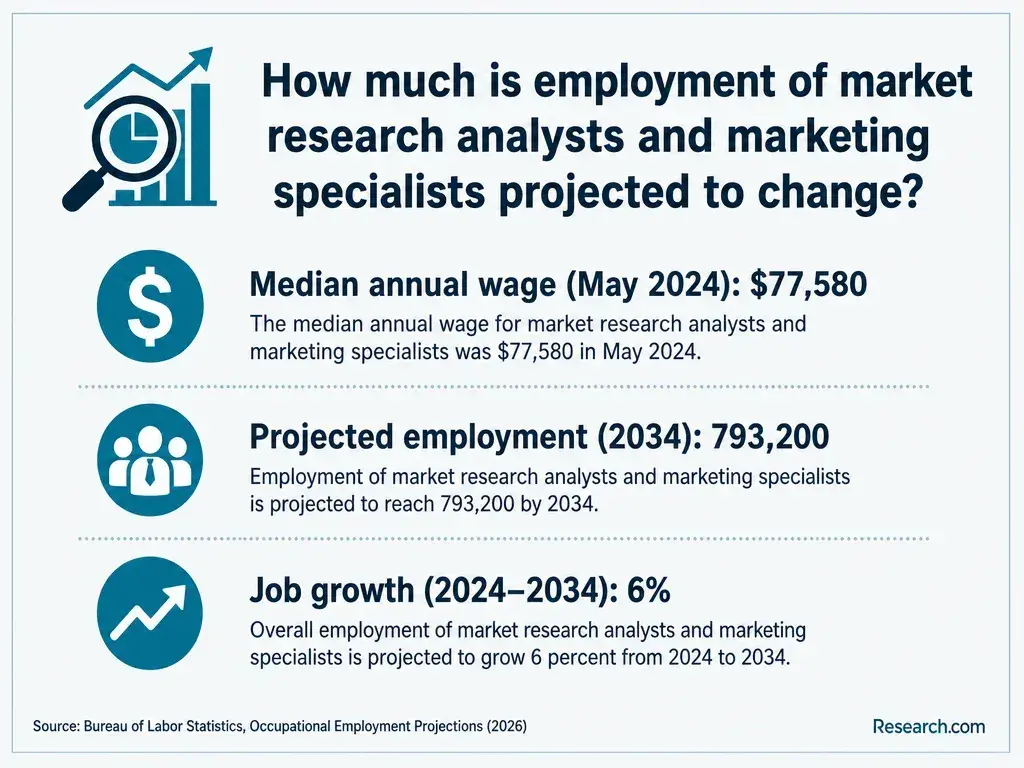
There is no single salary for BS in Business Administration graduates. Pay depends on occupation, experience, location, industry, and responsibilities - not the degree title alone. For context, the U.S. Bureau of Labor Statistics reports a May 2025 median annual wage of $75,940 for human resources specialists. That occupation-wide figure includes experienced workers; it is not an expected starting salary for a new graduate or a forecast of a degree's return.
Evaluate a possible payoff against a specific next role and your own costs: remaining tuition and fees, employer funding you are certain to receive, any borrowing, and work time you may give up. If your main objective is internal advancement rather than broad business preparation, undergraduate leadership programs with shorter timelines may be another option to compare. Neither route guarantees a promotion; your employer's requirements and evidence of workplace results matter.
Other Things You Should Know About Business Administration
Possibly, but check the plan before leaving. Future payments may stop, and a repayment clause may apply to benefits already paid. Ask for the applicable policy in writing.
Your employer may decline reimbursement or require repayment, while the school's refund and financial-aid rules may create a separate balance. Check both policies before the withdrawal deadline.
You generally cannot use the same expenses for both tax-free employer assistance and an education tax benefit. Eligible expenses you paid yourself may be treated differently; consult current IRS guidance or a qualified tax professional.
Yes, if your plan requires advance approval. Obtain confirmation for the school, degree, and intended courses before the term starts, and keep copies of approvals and receipts.
- Student Eligibility for Pell Grants | ed.gov https://fsapartners.ed.gov/knowledge-center/fsa-handbook/2024-2025/vol7/ch1-student-eligibility-pell-grants
- Employer-offered educational assistance programs can help pay for college | Internal Revenue Service https://www.irs.gov/newsroom/employer-offered-educational-assistance-programs-can-help-pay-for-college
- Understanding College Costs | studentaid.gov https://studentaid.gov/resources/prepare-for-college/students/choosing-schools/consider-costs
- Bachelor of Science in Business Administration Online | SDSU Global Campus https://globalcampus.sdsu.edu/program/business/bachelor-science-business-administration-online-degree-completion-program/
- Financial Aid - Online BA in Business Administration https://extension.fullerton.edu/onlinedegrees/baba/financial-aid.aspx
- Online Bachelor's Degree in Business Administration | Purdue Global https://www.purdueglobal.edu/degree-programs/business/bachelor-business-administration/
- Online Business Administration Degree (BS) | University of Florida Online https://ufonline.ufl.edu/degrees/undergraduate/business-administration-bs/


