2027 Can a BS in Business Administration Prepare You for a Sport Facility Business Manager Role? Skills and Entry Requirements
Audited and Verified:
Our Editorial and Data Verification Process
Research.com uses government datasets, official education statistics and primary institutional information to support its career and degree guides. Our review process checks factual accuracy, occupational definitions, source dates and the requirements associated with the credentials discussed.
How This Article Was Fact-Checked
Our editorial team verifies salary estimates, employment projections, education requirements and program information against original data providers and official organizations. Salary figures are checked against the relevant occupational definitions and reporting periods. Information about licensure, accreditation and required in-person training is reviewed separately.
Fact-checked and verified on:

Co-Founder and Chief Data Scientist
A sport facility business manager must keep a venue financially sound while helping it run reliably on event days. A BS in Business Administration can build the budgeting, staffing, marketing, and operations skills for that work, but employers may also expect hands-on facility experience.
If you are choosing a degree or planning a move from an entry-level venue job, this guide explains where business coursework helps, what it cannot replace, and how to assess a practical route into management.
Key Things You Should Know
- A BS in Business Administration can prepare you for the business side of sport facility management, but a degree alone does not establish readiness to supervise a venue.
- Budgeting, scheduling, customer service, vendor coordination, and event operations are more persuasive when you can show how you used them in a facility setting.
- The May 2025 median wage for administrative services managers was $114,130, and employment in that broader occupation is projected to grow 5% from 2025 to 2035; neither figure describes new sport facility graduates specifically.
What Does a Sport Facility Business Manager Do?
A sport facility business manager oversees the commercial and administrative work that helps an arena, stadium, recreation center, athletic complex, or similar venue operate. The exact title varies: one employer may combine business and building operations, while another assigns event production, maintenance, and sales to separate teams.
Typical responsibilities include preparing operating budgets, monitoring revenue and expenses, negotiating with vendors, scheduling staff and facility use, handling customer or tenant agreements, and reviewing attendance or utilization data. During events, the manager may coordinate with security, maintenance, concessions, and event staff. Safety procedures and technical work require appropriately trained personnel; a business manager should know who has authority to make and escalate those decisions rather than assume every task is theirs to perform.
Facility management also differs from managing a single tournament or construction project. If your interest is primarily in temporary projects rather than ongoing venue operations, you can compare affordable project management schools as a more focused education option.
Can a BS in Business Administration Lead to Sport Facility Management?
Yes. A BS in Business Administration is a plausible foundation because facilities need people who understand finance, personnel, contracts, customers, and operating processes. It is not a sport facility qualification by itself. A candidate who can connect business study to supervised venue work will usually have a clearer case than one whose experience is entirely classroom-based.
The best academic choice depends on the gap you need to close. This comparison separates broad business preparation from more specialized routes; actual curricula and employer preferences vary.
| Pathway | Best fit | Important limitation |
| BS in Business Administration | Someone seeking broad budgeting, management, marketing, and operations preparation | May offer little direct exposure to venue operations unless paired with relevant work or electives |
| Sport management bachelor's | Someone seeking sport-industry coursework and related experiential opportunities | Business depth and access to facility placements vary by program |
| Targeted training plus venue experience | An employee who already has substantial business education or relevant facility responsibility | May not satisfy employers that require a bachelor's degree |
A formal concentration can be useful if its courses and placements match the role, but an elective is not a separately awarded concentration. Compare the actual curriculum, remaining degree requirements, and opportunities to work with venues before paying for specialization. For a broad-business route, online business administration degrees at lower prices can be a starting point for comparing options - not evidence that a particular program offers sport facility training.

What Education and Experience Are Required for Sport Facility Managers?
There is no single degree or experience requirement for every US sport facility manager job. Employers set qualifications according to the venue's size, ownership, responsibilities, and level of authority. A bachelor's degree in business, sport management, hospitality, or a related field may be requested or preferred, while significant venue experience may be especially important for positions with staff, budgets, and event-day accountability.
For an early-career applicant, a realistic progression is relevant coursework alongside supervised work in event services, facility scheduling, recreation operations, or venue administration, followed by responsibility for a defined process or budget. Someone already coordinating staff or vendors should document the scope of that work rather than rely on a job title alone.
Admission to a business degree is a separate question from hiring. If you are entering or returning to college, check the school's mathematics, accounting, and transfer policies rather than assuming prior coursework meets its requirements. This guide to required credits before entering business administration study can help you frame questions for an admissions adviser; the institution makes the final determination.
The strongest skills are those that connect a business decision to a venue outcome. For example, filling unused court time may require demand analysis and marketing, while adding an event may require a staffing and cost assessment, not just an attractive revenue forecast.
Focus on evidence you could discuss in an interview: a budget you helped monitor, a schedule you improved, a vendor issue you resolved, or a customer-service process you documented. Useful capabilities include interpreting financial reports, using spreadsheets to track utilization and expenses, coordinating staff and contractors, communicating with tenants, and recognizing when safety or legal questions require a specialist. Use anonymized examples if workplace information is confidential.
Project management is valuable when a facility is installing equipment, changing a booking process, or preparing for an event. It is only part of the role, however. If your preferred work is project delivery rather than continuing venue oversight, low-cost project management schools and aid options may be more relevant to compare than a general business degree.
Look beyond the degree title to the courses and assignments you can actually take. Accounting and managerial finance help with operating budgets; operations and project management support scheduling and process design; marketing helps with rentals and customer demand; and management or human resources coursework addresses supervision and staffing. Business law can introduce contract concepts, but it does not replace legal advice.
Choose applied assignments that resemble facility decisions: compare the costs of two staffing schedules, build a hypothetical rental-pricing model with stated assumptions, or map a booking process. A classroom model is evidence of analysis, not a claim that you changed a real venue's results. If a course uses employer data, obtain the permissions your school and employer require.
Before selecting an operations or project-management elective, check its prerequisites, availability, and whether it counts toward your degree. Students considering a separate project management degree should also check how they can finish project management studies with transferred college credits; accepted credits do not necessarily fulfill major requirements.
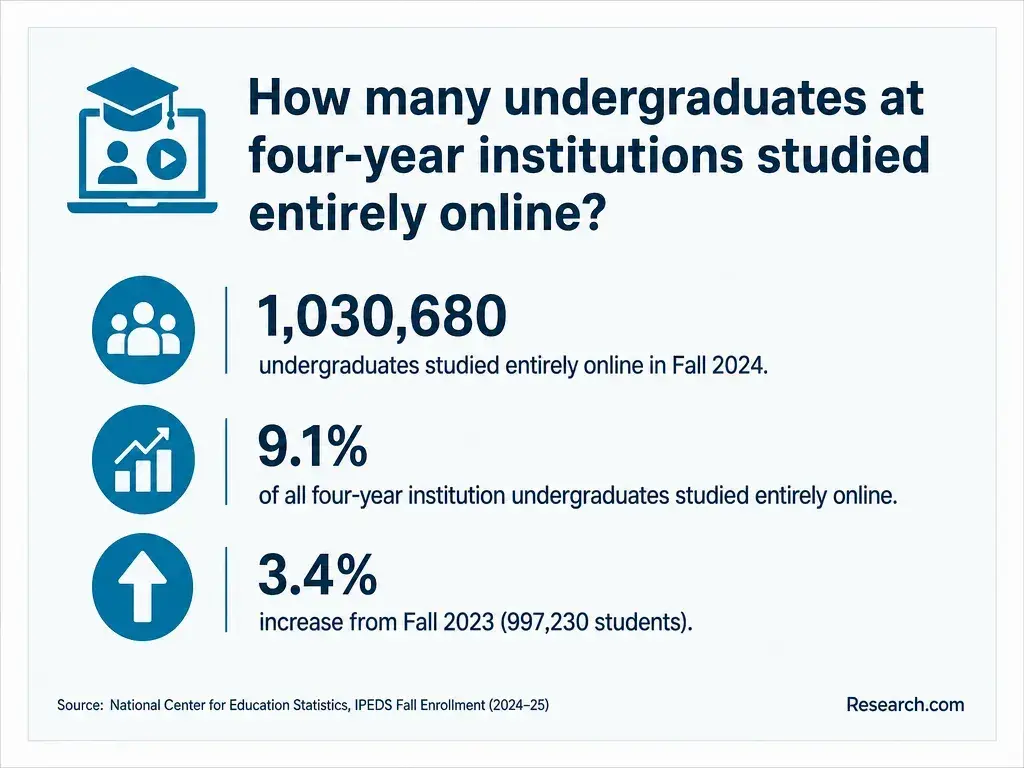
They can be, particularly if you can gain venue experience locally while studying. An online program can teach business concepts and assess projects, but online delivery does not supply access to live events, supervisors, or facility systems. It also does not guarantee a self-paced schedule.
Before enrolling, ask whether courses require live meetings, group work, proctored exams, internships, or campus visits, and whether required courses are offered when you need them. Ask a facility employer or volunteer coordinator about shifts that expose you to scheduling, event setup, customer service, or administrative work. Confirm whether the school would approve that work for academic credit before counting on it.
If application charges affect how many programs you can consider, online college options without an application fee may help narrow a search. Still verify institutional accreditation, the specific business degree's requirements, and opportunities for relevant applied work.
A bachelor's degree is commonly planned as four years of full-time undergraduate study, but your remaining time depends on accepted credits, the courses those credits satisfy, enrollment pace, and course availability. A returning student should request an official degree audit before relying on an advertised completion timeline.
Compare total remaining cost, not tuition alone: required courses, fees, books or software, travel for any in-person requirements, financing costs, and potential lost work hours all matter. Then weigh that cost against the experience you still need to gain. A lower-priced degree may be a good choice if it leaves room in your schedule and budget for venue work; a short program with no feasible practical component may be a weaker fit.
Use lower-priced college options for business majors to identify programs worth checking, then request each school's current charges and a credit evaluation. Do not assume a listed price is your final cost.
There is no universal US license to hold the title "sport facility business manager." Requirements can attach instead to the venue, employer, or particular duties. For example, staff assigned first aid, pool operations, food service, security, or technical building work may need training or credentials under applicable rules and employer policies. The manager must understand those boundaries without assuming a business degree authorizes specialized work.
Voluntary training in emergency response, facility operations, or project management may strengthen an application when it matches the job description. Before paying for a credential, check who issues it, whether the target employer recognizes it, and whether you meet its eligibility requirements. Keep optional certification expenses separate from degree tuition; financial aid planning for low-cost business administration degrees can help with the degree side, but aid eligibility for outside training must be checked separately.
Start with roles that let you observe how a venue makes money and delivers events. Facility scheduling assistant, event operations assistant, recreation center coordinator, membership or rental services representative, and administrative coordinator can each provide relevant exposure. Their value depends on the actual duties: a position involving booking records, vendor communication, or shift coordination may provide stronger management evidence than a more impressive title with narrow tasks.
As you gain experience, seek responsibility for a defined process and record what you did without disclosing confidential information. For example, explain the schedule you maintained, the type of budget you tracked, and who supervised the work. If a bachelor's requirement blocks advancement and you already have college credit, US fast-track undergraduate business degree options may be worth examining. Confirm how your credits apply and whether the pace leaves you able to keep building venue experience.
What Are Sport Facility Manager Salaries and Job Outlook?
The US Bureau of Labor Statistics does not provide a single national wage series for the job title "sport facility business manager." Administrative services managers are one relevant comparison for positions overseeing facilities or organizational services, but that occupation spans many industries and levels of responsibility. Its May 2025 median annual wage was $114,130. That is an occupation-wide midpoint, not an expected starting salary for a business graduate or a sport venue employee.
BLS projects 5% employment growth for administrative services managers from 2025 to 2035, compared with approximately 3.5% across all occupations. This suggests demand for the broader occupation, not a forecast of sport facility openings in your area. For a useful pay comparison, review local postings with similar venue size, supervisory duties, and budget authority. A business administration education length and salary outlook guide can add degree-planning context, but no degree-wide salary figure substitutes for the pay range of your target job.
Other Things You Should Know About Business Administration
No. Business management concerns the venue's finances, services, staff, and operations. Coaching focuses on athletes and athletic performance, though the two groups may coordinate facility use.
Possibly. Public school employers set their own qualifications and hiring procedures, which may include background checks. Review the specific posting rather than assuming private-venue requirements apply.
Authority depends on the venue's plans and applicable rules. Security, emergency responders, technical staff, and designated venue leaders may each have defined responsibilities. A business manager should know the escalation process.
Seek an event-day shift, facility tour, or informational conversation with a venue operator. Ask about evening and weekend work, routine administrative tasks, and how responsibilities change between event days.
- Manager of Sports Facilities Class Spec | State Universities Civil Service System https://www.sucss.illinois.gov/pages/classspec/ViewSpec.aspx
- Americans with Disabilities Act Title II Regulations | ADA.gov https://www.ada.gov/law-and-regs/regulations/title-ii-2010-regulations/
- What Is Sport Management? - Texas A&M | Kinesiology & Sport Management https://knsm.tamu.edu/what-is-sport-management/
- What is a business administration degree? | Northwest Media Center https://www.nwmissouri.edu/media/news/2025/07/what-is-a-business-administration-degree.htm
- Become a Sports Facility Manager With an MBA | STU https://online.stu.edu/degrees/business/mba/sports-administration/become-sports-facility-manager/
- Employment Guide for the Sports Industry Sport Facility Management | University of New Haven https://www.newhaven.edu/business/sports-industry-employment-guide/facility-management.php
- What Jobs Can You Get With a Business Degree? | snhu.edu https://www.snhu.edu/about-us/newsroom/business/what-jobs-can-you-get-with-a-business-degree
- What can you do with a sports management degree? | University of the Pacific https://www.pacific.edu/blog/2024/04/05/what-can-you-do-with-a-sports-management-degree/
- Facilities Management: Essential Skills for Anyone Managing the Built Environment - Center for Workforce Development https://www.missouriwestern.edu/workforce/facilities-management/
- What Can You Do With a Business Administration Degree? | American Military University https://www.amu.apus.edu/area-of-study/business-administration-and-management/resources/what-can-you-do-with-a-business-administration-degree-exploring-options/