2027 Should You Choose a BS in Business Administration or PMP for Your Next Career Step?
Audited and Verified:
Our Editorial and Data Verification Process
Research.com uses government datasets, official education statistics and primary institutional information to support its career and degree guides. Our review process checks factual accuracy, occupational definitions, source dates and the requirements associated with the credentials discussed.
How This Article Was Fact-Checked
Our editorial team verifies salary estimates, employment projections, education requirements and program information against original data providers and official organizations. Salary figures are checked against the relevant occupational definitions and reporting periods. Information about licensure, accreditation and required in-person training is reviewed separately.
Fact-checked and verified on:

Co-Founder and Chief Data Scientist
A business administration degree and Project Management Professional (PMP) certification can both support career advancement, but they solve different problems. If you are changing careers, finishing college, or already leading projects, choosing the wrong pathway could mean paying for preparation you do not need, or pursuing a credential you cannot yet earn.
This comparison explains what each option teaches, who qualifies, what it may cost, and how employers use it, so you can choose the next step that matches your experience and target role.
Key Things You Should Know
- Choose a BS in Business Administration if you need a bachelor's degree or broad preparation across business functions; choose PMP if you already have qualifying project leadership experience and want to validate it.
- PMP is not a shortcut around experience requirements. A business degree may support eligibility under PMI's degree-based route, but coursework alone does not substitute for leading projects.
- The U.S. median annual wage for project management specialists was $102,320 in May 2025, with 7% projected employment growth from 2025 to 2035. Those occupation-wide figures are not expected pay or job prospects for new degree holders or newly certified workers.
What is the difference between a BS in Business Administration and PMP certification?
A BS in Business Administration is an undergraduate degree covering multiple business functions. PMP is a professional certification awarded by the Project Management Institute (PMI) to applicants who meet its education, project experience, and examination requirements.
The degree develops broad preparation; the certification validates project-management knowledge alongside documented experience.
The distinction matters if a job posting requires a bachelor's degree: PMP does not replace one. Conversely, a business degree does not confer PMP status or demonstrate that its graduate has led projects. The comparison below shows what each credential signals to an employer:
| Decision factor | BS in Business Administration | PMP certification |
| Primary scope | Accounting, finance, marketing, operations, management, and other business subjects | Leading projects through approaches and practices assessed by PMI |
| Credential awarded by | A college or university | PMI |
| Experience needed before entry | Usually not professional project leadership experience | Documented qualifying project leadership experience |
| Best use | Meeting a degree requirement or building broad business knowledge | Demonstrating project-management capability after gaining experience |
A BS in Business Administration is also not interchangeable with a specialized degree. Someone targeting HR may benefit more from understanding human resources degree levels than from assuming a general business curriculum offers the same functional depth.
Which is better for your career: a business administration degree or PMP certification?
Start with the qualification missing from your target role. If you have substantial project responsibility, meet PMI's eligibility rules, and see PMP requested in relevant postings, certification is usually the more direct next step.
If employers require a bachelor's degree that you lack, or you want to move among business functions rather than specialize in project delivery, the BS is more useful.
For a career changer, an adjacent move is often easier than a wholesale switch. A customer-service supervisor who has coordinated system rollouts may be able to document project work and pursue project roles; someone with no project leadership should first seek coordinator responsibilities, supervised projects, or employer training. Neither credential alone makes a candidate ready to manage a large program or staff.
If your target is specifically procurement or logistics rather than cross-functional project delivery, compare the business degree with shorter online supply chain degree pathways and relevant work experience. A specialized route may address that skill gap more directly.
If you need both a degree and PMP, the choice is usually about sequence: finish the degree while gaining qualifying project experience, then apply for certification when eligible.
What are the education and experience requirements for PMP certification?
PMI's commonly published eligibility routes distinguish applicants with a four-year degree from those with a secondary-school diploma or associate degree. The degree-based route calls for 36 months of project leadership experience; the secondary-school or associate-degree route calls for 60 months.
Both call for 35 hours of project management education or training, unless an accepted alternative applies. PMI also has a distinct route for graduates of qualifying accredited project management programs. Check PMI's rules in force when you apply, including its definitions, experience window, and documentation requirements.
The degree can be in business administration or another field: PMI does not require a BS in Business Administration. More importantly, experience means leading or directing project work, not simply holding a job with "project" in its title.
Document each project's dates, objective, your responsibilities, and a person who can verify the work; overlapping projects do not create extra months of experience. PMI may audit an application.
If you do not yet have a bachelor's degree, review the college coursework required for business administration entry before treating the degree-based PMP route as your immediate plan. You may be able to qualify through PMI's other education route, but it carries a different experience requirement.
A typical BS in Business Administration combines general education with accounting, finance, economics, marketing, operations, organizational behavior, quantitative reasoning, and business communication.
Some programs offer electives or formal concentrations in areas such as management or analytics. A project-management course may teach schedules, budgets, stakeholder communication, and risk analysis, but it neither awards PMP certification nor replaces PMI's experience requirement.
For this decision, examine the incremental value beyond PMP preparation. Financial statements and operations coursework can help a project professional assess trade-offs across a business; internships, simulations, or a capstone can provide work samples for someone seeking an initial business role.
Check whether a desired project course is required, merely an elective, or available in your enrollment format.
If your intended work is chiefly employee relations or recruiting, compare the general business curriculum with human resources degree options for college transfers. Transferability and a named concentration should be confirmed through the school's evaluation and catalog, not inferred from a course list.
A bachelor's degree is commonly structured as a multi-year program, but a returning student's actual timeline depends on credits applied to the degree, required course sequence, and enrollment pace.
PMP preparation and an exam application can take far less calendar time once you already qualify; accumulating the required project experience may take years. That difference makes a simple "months to credential" comparison misleading.
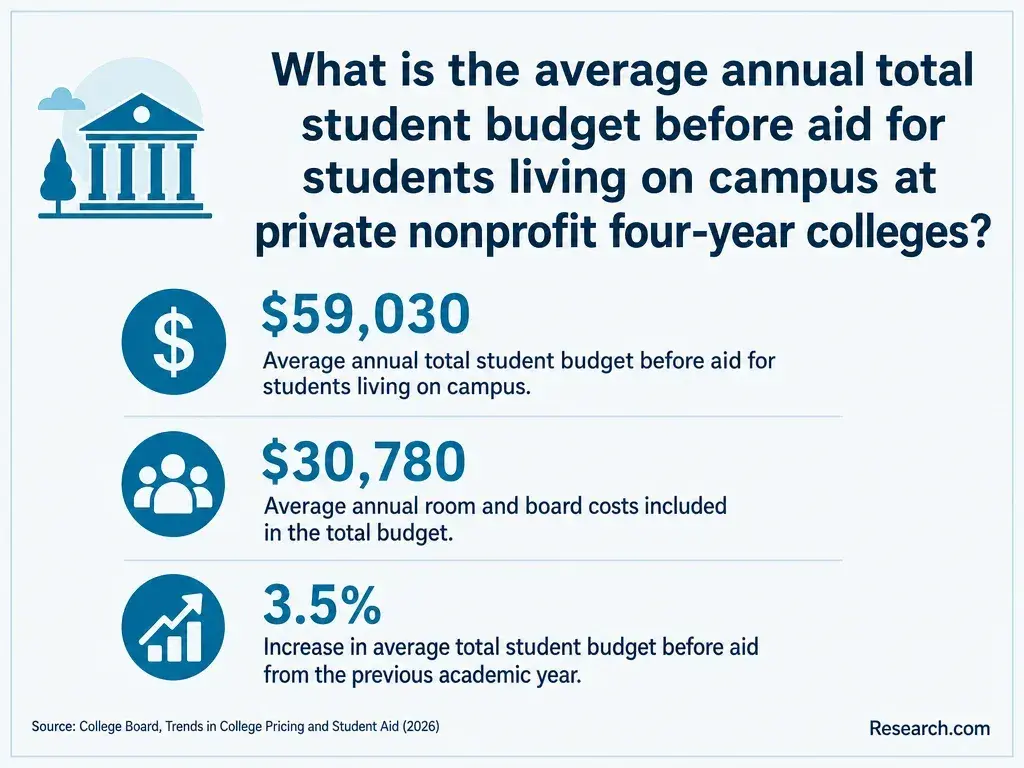
Compare a school's remaining tuition and mandatory fees with PMI's current exam charge, any training-provider fee, study materials, and future certification-maintenance costs. PMI fees and institutional prices can change, so request current charges rather than relying on a generic total.
For the degree, obtain an official credit evaluation and include books, technology, possible travel, and any wages lost by reducing work hours. For PMP, ask whether your employer will pay for training and the exam, and whether reimbursement depends on passing.
Financial aid for a degree is a separate question from funding a certification exam. Resources on tuition and aid questions for project management students can help with an academic alternative, but do not assume degree-based aid pays for stand-alone PMP preparation.
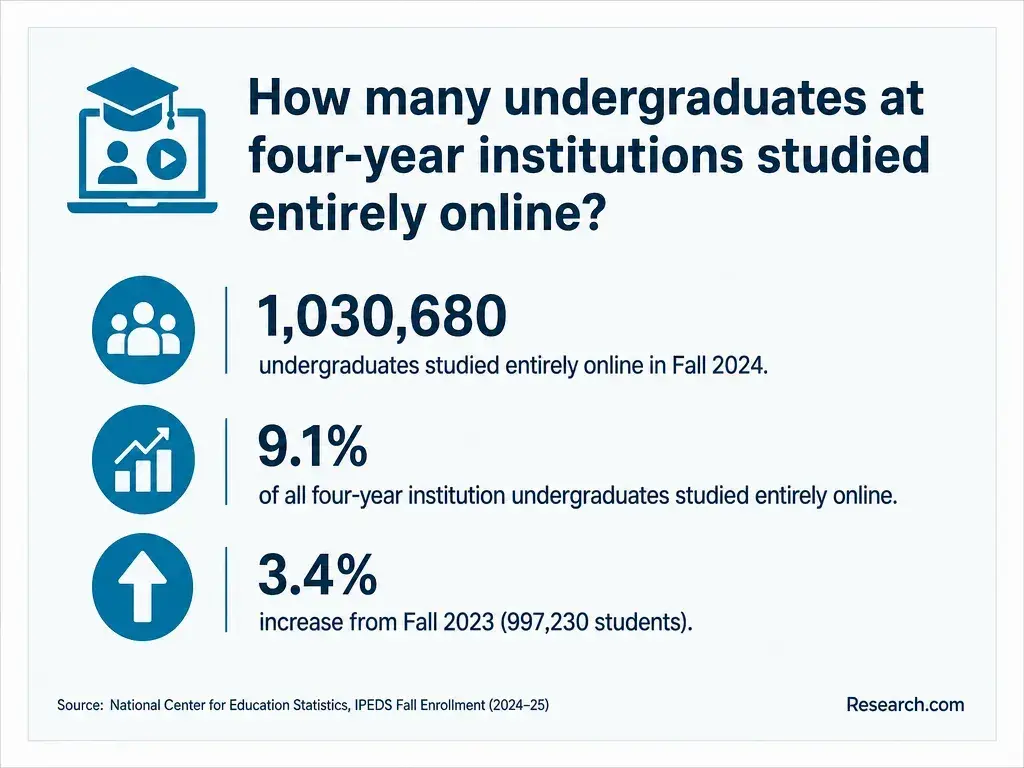
Yes. Some accredited institutions offer an online BS in Business Administration, while PMP training is also available remotely through various providers.
"Online" does not necessarily mean self-paced: a degree may have scheduled meetings, group assignments, proctored exams, fixed deadlines, or an internship or capstone requirement. An online student should confirm whether every required course is offered in a workable sequence.
If you work full time, compare the weekly coursework and collaborative obligations with the time you could devote to PMP study and, crucially, to gaining qualifying experience at work.
An accelerated degree compresses the calendar, not necessarily the workload. When you compare ranked accelerated undergraduate business schools, verify your remaining requirements and the actual schedule before assuming a published completion time applies to you.
Requirements vary by institution and by whether you apply as a first-year, transfer, returning, or second-degree student. Schools generally review prior academic records; some business majors have additional entry standards or prerequisite courses in subjects such as mathematics, accounting, or economics.
An applicant's professional experience may strengthen their preparation without automatically awarding academic credit.
Before applying, request the current admissions requirements and ask how prior courses would apply to general education, the business core, electives, and residency rules.
An accepted transfer credit does not necessarily replace a required business course. If application charges matter while comparing schools, consider no-fee college applications, but evaluate academic fit and total completion cost separately.
A business administration graduate might pursue operations coordinator, administrative specialist, sales-support, or project coordinator roles, depending on coursework and experience. A graduate with relevant analytical work may also pursue function-specific openings, but a general degree does not establish readiness for every finance, HR, or management job.
PMP is more directly relevant to project-management specialist and project lead roles; employers will still assess industry knowledge, delivery results, and the scale of projects handled.
Compare job descriptions by tasks, not titles. If they call for tracking schedules, coordinating stakeholders, and reporting risks, seek evidence from projects you have actually supported.
If they call for budgeting, supervising staff, or specialized systems, identify those gaps separately. A coordinator role can be a way to gain experience, but its duties count toward PMP eligibility only if they meet PMI's project leadership criteria.
If you are considering an academic project-management pathway instead of certification, explore scholarship search options for project management majors. Scholarships for degree students should not be treated as funding automatically available to PMP applicants.
There is no reliable degree-versus-PMP salary winner independent of occupation and experience. The U.S. Bureau of Labor Statistics reports a May 2025 median annual wage of $102,320 for project management specialists and projects 7% employment growth from 2025 to 2035.
Those figures describe the occupation as a whole, not PMP holders specifically, and not an offer to someone entering the field.
A BS in Business Administration leads toward multiple occupations rather than one measurable "business graduate" wage. For your decision, compare postings in your location that match your experience: note which require a bachelor's degree, request PMP, or accept equivalent experience.
Then weigh likely opportunities against your budget-friendly online business schools shortlist and the cost of any remaining credits. Do not calculate a personal payback period from an occupation-wide median.
How can you choose an accredited business program or reputable PMP training provider?
For a degree, verify the institution's accreditation through its accreditor and confirm that the specific BS program, delivery format, and degree requirements match what the school advertises. AACSB, ACBSP, or IACBE business accreditation, where applicable, has its own scope; it is not the same as institution-level accreditation. Ask for a written transfer evaluation, a sample course sequence, and the full cost of completion.
For PMP preparation, check PMI's current training and eligibility rules before paying a provider. Ask what instruction is documented, whether it meets the training requirement applicable to you, what study support is included, and whether exam fees are separate.
A provider's course-completion certificate is not PMP certification, and a promised pass or promotion is not evidence of quality.
If federal student aid is part of your degree plan, investigate FAFSA-accepting colleges for business administration students and confirm the particular program's aid eligibility with its financial-aid office. Accreditation, aid eligibility, and PMP training recognition answer different questions; verify each with the responsible organization.
Other Things You Should Know About Business Administration
PMP holders must meet PMI's continuing-certification requirements to maintain the credential. Check PMI's current renewal cycle, professional development requirements, and fees before applying.
PMI's Certified Associate in Project Management (CAPM) can be worth considering if you want a project credential but do not yet meet PMP's experience requirement. Check its separate eligibility rules and whether employers in your target roles value it.
Potentially. What matters is whether the work meets PMI's project experience rules and can be documented and verified - not whether you were paid. Confirm the current criteria before including it in an application.
Some colleges assess prior learning, but employment does not automatically convert to credits or satisfy the business major. Ask the school whether it offers an assessment process and how any awarded credits would apply to your degree audit.
- PMP Certification Requirements: A Complete Guide | uttyler https://online.uttyler.edu/degrees/business/mba/project-management/pmp-certification-requirements/
- PMP Certification: Requirements, Eligibility, and How to Get It | post.edu https://post.edu/blog/pmp-certification-what-is-it-and-how-do-you-get-it/
- What Jobs Can You Get With a Business Degree? | snhu.edu https://www.snhu.edu/about-us/newsroom/business/what-jobs-can-you-get-with-a-business-degree
- Can I get a PMP certification with a bachelor's degree? | Herzing University https://www.herzing.edu/faq/can-i-get-pmp-certification-bachelor-degree
- What Makes a Project Management Certificate Credible to Employers Today? - Northeastern Online https://online.northeastern.edu/resources/what-makes-a-project-management-certificate-credible-to-employers-today/
- PMP Exam Preparation | bhcc.edu https://www.bhcc.edu/pmp/
- Careers in Business Administration: Roles & Pay | PathWise https://pathwise.io/careers-in-business-administration/
- What Are The Requirements For A PMP Certification? | UMBC Training Centers https://www.umbctraining.com/what-are-the-requirements-for-a-pmp-certification/
- How PMP Certification Can Set You Apart in a Competitive Job Market? | vinsys.com https://www.vinsys.com/blog/how-pmp-certification-can-set-you-apart-in-a-competitive-job-market
- 21 Jobs You Can Get With a Business Management Degree | indeed.com https://www.indeed.com/career-advice/career-development/business-management-degree-jobs