2027 Should You Choose a BS in Business Administration or Google Data Analytics Certificate for Your Next Career Step?
Audited and Verified:
Our Editorial and Data Verification Process
Research.com uses government datasets, official education statistics and primary institutional information to support its career and degree guides. Our review process checks factual accuracy, occupational definitions, source dates and the requirements associated with the credentials discussed.
How This Article Was Fact-Checked
Our editorial team verifies salary estimates, employment projections, education requirements and program information against original data providers and official organizations. Salary figures are checked against the relevant occupational definitions and reporting periods. Information about licensure, accreditation and required in-person training is reviewed separately.
Fact-checked and verified on:

Co-Founder and Chief Data Scientist
A business degree and a data analytics certificate can both strengthen your résumé, but they solve different career problems. If you want to move into business operations, change fields, or qualify for jobs that require a bachelor's degree, that distinction matters more than the speed of either program.
If you already have relevant experience and need practical data skills, a shorter credential may be the better next step. This comparison explains what each path teaches, what it cannot promise, and how to check its value against the jobs you actually want.
Key Things You Should Know
- Choose a BS in Business Administration when your target jobs require a bachelor's degree or you need broad preparation in finance, operations, marketing, and management; the Google certificate does not replace a degree requirement.
- Choose the Google Data Analytics Certificate when your immediate gap is hands-on analysis and you can pair it with relevant experience or projects; completing it alone does not establish job readiness.
- For context, the U.S. median annual wage for market research analysts was $78,760 in May 2025, with 7% projected employment growth from 2025 to 2035. That occupation-wide figure is not an expected starting salary for either credential.
What Is the Difference Between a BS in Business Administration and a Google Data Analytics Certificate?
A BS in Business Administration is an undergraduate academic degree awarded by a college or university. The Google Data Analytics Certificate is a professional certificate earned through a training program, not a bachelor's degree or a professional license. Their coursework overlaps around data-informed decisions, but they differ in scope and the qualifications they can satisfy.
The comparison below focuses on what an employer or student can reasonably infer from each credential - not on a promise of employment.
| Decision factor | BS in Business Administration | Google Data Analytics Certificate |
| Primary purpose | Broad preparation across business functions | Focused introduction to a data analysis workflow |
| Credential | College-awarded bachelor's degree | Non-degree professional certificate |
| Typical evidence of skill | Coursework, and potentially internships or an approved capstone | Hands-on exercises and a shareable case study or project |
| Main limitation | Does not, by itself, prove advanced analytics or management experience | Does not satisfy a bachelor's-degree requirement |
A BS may be a better platform for several possible business careers, while the certificate tests your interest in analytics with a narrower commitment. Neither label tells you enough about a particular school: when evaluating degrees, compare ranked online business schools in America alongside their actual curricula, costs, and student support.
Which Career Path Offers Better Salary and Job Opportunities?
Neither credential has a single salary. Employers pay for a particular role, location, industry, and level of responsibility - not simply for completing a program. A business degree can open consideration for more bachelor's-required positions; the certificate can strengthen applications where analytical work is central, especially when you can show relevant experience.
The U.S. Bureau of Labor Statistics reports a May 2025 median annual wage of $78,760 for market research analysts and projects 7% employment growth from 2025 to 2035. These analysts study customers and markets, so the occupation is relevant to business-focused analytics. The median covers workers at different experience levels and does not show what a new certificate holder or graduate will earn.
Management analyst roles illustrate a different boundary: they involve evaluating organizational performance and often call for a bachelor's degree plus related work experience. If you are considering an HR route instead of analytics, investigate the distinct duties and qualifications involved; HR education costs and career planning can help frame that separate decision. Compare local postings for your target role before treating any national salary as a personal forecast.
Should You Choose a Degree or Certificate for Your Career Goals?
Start with your current qualifications and a short list of jobs you would apply for next. The deciding issue is whether you lack a required degree, a demonstrable technical skill, relevant experience, or some combination.
Choose the BS if bachelor's-degree requirements regularly block your applications or you want structured preparation across business functions. For a career changer without a prior degree, it may provide a broader foundation than analytics training alone. Ask whether the program offers an analytics concentration or electives if data work is your goal; an elective is not automatically a formal concentration.
Choose the certificate first if you already meet your target jobs' education requirements and need to build foundational skills in cleaning, analyzing, and presenting data. It can also be a lower-commitment way to test whether you enjoy the work before pursuing a degree. Pair it with a relevant, clearly explained project rather than relying on the credential's name.
Choose a more specialized path if the jobs consistently call for deeper preparation in a specific function. For example, someone targeting procurement or logistics should compare business administration with shorter online supply chain degree pathways, not assume a general degree or introductory analytics certificate is the closest fit.
A business administration bachelor's typically combines general education with accounting, finance, economics, marketing, operations, management, and quantitative coursework. Students may practice interpreting financial statements, evaluating costs, communicating recommendations, and considering legal or ethical constraints. Course depth varies by school: introductory statistics and spreadsheets are not the same as advanced database or statistical training.
Look beyond course titles. An analytics elective may teach business reporting, while a supervised internship or approved capstone may let you apply concepts to a defined problem. Verify the assignment, available software, supervision, and data-use rules before assuming it will produce a portfolio piece. If your goal is coordinating projects rather than specializing in analytics, compare how schools count previous credits; guidance on applying previous coursework to a project management degree offers a useful contrast with a general business curriculum. Only the receiving school can determine which credits satisfy its requirements.
The Google Data Analytics Certificate introduces a workflow for asking analytical questions, preparing and cleaning data, analyzing it, and presenting findings. Its training includes spreadsheets, SQL, visualization, and introductory statistical thinking; check the current syllabus for the tools used in the version you enroll in. A completed exercise can show how you worked, but it is not evidence that you have managed confidential employer data or delivered a verified business result.
For a useful portfolio sample, explain the question, data source, cleaning choices, limitations, and recommendation. Use public or authorized data, and distinguish an observed pattern from a causal claim. If you want to apply analysis primarily to project coordination, compare this focused training with degree coursework and federal aid for undergraduate project management study; similar skills do not make a standalone certificate eligible for the same aid as an eligible degree program.
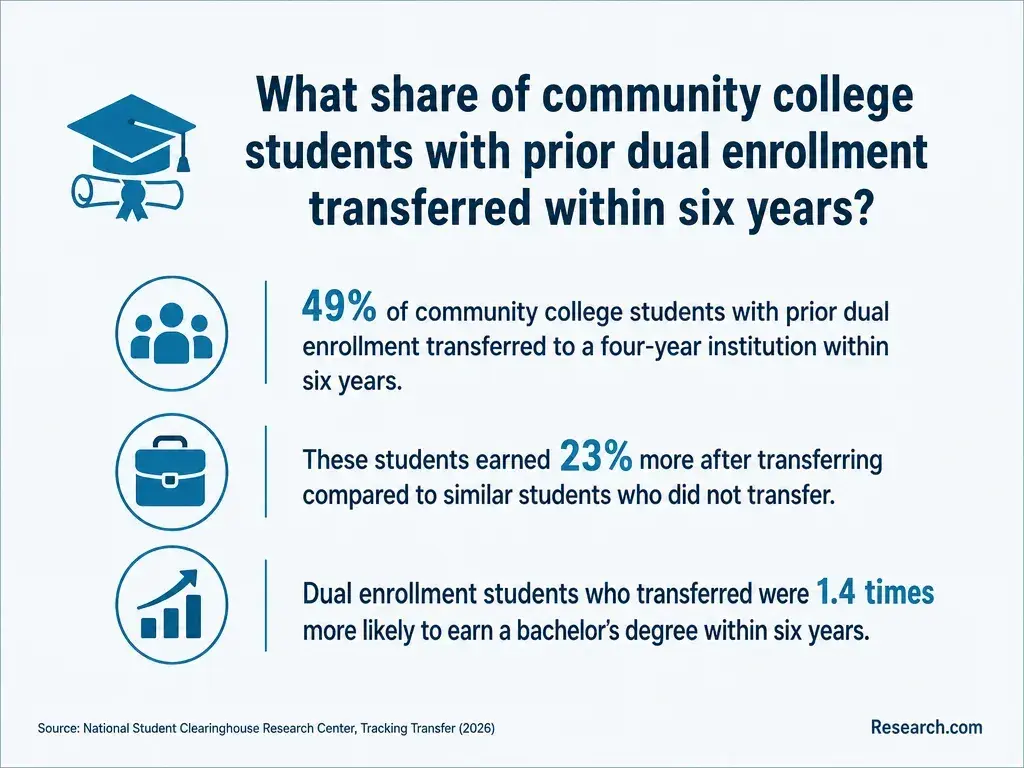
A bachelor's usually requires a multi-year course of study if you start without college credit. Accepted transfer credits may shorten the path, but only an official evaluation can show which credits apply to general education, the business major, and residency requirements. The Google certificate is designed as a shorter, self-paced course of study; completion time depends on your weekly hours and familiarity with the material.
Compare the full cost to reach your goal, not just the advertised tuition or subscription rate. The two paths have different charges to verify:
- BS in Business Administration: Request an estimate covering remaining tuition, required fees, books or software, and any travel or lost work time. Check grant and employer-benefit eligibility separately.
- Google Data Analytics Certificate: Check the current subscription price, whether any trial or aid applies, and how additional months affect the total. Budget time for independent practice and job-search projects.
Published prices change, so a universal cost comparison would be misleading. If you need a bachelor's, compare lower-cost business degree options using your own remaining-credit evaluation and expected net cost. A cheaper certificate is not a bargain if the jobs you want still require a degree.
The better format is the one in which you can finish the required work and build credible evidence of skill. The Google certificate is online. Business bachelor's programs may be online, on campus, or hybrid, with substantial differences in deadlines, group assignments, presentations, exams, and access to internships or career services.
For a working student, "online" does not necessarily mean self-paced. Ask for a sample course schedule and confirm live attendance, proctoring, group-meeting expectations, and any campus visits. Campus study may offer easier access to in-person recruiting; an online program may better accommodate a job if its actual schedule fits. Business degrees through accelerated online learning are another option, but a shorter calendar can require more weekly study time rather than less work overall.
For a BS, verify that the awarding institution holds recognized institutional accreditation and that the status covers your enrollment. Some business schools also hold AACSB, ACBSP, or IACBE accreditation; check the accreditor's directory and the exact school or program covered rather than assuming every business offering is included. Accreditation alone does not establish job placement or a particular curriculum's quality.
The Google certificate is a non-degree credential, so do not assess it as though it were an accredited university degree. Instead, inspect its current syllabus and compare its assignments with job postings and tools you would use. If college credit or financial aid matters, obtain written confirmation from the relevant institution: a certificate of completion does not automatically transfer as degree credit. Researching accredited online business administration study with aid eligibility is a starting point, not a substitute for checking the school's current accreditation and your own aid eligibility.
The Google certificate is intended to be accessible without a prior degree or analytics experience. Check its current enrollment terms, technology needs, and payment arrangement before signing up. No admissions process means you can start learning sooner; it does not remove employers' qualification requirements.
A BS applicant generally must meet the university's undergraduate admission rules and may face separate requirements for entering the business major. Schools can differ on prior coursework, quantitative prerequisites, transfer limits, and application documents. If you have college credit, request an official degree audit: accepted electives are not necessarily satisfied accounting, statistics, or business-core requirements. Students considering an HR-specific degree can compare HR bachelor's completion with transferred coursework, but the receiving institution makes the final credit decision.
Which Jobs Can You Get With a Business Degree or Data Certificate?
Think in terms of roles you can compete for, not jobs a credential automatically grants. A business graduate with relevant experience may seek operations coordinator, marketing coordinator, procurement assistant, or business-support roles. Someone with the Google certificate, strong work samples, and suitable prior experience may pursue entry-level reporting or analyst-support work. Job titles vary, and many analyst postings ask for a bachelor's degree or more technical depth than the certificate alone provides.
Read several postings and match each recurring task to evidence you can show: a spreadsheet model, a documented SQL query, a presentation, customer research, or experience improving a process. For supply chain work, distinguish an assistant or coordinator opening from a specialist position. If that function is your clear destination, comparing accelerated supply chain management bachelor's schools may be more useful than choosing between two general-purpose options.
The practical next step is to identify the requirement you cannot yet demonstrate. Choose the BS if it is an applicable bachelor's degree and broad business preparation; choose the certificate if it is foundational data practice. If postings demand both a degree and analytical evidence, the paths can complement each other without either replacing relevant experience.
Other Things You Should Know About Business Administration
You can list it under certificates or professional development on a résumé or professional profile. Do not present it as a degree, license, or professional designation.
Ask whether its education benefit covers undergraduate tuition, non-degree subscriptions, or both. Confirm approval timing, grade rules, reimbursement limits, and any repayment obligation before enrolling.
No. A degree can help you study budgeting, marketing, and operations, but starting a business does not generally require a business administration degree. Check any licenses required for the specific activity and location.
Use a public dataset or a clearly labeled hypothetical scenario. Document your methods and limitations, and obtain permission before sharing any employer-owned material.
- Basic Skills Requirement (CL-667) | Commission https://www.ctc.ca.gov/credentials/leaflets/cl-667/
- School-Determined Requirements | 2024-2025 Federal Student Aid Handbook https://fsapartners.ed.gov/knowledge-center/fsa-handbook/2024-2025/vol1/ch1-school-determined-requirements
- Annual Earnings by Educational Attainment - COE https://nces.ed.gov/programs/coe/indicator/cba/annual-earnings
- TEN_25-19.pdf | dol.gov https://www.dol.gov/node/161262
- What Is the Best Degree for a Data Analyst Career? | About the University of Cincinnati https://www.uc.edu/blog/what-is-the-best-degree-for-a-data-analyst-career.html
- Degree vs. Certificate: How It Impacts Your Career | University of San Diego https://pce.sandiego.edu/certificate-vs-degree/
- How Do Transfer Credits Work When You Go Back to School? | Whitworth Online https://online.whitworth.edu/news-articles/how-do-transfer-credits-work-when-you-go-back-to-school/
- How Transfer Credits Work | Lackawanna College https://www.lackawanna.edu/college-transfer-credits-guide/
- Best Data Analytics Courses: How to Choose the Right Program | TechGuide https://techguide.org/courses/data-analytics/
- Google Data Analytics Professional Certificate | Coursera https://www.coursera.org/professional-certificates/google-data-analytics