2027 Should You Choose a BS in Business Administration or CompTIA A+ for Your Next Career Step?
Audited and Verified:
Our Editorial and Data Verification Process
Research.com uses government datasets, official education statistics and primary institutional information to support its career and degree guides. Our review process checks factual accuracy, occupational definitions, source dates and the requirements associated with the credentials discussed.
How This Article Was Fact-Checked
Our editorial team verifies salary estimates, employment projections, education requirements and program information against original data providers and official organizations. Salary figures are checked against the relevant occupational definitions and reporting periods. Information about licensure, accreditation and required in-person training is reviewed separately.
Fact-checked and verified on:

Co-Founder and Chief Data Scientist
A business administration degree and CompTIA A+ can both help you change careers, but they prepare you for different work. The choice matters if you need a faster route into paid employment, a bachelor's degree for a target role, or skills your current experience does not demonstrate.
This comparison is for US career changers and early-career workers weighing business roles against IT support. It explains what each credential teaches, what it costs in time and money, and how to test which path fits the jobs you actually want.
Key Things You Should Know
- Choose CompTIA A+ if your immediate target is entry-level IT support and you want to demonstrate troubleshooting skills without first completing a bachelor's degree; certification alone does not secure a job.
- Choose a BS in Business Administration if your target roles call for a bachelor's degree and broad preparation in areas such as operations, finance, and organizational decision-making; it is not a substitute for technical IT training.
- Compare specific jobs, not credential-wide salary claims. The US Bureau of Labor Statistics projects 6% employment growth for human resources specialists from 2025 to 2035, but that occupation is only one possible business path - not an outcome promised to business graduates.
What is the difference between a BS in Business Administration and CompTIA A+?
A BS in Business Administration is an undergraduate academic degree. It combines general education with business subjects and may offer an official concentration, depending on the school. CompTIA A+ is an industry certification earned by passing its required exams. It focuses on foundational skills used to support computers, devices, software, and users. Neither credential replaces the other.
The distinction is most useful when you name the work you want to do. The table compares what each pathway is designed to establish - not what every employer will require.
| Decision factor | BS in Business Administration | CompTIA A+ |
| Primary focus | Business functions and organizational decisions | Foundational IT support and troubleshooting |
| Credential awarded | Bachelor's degree from a college or university | Certification from CompTIA |
| Typical evidence of ability | Coursework, projects, relevant work, and possibly an internship or capstone | Passed exams, ideally supported by hands-on practice |
| Main limitation | Does not establish hands-on IT support competence | Does not satisfy a bachelor's-degree requirement |
Prior college credit can shorten a degree path, but only an official evaluation can show what remains. If your goal is specifically people or operations leadership rather than broad business study, explore shorter organizational leadership bachelor's programs as another degree option; compare their actual curricula and transfer policies before assuming they are faster for you.
Which career path offers better job opportunities: business administration or IT support?
Neither pathway has universally better opportunities. A+ is more directly aligned with applications for help desk and desktop support work. A business degree reaches across more functions, but each vacancy may demand different experience: an HR role, for example, is not interchangeable with an operations or marketing role.
The Bureau of Labor Statistics (BLS) projects 6% growth for human resources specialists from 2025 to 2035. That suggests opportunities in one identifiable business occupation, not a forecast for everyone with a business degree. If HR is your target, examine the duties and training expectations in a human resources program selection guide rather than choosing a broad degree solely because it can include HR courses.
For IT support, inspect local postings for the devices, operating systems, customer-contact duties, and experience employers request. Some employers accept a certification and practical ability; others prefer a degree or prior support work. An A+ holder competing for a first job should be ready to show how they diagnose a problem and explain a fix to a user.
Should you choose a business degree or CompTIA A+ certification?
Choose based on your next job, not the apparent prestige or speed of the credential. A+ is the more direct first investment if you want to troubleshoot technology for users and can practice those tasks. A business degree is more relevant if postings for your intended business function consistently require or prefer a bachelor's degree and you need the underlying business education. If you already have a bachelor's degree and need only a specific new skill, another full degree may be unnecessary.
Your existing experience can change the answer. Customer service may transfer well to either user support or business-facing work; device repair or software troubleshooting strengthens an IT application, while budgeting, scheduling, or process coordination may strengthen a business one. Before enrolling, collect several relevant local job postings, identify the requirements you already meet, and note which gaps each pathway actually closes.
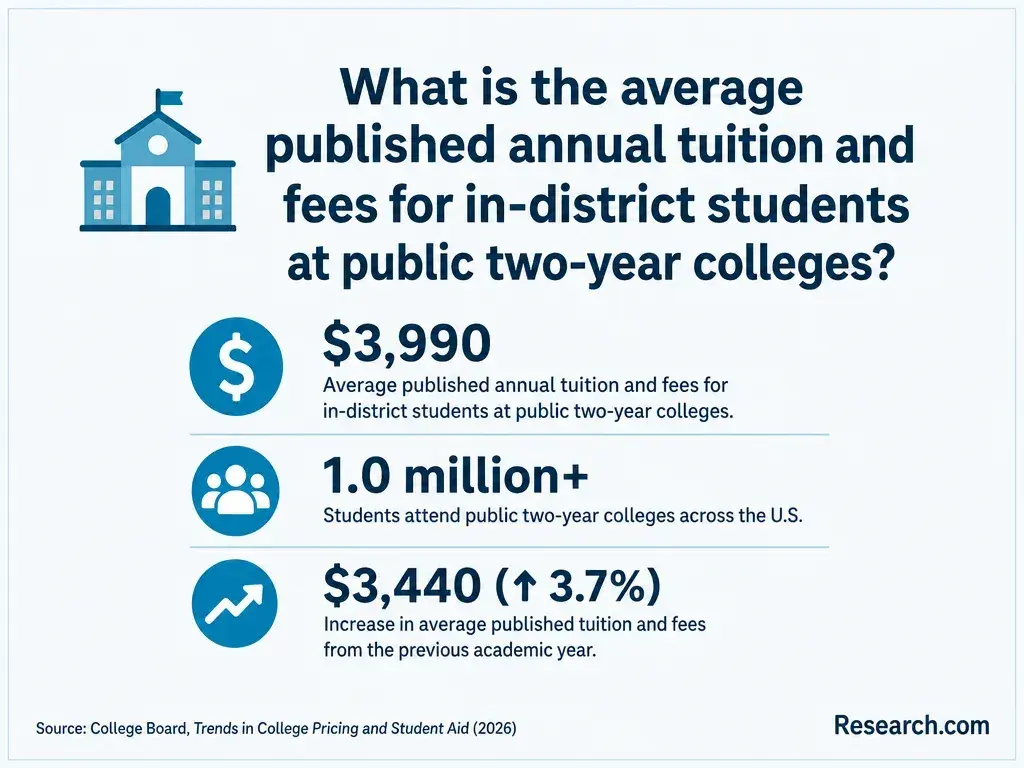
Also compare what you must spend to reach an interview-ready level, not just to receive a credential. The comparison of tuition for online business colleges can help you investigate degree prices, but your decision should include remaining credits, fees, living expenses, and time away from work alongside A+ exam and practice costs.
A business degree requires admission and completion of the institution's approved curriculum. Schools may set separate rules for entry into the business major, quantitative prerequisites, transfer credit, minimum grades, and credits completed at the awarding institution. Check the specific program's prerequisites for a business administration degree, then request an official degree audit if you have previous college work. Accepted transfer credits do not necessarily fulfill business-core requirements.
CompTIA A+ does not require a business degree. Candidates earn it by passing the required exams for the applicable exam series; CompTIA determines exam objectives, fees, and renewal rules. Confirm those details directly before buying vouchers or training, particularly if a course advertises an older exam version. Passing the exams establishes the certification, while employers decide whether your practical experience meets a job's requirements.
Business administration typically covers accounting, finance, marketing, management, operations, and quantitative reasoning alongside general education. Its value for a career changer is learning to interpret organizational problems - for example, how a service delay affects customers, staffing, and cost. A concentration or applied project can add depth, but an introductory course is not proof of specialist or managerial competence.
A+ exam objectives instead emphasize foundational support tasks, including hardware, operating systems, networking concepts, security practices, and troubleshooting. Effective preparation should include hands-on exercises, not just memorized terms. This makes A+ more task-specific for a help desk application but less relevant to budgeting or managing a business process.
If you are drawn to coordinating technology-related work rather than fixing devices, examine that distinction before choosing either route. A project-focused degree is another, usually larger, educational commitment; project management fees books and aid considerations matter if you compare one with a business degree and a shorter IT certification.
A traditional bachelor's path commonly spans four academic years of full-time study, but transfer credits, course sequencing, part-time attendance, and program rules can change an individual completion date. A+ preparation can take weeks or months, depending on prior experience and study time, followed by exam scheduling. The shorter route to a credential is not necessarily the shorter route to a job if you still need practice or relevant experience.
For a fair cost comparison, price the remaining path. On the degree side, obtain a written estimate of credits still required, tuition, mandatory fees, materials, and any travel or time off work. On the A+ side, check current exam vouchers, study resources, equipment or lab access, and potential retake costs. Do not assume financial aid or an employer benefit applies to either option without confirming its rules. If a degree is the better fit, compare inexpensive business administration degree options using your own transfer evaluation rather than advertised tuition alone.
Business degrees may be offered on campus, online, or in hybrid formats. Online does not automatically mean self-paced: ask about live classes, group projects, presentation times, proctored exams, internships, and required campus visits.
For A+, options include independent study, online instructor-led courses, community-college classes, and in-person labs. Favor a format that gives you access to realistic troubleshooting practice and feedback. Before paying a provider, establish whether exam vouchers are included and whether its lessons match the exams you intend to take. Application costs are a smaller but still relevant comparison point when reviewing online schools with free applications.
There is no reliable single salary for either "business graduates" or "A+ professionals." Pay belongs to an occupation and varies with location, employer, experience, and responsibilities. For context, BLS reports a May 2025 median annual wage of $75,940 for human resources specialists. That is an occupation-wide midpoint, not the expected starting pay of a new business graduate, and an HR job may require preparation beyond a general business curriculum.
Likewise, an A+ holder's pay should be compared with the specific IT support occupations and openings they qualify for - not with salaries for experienced cybersecurity or software professionals. Compare local entry-level postings on both sides, noting stated pay and required experience. Then weigh likely starting work against your total education cost and forgone earnings. A broader discussion of business administration degree cost versus career outlook can inform that calculation, but it cannot predict your personal return.
A business graduate might seek operations coordinator, administrative specialist, marketing coordinator, or HR assistant openings, depending on coursework and experience. These jobs involve different tasks: tracking processes, supporting budgets and records, coordinating campaigns, or helping administer personnel procedures. A degree may meet an education requirement, but work samples, internships, and prior employment help show readiness. Supervisory roles generally call for demonstrated responsibility beyond graduation.
With A+, common targets include help desk technician, desktop support technician, and other user-support openings. Such jobs may involve diagnosing devices and software, documenting tickets, setting up equipment, and communicating with users. A small portfolio of troubleshooting scenarios or supervised support experience can make the certification more persuasive; do not include another person's private information in work samples.
Some roles bridge business and technology, such as coordinating an IT rollout or improving a support process. Check whether an employer primarily needs hands-on technical support, business analysis, or project experience before pursuing another qualification. For a project-centered alternative, investigate shorter organizational leadership bachelor's programs only if their coursework and degree requirements match the roles you want.
An accelerated online bachelor's program may shorten the calendar for a suitable student, but deadlines and total workload still need scrutiny.
How can you evaluate accredited business programs and reputable IT training providers?
For a business degree, verify the school's recognized institutional accreditation and the exact degree it awards. If it advertises AACSB, ACBSP, or IACBE accreditation, confirm which school or programs that accreditation covers; it is distinct from institutional accreditation. Request the current curriculum, an official transfer evaluation, a complete cost estimate, and details of advising and career support. Use ranked school options for studying business online to build a comparison list, not as a substitute for those checks.
For IT training, check that the provider teaches the applicable A+ exam objectives, states the full price and voucher policy, offers useful hands-on practice, and explains access to instructors or labs. Ask what assistance is available for job applications and what evidence supports any placement claim. Neither a school's accreditation nor a training provider's marketing guarantees employment; the strongest choice is the one that closes a documented gap between your current skills and your target job.
Other Things You Should Know About Business Administration
Possibly, but only the college can decide. Ask its transfer or prior-learning office whether the certification earns credit and, if so, whether that credit applies to a required course or only an elective.
No. CompTIA sets renewal requirements for A+. Check its current continuing-education rules and expiration date when planning the ongoing cost of certification.
Neither is primarily a coding credential. Some business programs include information-systems or analytics work, while A+ preparation may involve basic command-line tasks. Review the particular curriculum or exam objectives rather than assuming coding is required.
Usually you can describe your own work, but check school, employer, and data-use rules before sharing files. Remove confidential business information and personal data, and be clear about whether a project was a classroom exercise or implemented at a workplace.
- Annual Earnings by Educational Attainment - COE https://nces.ed.gov/programs/coe/indicator/cba/annual-earnings
- IT Certifications vs. IT Degrees: What Employers Actually Prefer - Florida National University (FNU) https://www.fnu.edu/it-certification-vs-it-degree-employer-preference/
- CompTIA Certifications vs. a Bachelor's Degree | asher.edu https://asher.edu/comptia-certifications-vs-a-bachelors-degree-why-stackable-credentials-matter-in-todays-job-market/
- Which CompTIA Certification Is Right for Your Future? | Computer Systems Institute https://www.csinow.edu/blog/which-comptia-certification-is-right-for-your-future/
- 6 BS in Business Skills Employers Seek | University of Bridgeport https://www.bridgeport.edu/news/bs-in-business-administration-skills-employers-seek/
- Certificate vs. Degree: Pros, Cons, and Career Outcomes | National University https://www.nu.edu/blog/certificate-vs-degree/
- Business Administration Program | Boricua College https://www.boricuacollege.edu/business-administration-program
- Transferable Skills in Business Administration Across Industries | The College of Westchester https://www.cw.edu/blog/how-business-administration-courses-build-transferable-skills-across-multiple-industries/
- IT Certifications vs. Degrees: Which Should You Pursue? | Syracuse University https://ischool.syracuse.edu/it-certifications-vs-degree/
- Is it Worth it to get CompTIA+ Certified? | UTSA PaCE https://www.utsa.edu/pace/news/is-it-worth-it-to-get-comptia-certified.html