2027 Choosing a BS in Business Administration When Your Previous College Closed Before You Requested a Transcript
Audited and Verified:
Our Editorial and Data Verification Process
Research.com uses government datasets, official education statistics and primary institutional information to support its career and degree guides. Our review process checks factual accuracy, occupational definitions, source dates and the requirements associated with the credentials discussed.
How This Article Was Fact-Checked
Our editorial team verifies salary estimates, employment projections, education requirements and program information against original data providers and official organizations. Salary figures are checked against the relevant occupational definitions and reporting periods. Information about licensure, accreditation and required in-person training is reviewed separately.
Fact-checked and verified on:

Co-Founder and Chief Data Scientist
Your former college has closed, and you never requested a transcript. That does not necessarily mean your coursework is lost - but it can make choosing a BS in Business Administration harder. This guide is for returning students who need to find their academic record, understand what happens if an official transcript is unavailable, and compare degree-completion programs without relying on a guess about transferable credits. The goal is a written, workable path to graduation before you commit to a school or a tuition bill.
Key Things You Should Know
- Start with the closed college's state higher education agency or listed records custodian; closure does not necessarily mean its transcripts were destroyed.
- A receiving university usually controls whether it will admit you with missing records and whether documented coursework earns credit. An unofficial record is not a guaranteed substitute for an official transcript.
- Compare programs using a written degree audit showing where accepted credits apply, which business courses remain, and what those requirements will cost - not an advertised transfer-credit maximum.
What Should You Do If Your College Closed Before You Requested a Transcript?
Find the records custodian before assuming the transcript is unavailable. A closed college may have transferred records to a state agency, another institution, a records company, or an organization designated during its closure. Search the former college's state higher education agency for closure and transcript instructions. If the school had multiple campuses or changed names, identify the campus, location, and name used while you attended.
Keep copies of your requests and any response confirming who holds the records. Gather your student ID if known, dates of attendance, prior name, course schedules, grade reports, financial-aid records, and any unofficial transcript. These may help a custodian locate your file, although they do not themselves become an official transcript.
If the designated custodian cannot find a record, request written confirmation and ask the receiving university's admissions and transfer-credit offices what alternative documentation they will consider. Contact them before paying an enrollment deposit: an admissions exception and a credit-award exception may require different approvals. If you must apply to several schools while the search continues, online college application fee savings can help limit one immediate expense; confirm each school's current fee policy directly.
Can You Transfer Credits Without an Official Transcript From a Closed College?
Possibly, but only under the receiving school's policy. Many universities require an official transcript for final credit evaluation. Some may make a provisional admission decision from unofficial records, seek verification from a records custodian, or review an exception when records are demonstrably unavailable. Ask which documents are acceptable for admission, which are acceptable for final credit, and whether a provisional award can later be withdrawn.
What matters for completion is not just how many credits are accepted. A university may place former courses in general education or free electives while still requiring its own accounting, statistics, economics, business-core, or concentration courses. Course descriptions and syllabi can be especially useful when you need an equivalency or substitution reviewed. An associate degree, applied coursework, examination credit, and prior learning may each follow separate rules; none should be counted toward a requirement until the university approves it.
Ask for a written evaluation that separates accepted credits from credits applied to your degree. If documentation is permanently unavailable, compare the cost of retaking specific requirements with any permitted credit-by-exam or prior-learning assessment - not with the hope that all missing credits will be restored. A student open to a different major can also examine project management bachelor's completion using existing credits, but should request the same course-by-course evaluation before changing direction.
How Do You Choose an Accredited Bachelor's in Business Administration Program?
First confirm the institution's accreditation status with its accreditor and establish that the status applies to the school you would attend. Then verify the exact degree: a BS in Business Administration, BBA, and specialized business bachelor's may have different cores, transfer policies, and graduation requirements. AACSB, ACBSP, or IACBE accreditation, where applicable, concerns a defined business-school or program scope; it is not a substitute for checking the institution and the specific degree.
For a student with a closed-college record, the deciding policy may be more important than a program's advertised pace. Ask each school who can authorize an exception for unavailable transcripts, when a final evaluation is issued, whether course substitutions are appealable, and how many credits must be completed there. Compare the resulting audits alongside required-course availability, advising access, and total remaining cost. A national comparison of accelerated business bachelor's schools can generate candidates, but a fast published schedule does not establish your personal graduation date.
A BS in Business Administration generally combines business fundamentals - such as accounting, finance, marketing, management, operations, and economics - with quantitative reasoning, communication, and general education. Programs differ in depth and sequencing. For a returning student, the practical question is which former courses satisfy the current curriculum and which prerequisites must be completed before upper-level business classes.
Look beyond the course titles when comparing an accounting or statistics class from your closed college with a required business course. The receiving department may need a syllabus to judge coverage and level. If you want to move into a particular function, examine its electives, concentration rules, and applied assignments rather than assuming a general business degree provides specialist preparation. For example, someone focused on logistics might compare the broad BS with faster-paced online supply chain college study; the better choice depends on both career fit and the credits each program will actually apply.
Choose the format in which you can reliably complete the remaining required courses, not simply the one marketed as more flexible. Online study can remove commuting, but classes may still have live meetings, group presentations, fixed deadlines, proctored exams, or campus visits. A campus program may offer useful face-to-face advising and recruiting, yet required courses may conflict with work or be offered only in certain terms.
Request a sample schedule for your likely first and final terms, including the frequency of required business courses. If closure-related records delay your evaluation, ask whether you can begin courses that will count regardless of the eventual transfer decision. Business programs with accelerated online classes may shorten the calendar between course starts, but a shorter term can increase weekly workload and will not resolve missing prerequisites.
Requirements vary by institution and by whether you apply as a first-year, transfer, returning, or second-degree student. A university may ask for secondary-school records and transcripts from every college attended, even when you do not expect credit from one of them. Admission to the university may also be separate from admission to its business major, which can have its own GPA or course requirements.
Tell admissions that the prior college closed before you requested a transcript, and provide evidence of your attempt to obtain one. Ask whether you may apply provisionally, what deadline applies to outstanding documents, and who can approve an exception if the official record cannot be recovered. Separately, check prerequisites before applying to business administration programs; permission to enroll does not mean a missing accounting or quantitative course has been waived.
Your timeline starts with a reliable degree audit, not the number of credits you remember completing. Remaining general education, business prerequisites, upper-level courses, and the school's residency requirement all affect it. A missing transcript can also delay the audit or cause courses to be repeated. Part-time enrollment and courses offered infrequently may extend the calendar even when relatively few credits remain.
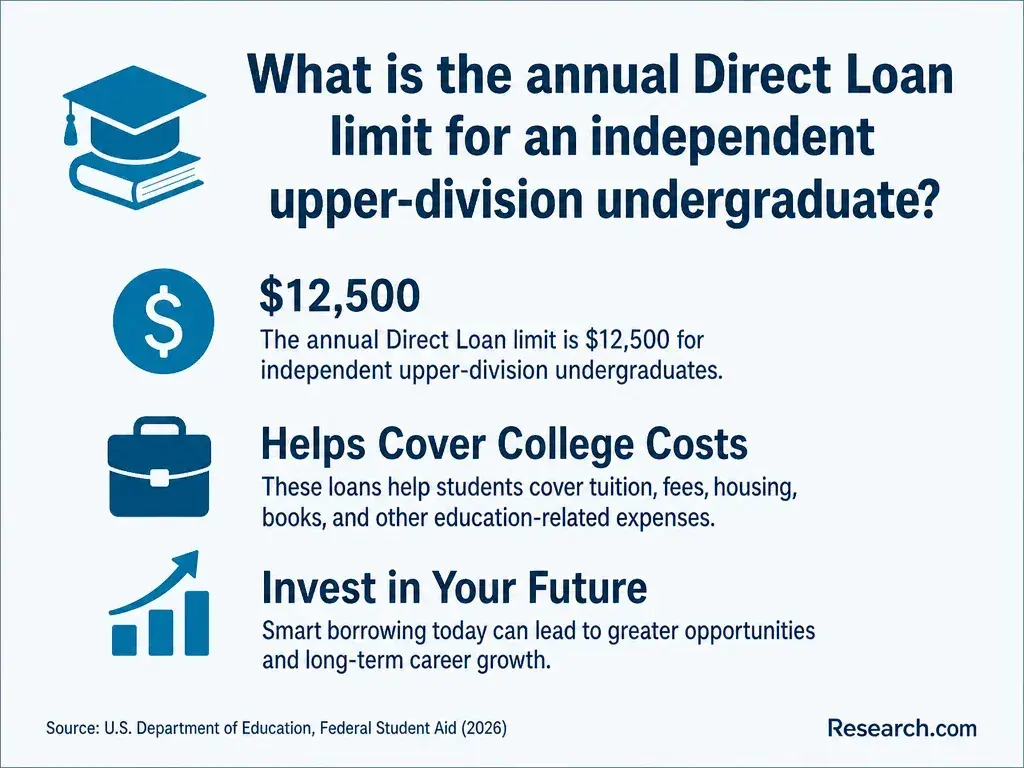
Compare schools using a written estimate of remaining tuition and mandatory fees, plus books, technology, travel, and any required assessments. Ask financial aid how transfer or repeated coursework affects your eligibility and academic-progress review; do not assume a lower advertised per-credit price produces the lowest completion cost. Affordable business administration programs with federal aid access may be worth considering, but confirm each institution's current aid eligibility and your individual aid offer. Recalculate the estimate if the final transcript decision changes your remaining courses.
A business administration degree can support applications for roles in operations coordination, sales support, procurement, marketing, HR, and administrative work. The appropriate entry point depends on your previous employment and demonstrable skills, not just the credential. Someone who already handled scheduling, customer accounts, or purchasing may be able to show relevant experience; someone entering a new function may need an internship, supervised project, or entry-level role first.
Compare job postings for your target function with the courses and work samples you can actually document. If an employer requires a bachelor's degree, fast-track bachelor's degree options may be relevant - but only if their transfer evaluation and workload make completion realistic. A BS in Business Administration prepares students to study organizational decisions; it does not by itself confer a management position or replace function-specific experience.
There is no single salary for a BS in Business Administration. Pay depends on the occupation, responsibilities, location, industry, and experience. For one occupation a graduate might pursue after developing relevant skills, the U.S. Bureau of Labor Statistics reports a May 2025 median annual wage of $78,760 for market research analysts. That is an occupation-wide median, not an expected starting salary or a measured outcome for business administration graduates.
Use pay information only after identifying realistic target roles and entry requirements. Then compare likely job opportunities with your remaining education cost and time away from work. Browsing inexpensive online business administration colleges can help establish a cost comparison, but the cheapest listed tuition is not necessarily your lowest net cost if another school applies more of your prior coursework.
Do Business Administration Careers Require Licenses or Certifications?
Most general business-support roles do not require a license simply because they involve business administration. Specific work can be different: public accounting, certain financial-services activities, and other regulated functions have requirements set by the relevant licensing authority. Voluntary credentials in areas such as HR or project management have separate eligibility rules. A business degree, concentration, or course does not automatically satisfy them.
If your goal is a regulated or specialized occupation, check its official requirements before choosing a degree-completion program. You may need specified coursework or experience that a general BS does not provide. Where a license is not required, compare a full degree with targeted training and experience; cost-effective paths to a business degree matter most when the degree itself advances a clear employment or educational goal.
Other Things You Should Know About Business Administration
No. School closure does not automatically erase a balance or loan. If you have federal student loans, ask your loan servicer whether you qualify for a closed-school discharge; eligibility depends on your circumstances, including what happened to your studies.
Closure alone does not cancel an earned degree. Keep your diploma and locate the records custodian so you can obtain verification if an employer or another school requests it.
You may list a degree or relevant education you completed there accurately. Do not present unfinished coursework as a completed degree, and retain documentation in case an employer asks for verification.
Contact the successor institution first and ask whether it holds records for your campus and attendance dates. The state higher education agency can help identify the custodian if the successor does not have them.
- DAPIP | Homepage - Office of Postsecondary Education (OPE) https://ope.ed.gov/dapip/
- Accreditation in the U.S. | ed.gov http://www.ed.gov/laws-and-policy/higher-education-laws-and-policy/college-accreditation/accreditation-in-the-us
- How To Evaluate Your Aid Offers | studentaid.gov https://studentaid.gov/articles/evaluating-financial-aid-offers/
- Student Academic Record or Transcript Requests | Texas Higher Education Coordinating Board https://www.highered.texas.gov/student-academic-record-or-transcript-request/
- Transcripts from Closed Colleges | New York State Education Department https://www.nysed.gov/college-transcripts
- .14 Evaluation and Review Process for Transfer of Courses and Credits. | Library of Maryland Regulations https://regs.maryland.gov/us/md/exec/comar/13B.06.02.14
- Transfer Credit Services | usc.edu http://arr.usc.edu/transfer-credit-services/
- Transfer Credit Evaluation | Undergraduate Admissions | The Pennsylvania State University https://www.psu.edu/resources/credit/transfer-credit-evaluation
- Chapman University Transfer Credit Policies and Guidelines https://www.chapman.edu/students/academic-resources/registrar/student-services/transfer-credit-policies-and-guidelines.aspx
- What To Do If Your College Closes or Your University Shuts Down | Colorado State University Global https://csuglobal.edu/blog/what-do-if-your-college-closes