2027 BS in Business Administration Transfer Planning: College Credits with a D Grade
Audited and Verified:
Our Editorial and Data Verification Process
Research.com uses government datasets, official education statistics and primary institutional information to support its career and degree guides. Our review process checks factual accuracy, occupational definitions, source dates and the requirements associated with the credentials discussed.
How This Article Was Fact-Checked
Our editorial team verifies salary estimates, employment projections, education requirements and program information against original data providers and official organizations. Salary figures are checked against the relevant occupational definitions and reporting periods. Information about licensure, accreditation and required in-person training is reviewed separately.
Fact-checked and verified on:

Co-Founder and Chief Data Scientist
A D on your transcript does not necessarily erase the college credit you earned, but it may not move you closer to a BS in Business Administration. A school can accept a course as transfer credit while refusing to use it for accounting, statistics, or another required course. If you are transferring or returning to college, that distinction affects what you repeat, when you can enter the business major, and what completion will cost. This guide shows you how to evaluate D-grade courses against a prospective school's rules and obtain a usable degree plan before enrolling.
Key Things You Should Know
- A D-grade course may transfer as elective credit yet fail to satisfy a business-core course or its prerequisite; the receiving school's official evaluation controls.
- Check the minimum grade separately for university admission, business-major admission, each required course, and graduation.
- Before paying to repeat a course, obtain a degree audit showing where the original credit applies and confirm how a repeat would affect your requirements, GPA, aid, and completion date.
Can College Credits With a D Grade Transfer to a BS in Business Administration?
Sometimes, but "transfer" can mean several different things. A receiving college may award credit for a D-grade course without treating it as equivalent to a required business course. It might instead apply to general education or free electives - or award no credit under its minimum-grade policy. The receiving institution, not the college where you earned the D, makes that decision.
Read a transfer evaluation alongside the degree audit. The evaluation tells you whether credit was awarded; the audit shows whether that credit satisfies a requirement in your intended BS in Business Administration. Also check the catalog year and concentration attached to the audit: a course that fits one set of requirements may not fit another.
If you are considering a different major after discovering a D will not satisfy the business core, compare its credit rules independently. For example, online undergraduate project management credit acceptance may differ from business administration credit acceptance at the same or another school. Do not switch programs based on an advertised transfer-credit maximum alone.
Which Business Administration Courses With D Grades Must You Retake?
Retake a D-grade course when the school confirms that the grade fails a requirement you still need and no approved alternative satisfies it. Common courses to investigate include financial and managerial accounting, economics, algebra or calculus, statistics, business communication, and prerequisites for finance or upper-level analytics. The minimum acceptable grade can differ between general education and the business major, even when the course title is identical.
A D in a free elective may be less consequential if its credit is accepted and you have elective space. By contrast, a D in statistics could block a later analytics course even if the credit appears on your transcript. A higher grade in a later course does not automatically waive the earlier prerequisite.
Before registering for a repeat, ask the business adviser which requirement is unmet, whether an approved equivalent at another college is allowed, and whether the repeat must be taken at the receiving institution. The business administration degree admissions requirements guide can help you identify prerequisites to investigate, but your program's catalog and written evaluation determine what you personally must complete.
How Do Accreditation and Transfer Policies Affect D Grade Credits?
Institutional accreditation and transfer policy answer different questions. Recognized institutional accreditation is an important factor in evaluating a college, but it does not require another school to accept every course or every grade. The receiving school sets its transfer thresholds, equivalency rules, credit limits, and degree requirements. Business-school accreditation through AACSB, ACBSP, or IACBE has its own scope; it does not, by itself, establish a universal D-grade rule.
Policies may also distinguish lower- from upper-division work, set recency rules for particular subjects, or require a minimum number of credits completed in residence. An articulation agreement may clarify how courses from a partner college apply, but you still need to check whether it covers your grade and enrollment term. When comparing ranked American online business degree options, use each school's published accreditation information and transfer policy rather than assuming similar programs evaluate a D alike.
If a course is assigned elective credit when you believe it matches a requirement, ask the transfer office about an equivalency review. Provide the syllabus from the term you took it, including topics, contact hours, and assessments. The business department may need to approve a major-course substitution; an informal adviser conversation is not the same as a recorded decision.
Students commonly transfer from an AA or AS program designed for further study, an applied associate program, or another bachelor's program. Each route can work, but the degree label does not tell you how many credits will satisfy the business BS. Applied coursework, military learning, competency-based credits, and international coursework may require separate reviews. Quarter credits also need conversion before they can be compared with semester-credit requirements.
The most useful comparison is remaining required coursework, not the largest number of credits a school says it will accept. An AA with completed general education may leave business prerequisites; an applied degree may contribute substantial electives but fewer equivalent core courses. If your goal has shifted toward logistics or procurement, supply chain bachelor's options focused on completion speed offer an alternative to compare - but check how your actual D-grade courses apply to each degree before changing paths.
Delivery format does not determine whether a D transfers; academic policy does. Format does affect how feasibly you can complete a required repeat or prerequisite. An online course may still have fixed deadlines, live presentations, group work, or proctored exams. A campus program may offer more predictable in-person support but require travel at times that conflict with work or caregiving.
If a D forces you into a prerequisite sequence, ask when each course is offered in your preferred format. A program that accepts more of your credits may still take longer if the course you need runs infrequently. Compare section availability, synchronous obligations, testing arrangements, and part-time options - not just whether the degree is labeled online. Degree options for working business administration students can provide a starting set of programs to investigate against your schedule.
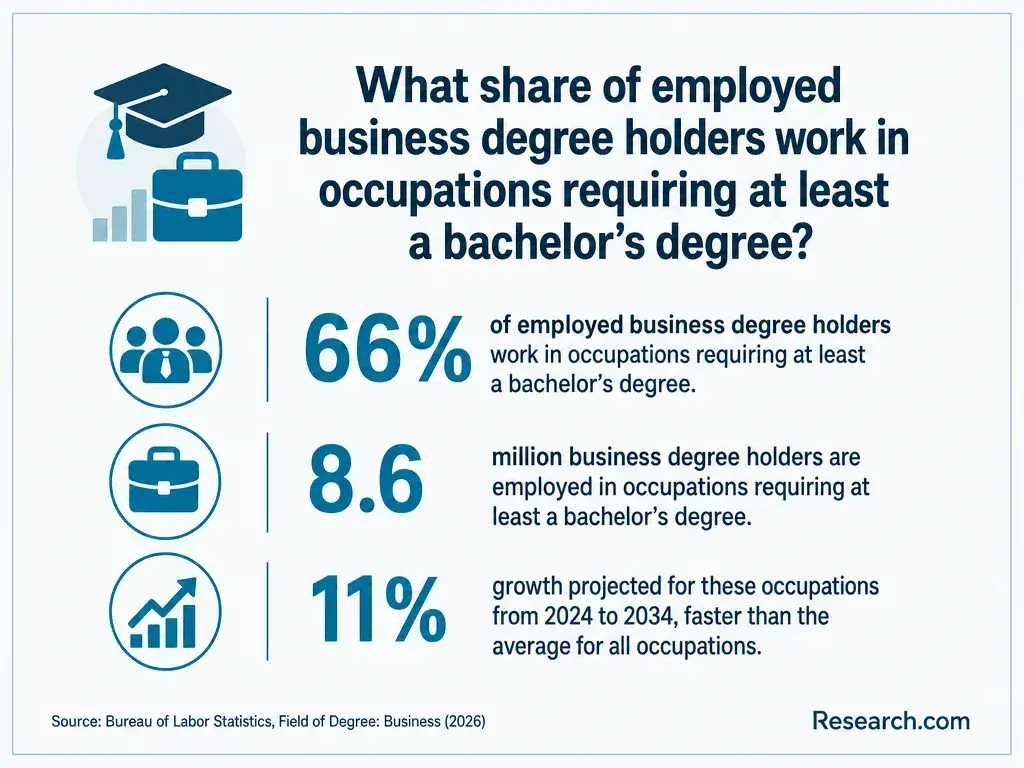
Requirements vary, but a BS in Business Administration commonly combines general education with accounting, economics, finance, marketing, management, operations, quantitative coursework, and advanced business study. A school may also require a concentration, internship, or capstone. Its course sequence matters more to a D-grade transfer student than a broad list of subjects: accounting may precede finance, for example, while statistics may precede analytics.
Request a requirement-by-requirement audit that separates completed general education, business core, concentration, electives, and residency credits from courses still needed. Look for a D-grade course marked as transferred but not satisfying a named requirement. If you compare ranked programs for finishing a business bachelor's sooner, test their advertised timelines against your specific prerequisite chain and the availability of upper-level courses.
Admission to a university, admission to its business school or major, and acceptance of individual courses may involve separate decisions. A university could admit you with a D on your transcript while requiring a higher grade before you enter the business major or take an advanced course. Schools may review cumulative or transferable GPA, completed prerequisites, academic standing, and official transcripts; the applicable rules depend on the institution and enrollment term.
Ask admissions whether your application is reviewed for direct entry to the major or for a pre-business pathway. Then ask the business department whether a D-grade prerequisite affects entry, progression, or both. If application costs matter while you compare policies, compare accredited schools with no application charge; a waived fee is useful, but it says nothing about whether your coursework will fulfill the degree.
Your remaining requirements - not your accumulated credits alone - determine the likely timeline and cost. A D-grade course can add expense if you must repeat it, but the larger delay may come from a course that is offered only after a prerequisite or in a particular term. Conversely, repeating a course before receiving an evaluation can waste money if the original credit already meets a requirement.
Compare schools using the same planned enrollment pace. Include tuition and mandatory fees for courses still required, books or software, any travel or proctoring charges, and the cost of a delayed term. Ask financial aid how your planned repeats and transfer credits affect aid eligibility and satisfactory academic progress; do not assume an accepted course or repeat is funded. Resources that compare business administration tuition and FAFSA eligibility can help you identify schools, but only your evaluated degree plan can support a personal completion estimate.
Get a term-by-term plan from an adviser, then confirm the financial implications with the aid office before enrolling. If a required repeat cannot fit the first term, ask what other required coursework can be taken without creating a scheduling conflict later.
A business administration BS can support applications for roles in operations, marketing, human resources, sales support, and project coordination. Your experience and demonstrated skills still matter: coursework in accounting or analytics is not the same as managing a budget or producing analysis for an employer. For a transfer student, the immediate career question is whether finishing this degree helps meet the requirements of a target role enough to justify any repeats and added time.
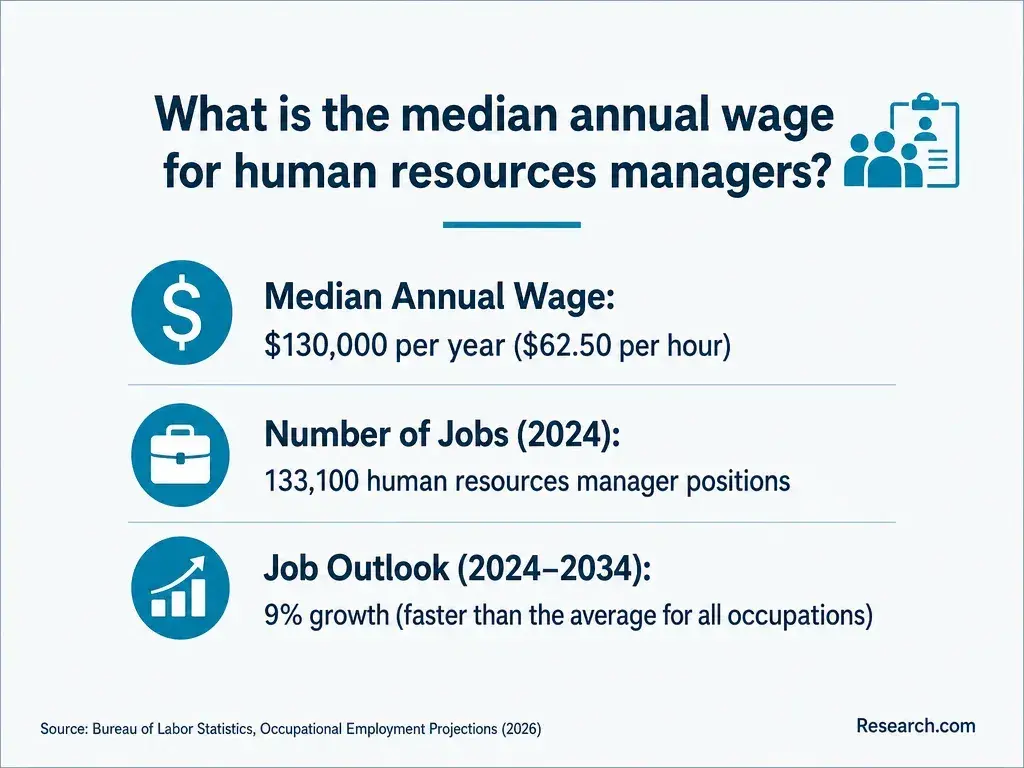
For context, the U.S. Bureau of Labor Statistics reports a May 2025 median annual wage of $75,940 for human resources specialists, with employment projected to grow 6% from 2025 to 2035. That is an occupation-wide median, not an expected starting salary for business graduates; employers may also seek relevant HR experience. Compare the tasks and qualifications in roles you want with the courses and experience you will have at graduation. A guide to business administration tuition, time commitment, and career value can frame that comparison, but it cannot predict your earnings.
Do Business Administration Graduates Need Certifications or Professional Licenses?
There is no universal professional license required simply to hold a BS in Business Administration or apply for general business roles. A particular occupation may have separate rules: a business degree alone does not grant CPA licensure or a financial-services license. Voluntary credentials in areas such as HR or project management have their own eligibility standards and should be checked with the credentialing organization.
If your main goal is project coordination, compare the degree's remaining requirements with the skills and qualifications employers actually request. Affordability checks for accredited project management programs may help you assess a specialized degree alternative, while a targeted course or relevant work experience may be more direct for some roles. Neither a concentration nor a project-management class automatically awards a professional certification.
Other Things You Should Know About Business Administration
The receiving school may record the transferred course and credit without including its grade in its institutional GPA. Policies vary, and your original transcript still documents the D. Ask how both schools' records are used for admission and graduation decisions.
Not necessarily. Academic renewal may change how your original college calculates its GPA without removing the course from the transcript or requiring another college to disregard the grade. Request the receiving school's policy in writing.
Many schools provide an equivalency review or appeal process. Submit the course syllabus and the specific requirement you believe it matches; ask who makes the final decision and when it will appear in your audit.
Apply or request a preliminary evaluation first when possible. Once the school identifies an unmet grade requirement, confirm where you may take the repeat and whether its grade will satisfy that requirement before you register.
- Transfer Credit | University of Alabama - UA Academic Catalog https://catalog.ua.edu/undergraduate/about/academic-regulations/policies/transfer-credit/
- Transfer Credit Services | usc.edu http://arr.usc.edu/transfer-credit-services/
- Business Administration Articulation Agreement and Transfer Guide for Mott Community College | ferris.edu https://transfer.ferris.edu/transfer-guides/mott-community-college/buad-bs-mottcc.htm
- Transfer credit practices - UC Admissions https://admission.universityofcalifornia.edu/counselors/preparing-transfer-students/transfer-credit-practice.html
- Academic Regulations | Wayne State University Academic Catalog https://bulletins.wayne.edu/undergraduate/general-information/academic-regulations/
- Transfer Credit Evaluation - TXST Admissions https://www.admissions.txst.edu/future-students/transfer-credit-evaluation.html
- How to Ensure Transfer to University Goes Smoothly | San Juan College https://www.sanjuancollege.edu/blog/ensure-community-college-transfer-goes-smoothly/
- 4.1.18 Credit Earned through Transfer, Examination, and Prior Learning | Illinois State https://policy.illinoisstate.edu/academic/4-1-18/
- Transfer Evaluation Appeal Process | TCC.edu https://www.tcc.edu/service-support/registrar/transfer-evaluation/transfer-evaluation-appeal-process/
- UNDERGRADUATE PROGRAMS BULLETIN 2024-2025 | Ross IT https://rossweb.bus.umich.edu/academics/bbabulletin-2024-2025/