2027 Online BS in Business Administration Admissions with A Request to Review Professional Training for Credit: What to Check
Audited and Verified:
Our Editorial and Data Verification Process
Research.com uses government datasets, official education statistics and primary institutional information to support its career and degree guides. Our review process checks factual accuracy, occupational definitions, source dates and the requirements associated with the credentials discussed.
How This Article Was Fact-Checked
Our editorial team verifies salary estimates, employment projections, education requirements and program information against original data providers and official organizations. Salary figures are checked against the relevant occupational definitions and reporting periods. Information about licensure, accreditation and required in-person training is reviewed separately.
Fact-checked and verified on:

Co-Founder and Chief Data Scientist
Professional training may strengthen your application to an online BS in Business Administration, but it will not necessarily reduce the courses you need to finish. For experienced employees and returning students, that distinction affects tuition, scheduling, and the value of enrolling.
This guide explains how schools evaluate workplace learning, which records to gather, and how to confirm whether an award satisfies degree requirements. It also covers the program checks that matter if you plan to keep working while you study.
Key Things You Should Know
- Ask for separate decisions on admission, the award of credit for professional training, and where that credit applies in the BSBA degree audit.
- Submit verifiable evidence of training content, hours, assessment, and completion; a job title or certificate of attendance alone may not establish college-level learning.
- Compare programs using your remaining required courses, assessment fees, credit limits, and actual online schedule - not the maximum credit advertised.
What Is an Online BS in Business Administration?
An online Bachelor of Science in Business Administration (BSBA) is an undergraduate degree covering several business functions, commonly including accounting, finance, marketing, management, operations, and quantitative decision-making. "Online" describes delivery, not a separate academic credential. A Bachelor of Business Administration (BBA) or a specialized business bachelor's may have different requirements even when course titles overlap.
For someone with substantial workplace training, the relevant question is whether a school's specific BSBA curriculum leaves room for that learning to satisfy requirements. A program with a suitable elective category may accept more of it than one with tightly prescribed courses. If staying employed is central to the decision, compare online business administration options balancing price and duration against the degree audit each school would actually give you.
How Does Professional Training Credit Work During Admission?
Professional training credit is an academic award for documented learning outside a conventional college course. Schools may consider employer academies, industry training, military learning, recognized credit recommendations, examinations, or an individual prior-learning assessment (PLA). A third-party credit recommendation can help an evaluator, but the college decides whether to award credit and where to apply it.
Three decisions must stay separate: admission to the institution or business major, award of credit for the learning, and application of that credit to general education, the business core, a concentration, or electives. Training that earns elective credit may still leave accounting or statistics requirements untouched. The admissions office can explain eligibility; the registrar, transfer-credit office, or designated PLA evaluator determines the credit award, while an academic adviser should confirm its place in the degree audit.
Before applying, assemble evidence that lets the evaluator judge learning rather than attendance alone:
- Request a training syllabus or outline showing topics, learning objectives, dates, instructional hours, and assessment methods.
- Collect completion records, examination results, issued credentials, and any applicable credit recommendation.
- Ask whether supervised work products or a portfolio can support an individual PLA review; remove confidential employer and customer information unless you have permission to disclose it.
- Request the school's written rules on eligible training, assessment fees, credit caps, minimum grades or scores, course equivalencies, and the timing of a final decision.
- After evaluation, obtain an updated degree audit showing exactly which requirements were met and which remain.
Check whether assessment must occur before enrollment and whether an unsuccessful assessment can be appealed. If a quick-completion business degree pathway advertises credit for prior learning, use the written audit - not the advertised maximum - to estimate your finish date.
What Accreditation Should an Online Business Administration Program Have?
Confirm that the degree-granting institution holds accreditation recognized by the U.S. Department of Education and that its status covers the institution offering the online degree. This is an important check for federal aid eligibility and for how other institutions may review the credential, although accreditation does not guarantee that another college will accept its credits.
Business-focused accreditation is a separate question. AACSB, ACBSP, and IACBE accredit within their respective scopes; a university's claim about its business school does not establish that the particular BSBA is covered. Ask the school which entity is accredited and verify the scope with the accreditor. When comparing business administration colleges participating in federal aid programs, check both accreditation and the program's aid eligibility directly rather than treating either as proof that your training will earn credit.
Requirements vary by school and by whether you apply as a first-time, transfer, or returning student. Expect the institution to ask for previous academic records; some programs also set minimum academic-standing or business-major requirements. Professional experience can provide useful context for an application without replacing an official transcript, a prerequisite, or a required admission credential unless the school expressly allows it.
Ask admissions which transcripts and application materials are required, then ask the business department whether accounting, economics, mathematics, or statistics must be completed before entry or can be taken after admission. If you already hold a bachelor's degree, request the school's second-degree and transfer-credit rules. A lower application charge can help with initial costs, so free application options at accredited online schools may be worth checking - but an inexpensive application is not a substitute for a favorable credit evaluation.
Online delivery can remove a commute, but it does not make classes self-paced. Either format may require scheduled meetings, team projects, presentations, proctored exams, or an internship. For an employed applicant, the practical comparison is whether required activities fit around work and whether the courses needed after a training-credit evaluation are offered often enough to maintain progress.
The comparison below highlights obligations to verify for the courses remaining on your audit; it does not assume that every program uses the same format.
| Decision factor | Online program: verify | Campus program: verify |
| Attendance | Live sessions, deadlines, and required visits | Class times, commute, and required presence |
| Assessment | Proctoring, group work, and presentation schedules | In-person exams, group work, and presentation schedules |
| Degree progress | When remaining required courses run online | When remaining required courses run on campus |
Ask for sample course schedules and assessment policies before choosing. Resources on flexible online study for business administration career growth can help identify programs to investigate, but confirm flexibility course by course.
A BSBA generally combines general education with a business core and, where offered, electives or a formal concentration. Business courses may address financial and managerial accounting, economics, finance, marketing, management, operations, business law, statistics, and strategy. Exact requirements and prerequisite sequences belong to the school's catalog for your enrollment term.
Match each proposed training-credit award against a course requirement. For example, employer instruction in purchasing procedures might support an operations elective review, but it should not be assumed equivalent to a required accounting course. If your goal is supply chain work, compare the BSBA's relevant courses with accelerated degree planning for supply chain undergraduates; a more specialized curriculum could be a better fit even if it accepts fewer credits from your training.
Your completion time depends on the requirements left after evaluation, course sequencing, enrollment pace, and how often required classes are available. An award of prior-learning credit saves time only if it replaces coursework you would otherwise have to take; elective credit beyond the degree's available elective space may not shorten the program.
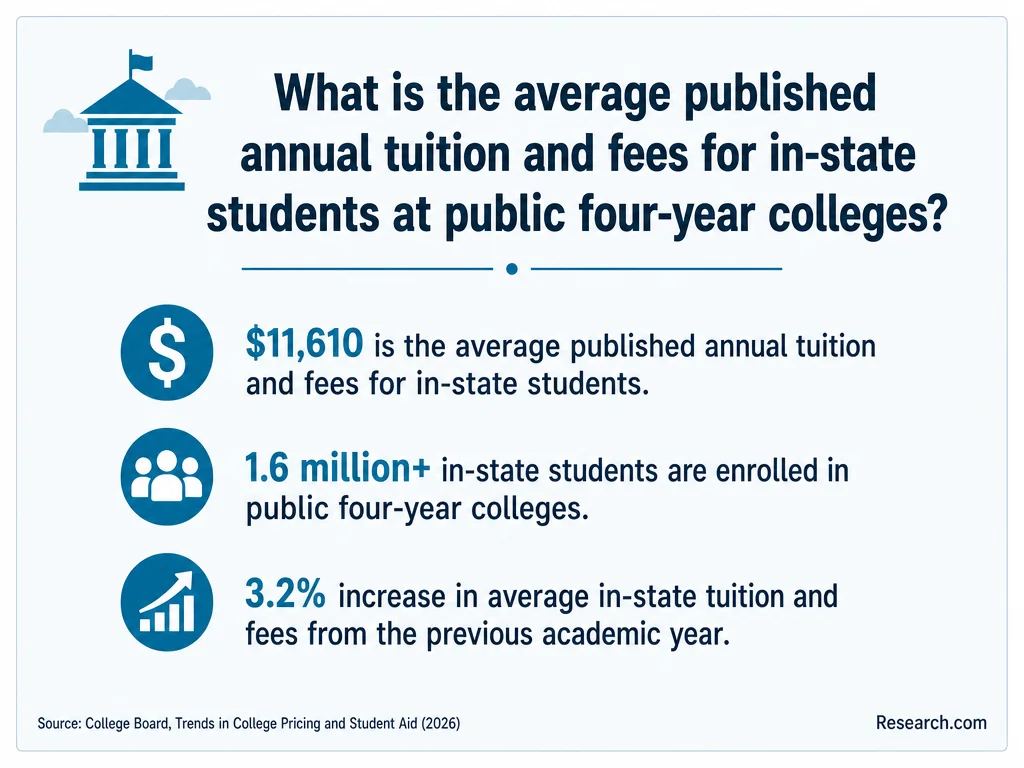
Build a school-by-school estimate from the written audit and current charges. Include tuition for remaining courses, mandatory fees, PLA assessment charges, books or software, proctoring or travel, and any likely delay caused by course availability. Ask financial aid how your planned enrollment pace and prior-learning awards affect eligibility. Use a business administration degree tuition savings guide to find comparison candidates, then calculate costs from each school's assessment of your record rather than its headline tuition alone.
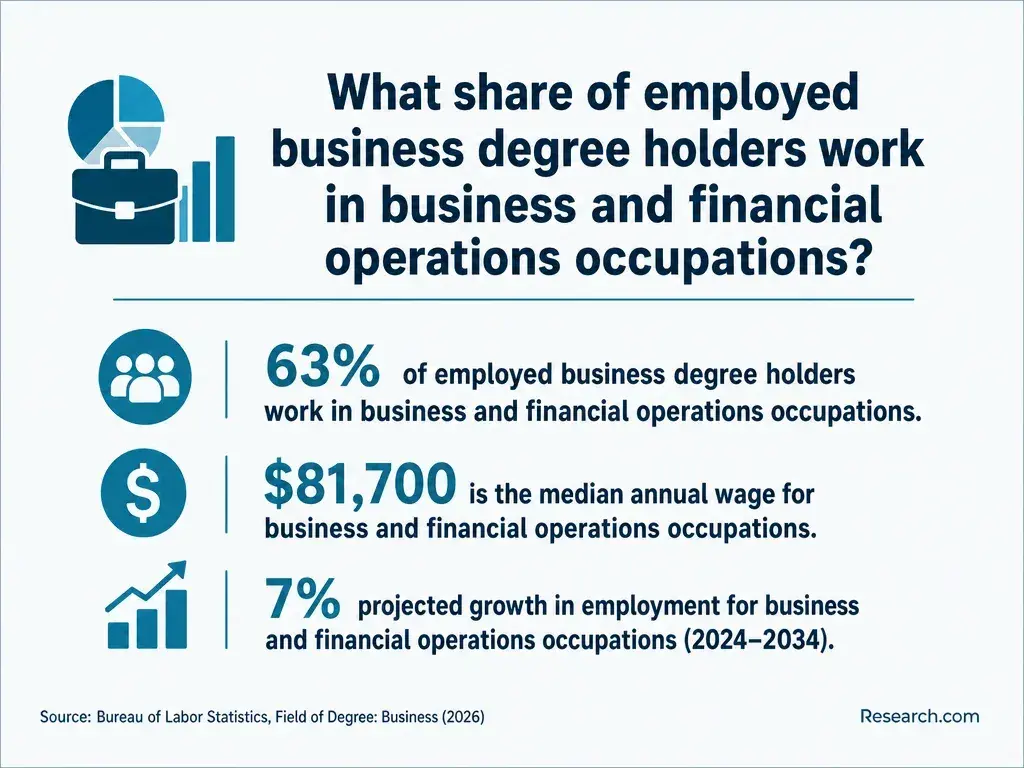
A BSBA can support applications for business operations, sales support, marketing coordination, HR support, purchasing, or project coordination roles. For experienced employees, its value may instead be meeting a bachelor's-degree requirement for advancement while documenting skills already used at work. Neither the degree nor training credit establishes that you are ready to supervise staff or manage a major budget; employers will also assess your responsibilities and results.
Choose electives and work samples around a target function. Someone moving toward project coordination, for instance, should be able to show scheduling, stakeholder communication, and progress tracking - not just a project-management course title. Compare that route with lower-tuition online programs for project management if focused project coursework would serve your goal better than a broad BSBA.
There is no single salary or growth rate for BSBA graduates: labor statistics describe occupations, not the earnings of everyone holding a particular degree. For example, the U.S. Bureau of Labor Statistics reports a May 2025 median annual wage of $75,940 for human resources specialists and projects 6% employment growth from 2025 to 2035. That occupation-wide median includes workers with different experience levels; it is not a starting-salary estimate or a return-on-tuition promise.
Evaluate the role you actually want, its experience requirements, and openings in your area before using wages to justify enrollment. If you are weighing business administration against a supply chain pathway, tuition and time comparisons for supply chain students can inform the education side of that decision, but neither program's advertised career potential establishes what you personally will earn.
Which Certifications and Licenses Complement a Business Administration Degree?
A role-specific credential can complement a BSBA when it addresses a skill or hiring requirement the degree does not. HR, project management, accounting, and financial services credentials have different eligibility rules, examinations, and, in some cases, legal requirements. A BSBA or a concentration does not itself grant a professional license or establish eligibility for every certification.
Check the issuing organization or relevant state board before paying for preparation. Compare its required education and experience with your existing training and target job. If project management is the goal, project management programs with lower total costs offer another education comparison; a degree program and a separately awarded professional certification should be evaluated as different credentials.
Other Things You Should Know About Business Administration
Ask whether it can provide a nonconfidential outline, verification letter, or assessment record. Check with the college before submitting internal materials, and do not disclose proprietary or personal information without authorization.
Not necessarily. The school may assess each person's completion records, results, and applicable degree requirements separately.
No. The receiving college decides whether to accept it and how it applies. Keep the original training records as well as the first college's credit decision.
Ask before registering. Schools may restrict duplicate credit or require prior-learning assessment by a particular deadline; an award may not remove charges or obligations for a course already underway.
- Rule 3358:5-7-12 | Prior learning assessment policy. https://codes.ohio.gov/ohio-administrative-code/rule-3358:5-7-12
- Prior Learning Assessment - School of Professional Studies https://sps.rowan.edu/prior-learning-credits/
- Credit for Prior Learning | Academic Affairs https://evcaa.d.umn.edu/credit-prior-learning
- Prior Learning Assessment | Admissions | Sullivan University https://www.sullivan.edu/admissions/prior-learning-assessment
- Transcript Evaluations | nctc.edu https://catalog.nctc.edu/content.php
- Prior Learning Assessment (PLA) - UNH Catalog https://catalog.unh.edu/undergraduate/academic-policies-procedures/prior-learning-assessment/
- 4.1.18 Credit Earned through Transfer, Examination, and Prior Learning | Illinois State https://policy.illinoisstate.edu/academic/4-1-18/
- Credit for Prior Learning (CPL) Glossary | NCCCS https://www.nccommunitycolleges.edu/credit-for-prior-learning-glossary/
- Credit for Prior Learning | University of Arizona Catalog https://catalog.arizona.edu/policy/courses-credit/credit/credit-prior-learning
- Professional & military learning - Office of the Provost | Master's Degree in Public Administration https://in.nau.edu/provost/professional-military-learning/