
2027 BS in Business Administration: Estimating Value When You Need to Change Industries
Audited and Verified:
Our Editorial and Data Verification Process
Research.com uses government datasets, official education statistics and primary institutional information to support its career and degree guides. Our review process checks factual accuracy, occupational definitions, source dates and the requirements associated with the credentials discussed.
How This Article Was Fact-Checked
Our editorial team verifies salary estimates, employment projections, education requirements and program information against original data providers and official organizations. Salary figures are checked against the relevant occupational definitions and reporting periods. Information about licensure, accreditation and required in-person training is reviewed separately.
Fact-checked and verified on:

Co-Founder and Chief Data Scientist
Changing industries does not erase the experience you already have, but employers may not immediately see how it applies to their work. A BS in Business Administration can help close business-skill gaps and meet degree requirements; it cannot replace sector knowledge or guarantee a new role.
If you are weighing school against a faster transition, this guide shows how to assess your target job, remaining degree cost, and realistic entry route. The goal is to estimate the degree's value for your move, not for a hypothetical business graduate.
Key Things You Should Know
- A BS is most valuable when target employers require a bachelor's degree and your remaining coursework supplies skills or recruiting access you cannot obtain more directly.
- Price the remaining degree, not the advertised tuition: transfer applicability, fees, time away from work, and financing can change the decision.
- The U.S. median annual wage for market research analysts was $78,760 in May 2025, but that occupation-wide figure is not a starting salary or a return-on-investment estimate for career changers.
What Is a BS in Business Administration?
A Bachelor of Science in Business Administration is an undergraduate degree combining general education with a broad study of organizational functions, often including accounting, marketing, finance, management, operations, and quantitative analysis. Its value in an industry change is breadth: it can help someone with sector experience explain budgets, customers, processes, and business decisions in an employer's terms.
The BS title does not establish a standard curriculum. A BBA or BA in Business may cover similar ground, while a specialized bachelor's may offer more depth in a target function. If your goal is specifically to supervise teams, compare accelerated organizational leadership degrees against business administration curricula—but remember that neither degree substitutes for demonstrated supervisory responsibility.
Is a BS in Business Administration Worth It for Changing Industries?
It can be, if it removes a hiring barrier or fills a consequential skill gap at a reasonable remaining cost. Start with the industry and function you want: moving from healthcare scheduling into healthcare operations is a different problem from moving from healthcare scheduling into financial analysis at a technology company. The first move retains sector knowledge; the second requires evidence of a new function and a new sector.
The comparison below shows why the same degree can have different value depending on how much of your experience carries over:
| Transition | What may transfer | What the BS may need to add | Likely alternative to test |
| Same function, new industry | Workflows, tools, customer or stakeholder skills | Business context and access to sector-specific projects | Industry training and targeted networking |
| New function, familiar industry | Sector rules, terminology, and relationships | Accounting, analytics, marketing, or operations foundations | Relevant courses and an internal assignment |
| New function and industry | General communication and project experience | Business foundations, applied evidence, and a feasible entry route | A focused credential or entry-level experience before a full degree |
Estimate value against a credible alternative, not against doing nothing. Compare the remaining tuition and fees, borrowing costs, lost earnings or hours, and time to completion with the cost of targeted coursework, employer training, or a lower-level bridge role. Then check postings for the jobs you would actually pursue: separate "bachelor's required" from "preferred," and identify the experience and software skills requested alongside it. If a degree is the missing qualification, business administration programs for advancement while working may be worth comparing with a full-time route.
A higher future wage is not automatically a degree payoff. Industry, location, prior experience, and the role you can realistically enter also affect earnings. The strongest case for enrolling combines a manageable completion cost with evidence that the program addresses specific hiring requirements.
What Jobs Can You Get With a BS in Business Administration?
For a career changer, the best first job is often a bridge role that uses existing experience while adding a business function. A former retail supervisor might pursue operations coordination in another sector using scheduling and inventory evidence. Someone with customer service experience might pursue sales operations or marketing coordination, supported by spreadsheet work and a campaign or reporting project.
Other possible routes include procurement support, project coordination, HR support, and analyst-track roles. Titles are less informative than tasks: an analyst opening may require substantial data skills, while an operations coordinator may prioritize process documentation and stakeholder communication. Management positions generally require demonstrated results and responsibility beyond the degree.
Labor demand can inform—but not decide—the choice. The U.S. Bureau of Labor Statistics projects 18% employment growth for logisticians from 2025 to 2035; that does not mean a general business degree alone qualifies an applicant for supply chain work. If that function interests you, compare economical supply chain study timelines with the general BS and the experience local employers request.
Before treating a degree as a route past a hiring requirement, verify the institution's recognized accreditation and the employer's wording. Institutional accreditation concerns the college or university. AACSB, ACBSP, and IACBE accreditation concerns business education within an accreditor's stated scope; do not assume that a named BS, campus, or delivery format is covered without checking.
Accreditation does not establish job placement or make two programs equally useful for a switch. Compare the curriculum, transfer evaluation, career services, and opportunities to produce work samples. If affordability is central, explore affordable colleges for business study, then confirm each candidate's accreditation status and program details directly before applying.
Business-core courses commonly introduce financial statements, budgets, customer research, organizational behavior, operations, and data interpretation. For an industry switch, the useful question is whether you can apply those subjects to the tasks of the target role. An operations applicant might need spreadsheet-based process analysis; a marketing applicant might need customer research and campaign measurement.
Review the actual course sequence rather than relying on a concentration's name. Check prerequisites, whether relevant electives run when you need them, and whether a capstone or approved workplace project can yield a shareable, nonconfidential work sample. If HR is your intended function, a human resources program selection guide can help you compare general business coverage with more focused HR study. An elective or informal focus is not necessarily a formally awarded concentration.
Choose the format that lets you finish and build credible evidence for your target industry. Online study may preserve work hours and allow an employer-based project; campus study may make local recruiting, group work, and internships easier to access. Neither format guarantees those opportunities.
Ask about live meetings, group-project schedules, proctored exams, required visits, internship eligibility, and career services for online students. If speed matters, the shortest online business bachelor's program rankings can identify programs to investigate, but an advertised completion time is not your timeline until a school evaluates your credits and maps the required courses.
Requirements vary by institution and by whether you enter as a first-year, transfer, or second-degree student. Schools may request prior transcripts and evidence that you meet academic standing or prerequisite rules; admission to the university may differ from admission to its business major. A background outside business does not, by itself, rule out the BS.
For a career changer, the consequential question is what prior study applies after admission. Ask for an official evaluation showing general education, business-core, elective, and residency requirements separately. If you already hold a bachelor's degree, check second-degree policies before paying to repeat broad coursework. Application fees are a smaller cost to screen; a guide to online colleges without application fees can help identify options, but it cannot establish credit applicability.
There is no reliable personal price or completion date without a degree audit. Remaining requirements, prerequisite sequencing, course availability, enrollment pace, and the school's residency rule matter more than credits merely accepted in transfer. Compare schools using the same assumptions about work hours and the courses still needed.
Build a written estimate from required credits or terms, tuition and mandatory fees, books and software, any travel or proctoring expense, and financing costs. Add earnings you would forgo if the schedule reduces paid work; subtract grants or confirmed employer assistance only when eligibility and timing are clear. Candidates can use economical business administration degrees with quicker study routes to compare prices, but such comparisons are no substitute for each school’s individual aid offer and degree plan.
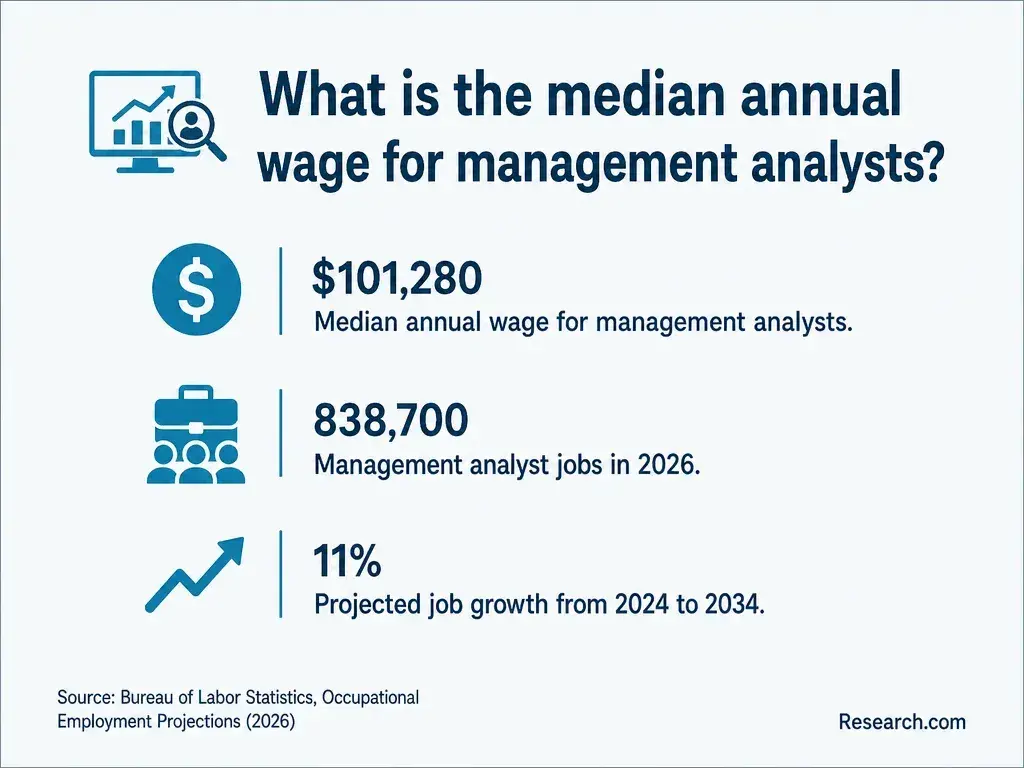
No single salary applies to BS in Business Administration graduates. For context, the U.S. Bureau of Labor Statistics reports a May 2025 median annual wage of $78,760 for market research analysts. That is the midpoint for workers across the occupation—not the pay a new graduate or industry switcher should expect. A coordinator role, a specialist role, and a management role have different requirements and pay prospects.
For a useful earnings estimate, compare local postings for roles you can qualify for now with postings you could plausibly qualify for after the degree. Account for prior experience and any step down in seniority during the switch. If project work is your target, explore economical project management degree programs as a functional alternative, then compare actual job requirements rather than using occupation-wide pay as a promised return.
Do Business Administration Careers Require Licenses or Certifications?
Many coordination, operations support, marketing, and general business roles have no universal occupational license. Particular jobs may still require employer-specified training or experience. Regulated work is different: a general business BS does not itself confer CPA eligibility, a financial-services license, or another professional authorization.
Voluntary certifications can be useful when their eligibility rules and assessed skills match a target job, but a course bearing the same subject name is not a certification. For project-oriented work, check a certifying organization's current requirements separately from any degree requirements. If prior college credit could shorten the academic route, explore transfer-friendly undergraduate project management schools and request an official evaluation before comparing their costs with business administration.
Other Things You Should Know About Business Administration
Study the target employer's customers, operating constraints, and terminology, then discuss a relevant public case or nonconfidential project. Label independent analysis as your own work, not employer experience.
Not always. An adjacent move may preserve responsibility, while a new function and industry may require a bridge role. Compare job duties and decision authority, not titles alone.
Potentially. Ask about cross-functional assignments, job shadowing, or a supervised project. Confirm permission before using workplace information in coursework or a portfolio.
Connect a target-role task to a specific result from your prior work, acknowledge the industry knowledge you are still building, and explain the steps you have taken to close that gap.
- Fast Facts: Employment rates of young adults (561) | ed.gov https://nces.ed.gov/fastfacts/display.asp
- Accreditation in the U.S. | ed.gov http://www.ed.gov/laws-and-policy/higher-education-laws-and-policy/college-accreditation/accreditation-in-the-us
- Entry-Level Jobs With a Business Administration Degree | Warner Pacific University http://www.warnerpacific.edu/blog/top-entry-level-jobs-ba-business-administration/
- Student internships and employment opportunities after graduation: A field experiment - ScienceDirect https://www.sciencedirect.com/science/article/pii/S0272775721000601
- What Can You Do With a Business Administration Degree? | snhu.edu https://www.snhu.edu/about-us/newsroom/business/what-can-you-do-with-a-business-administration-degree
- Is a Business Degree Still Worth It in Today's Job Market? | MVNU https://mvnu.edu/blogs/is-a-business-degree-still-worth-it/
- Why Is Accreditation Important? | ACE Blog https://ace.edu/blog/why-is-accreditation-important/
- MBA Concentrations: Types, Skills, and Career Paths | SCU https://www.scu.edu/business/blog/mba/mba-concentrations/
- What Jobs Can You Get With a Business Administration Degree? - Villa Maria College https://www.villa.edu/what-jobs-can-you-get-with-a-business-administration-degree/
- Top Concentrations for Your Business Degree: Marketing, Finance, or Management | LSU Online https://online.lsu.edu/newsroom/articles/top-concentrations-for-your-business-degree-marketing-finance-or-management/


