2027 BS in Business Administration and Finance: Can Concentration Requirements Add an Extra Term?
Audited and Verified:
Our Editorial and Data Verification Process
Research.com uses government datasets, official education statistics and primary institutional information to support its career and degree guides. Our review process checks factual accuracy, occupational definitions, source dates and the requirements associated with the credentials discussed.
How This Article Was Fact-Checked
Our editorial team verifies salary estimates, employment projections, education requirements and program information against original data providers and official organizations. Salary figures are checked against the relevant occupational definitions and reporting periods. Information about licensure, accreditation and required in-person training is reviewed separately.
Fact-checked and verified on:

Co-Founder and Chief Data Scientist
A finance concentration may fit inside a BS in Business Administration - or delay graduation if its required courses do not fit your remaining schedule. That distinction matters most when you are transferring credits, returning to school, or planning around work. This guide explains how to check the degree audit, prerequisites, course schedule, and costs before declaring the concentration. You will be able to judge whether the added finance coursework is worth the time it may require.
Key Things You Should Know
- Yes, a finance concentration can add an extra term even when it adds no credits to the degree, if a required course is offered too late or has an unmet prerequisite.
- There is no universal concentration credit count. Check how many finance credits are required, which courses can fill existing electives, and whether transferred credits satisfy specific requirements.
- Request a term-by-term graduation plan before declaring. Compare the finance path with the general business path using actual course offerings, remaining costs, and your target role.
What Is a BS in Business Administration and Finance?
Typically, this is a BS in Business Administration with an official finance concentration: a general business degree whose designated coursework emphasizes financial decisions. Schools may use different names, including a finance track or emphasis. Confirm the exact credential on the transcript or diploma; a collection of finance electives is not necessarily a formal concentration, and a business administration degree with a concentration is not automatically equivalent to a specialized BS in Finance.
The distinction matters for graduation planning. A concentration may use elective space already built into the business degree, while a specialized finance major may have a different core and prerequisite sequence. When comparing programs, use each school's published curriculum rather than assuming similarly named degrees take the same time. A broader business administration degree affordability duration and value guide can help frame the comparison, but your school's degree audit determines your remaining requirements.
Can a Finance Concentration Add an Extra Term?
Yes - but an extra term is not automatic. The deciding issue is whether every concentration requirement can be completed within the terms you would otherwise need to graduate. A concentration can fit without delaying completion when its courses replace open electives, prerequisites are already satisfied, and required classes are available in time.
The table separates added credits from scheduling delays. These are different problems and may call for different choices.
| Situation | Likely effect on completion |
| Finance courses fill remaining elective slots and run on schedule | No additional term solely because of the concentration |
| A required finance course needs an unfinished prerequisite | A later term may be necessary, even if the total degree credits stay the same |
| A required course is offered after the planned graduation term | Completion may be delayed unless an approved alternative is available |
| Finance requirements exceed available elective space | Additional courses may be needed; the timetable depends on when they can be taken |
Ask an adviser for two plans built from the current catalog and actual course schedule: one with the concentration and one without it. If speed is the priority, business degree options with shorter sessions are worth comparing, but shorter sessions will not resolve an unavailable prerequisite or required course.
How Many Credits Does a Finance Concentration Require?
There is no standard finance concentration credit requirement across US business schools. The catalog should specify the required finance courses and electives; the degree audit should show whether those courses fit within the credits already needed for graduation. Concentration credits and additional degree credits are not the same thing. A student may complete substantial finance coursework without increasing the degree's total credits if it fills open elective slots.
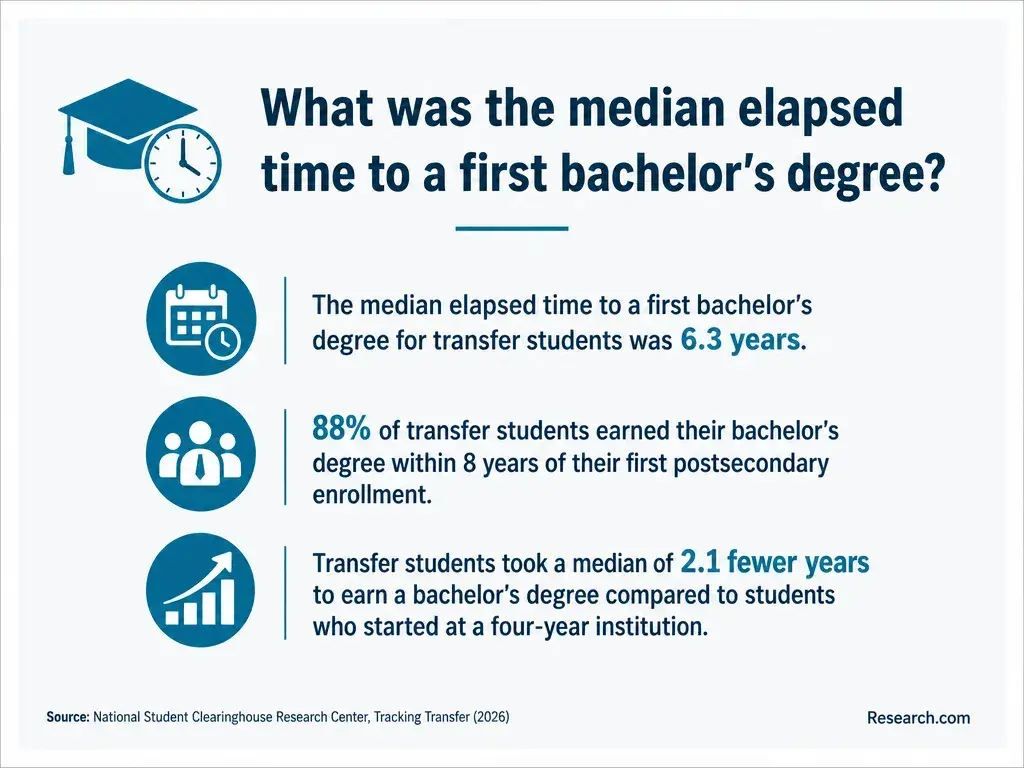
For transfer and returning students, the crucial distinction is between credit the school accepts and credit it applies to a specific requirement. Prior finance coursework might count as a free elective while leaving a required finance course outstanding. The same issue arises when applying previous coursework to a project management degree; the receiving institution decides equivalencies and where accepted credit applies.
Request an official audit that separates general education, business core, finance concentration, open electives, and residency requirements. If a prior course appears in the wrong category, submit its syllabus for a formal equivalency or substitution review. Do not plan a graduation date around a preliminary transfer estimate.
Students usually complete a business core that provides accounting, economics, statistics or quantitative reasoning, management, and introductory finance preparation. The finance concentration then builds on that foundation through courses that may address corporate finance, investments, financial markets, risk, or financial modeling. The exact mix - and its depth - depends on the program.
For timing, read the catalog as a prerequisite chain, not just a course list. An accounting or introductory finance course may need to be completed before an advanced finance class. Also check whether a finance elective can satisfy a general business elective and whether a capstone has separate enrollment conditions. If your goal is personnel management rather than financial analysis, human resources degree planning basics may clarify whether a different course sequence better matches the work you want to do.
Not inherently. Online delivery changes where you study; it does not remove prerequisite rules or guarantee that every finance course runs every term. An online program may offer a convenient schedule, while another may require live sessions, group work, proctored exams, or courses offered only at particular times. Campus programs can have similar bottlenecks.
Compare the finance course rotation in each format, including whether online and campus students can enroll in the same sections. Then match assignment deadlines and any live attendance to your work or caregiving schedule. Advertised completion speed for another business specialty, such as supply chain bachelor's options focused on completion speed, does not establish how quickly a finance concentration can be completed.
Admission to the college and eligibility to declare finance may be separate decisions. Some programs let business students select a concentration directly; others require completion of foundational courses, a particular academic standing, or approval by the business school. Requirements vary, so check the catalog that applies to your enrollment term.
For a transfer or returning student, ask whether previous accounting, economics, mathematics, or finance courses meet both entry conditions and degree requirements. Also confirm when you may declare the concentration: a late declaration can leave too little time for sequenced courses. If you are still choosing a school, accredited online colleges without application fees may reduce one application expense, but an application-fee policy says nothing about concentration eligibility.
The relevant price is your remaining cost to graduate with finance, compared with your remaining cost without it. Tuition may be charged by credit, course, or term. Add mandatory fees, materials and software, and any additional enrollment caused by course sequencing. An extra term can cost money even if the concentration adds no degree credits - for example, through term-based fees or delayed entry into full-time work.
Get a written estimate based on your evaluated credits and both term-by-term plans. Ask the financial-aid office how the proposed enrollment pattern affects aid eligibility, and check employer reimbursement rules before counting on that funding. Use lower-cost business degree options as a starting point for comparison, not as a substitute for an individualized cost estimate.
Yes. Verify the institution's recognized accreditation when evaluating the degree and financial-aid eligibility. Separately, a business school may hold accreditation from AACSB, ACBSP, or IACBE; check the accreditor's listing and the scope of coverage rather than assuming every degree or concentration is included.
Accreditation is not a shortcut for judging completion time. A properly accredited program can still have infrequent finance offerings or restrictive transfer rules. When reviewing ranked American online business degree options, check accreditation alongside the current finance curriculum, course schedule, and written transfer evaluation. A finance concentration also does not, by itself, grant a professional license or designation.
A finance concentration can support applications for finance-related work involving budgets, financial reporting, credit, or analysis. The best entry route depends on your prior experience and the employer's requirements. For example, someone with accounting or operations experience may be able to show relevant work alongside finance coursework; a new graduate may need an internship, supervised project, or entry-level role to demonstrate practical skills.
Evaluate the concentration against the tasks you want to perform. Look for chances to build and explain a spreadsheet model, interpret financial statements, and communicate assumptions - not just a finance label on the transcript. If your intended work is primarily in HR, online HR bachelor's programs accepting transfer credits offer a more directly related comparison. Finance coursework alone does not qualify someone to give regulated financial advice or move directly into a management role.
What Salary and Job Outlook Can Finance Graduates Expect?
The US Bureau of Labor Statistics reports a $102,740 median annual wage for financial and investment analysts in May 2025 and projects 7% employment growth for that occupation from 2025 to 2035. These are occupation-wide figures, not starting salaries or placement outcomes for graduates with a finance concentration. Employers may also expect analytical skills and relevant experience beyond the degree.
Use occupation data to test whether the work interests you, not to assume an extra term will pay for itself. Compare the concentration's added cost and time with the skills required in roles you would actually pursue. If your target work is project coordination rather than financial analysis, budget-friendly online project management programs provide another pathway to compare - but only after checking which qualification and experience your target employers request.
Other Things You Should Know About Business Administration
Often, but ask your adviser how the change would affect your catalog requirements and whether completed finance courses would still count toward graduation.
Not necessarily. Schools differ in whether a concentration appears on the diploma, transcript, or both. Confirm how your institution records it.
They may, if the needed course is offered, you meet its prerequisites, and your adviser confirms it applies to the degree. Check summer aid and tuition separately.
Only if the program explicitly permits that substitution and approves it. Relevant work experience does not automatically fulfill an academic requirement.
- Fast Facts: Time to degree (569) | ed.gov https://nces.ed.gov/fastfacts/display.asp
- Chapter 3 - Courses and Enrollment, Full Course of Study, and Reduced Course Load | USCIS https://www.uscis.gov/policy-manual/volume-2-part-f-chapter-3
- Finance - NYU Stern - New York University https://www.stern.nyu.edu/current-students/undergraduate/academics/degree-programs/bs-business/finance
- Program: Business Administration, Finance Concentration, B.A. | fullerton.edu https://catalog.fullerton.edu/preview_program.php
- Finance Concentration | Office of Undergraduate Programs | News at Poole College https://poole.ncsu.edu/undergraduate/majors-and-minors/business-administration/finance-concentration/
- FIN: BBA - Bachelor of Business Administration in Finance | Florida International University Catalog https://catalog.fiu.edu/programs/FIN%3ABBA/requirements-uz47h
- Finance B.S., with Corporate Finance Concentration | usf.edu https://cloud.usf.edu/catalog/undergrad/finance-bs-with-corporate-finance-concentration
- Business Administration Requirements | uoregon.edu https://business.uoregon.edu/programs/undergraduate/majors/business-administration/courses-requirements
- Course Policies - Policies and Procedures - UT Dallas 2021 Undergraduate Catalog - The University of Texas at Dallas https://catalog.utdallas.edu/2021/undergraduate/policies/course-policies
- Degree Requirements - Business - IU Columbus https://columbus.iu.edu/business/bachelor-program/degree-requirements/index.html