2027 Is an Online BS in Business Administration the Right Next Step for Court Administration Staff?
Audited and Verified:
Our Editorial and Data Verification Process
Research.com uses government datasets, official education statistics and primary institutional information to support its career and degree guides. Our review process checks factual accuracy, occupational definitions, source dates and the requirements associated with the credentials discussed.
How This Article Was Fact-Checked
Our editorial team verifies salary estimates, employment projections, education requirements and program information against original data providers and official organizations. Salary figures are checked against the relevant occupational definitions and reporting periods. Information about licensure, accreditation and required in-person training is reviewed separately.
Fact-checked and verified on:

Co-Founder and Chief Data Scientist
Court administration staff already manage work that keeps a public institution running: schedules, records, payments, purchasing, and service to people navigating the courts. An online BS in Business Administration could strengthen the budgeting, operations, and management skills behind that work, but it is not the best next step for every position.
This guide helps clerks, coordinators, and aspiring court managers weigh the degree against judiciary-specific training, check whether online study fits court hours, and identify the evidence they need before committing time and money.
Key Things You Should Know
- An online BS in Business Administration is most useful when a target court role calls for a bachelor's degree or broader budgeting, operations, personnel, or procurement skills - not simply more knowledge of court procedure.
- Compare the employer's job posting, your remaining degree requirements, and the program's actual schedule before enrolling; online courses may still require live meetings or group work.
- The May 2025 national median pay for administrative services managers was $114,130, but that occupation-wide figure is not an expected starting salary or a forecast of a court employee's promotion.
Is an online bachelor's degree in business administration right for court administration staff?
Usually, yes - if you need a bachelor's degree for a defined advancement opportunity and want transferable administrative skills. A BS in Business Administration is a general undergraduate business degree, not training in judicial procedure. Its value depends on whether the court work you want to do involves budgets, staffing, purchasing, performance measures, or organizational change.
The distinction matters because court titles vary across local, state, and federal systems. Someone responsible for filing accuracy may benefit more immediately from court-specific records training. Someone preparing to coordinate multiple offices or support a court administrator may have a stronger case for broad business study. This comparison identifies the likely fit; the relevant job description should settle it.
| Primary goal | Likely best-fit preparation | Key limitation |
| Advance into broader court operations | Business bachelor's degree plus documented court experience | A degree does not substitute for supervisory results or knowledge of court rules. |
| Improve knowledge of caseflow or records procedures | Judiciary-specific training and supervised practice | General business courses may spend little time on court processes. |
| Move into public budgeting or policy | Business coursework with relevant finance electives, or a public administration pathway | Program curricula and hiring requirements differ. |
For staff planning to remain employed, business administration education for employed professionals provides a useful comparison point. Before applying, obtain an actual target posting and mark which requirements the degree would meet, which your court experience already meets, and which would still require separate training.
What career benefits can court administration staff gain from a business administration degree?
The strongest benefit is a better way to explain and improve responsibilities court staff may already hold. Accounting and finance can help a purchasing coordinator interpret expenditures; operations courses can help a caseflow coordinator examine bottlenecks; management and HR coursework can support staff scheduling and communication. Public institutions still operate under statutes, judicial policies, appropriations, and accountability requirements. A private-sector efficiency technique is useful only if it respects those constraints.
The degree can also make existing work more legible to hiring panels. A candidate who can describe an approved scheduling improvement, its measure, and its limits offers stronger evidence than one who lists coursework alone. If the goal is specifically staff leadership rather than a broad business foundation, accelerated online organizational leadership school choices may be worth comparing. Check the actual courses and credits remaining rather than assuming a faster advertised pathway will fit your situation.
What jobs can court administration staff pursue with a business administration bachelor's degree?
A business degree can support applications for roles that combine administrative judgment with relevant experience. It does not, by itself, make a graduate a court administrator or qualify someone for every specialist position. Titles and minimum qualifications differ by court system, so compare duties rather than relying on a title alone.
| Possible role | Relevant court experience and business preparation | What else to check |
| Court operations coordinator | Caseflow or scheduling experience paired with process analysis and communication | Required court-system knowledge and authority over workflow |
| Budget or purchasing analyst | Payment or procurement work paired with accounting, budgeting, and spreadsheets | Government purchasing rules and any required analytical experience |
| Administrative services supervisor | Office coordination paired with staffing, operations, and performance reporting | Supervisory experience and the employer's promotion rules |
| Project coordinator | Support for technology or process changes paired with project planning | Evidence of completed projects and stakeholder coordination |
Court experience can also transfer to employers outside the judiciary, though the transition may require new industry knowledge. For staff specifically interested in purchasing and logistics, shorter supply chain degrees and career value offers a more specialized comparison than general business study.
Programs commonly combine general education with accounting, economics, finance, management, marketing, operations, statistics, and business law. Exact requirements vary. For court staff, the most useful question is whether assignments develop skills they can apply within public-sector rules: reading a budget, mapping a process, evaluating a purchasing choice, or communicating a recommendation to different stakeholders.
Look beyond course names. A project management class may teach schedules and risk registers without providing substantial practice leading a real project. A formal concentration requires an institution-defined set of courses; an elective or workplace project is not automatically a concentration or professional credential. If project coordination is the target, compare the business curriculum with low-cost project management degree options for the depth of project coursework and the number of additional credits you would need.
Ask whether a capstone may address a court-related problem. Any use of case records, personnel information, or internal performance data requires appropriate permissions; a hypothetical or publicly available dataset may be safer and fully sufficient for an academic assignment.
Online study can eliminate a commute and make it easier to remain on the court's work schedule. It does not necessarily let students study at any hour. Courses may have live sessions, timed exams, weekly deadlines, team presentations, or required software. Campus study offers in-person access to faculty and classmates but may be harder to coordinate around hearings, coverage duties, and travel.
For court staff, the decisive comparison is the actual weekly timetable, not the delivery label. Request sample syllabi for required courses, including the capstone, and ask about proctoring, group meetings, accessibility, campus visits, part-time sequencing, and leave policies. If speed matters, compare accelerated undergraduate programs against the hours you can reliably study during busy court periods. A shorter calendar does not mean less coursework.
Requirements depend on the school and on whether you enter as a first-year or transfer student. Institutions may request prior transcripts and evidence of academic readiness; entry to the business major can have requirements separate from admission to the university. Prior court employment may strengthen an application, but it does not automatically satisfy accounting, mathematics, or other course requirements.
If you have previous college coursework, ask for an official evaluation showing credits accepted and credits applied to general education, the business core, electives, and any residency requirement. An accepted course that fills only an elective slot may not shorten the path to graduation. When reviewing national rankings of fast-paced business bachelor's programs, confirm each school's admission route and written transfer evaluation before treating a published completion pace as your own.
Completion time depends chiefly on credits that apply to the degree, required-course availability, prerequisites, and how many courses you can take while working. Tuition may be charged by credit, course, or term; fees, books, software, and proctored exams can change the total. Do not compare advertised tuition without comparing the remaining requirements at each school.
Build a written estimate from each institution's degree audit and current charges. Include the courses still needed, likely enrollment pace, fees, and any additional term caused by course sequencing. Lower-tuition online business administration programs can be a starting point, but the lowest listed tuition may not produce the lowest cost to finish. Ask your court employer whether education assistance is available, which courses qualify, when reimbursement occurs, and whether continued employment or a minimum grade is required.
Check institutional accreditation first through the school's stated accreditor and the U.S. Department of Education's recognition information. Then check whether a business-specific accreditor - such as AACSB, ACBSP, or IACBE - covers the school or program you are considering. These are different checks: a claim about the business school does not establish that every degree or delivery location is within the accreditor's scope.
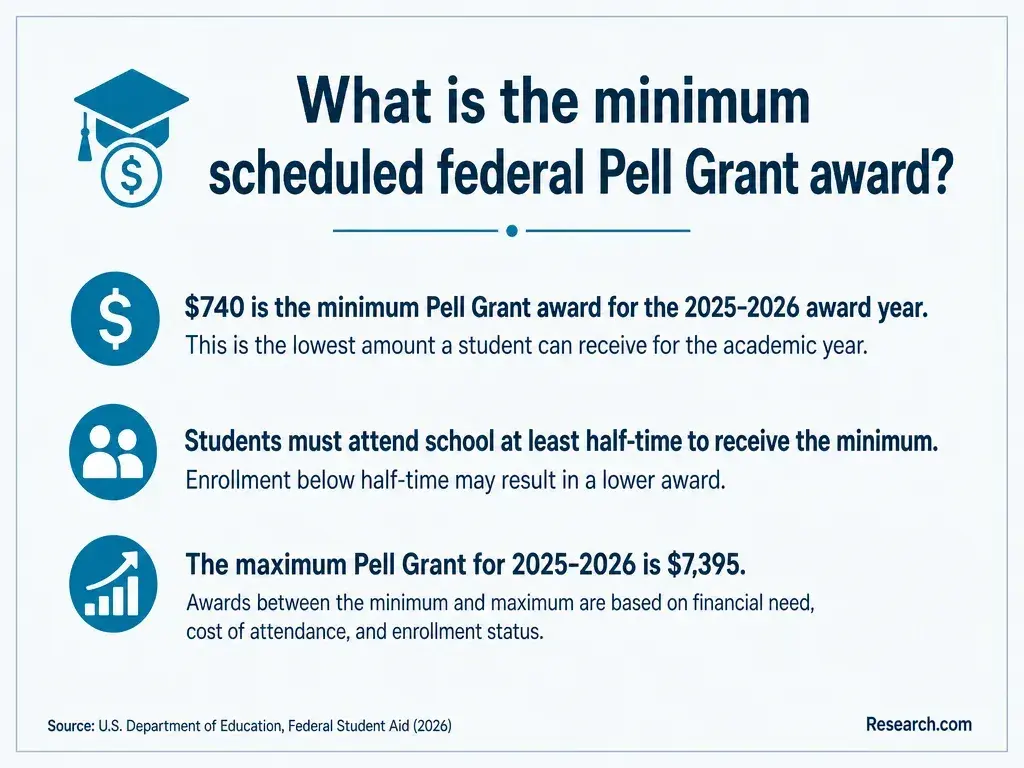
Verify the exact BS program and online offering with the institution and accreditor, especially if a job posting or future school specifies an accreditation requirement. Accreditation alone does not establish that a program is affordable or that graduates obtain particular jobs. When comparing business administration tuition and FAFSA eligibility, also confirm the institution's current aid eligibility and your individual aid options with its financial-aid office.
There is no single business administration license that qualifies someone to manage a court. Court positions instead have employer-specific education, experience, training, and sometimes background-check requirements. Judiciary or court-management credentials may support professional development, but whether they matter for hiring or promotion depends on the court system and position.
A business degree likewise does not award a project management credential or authorize regulated accounting practice. If a target posting names a certification, check the issuing organization's eligibility rules separately. For a staff member whose immediate goal is project work, employer training or a focused credential may be more direct than another degree; comparing total costs of project management programs helps put the degree alternative in perspective.
What salary and job outlook can business administration graduates expect?
There is no reliable single salary for "business administration graduates," and public-sector pay often follows a posted grade or negotiated schedule. For context, the U.S. Bureau of Labor Statistics reports a May 2025 median annual wage of $114,130 for administrative services managers and projects 5% employment growth for that occupation from 2025 to 2035. Those figures describe workers across industries and experience levels - not new graduates or court administrators specifically.
Use the pay grade and qualifications on actual court vacancies to evaluate your likely return. Compare a potential increase in responsibility and compensation with your remaining education cost and time; account for the possibility that advancement requires an opening and demonstrated experience. If finishing sooner would materially change that calculation, quick-completion business degree pathways merit review - but only after a school confirms which of your credits meet degree requirements.
Other Things You Should Know About Business Administration
No. It develops general organizational skills; court rules, case-management systems, and judicial policies require training specific to your jurisdiction and role.
Yes, especially experience with scheduling, purchasing, records controls, or service operations. Translate those duties into clear examples and check what industry-specific knowledge the new employer requires.
Not automatically. Compare the target job's requirements with a certificate, selected courses, employer training, or a graduate program. Also check second-bachelor's rules before assuming your previous credits will reduce the new degree's requirements.
Describe your responsibilities, methods, and results at a level your employer permits. Do not disclose sealed cases, personal information, internal records, or a project's claimed impact without authorization.
- Accreditation in the U.S. | ed.gov http://www.ed.gov/laws-and-policy/higher-education-laws-and-policy/college-accreditation/accreditation-in-the-us
- Court Administration and Services Careers | United States Courts https://www.uscourts.gov/careers/who-works-judiciary/court-administration-and-services-careers
- III. Characteristics and Skills of an Effective Court Manager | ohio.gov https://www.supremecourt.ohio.gov/courts/services-to-courts/managing-courts-in-ohio-a-guide-for-court-managers/iii-characteristics-and-skills-of-an-effective-court-manager/
- What Can You Do With a Business Administration Degree? | American Military University https://www.amu.apus.edu/area-of-study/business-administration-and-management/resources/what-can-you-do-with-a-business-administration-degree-exploring-options/
- What Can I Do with a Business Administration Degree? | CTU https://www.coloradotech.edu/degrees/studies/business-and-management/articles/what-can-i-do-with-a-business-administration-degree
- Business Administration | broward.edu https://www.broward.edu/academics/business/business-administration.html
- Court Administrator | NC State Online and Distance Education https://online-distance.ncsu.edu/career/court-administrator/
- How Long Does it Take to Get a Business Degree Online? | stevenson.edu https://www.stevenson.edu/online/about-us/news/how-long-does-it-take-to-get-a-business-degree-online/
- Online Bachelor's Degree in Business Administration | Purdue Global https://www.purdueglobal.edu/degree-programs/business/bachelor-business-administration/
- BA vs BS: Which is the Better Business Degree? - UC Online https://www.online.uc.edu/blog/ba-vs-bs-which-is-the-better-business-degree-uc-online.html