2027 Choosing a BS in Business Administration for Business Roles in Hospital Administration
Audited and Verified:
Our Editorial and Data Verification Process
Research.com uses government datasets, official education statistics and primary institutional information to support its career and degree guides. Our review process checks factual accuracy, occupational definitions, source dates and the requirements associated with the credentials discussed.
How This Article Was Fact-Checked
Our editorial team verifies salary estimates, employment projections, education requirements and program information against original data providers and official organizations. Salary figures are checked against the relevant occupational definitions and reporting periods. Information about licensure, accreditation and required in-person training is reviewed separately.
Fact-checked and verified on:

Co-Founder and Chief Data Scientist
A hospital needs people who can manage budgets, purchasing, staffing processes, and projects - but a business degree does not prepare someone for every hospital role equally. If you are choosing a BS in Business Administration, the key is to match its coursework and practical opportunities to the work you want to do. This guide explains where business graduates can enter hospital operations, what experience employers may expect, and how to evaluate programs without mistaking a degree for an automatic route into management.
Key Things You Should Know
- A BS in Business Administration can support entry into hospital finance, purchasing, HR, and operations support; leading a department usually requires relevant experience beyond the degree.
- Prioritize accounting, operations, analytics, HR, and healthcare-specific learning - and seek an approved project or internship that demonstrates those skills in a care setting.
- For perspective, the U.S. median annual wage for administrative services managers was $114,130 in May 2025, but that occupation-wide figure is not a starting salary for business graduates.
What is a BS in Business Administration for Hospital Administration Roles?
A BS in Business Administration is an undergraduate degree covering organizational functions such as accounting, management, finance, and operations. In a hospital, those skills may apply to nonclinical work: monitoring departmental spending, coordinating vendors, supporting staffing processes, or improving administrative workflows.
The degree is not a clinical qualification or a guaranteed hospital management credential. A BBA or specialized healthcare administration bachelor's may serve a similar goal, but the actual courses matter more than the label. Choose general business if you want flexibility across hospital functions or industries. Favor a healthcare-focused program if it offers meaningful instruction and supervised experience in the setting you intend to enter.
If finishing quickly is a priority, compare online business bachelor's degrees with shorter timelines against the time needed to gain relevant hospital experience. A shorter academic schedule does not replace it.
What jobs can you get in hospital administration with a business degree?
Business graduates are more likely to enter a defined administrative function than to become hospital administrators immediately. Job titles vary by employer, so compare responsibilities and minimum qualifications rather than searching for one title alone.
The distinctions below show where a business degree may help and what additional evidence an applicant would need.
| Potential role | Typical work | Evidence that strengthens an application |
| Operations or administrative coordinator | Schedules, reports, process tracking, and support for a department | Spreadsheet work, communication, and process documentation |
| Purchasing or supply chain assistant | Purchase orders, inventory records, and vendor coordination | Procurement coursework and inventory or purchasing experience |
| HR assistant or coordinator | Recruiting logistics, employee records, and onboarding support | HR coursework, discretion, and applicable employment-law knowledge |
| Revenue cycle or finance support staff | Billing workflows, account follow-up, or budget reporting support | Accounting fundamentals and training on the employer's systems |
Hospital HR is a distinct path from hospital operations leadership. If that function appeals to you, compare business electives with HR education costs and career planning before choosing a concentration. Likewise, revenue cycle work requires knowledge of healthcare payment processes that a general finance class may not cover.
What education and experience do hospital administrators need?
Requirements depend on the scope of the job. An administrative support position may accept a bachelor's degree plus relevant skills; responsibility for staff, large budgets, or hospital-wide operations generally calls for substantial experience. Some employers prefer a graduate degree for senior leadership, but an MBA or healthcare administration master's is not a universal entry requirement.
For a career changer, the starting point is existing responsibility. Experience in scheduling, customer service, purchasing, payroll, or team coordination can be relevant if you can explain its scale and results. Experience in a hospital or another care setting adds familiarity with how administrative decisions affect clinicians and patients. A useful progression is to seek a function-specific role, learn its healthcare workflows, and then pursue broader responsibility.
Employees who need to study while building that experience can compare business administration education for employed professionals. Before enrolling, ask a hospital employer which degrees and experience it recognizes for the next role - not just whether it offers tuition assistance.
Look first for a sound business core, then for opportunities to apply it to healthcare. Accounting and managerial finance help with budgets and costs; operations and supply chain courses address purchasing and workflow; statistics and spreadsheet analysis support reporting. HR and organizational behavior matter when work involves staffing, while business ethics and information systems help frame responsible decisions about sensitive information.
Healthcare electives can add context on payment, regulation, quality, or health systems. Check whether they are required, available regularly, or merely listed as possible electives. An official healthcare concentration should have published requirements; one healthcare course does not create a concentration.
Applied work is especially valuable when it produces evidence you can discuss with an employer. For example, a faculty-approved project might map a publicly documented purchasing process or analyze a de-identified, authorized dataset. Do not assume a student may access patient records or confidential hospital data. If purchasing becomes your primary goal, compare the business curriculum with a specialized supply chain route, including supply chain college costs versus potential career outcomes.
Yes, if the program provides the courses and support you need and you can obtain relevant practical experience. Online study can help someone already working in a hospital keep that job. It does not, by itself, provide clinical-setting exposure, a hospital internship, or a flexible schedule.
Ask whether classes require live attendance, proctored exams, group meetings, campus visits, or an internship. Confirm whether required healthcare electives run online and how often they are offered. For shift workers, an accelerated term can mean tighter weekly deadlines rather than less work; compare business programs with accelerated online classes using actual course schedules, not the advertised completion time alone.
A bachelor's degree commonly requires about four years of full-time study from the beginning. Transfer credit, part-time enrollment, prerequisite sequencing, and course availability can change the remaining timeline. A school must determine not only which credits it accepts, but which fulfill business-core, elective, and residency requirements.
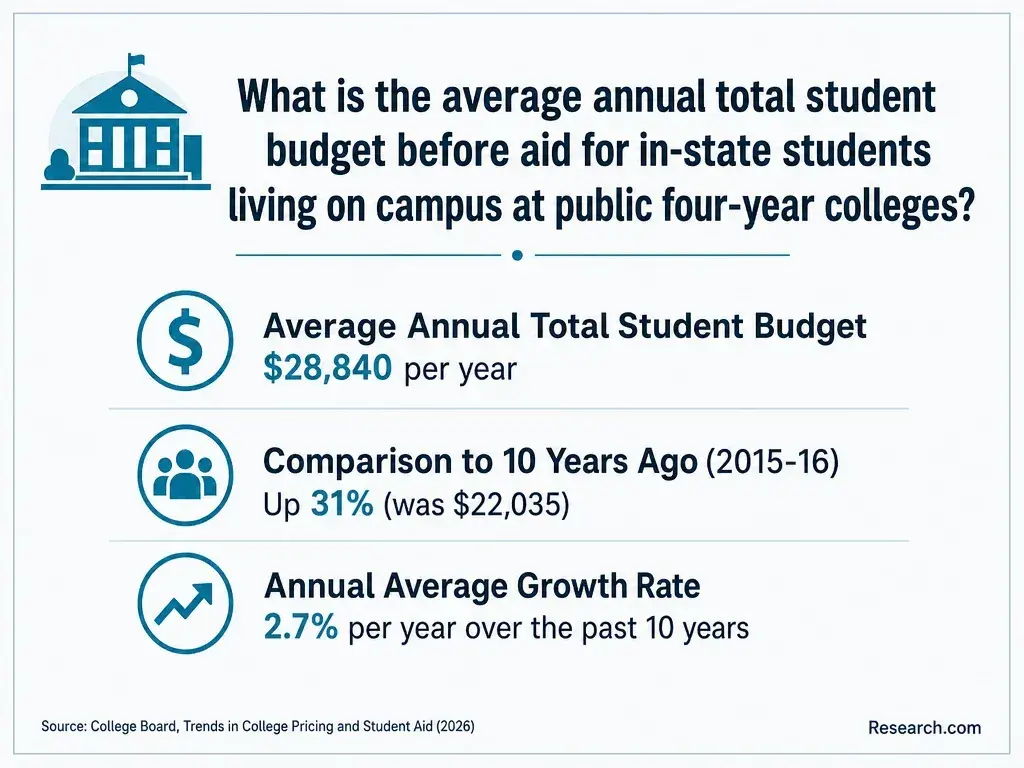
There is no reliable single price for this pathway. Compare each school's estimate for your remaining required credits, tuition and mandatory fees, books or software, travel for any in-person requirement, and likely borrowing. A faster program may reduce time away from work without reducing tuition; an employer reimbursement benefit may also arrive after you pay the bill.
Use a degree audit and written cost estimate when applying a business administration degree affordability, duration, and value guide to your own circumstances.
Requirements vary by institution and by whether you apply as a first-year or transfer student. Schools generally request prior academic records; a business major may also have its own GPA or prerequisite rules. Mathematics, introductory accounting, or economics requirements should be checked in the current catalog rather than assumed.
If you have previous college work, send official transcripts and request an evaluation showing where accepted credits apply. Ask admissions about entry requirements, then ask an academic adviser to confirm remaining degree requirements. An application-fee waiver can reduce the cost of exploring options; a guide to online colleges without application fees can help you identify schools to investigate, but it does not establish their current admission or transfer policies.
First, confirm that the institution holds recognized institutional accreditation and that it applies to the school awarding your degree. Then check any claimed business accreditation - such as AACSB, ACBSP, or IACBE - directly with the accreditor, including whether the relevant school and degree are within its stated scope. Institutional and business accreditation answer different questions; neither guarantees a hospital job.
Program quality for this goal also depends on accessible healthcare electives, faculty guidance, internship support, and a path to graduation that fits your schedule. Request the current catalog, a sample degree plan, internship rules, and any clearly defined outcomes data. When you evaluate American online business school options, verify those details with each institution rather than treating a ranking as evidence that its program fits your hospital career target.
A certification is most useful after you identify a job function and check its eligibility rules. Project management training may help someone coordinating hospital initiatives; HR credentials may be relevant to employee services; healthcare administration or revenue cycle credentials may fit other paths. Some professional certifications require documented experience, specific education, or an exam. A business bachelor's alone does not confer them.
Before paying for a credential, review job postings from your target employers and the certifying organization's current requirements. If project work is the goal, compare a short credential and supervised project experience with cheapest accredited online project management options. A second degree may add less value than relevant work if you already have the needed academic foundation.
What salary and job outlook can hospital administration graduates expect?
There is no single salary for a business graduate entering hospital administration. Pay depends on the function, employer, location, and prior experience. As one reference point, the U.S. Bureau of Labor Statistics reports a May 2025 median annual wage of $114,130 for administrative services managers and projects 5% employment growth for that occupation from 2025 to 2035. Those figures cover workers across industries and experience levels; they are not hospital-specific starting-pay estimates.
For a realistic comparison, collect local postings for the exact roles you could qualify for now, then separate their pay from postings requiring management experience. Compare that evidence with your remaining education costs and the value of experience you can gain while studying. A degree is more likely to pay off when it closes a stated hiring requirement or helps you move into work with greater responsibility - not simply because a managerial occupation has a high median wage.
If you are comparing a separate project management bachelor's as an alternative, FAFSA planning for project management bachelor's students is relevant to that alternative - but compare its aid offer with the business program's actual offer before deciding.
Other Things You Should Know About Business Administration
Usually not for nonclinical jobs such as purchasing or administrative coordination. Duties that involve clinical practice are different; check the specific posting and applicable licensing rules.
Not by itself. Nursing home administrator licensure has state-specific education, experience, examination, and other requirements. Check the state licensing board before choosing a program for that goal.
It can help you learn the setting and make contacts, particularly if the work demonstrates coordination or communication. It should not be presented as budget or staff-management experience unless you actually held those responsibilities.
Choose based on the skills the role develops. Hospital employment builds familiarity with internal operations; a vendor role may build relevant purchasing, systems, or client-service experience. Neither route automatically leads to hospital management.
- Internship Experience: A Transition from Academic World to Health Care Workplace | nih.gov https://pmc.ncbi.nlm.nih.gov/articles/PMC9226739/
- Health Insurance Portability and Accountability Act (HIPAA) Compliance - StatPearls - NCBI Bookshelf https://www.ncbi.nlm.nih.gov/books/NBK500019/
- Definitions | Transfer Credit Ohio https://transfercredit.ohio.gov/educational-partners/educational-partner-initiatives/articulation-transfer-policy-policy/articulation-transfer-policy-definitions
- Health Care Management - Business Administration, B.B.A. | Mississippi University for Women https://www.muw.edu/business/bba/hcm/
- Revenue Cycle Management in Health Care Explained | Tulane University https://online.tulane.edu/public-health/blog/revenue-cycle-management-health-care
- BS in Health Care Administration | Online Bachelor's Degree | Capella University https://www.capella.edu/online-health-science-degrees/bs-health-care-administration-program/
- Business Administration: Healthcare Management, AS | laguardia.edu https://www.laguardia.edu/majors/healthcare-management/
- Online Accelerated Bachelor's Degree in Health Care Administration | Purdue Global https://www.purdueglobal.edu/degree-programs/health-sciences/exceltrack-bachelors-healthcare-administration/
- Healthcare Management Career Guide | American College of Education https://ace.edu/student-success/career-guides/healthcare-management/
- Online Healthcare Administration Degree: What to Look for in a Program | CSP Global Concordia University, ST. Paul https://online.csp.edu/resources/article/online-healthcare-administration-degree/