2027 Online BS in Business Administration Admissions with A College Resume with Multiple Career Changes: What to Check
Audited and Verified:
Our Editorial and Data Verification Process
Research.com uses government datasets, official education statistics and primary institutional information to support its career and degree guides. Our review process checks factual accuracy, occupational definitions, source dates and the requirements associated with the credentials discussed.
How This Article Was Fact-Checked
Our editorial team verifies salary estimates, employment projections, education requirements and program information against original data providers and official organizations. Salary figures are checked against the relevant occupational definitions and reporting periods. Information about licensure, accreditation and required in-person training is reviewed separately.
Fact-checked and verified on:

Co-Founder and Chief Data Scientist
A resume that moves between industries or job functions can make an online business degree application feel harder to explain. For most applicants, the more important questions are whether they meet the school's academic requirements and can show a credible reason for studying business now.
This guide is for career changers considering an online BS in Business Administration, including those returning to college. It explains how to present a varied work history, check admission and transfer rules, and judge whether the degree fits the role they want next.
Key Things You Should Know
- Multiple career changes do not, by themselves, disqualify an applicant; academic eligibility and any separate business-major requirements control admission.
- Use the resume to show recurring skills and a specific next goal, but obtain an official evaluation before assuming earlier college credits will count toward the degree.
- Compare the remaining courses, total cost, online attendance rules, and career support, not just the advertised program length, before enrolling.
What is an online bachelor's in business administration, and who is it for?
An online BS in Business Administration is an undergraduate degree covering business functions such as accounting, management, marketing, finance, and operations.
"Online" describes delivery, not necessarily pacing: courses may still have scheduled meetings, group assignments, or fixed deadlines. A school may instead award a BBA or BA in Business; compare the actual curriculum and degree requirements rather than assuming the titles are interchangeable.
The degree can fit someone whose work history has revealed an interest in a specific business role, such as moving from customer service into marketing coordination or from logistics work into operations.
Start with the target role and identify which skills you already use. If you need only one skill or a credential required by an employer, targeted training may be more direct than another bachelor's degree. To compare curricula and delivery options, compare leading American online business degree schools.
Can a college resume with multiple career changes qualify for admission?
Yes. A varied resume is not normally an academic disqualification. Admissions decisions depend on the institution's stated criteria, which may include prior education, transcripts, academic standing, and, in some programs, separate entry requirements for the business major.
Relevant work can strengthen an application without replacing a required credential or prerequisite unless the school explicitly allows an alternative.
Distinguish eligibility from persuasiveness. A transcript may establish eligibility; a resume or statement can explain why a sequence of different jobs has led to this degree.
For example, retail, hospitality, and administrative work could collectively show customer communication, scheduling, and process responsibility. The applicant should describe what they actually did, not recast every job as management experience.
If applying to several schools while testing which policies fit your record, colleges that waive online application costs may reduce that initial expense. A waived fee says nothing about admission, transfer credit, or program quality.
What admissions requirements apply to online business administration programs?
Requirements vary by school and by whether you are entering college for the first time, transferring, or seeking a second bachelor's degree. Read the current admissions page and business-major catalog separately. For a precise comparison, keep these decisions distinct:
| Decision | What to verify | Who typically decides |
| Institutional admission | Prior credential, official transcripts, academic standing, and application materials | Admissions office |
| Business-major entry | Any GPA threshold or required math, accounting, economics, or other courses | Business school or academic department |
| Transfer-credit application | Which accepted courses satisfy general education, business core, electives, and residency rules | Registrar, transfer office, and academic department |
Ask whether an enrollment gap, older coursework, pass-fail grade, or previous bachelor's degree changes the rules for you. If a prerequisite is missing, ask whether it must be finished before admission or before taking a particular business course. This overview of required credits before entering business administration study can help you prepare questions, but the school must confirm its own policy.
Make the work history accurate and easy to follow, then use a short statement, if the application permits one, to connect it to a defined goal. Admissions readers need not see every change as a promotion. They need to understand your responsibilities, preparation for study, and reason for choosing business administration now.
A useful review sequence is:
- List roles with correct dates, employers, and concise descriptions of actual responsibilities.
- Identify recurring evidence, such as budget tracking, customer problem-solving, training colleagues, scheduling, or spreadsheet work.
- Name a plausible next role and the business knowledge you still need; explain significant shifts or gaps briefly, without apologizing for them.
- Match the statement to the program's courses and check that its claims agree with the resume and transcripts.
Be specific about the target function. Someone whose changes have moved toward recruiting may want to compare a general business degree with human resources degree costs and options. That comparison is more useful than claiming that every previous job was an HR role.
First, confirm the institution's accreditation and status through the accreditor and the U.S. Department of Education's accreditation records. Then check whether the specific business school or program claims additional accreditation from AACSB, ACBSP, or IACBE, and verify the accreditor's stated scope.
Institutional accreditation and business-program accreditation are different checks. Neither alone establishes that a particular online course schedule or career service meets your needs.
If federal student aid matters, also confirm the school's current aid eligibility and the program's eligibility with its financial-aid office. A list of FAFSA-accepting colleges for business administration students can help form a shortlist, but it does not replace verification for your enrollment term.
Most programs combine general education with introductory and upper-level business study. Depending on the school, the business core may include accounting, economics, finance, marketing, organizational behavior, operations, statistics, and business law.
Electives, an official concentration, and a capstone are separate features to check in the catalog; taking an elective does not automatically award a concentration.
Choose courses against the gap between your experience and target role. A career changer with strong client-facing experience might gain more from accounting and data analysis than another introductory communication course.
Someone aiming at project coordination should examine scheduling, budgeting, and operations assignments; if deeper specialization is the goal, compare affordable project management schools alongside general business programs. Ask which required courses are offered online each term and whether prerequisites delay access to them.
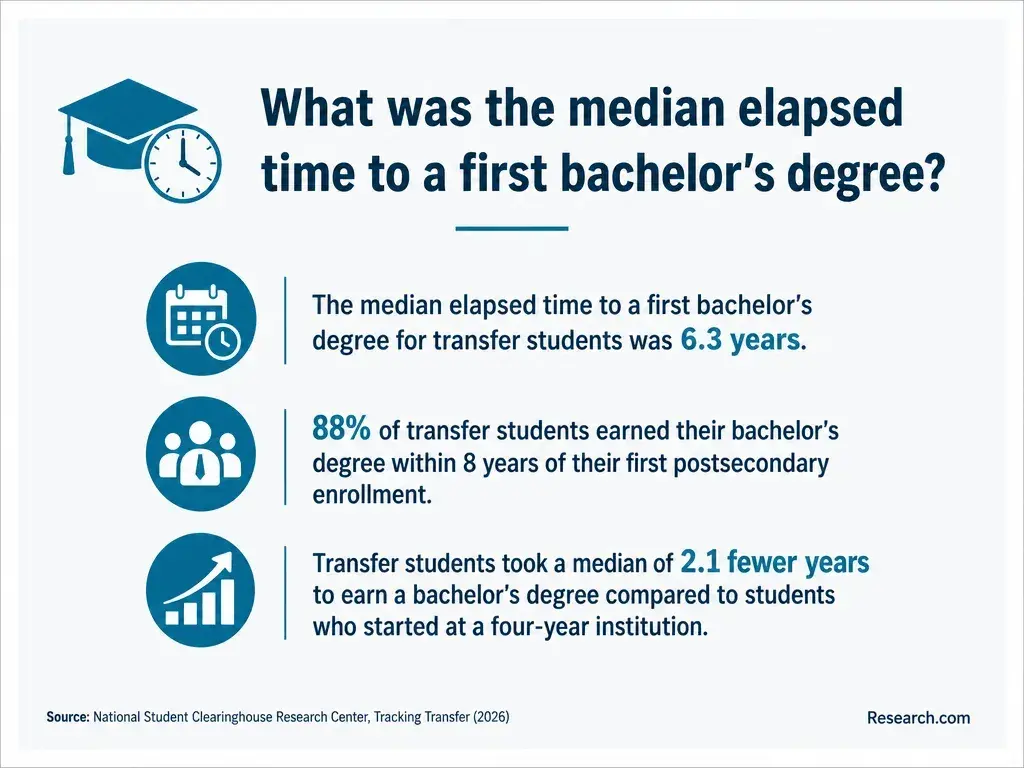
There is no dependable personal completion estimate until a school evaluates your transcripts and maps accepted credits to its requirements.
An accepted course may count only as an elective, while business prerequisites, upper-level credits, or residency rules can still remain. Part-time study may make work and coursework manageable but extend the calendar; an accelerated calendar does not erase the required work.
Request a written degree audit and a term-by-term course plan. Compare tuition using the remaining required courses, then add mandatory fees, books, software, possible proctoring or travel costs, and the financing costs of any borrowing.
Check aid eligibility at your planned enrollment intensity and any employer-reimbursement conditions. Listings of economical online business administration college programs are a starting point, not a substitute for your individual net-cost estimate.
The credential's value depends more on the institution, curriculum, and evidence of learning than on whether lectures occur online or on campus. Delivery does affect a working career changer's ability to attend, collaborate, and build connections.
| Feature | Online program | Campus-based program |
| Attendance | May allow remote study but still require live sessions or fixed deadlines | Usually requires scheduled travel and in-person class time |
| Applied work | May use remote teams, simulations, or approved workplace projects | May offer in-person teams and local employer activities |
| Career access | Depends on remote advising, recruiting access, and employer connections | Depends on campus services and local recruiting access |
Before choosing a format, ask for sample course schedules, group-project expectations, exam rules, and any campus or internship requirements. Explore US business bachelor's fast-track rankings only after checking whether the listed pacing works with your job and whether your credits will apply.
A business degree can support applications for roles such as operations coordinator, marketing coordinator, HR specialist, or project coordinator. The realistic entry point depends on your prior work and the employer's requirements.
Customer-facing experience may support a marketing or sales-operations transition; moving into financial analysis may require more quantitative preparation. A degree does not itself confer a manager title or qualify someone for a regulated occupation.
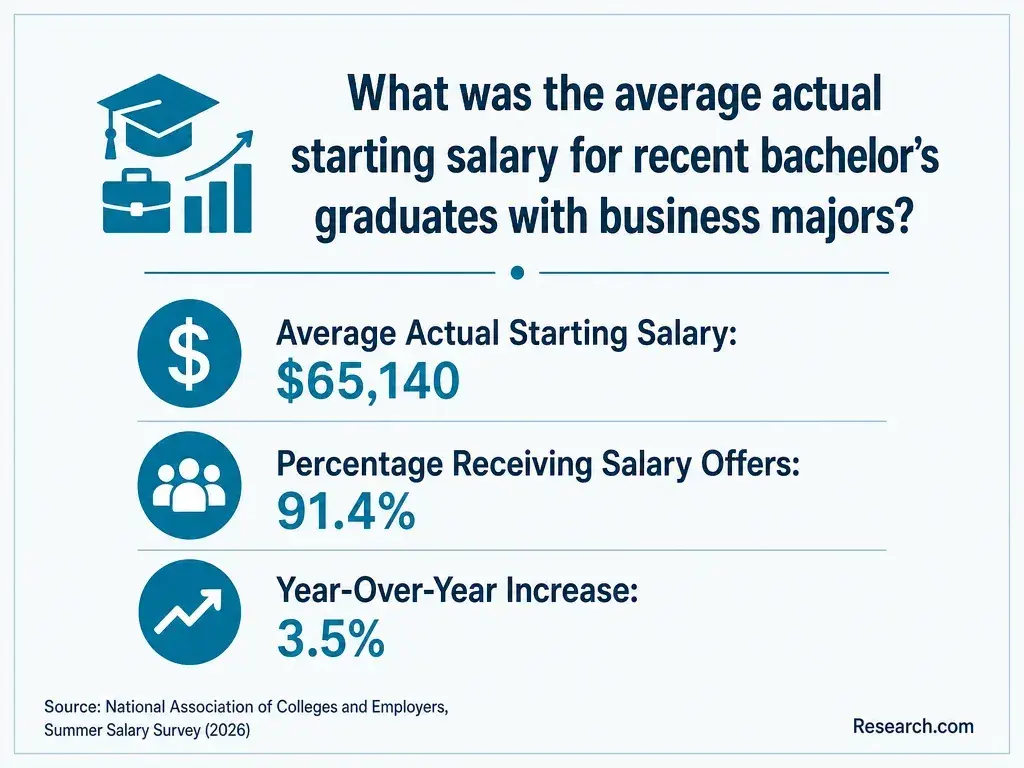
For context, the U.S. Bureau of Labor Statistics reports a $78,760 median annual wage for market research analysts in May 2025 and projects 7% employment growth from 2025 to 2035.
Those are occupation-wide figures, not expected pay or job prospects for a new business graduate. Compare postings for your target role and location, including the software, experience, and education requested.
If your target is specifically project management rather than broad business work, estimate the cost of accredited project management study as an alternative before committing to a general degree.
Which certifications or experience can strengthen business administration career prospects?
Evidence tied to the target role usually matters more than collecting unrelated credentials. Look for supervised work, an internship, volunteer responsibility, or an approved course project that demonstrates a specific task: maintaining a budget, analyzing a process, preparing a market brief, or coordinating a schedule.
Ask the school whether a current job can support an academic project; employment does not automatically earn internship or prior-learning credit. Protect employer and customer information in anything you share.
Before paying for a certification, check its eligibility rules and whether employers in your target function request it. A short course may address a narrow spreadsheet or accounting gap; a separate degree may make sense if the goal requires broader study.
For applicants considering another undergraduate route into project work, project management undergraduate scholarship comparisons can inform the cost discussion, but aid and award eligibility must be confirmed individually.
Other Things You Should Know About Business Administration
Follow the application's instructions. If it requests a complete history, include them accurately. Otherwise, prioritize relevant roles while keeping dates and explanations consistent across your materials.
Usually not. If recommendations are required, choose people who can speak concretely about your work, reliability, and readiness to study. Confirm the school's rules for who may recommend you.
Yes, if you meet the program's eligibility requirements. Relevant business responsibilities may exist within a non-business job, but describe those duties precisely rather than changing your job title.
Speak with an adviser before changing electives or a concentration. Check which courses still satisfy the degree and whether the new goal calls for different experience, targeted training, or a different academic path.
- School-Determined Requirements - FSA Partner Connect https://fsapartners.ed.gov/knowledge-center/fsa-handbook/2026-2027/vol1/ch1-school-determined-requirements
- How Do Transfer Credits Work When You Go Back to School? | Whitworth Online https://online.whitworth.edu/news-articles/how-do-transfer-credits-work-when-you-go-back-to-school/
- Embracing Change: Five Effective Resume Strategies for Highlighting Career Transitions | Herzing University https://www.herzing.edu/blog/embracing-change-five-effective-resume-strategies-highlighting-career-transitions
- Online Bachelor's Degree in Business Administration | Purdue Global https://www.purdueglobal.edu/degree-programs/business/bachelor-business-administration/
- Your Resume: What to Put In, What to Leave Out | Columbia Career Education https://www.careereducation.columbia.edu/resources/your-resume-what-put-what-leave-out
- Basic requirements | UC Admissions - University of California https://admission.universityofcalifornia.edu/admission-requirements/transfer-requirements/preparing-to-transfer/basic-requirements.html
- Transfer credit policies - Office of Admissions https://admit.washington.edu/apply/transfer/policies/
- Online B.S. in Business Administration for Transfer Students | sonoma.edu https://business.sonoma.edu/programs/undergraduate/bachelors-online-degree-completion-program
- How to Write a Career Change Resume - Template - Wharton | Wharton Executive Education https://executiveeducation.wharton.upenn.edu/thought-leadership/wharton-online-insights/how-to-write-a-career-change-resume/