2027 BS in Business Administration Decision Guide: A Broad Degree or a Specialized Certificate for an Office Manager
Audited and Verified:
Our Editorial and Data Verification Process
Research.com uses government datasets, official education statistics and primary institutional information to support its career and degree guides. Our review process checks factual accuracy, occupational definitions, source dates and the requirements associated with the credentials discussed.
How This Article Was Fact-Checked
Our editorial team verifies salary estimates, employment projections, education requirements and program information against original data providers and official organizations. Salary figures are checked against the relevant occupational definitions and reporting periods. Information about licensure, accreditation and required in-person training is reviewed separately.
Fact-checked and verified on:

Co-Founder and Chief Data Scientist
An office manager who already coordinates staff, vendors, budgets, and daily operations may not need a broad degree to solve a specific skills gap. But a certificate may not meet a bachelor's requirement for advancement. This guide compares a BS in Business Administration with targeted credentials through the lens of work you already do and the role you want next. It covers education requirements, courses, cost, online study, and salary evidence so you can choose a path without mistaking a credential for a promotion guarantee.
Key Things You Should Know
- Choose a BS in Business Administration when a target role requires a bachelor's degree or calls for broader preparation in budgets, people, and operations; choose a certificate when a defined skill gap is the main obstacle.
- Office manager is not one standardized occupation. The Bureau of Labor Statistics reports a May 2025 median of $114,130 and 5% projected 2025-2035 growth for administrative services managers, but those figures do not describe every office manager or predict a graduate's pay.
- Before enrolling, compare job postings with your responsibilities, obtain an official transfer-credit evaluation, and price the remaining degree requirements against a certificate's total cost.
What is a BS in Business Administration, and is it useful for office managers?
A BS in Business Administration is an undergraduate degree combining general education with business subjects such as accounting, management, operations, and quantitative decision-making. Its value to an office manager depends less on the degree title than on whether those subjects address the next role's requirements.
Someone who already schedules employees and coordinates vendors might use the degree to build stronger budgeting, process analysis, and organizational skills. It may also meet a bachelor's requirement in postings for administrative or operations roles. It does not, by itself, demonstrate that the graduate has managed a large budget or supervised a department.
Check the actual curriculum: a BS, BBA, or management degree can cover similar subjects at different depths. If your goal is specifically employee relations or recruiting rather than broad office operations, human resources degree planning basics offer a useful comparison.
Should office managers choose a business degree or specialized certificate?
Start with the obstacle between your current work and your next job. A bachelor's requirement, a missing technical skill, and a need for stronger supervisory experience call for different solutions. The comparison below shows what each pathway can reasonably provide:
| Pathway | Best fit | Main limitation |
| BS in Business Administration | A bachelor's requirement or a need for broad preparation across finance, people, and operations | More coursework and cost than targeted training; experience still matters |
| Specialized academic or professional certificate | A defined gap, such as payroll systems, bookkeeping, HR processes, or project coordination | Usually does not replace a required bachelor's degree; content and recognition vary |
| Employer training and documented work | Building evidence of a specific responsibility, such as improving purchasing or supervising a team | May not satisfy formal education requirements |
A certificate can be the stronger first choice when postings emphasize a tool or function you have not used, especially if your employer will let you apply the training immediately. A BS becomes more compelling when several target employers require a bachelor's degree or your next job spans multiple business functions. If you want a bachelor's but primarily need organizational leadership study, compare the curriculum and remaining credits with shorter study timelines for leadership bachelor's students; a faster advertised timeline is not a personalized completion estimate.
What education is required to become an office manager?
There is no universal US degree requirement for a job titled "office manager." Employers define the role differently: one may need an experienced administrator to oversee scheduling and supplies, while another expects responsibility for staff, contracts, facilities, and budgets. Hiring requirements may include a high school credential, relevant experience, a bachelor's degree, or industry knowledge.
Judge readiness by the responsibilities in actual postings. If you can document staff coordination, vendor negotiations, accurate recordkeeping, and process improvements, targeted training may close a remaining gap. If the jobs you want consistently specify a bachelor's degree, investigate whether completing one is feasible alongside work; a guide to accelerated bachelor's study can help frame pacing questions. Healthcare, legal, and other specialized offices may also require knowledge of sector-specific rules that a general business degree does not supply.
Typical business cores include financial and managerial accounting, economics, management, marketing, business law, statistics, and operations. An office manager should look beyond course names for assignments involving budgets, spreadsheets, purchasing decisions, staff communication, and process measurement.
Electives or a formal concentration may add depth, but they are not interchangeable: taking an HR elective does not award an HR concentration. Likewise, a classroom project demonstrates academic work, not verified results at your employer. If inventory and purchasing dominate your next role goal, compare the business core with shorter online supply chain degree pathways rather than assuming general coursework provides the same depth.
A bachelor's degree is commonly planned around four years of full-time undergraduate study, but an employed office manager's remaining time depends on accepted credits, how those credits apply to requirements, course availability, and enrollment pace. A certificate generally has a narrower curriculum, yet its calendar length also depends on scheduling and prerequisites.
Compare the cost to finish, not just advertised tuition. Request an official degree audit and account for remaining required courses, fees, books or software, possible travel, borrowing costs, and any reduction in work hours. Employer reimbursement may help, but confirm eligibility, payment timing, grade conditions, and repayment terms before relying on it. When evaluating schools, compare cost-to-finish for shorter business administration programs using your own evaluated credits; the lowest listed tuition need not produce the lowest personal total.
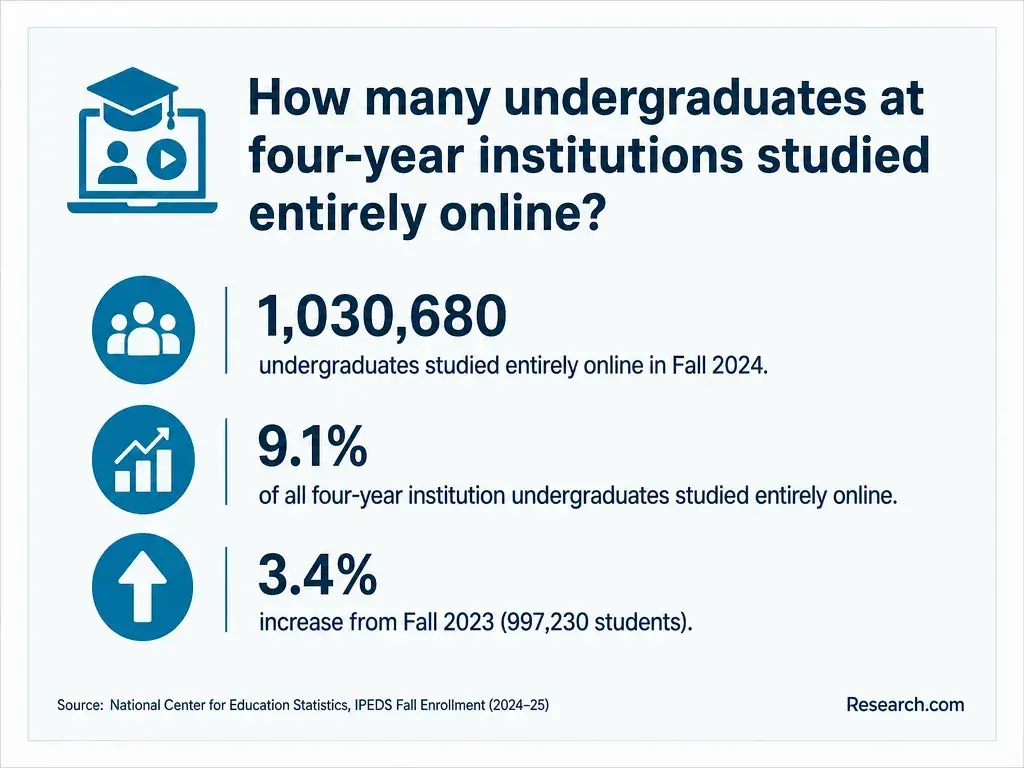
An online degree can be credible when the institution has recognized accreditation and the program meets the same stated academic requirements as its campus counterpart. Delivery mode alone does not establish quality—or flexibility. Verify who awards the degree, whether the named business program has any additional accreditation, and what appears on the transcript.
For an office manager with fixed work hours, ask about live sessions, group meetings, exam proctoring, deadlines, campus visits, and opportunities to use approved workplace projects. Compare those obligations with your actual schedule before choosing online business education on a smaller budget. An asynchronous course can still require substantial weekly work and collaboration.
Requirements vary by institution and entry route. First-time applicants generally need an accepted secondary school credential; transfer applicants usually submit records from previous colleges. A business major may have separate GPA, prerequisite, or progression rules, so admission to the university is not necessarily admission to every business course.
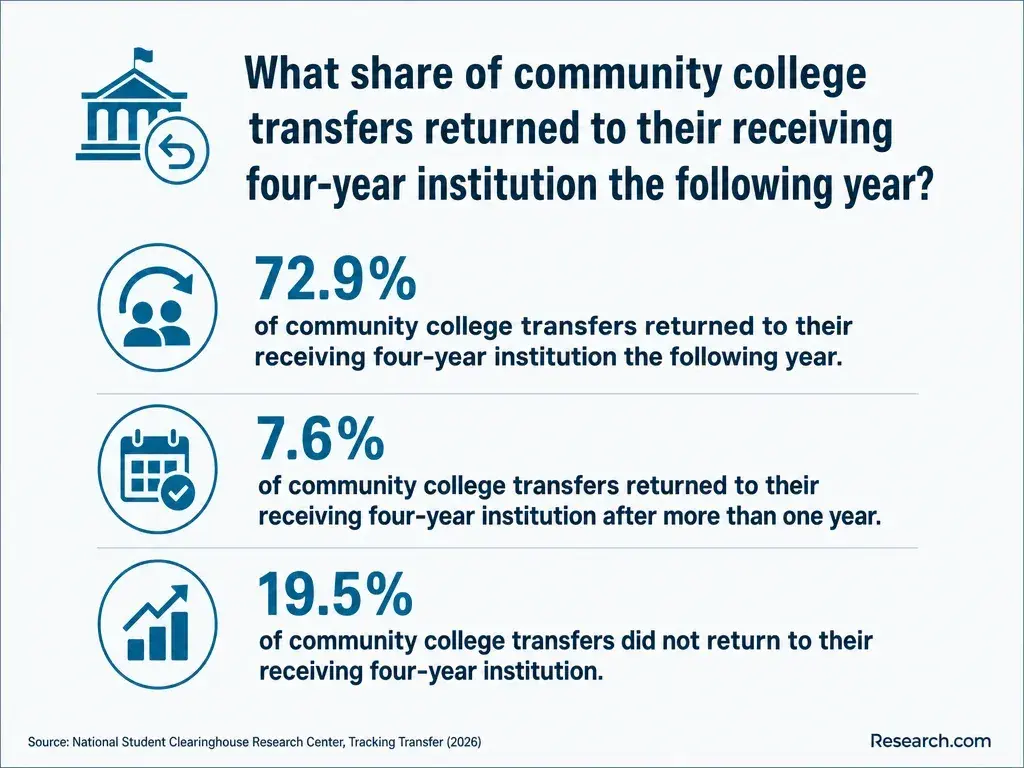
If you have prior college study, send official transcripts and request an evaluation showing which credits satisfy general education, the business core, electives, and any residency requirement. Ask when that evaluation becomes final. Application fees are a smaller consideration than total completion cost, though free application options at accredited online schools may make it easier to compare eligible programs.
For an experienced office manager, plausible next steps include broader administrative services responsibilities, operations coordination, facilities or vendor oversight, and project coordination. The strongest transition usually builds on duties you already perform: purchasing records support a procurement-focused application, while documented scheduling and workflow improvements support an operations application.
These are not automatic promotions. Administrative services manager positions generally call for relevant experience alongside education, and specialized functions may expect their own tools or industry knowledge. If project delivery is your goal, compare a general business degree with online degree options in project management at lower cost, then check whether employers want project experience rather than another degree. Preserve nonconfidential examples of your work to substantiate your applications.
There is no reliable national salary figure specifically for office managers who earn a BS in Business Administration. Job titles and responsibilities vary too widely, and a degree does not isolate its effect on pay.
For context, the US Bureau of Labor Statistics reports a May 2025 median annual wage of $114,130 for administrative services managers. That occupation covers established managers across employers; its median is not a starting offer or a forecast for a current office manager who graduates. Compare local postings that match your responsibilities, sector, and experience, then weigh the likely opportunities against your personal education costs. Compare inexpensive business administration degree options on remaining cost as well as curriculum if a bachelor's requirement is limiting your applications.
How can you choose an accredited business administration program?
Confirm institutional accreditation through the institution and its accreditor, then check whether any claimed AACSB, ACBSP, or IACBE accreditation covers the business unit or program you are considering. Institutional and business-specific accreditation have different scopes; neither guarantees a promotion.
Ask an adviser for a written degree audit, a course schedule that fits your shifts, and the rules for any concentration or workplace project. Ask financial aid for a personalized cost and aid estimate, including fees and enrollment requirements. To begin comparing aid-related questions, see resources on business administration college affordability and FAFSA participation; participation alone does not establish your eligibility or final net price. Choose the program that clears a documented career obstacle at a manageable cost and pace—not the one with the broadest promotional claims.
Other Things You Should Know About Business Administration
Possibly, but only the receiving college can determine whether the credits transfer and fulfill specific degree requirements. Ask for a written evaluation before treating a certificate as the first stage of a degree.
Some colleges offer prior-learning assessment, but employment alone does not award credit. Ask what evidence and assessment the school requires and where any awarded credit would apply.
Generally, no. Employers may value demonstrated supervision, operational judgment, and relevant undergraduate study more for this goal. Check the requirements of the specific position before considering graduate study.
Only with appropriate employer permission and in line with school rules. Remove personal or proprietary information when permitted, or use public or hypothetical data if the necessary approval is unavailable.
- THE VALUE OF EDUCATIONAL DEGREES IN TURBULENT ECONOMIC TIMES: EVIDENCE FROM THE YOUTH DEVELOPMENT STUDY - PMC https://pmc.ncbi.nlm.nih.gov/articles/PMC4792031/
- Administrative Professionals Online Certificate Program (APOCP) | U.S. Department of Commerce https://www.commerce.gov/hr/employees/training/leadership/apocp
- Certificate vs. Degree: Which Is Right for You? | UC San Diego Division of Extended Studies https://extendedstudies.ucsd.edu/news-events/extended-studies-blog/certificate-vs-degree-making-the-right-education-decision
- What Can You Do With a Business Administration Degree? | snhu.edu https://www.snhu.edu/about-us/newsroom/business/what-can-you-do-with-a-business-administration-degree
- Degree vs. Certificate: How It Impacts Your Career | University of San Diego https://pce.sandiego.edu/certificate-vs-degree/
- 10 Key Subjects Taught in a Bachelor of Business Administration Program | Carson-Newman University https://www.cn.edu/cps-blog/10-key-subjects-taught-in-a-bachelor-of-business-administration-program/
- Online Bachelor's Degree in Business Administration | OU Online https://online.ou.edu/program/bs-in-business-administration/
- What Can You Do With a Business Administration Degree? | American Public University https://www.apu.apus.edu/area-of-study/business-and-management/resources/what-can-you-do-with-a-business-administration-degree/
- Concentration in Management - SF State Bulletin https://bulletin.sfsu.edu/colleges/business/management/bs-business-administration-concentration-management/
- Office Manager Job Description and Key Responsibilities | Professional Alternatives https://www.proalt.com/office-manager-job-description-duties-skills-and-requirements/