2027 BS in Business Administration and Business Analytics: Choosing Courses for Your First Related Job
Audited and Verified:
Our Editorial and Data Verification Process
Research.com uses government datasets, official education statistics and primary institutional information to support its career and degree guides. Our review process checks factual accuracy, occupational definitions, source dates and the requirements associated with the credentials discussed.
How This Article Was Fact-Checked
Our editorial team verifies salary estimates, employment projections, education requirements and program information against original data providers and official organizations. Salary figures are checked against the relevant occupational definitions and reporting periods. Information about licensure, accreditation and required in-person training is reviewed separately.
Fact-checked and verified on:

Co-Founder and Chief Data Scientist
A business analytics course can teach you to build a dashboard, but your first related job may require you to clean unreliable data and explain what the dashboard means to a manager. If you are planning a BS in Business Administration, that gap should shape your course choices. This guide connects core classes, analytics electives, and applied projects to realistic entry-level roles. It also shows how to evaluate programs without mistaking a concentration, software certificate, or occupation-wide salary figure for a hiring guarantee.
Key Things You Should Know
- For a first analytics-related job, prioritize statistics, spreadsheets, data management, and a project that ends with a defensible business recommendation - not software classes alone.
- Choose electives around a target function: marketing research, operations, finance, and HR use data differently. Check prerequisites and whether the courses form an official concentration.
- The U.S. Bureau of Labor Statistics projects 7% employment growth for market research analysts from 2025 to 2035, but that occupation-wide outlook does not predict an individual graduate's hiring prospects.
What Is a BS in Business Administration and Business Analytics?
A BS in Business Administration typically combines a general business core - such as accounting, marketing, operations, and management - with quantitative coursework. "Business analytics" might be the degree's formal concentration, a separate major, or simply a set of electives. The transcript and catalog, not the program's promotional language, establish which credential you earn.
Business analytics means using data to inform a business decision. It can include defining a useful measure, preparing data, identifying a pattern, communicating uncertainty, and recommending an action. It is broader than learning one dashboard tool and usually less technically specialized than a dedicated statistics or computer science degree.
The broad business core suits students who have not yet chosen a function. If you already want people-operations work, compare the analytics electives with human resources college study options; an HR-focused path may offer more employment-law and staffing depth. Ask each school for the current degree map and confirm whether your preferred analytics courses are required, optional, or unavailable in your enrollment format.
What Careers Can You Pursue With This Business Degree?
Start with the work you want to do, not the most impressive-sounding title. An operations coordinator may track order delays and maintain reports; a marketing coordinator may summarize campaign and customer data; a business or reporting analyst may validate data and explain trends. Job titles vary by employer, and some analyst openings expect substantial technical or industry experience.
For a first role, look for postings that combine reporting with a business process you understand. An internship, relevant part-time job, or supervised project can provide evidence of that understanding. A supply-chain interest, for example, may point toward purchasing or logistics support roles rather than an immediate management position. If that function is your clear goal, compare economical supply chain study timelines against the broader business degree before committing to electives.
A general business degree is preparation, not a qualification for every occupation that uses data. Financial analyst positions may demand deeper finance skills; advanced analytics roles may require programming and statistical methods beyond an undergraduate business sequence. Match several actual job descriptions to your planned courses and projects before choosing a concentration.
Which Courses Prepare You for Your First Related Job?
The strongest course plan builds from business context to reliable analysis and then to communication. The table shows what to look for in course descriptions and assignments; a course title alone cannot confirm that you will practice the skill.
| Course area | Useful learning evidence | Connection to entry-level work |
| Accounting and operations | Interpret costs, margins, workflows, and service measures | Understand what a report measures and why it matters |
| Statistics and research methods | Evaluate samples, variation, and limits of a finding | Avoid overstating trends or confusing association with cause |
| Spreadsheets and data management | Clean records, join data, document formulas, and check errors | Produce reports others can review and update |
| Visualization and business communication | Present a chart, assumptions, and a recommendation | Help a nontechnical stakeholder make a decision |
Sequence matters: statistics may precede forecasting, while introductory information systems may precede database work. If space is limited, favor a course with a substantial, assessed project over several introductory tool demonstrations. A useful project states the decision, defines each measure and time period, checks missing data, and explains what the analysis cannot establish. Use public or approved data; never place confidential employer or customer records in a portfolio without permission.
Choose a functional elective to make that project relevant: marketing research for campaign questions, operations for process measures, or finance for budgeting and cash-flow interpretation. If coordinating projects - not analyzing business performance - is the intended career, project management degree tuition comparisons can help you weigh a specialized program against adding one project-management elective. Neither choice substitutes for documented work on a real project.
Choose the format in which you can complete the required analytics sequence, not just introductory business classes. Ask whether statistics, database, visualization, and capstone courses run in your preferred format and how often they are offered. An online program can still require live presentations, scheduled group work, proctored exams, or fixed weekly deadlines.
Campus study may make it easier to use computer labs, meet faculty, or join local recruiting events; online study may reduce commuting and fit employment better. Neither format guarantees an internship. Compare access to software, tutoring, career services, and project feedback as well as the timetable. If you need to earn a business administration degree while keeping your job, request sample syllabi for the hardest required courses and check whether their live and group commitments fit your actual work schedule.
First, verify that the institution holds accreditation recognized by the U.S. Department of Education or the Council for Higher Education Accreditation. Then check whether any advertised business accreditation - such as AACSB, ACBSP, or IACBE - covers the school or program in which this degree is housed. An institution's accreditation and a business accreditor's scope answer different questions; neither proves that a particular analytics elective is strong or that graduates obtain jobs.
Use the accreditor's directory and the institution's current catalog to check the exact degree and campus or online offering. This matters when comparing adjacent programs too: a list of accredited project management programs with low tuition is a starting point, not proof that each school's business analytics option has the same accreditation or curriculum. Request course-level evidence - assignments, software access, and capstone requirements - alongside accreditation information.
Requirements differ by school and by entry point. First-year applicants generally submit secondary-school records; transfer applicants generally submit transcripts from prior colleges. Some schools admit students to the university before they can enter the business major or a capacity-limited concentration. Mathematics preparation and introductory accounting or statistics requirements may affect when you can start advanced analytics courses, even if they are not conditions of initial admission.
Ask admissions which records and prerequisites apply to you, then ask a business adviser when you can take the first analytics course. If you have prior college work, obtain an official evaluation showing which credits satisfy general education, the business core, concentration requirements, and electives. An accepted course does not necessarily replace a required course. For schools you are still considering, accredited online colleges without application fees may reduce the cost of applying, but confirm each school's current fee policy and program availability.
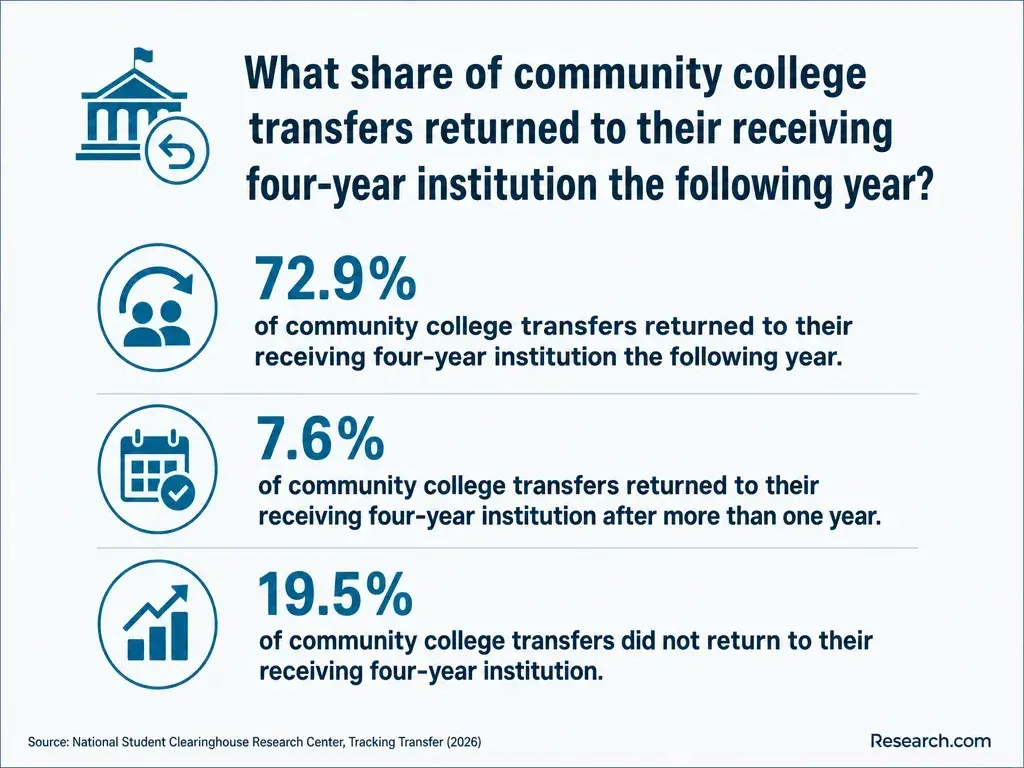
Completion time depends on accepted and applicable credits, enrollment pace, prerequisites, and how often required analytics courses run. A transfer student with many accepted electives could still need a long sequence of statistics, data, and capstone courses. Ask for an official degree audit and a term-by-term plan before relying on an advertised completion time.
Compare the cost of finishing, not tuition alone: include remaining required credits, mandatory fees, software, books, possible campus visits, and borrowing costs. Financial aid and employer reimbursement can change what you ultimately pay, but reimbursement timing may create an immediate cash-flow burden. Cost-saving online business administration school choices are worth reviewing only after you confirm that the analytics courses you need are available and that your prior credits apply. The lowest advertised tuition is not necessarily the lowest completion cost.
There is no single salary for graduates of this degree. Pay depends on the occupation, location, industry, responsibilities, and experience. The U.S. Bureau of Labor Statistics reports a May 2025 median annual wage of $78,760 for market research analysts. That is an occupation-wide midpoint, not a starting salary or a forecast for someone who completes a business analytics concentration.
Use salary data only after identifying a plausible first job and reviewing its posted qualifications. For example, HR reporting work may be embedded in an HR specialist role rather than advertised as a business analyst role. If HR is your target and you have previous college credits, examining how to apply prior college coursework toward an HR bachelor's may be more financially relevant than comparing analyst wage figures with no matching entry route.
The BLS projects 7% growth in U.S. employment for market research analysts from 2025 to 2035. That supports considering customer and market analysis as one possible direction, but it does not mean every employer will hire new graduates or that every business analytics job follows the same trend.
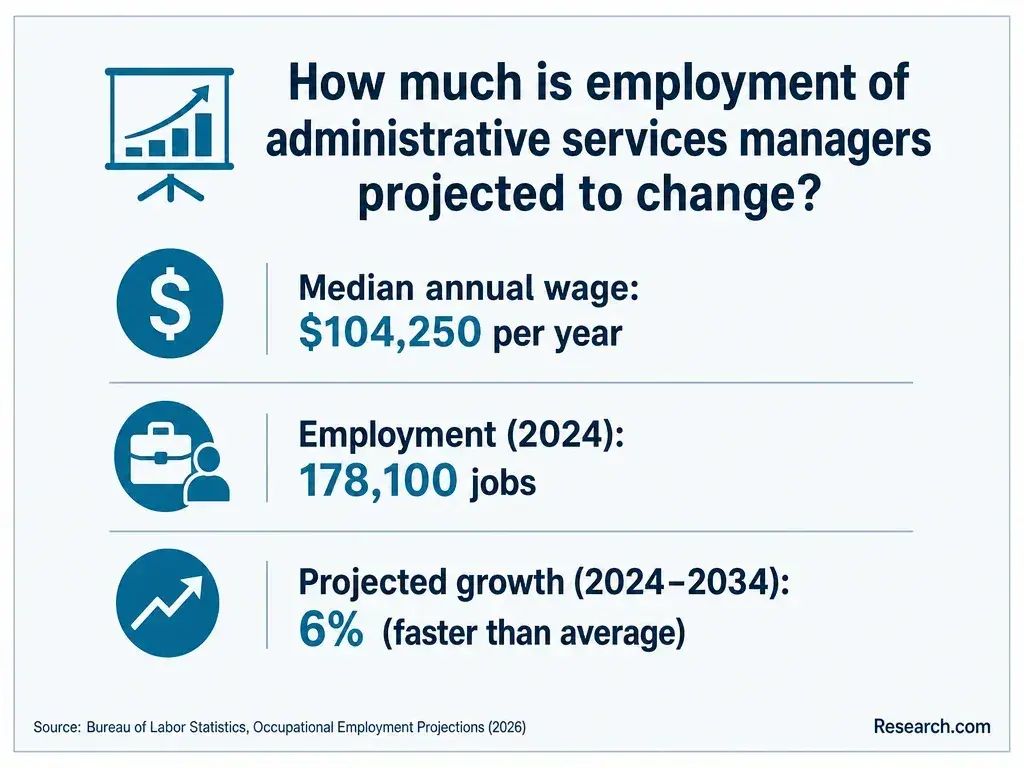
Outlook should refine, not dictate, your course plan. Read local postings to see whether employers want SQL, survey methods, industry knowledge, or experience presenting findings. Also distinguish analyst work from supervising people: growth in a management occupation does not make management an automatic first job. If your aim is leadership rather than analysis, three-year organizational leadership bachelor's options offer a different curriculum and pacing comparison, but the degree title alone will not replace supervisory experience.
Which Certifications Can Strengthen Your Business Analytics Résumé?
A relevant software or analytics certificate can support your résumé when it addresses a requirement in target job postings - for example, spreadsheet modeling, SQL, or a visualization platform. Check the issuing organization's current assessment, cost, renewal rules, and prerequisites. Distinguish a certificate of course completion from a certification earned through a separate assessment.
Prioritize evidence in this order: the skills employers request, a project showing how you used them, and then a credential that helps validate them. A dashboard badge without documented data checks or a clear business question is weak evidence of analyst readiness. If your main constraint is how soon you can finish the bachelor's, compare undergraduate programs with faster pacing separately from short certifications; accelerating a degree and adding a credential solve different problems.
Other Things You Should Know About Business Administration
Yes. Label it as an academic project, name the question and methods, and explain your contribution. Do not imply that an employer adopted its recommendation or that hypothetical results were measured outcomes.
Not necessarily. Check the program's prerequisites and target job postings. Some entry roles emphasize spreadsheets and reporting, while others expect SQL or programming.
Only if your employer and instructor permit the proposed use. Check confidentiality, privacy, and intellectual-property rules first; approved public or synthetic data may be safer.
Seek a supervised project, relevant part-time work, or a course assignment that requires you to define a business question, check data, and present limitations. Describe the experience accurately rather than calling it an internship.
- 10 Experiential Learning Examples for Graduate Students | Northeastern University Graduate Programs https://graduate.northeastern.edu/knowledge-hub/experiential-learning-examples/
- 7 Essential Data Analyst Skills to Advance Your Career | jhu.edu https://ep.jhu.edu/news/7-essential-data-analyst-skills-to-advance-your-career/
- What Jobs Can You Get With a Business Degree? | snhu.edu https://www.snhu.edu/about-us/newsroom/business/what-jobs-can-you-get-with-a-business-degree
- How Internships, Labs, and Projects Translate to Real Tech Careers | CIAT https://www.ciat.edu/blog/how-internships-labs-and-projects-translate-to-real-tech-careers-2/
- Top Skills You Need to Build a Career in Business Analytics | Edgewood College https://online.edgewood.edu/blog/what-skills-are-required-for-business-analytics-career/
- Business Analyst Career Path | Ziplines Education https://www.ziplines.com/blog/business-analyst-career-path-guide
- Business Analyst Career Path: Key Skills and Qualifications | investopedia.com https://www.investopedia.com/articles/professionals/120915/business-analyst-career-path-and-qualifications.asp
- Bachelor of Business Administration with Major in Business Analytics | University of North Dakota Academic Catalog https://und-public.courseleaf.com/undergraduateacademicinformation/departmentalcoursesprograms/accountancy/acct-bus-analytics/