2027 BS in Business Administration Curriculum: How to Evaluate Preparation in Professional Presentations
Audited and Verified:
Our Editorial and Data Verification Process
Research.com uses government datasets, official education statistics and primary institutional information to support its career and degree guides. Our review process checks factual accuracy, occupational definitions, source dates and the requirements associated with the credentials discussed.
How This Article Was Fact-Checked
Our editorial team verifies salary estimates, employment projections, education requirements and program information against original data providers and official organizations. Salary figures are checked against the relevant occupational definitions and reporting periods. Information about licensure, accreditation and required in-person training is reviewed separately.
Fact-checked and verified on:

Co-Founder and Chief Data Scientist
A business curriculum may promise strong communication skills without showing whether students actually practice presenting to decision-makers. If you are comparing BS in Business Administration programs, look beyond a required public-speaking course: the useful question is whether you will explain business evidence, defend recommendations, receive feedback, and improve.
This guide shows where presentation practice belongs in the curriculum, what to request from a program, and how to weigh delivery format, cost, and career goals before enrolling.
Key Things You Should Know
- Look for assessed presentations in more than one course, including a business analysis or capstone - not merely "communication skills" in program marketing.
- Ask for an assignment prompt and rubric showing how faculty assess audience fit, evidence, recommendations, delivery, and revision.
- For online study, verify live-presentation times and group-work rules; flexible access to lessons does not necessarily mean flexible presentation deadlines.
What Does a Business Administration Degree Teach About Professional Presentations?
A professional business presentation is a concise explanation designed to help an audience understand a situation or make a decision. In a BS in Business Administration, that might mean briefing a supervisor on a budget variance, recommending a marketing approach, or explaining a process change. The strongest assignments assess whether the student selects relevant evidence, acknowledges uncertainty, makes a defensible recommendation, and answers questions - not just whether the slides look polished.
Programs vary in how often students practice those skills. Some combine a communication course with presentations in marketing, finance, and strategy; others rely heavily on a final group project. If you are considering business degree programs designed for faster progress, check that compressed courses still leave time for feedback and a revised presentation. Speed alone says little about communication preparation.
How Can You Evaluate Presentation Skills in a Business Administration Curriculum?
The best evidence is an actual assignment, its grading rubric, and an explanation of when students receive feedback. A catalog description saying "develops communication skills" does not establish that every student presents independently or improves over time. When using US online business education program comparisons to identify options, request course-level evidence from each school before treating presentation training as comparable.
Use the following sequence with a program adviser or faculty member. It tests both the frequency and the quality of practice.
- Identify required courses with spoken, recorded, or live presentations; distinguish individual work from group work.
- Request a sample prompt and rubric, then check whether they assess business reasoning, audience adaptation, sources, visual clarity, delivery, and responses to questions.
- Ask when feedback arrives and whether students must revise or present again after receiving it.
- Confirm whether students present to classmates, faculty, simulated executives, or approved external partners, and whether those audiences provide feedback.
Prioritize repeated, progressively harder assignments over a single high-stakes presentation. A recorded pitch can demonstrate concise delivery, but a live question-and-answer session tests whether the presenter understands the recommendation well enough to defend it. Neither format substitutes for accurate business analysis.
What Courses Are Included in a Business Administration Degree Curriculum?
A BS in Business Administration generally combines general education with business foundations such as accounting, economics, marketing, management, finance, operations, and quantitative analysis. The exact requirements, electives, and capstone vary by institution. For presentation preparation, the important distinction is what each course asks students to communicate, not how many courses mention communication in their descriptions.
The table shows how common course areas can develop different presentation abilities. These are examples to check against a specific school's required assignments, not guarantees that every program uses them.
| Course area | Relevant presentation task | What it can demonstrate |
| Business communication | Brief an audience using a defined purpose and clear structure | Audience awareness and concise delivery |
| Accounting or finance | Explain a budget, financial comparison, or recommendation | Accurate interpretation and appropriate caveats |
| Marketing or analytics | Present customer research or a campaign proposal | Evidence selection and visual explanation |
| Operations or strategy | Defend a proposed change or final project | Trade-off analysis and responses to questions |
Electives or an official concentration may add relevant practice, but an elective does not automatically create a concentration. A student interested in operations, for example, can compare shorter online supply chain bachelor's pathways with a general business curriculum; the better choice depends on required coursework and whether presentations address the decisions that role entails.
Campus courses may use in-person briefings, classroom questions, and team presentations. Online courses may use recorded pitches, live video meetings, discussion-based critiques, or combinations of these. Neither format is inherently stronger: a well-assessed recording with specific feedback may teach more than an ungraded classroom speech, while a live exchange can better test responses under pressure.
Ask whether presentations are live or recorded, how attendance is handled, whether group members must meet outside class, and what happens when work schedules conflict. Also check technology and accessibility support, including captioning or other approved accommodations. These details matter even if you are comparing undergraduate programs with faster pacing: an asynchronous course can still impose fixed presentation and team deadlines.
First, confirm that the institution holds recognized institutional accreditation and that it applies to the school awarding the degree. Then check whether the business school or program has applicable AACSB, ACBSP, or IACBE accreditation, and whether the specific BS is within that accreditation's scope. The institution and the relevant accreditor are the authorities for these details.
Accreditation can provide context about academic oversight, but it does not prove that a particular course offers strong presentation feedback. Even when reviewing accredited project management degree cost breakdowns as an alternative, assess accreditation, price, and presentation assignments separately. Ask the business department for the rubric used in required courses.
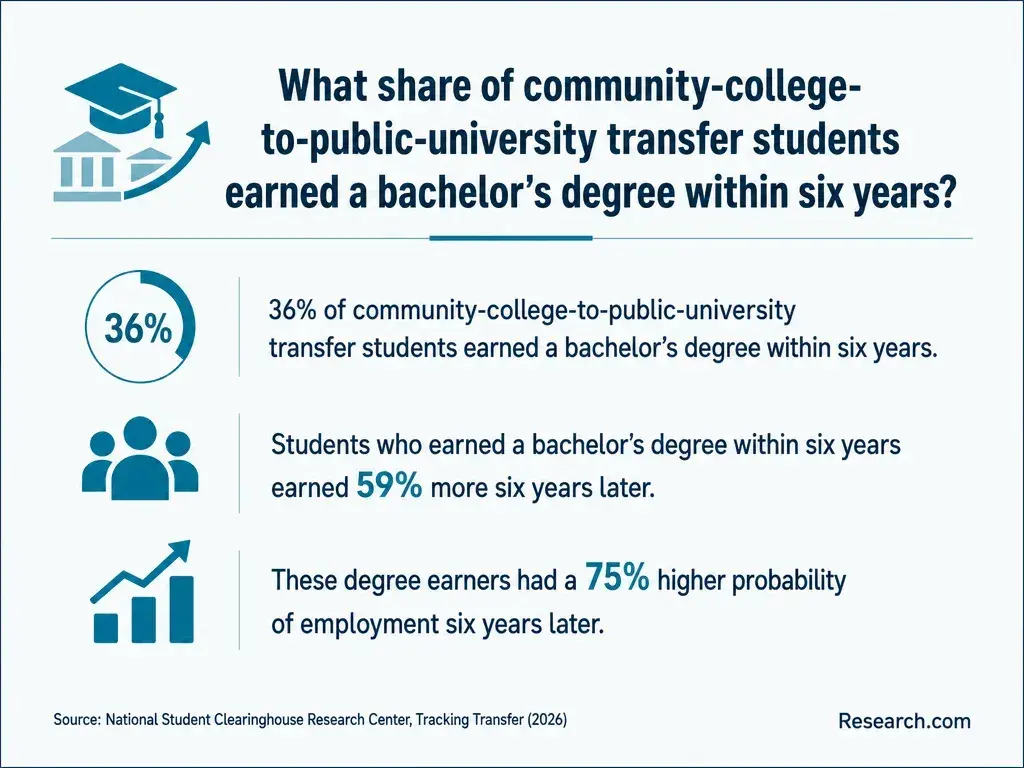
Requirements depend on the school and entry route. First-time applicants typically need evidence of secondary-school completion; transfer applicants generally submit prior college transcripts. Some schools set additional standards for entry to the business major or require prerequisite mathematics, statistics, accounting, or economics coursework. Admission to the institution is not the same as admission to the major.
If you already studied communication or business elsewhere, ask for a written evaluation showing where each accepted course applies. A transferred speech course might satisfy general education without replacing a required business presentation assignment. Students considering HR-focused options can compare credit acceptance at online HR schools, but only the receiving institution can determine how their own credits meet degree requirements.
Completion time depends on accepted credits that actually satisfy requirements, enrollment pace, prerequisites, and when required courses are offered. Cost depends on remaining coursework, tuition, mandatory fees, materials, and possible technology or travel expenses. A shorter advertised schedule is not a reliable estimate for a transfer student until the school provides a degree audit and course plan.
When comparing inexpensive online business administration colleges, request an individualized estimate of remaining courses and total charges. Ask specifically whether a presentation-intensive capstone has prerequisites, a separate fee, or limited term availability. These factors can affect both the learning experience and the amount you ultimately pay.
A business administration degree can support applications for roles such as marketing coordinator, HR assistant, operations coordinator, or project coordinator. Presentation assignments are most relevant when they produce evidence of a task the target role actually requires: explaining campaign findings, briefing colleagues on a process, or presenting a project status update. Hiring still depends on relevant experience, technical skills, and employer requirements; graduation alone does not qualify someone to manage staff or budgets.
For an HR goal, compare a general business curriculum with HR-focused study and relevant work experience. You can explore the costs of an HR degree, but also compare assignments: a general business presentation may demonstrate communication, whereas an HR-specific exercise may require more knowledge of HR practices. Choose based on the work you hope to do, not the degree title alone.
There is no single salary or growth rate for BS in Business Administration graduates. Outcomes depend on occupation, location, industry, and experience. As one relevant example, the U.S. Bureau of Labor Statistics reports a $78,760 median annual wage for market research analysts in May 2025 and projects 7% employment growth from 2025 to 2035. That occupation-wide median includes experienced workers; it is not a starting salary or a return on the degree.
Use an occupation aligned with your target work when evaluating education costs. If project coordination interests you, compare the business curriculum with specialized study and examine available funding before borrowing; guidance on paying for project management bachelor's study with grants can help frame that comparison. A presentation course is valuable career evidence when you can explain the analysis and your own contribution, not because a wage figure promises a payoff.
Do Business Administration Graduates Need Certifications or Licenses?
There is no general license required simply to hold a BS in Business Administration or give workplace presentations. Specific jobs can have separate rules: accounting licensure, certain financial-services activities, and some professional designations have requirements beyond a general business degree. Voluntary credentials may also have eligibility or experience conditions set by their issuing organizations.
If your goal is primarily to become more effective at presenting, a full degree may be unnecessary. A targeted course, workplace practice with feedback, or mentorship may address that goal at lower cost. If you are weighing a broader degree against specialized study, project management schools with competitive tuition offer one comparison point - but verify the actual credential, presentation assignments, and any separate certification requirements before deciding.
Other Things You Should Know About Business Administration
Only with appropriate employer permission and under the course's rules. Remove confidential, proprietary, and personal information; a fictionalized or public-data version may be safer.
Usually, if you own or have permission to share the material and follow school and employer policies. Label it as academic work, state your contribution, and avoid implying that a proposed recommendation was implemented.
Not necessarily. Ask about practice opportunities, feedback, and disability accommodations where applicable. A course with low-stakes rehearsals may be a better fit than one built around a single graded speech.
Follow the course's AI policy and disclose use when required. Check every claim and calculation yourself, and do not enter restricted workplace or personal data into an unapproved tool.
- Rubrics: Tools for Making Learning Goals and Evaluation Criteria Explicit for Both Teachers and Learners - PMC https://pmc.ncbi.nlm.nih.gov/articles/PMC1618692/
- Low and High-Stakes Assessments - [email protected] https://citral.ucsb.edu/faculty/resources/assessing-learning/low-and-high-stakes-assessments
- Student Presentations and Strategies for Audience Engagement | Teaching Writing | Boston University https://www.bu.edu/teaching-writing/resources/student-presentations-and-strategies-for-audience-engagement/
- Topic Guide: Assessment Evidence | ucdavis.edu https://cee.ucdavis.edu/topic-guide-assessment-evidence
- Graduate | Courses | Fanning Center for Business Communication https://fanning.nd.edu/courses/graduate/
- Assessing Student Learning: Group Projects | Oregon State University https://ctl.oregonstate.edu/assessing-student-learning-group-projects
- How to evaluate group work | Center for Teaching Innovation https://teaching.cornell.edu/teaching-resources/active-collaborative-learning/collaborative-learning/how-evaluate-group-work
- How can I assess group work? - Eberly Center | Carnegie Mellon University https://www.cmu.edu/teaching/designteach/design/instructionalstrategies/groupprojects/assess.html
- 10 Key Subjects Taught in a Bachelor of Business Administration Program | Carson-Newman University https://www.cn.edu/cps-blog/10-key-subjects-taught-in-a-bachelor-of-business-administration-program/
- Giving Feedback | UCLA Teaching & Learning Center https://teaching.ucla.edu/resources/teaching-guides/giving-feedback/