2027 Purdue Global BS in Business Administration: Evaluating Internship and Capstone Requirements
Audited and Verified:
Our Editorial and Data Verification Process
Research.com uses government datasets, official education statistics and primary institutional information to support its career and degree guides. Our review process checks factual accuracy, occupational definitions, source dates and the requirements associated with the credentials discussed.
How This Article Was Fact-Checked
Our editorial team verifies salary estimates, employment projections, education requirements and program information against original data providers and official organizations. Salary figures are checked against the relevant occupational definitions and reporting periods. Information about licensure, accreditation and required in-person training is reviewed separately.
Fact-checked and verified on:

Co-Founder and Chief Data Scientist
An internship requirement can change where and when you finish a degree; a capstone can change what workplace information you need to access. Those distinctions matter if you are considering Purdue Global's online BS in Business Administration while working, transferring credits, or changing careers.
This guide separates an internship from the degree's culminating business project, explains what to confirm in your enrollment-term catalog, and shows how to judge whether the applied work will support your goals without creating an unmanageable scheduling or confidentiality problem.
Key Things You Should Know
- Do not assume an internship is required or that an existing job earns internship credit; obtain the degree plan for your enrollment term and ask whether any chosen concentration changes the requirements.
- Expect to verify a required culminating business course and its actual assignment, approval, and presentation rules before planning an employer-based capstone.
- The practical difference is control: a classroom project may avoid placement logistics, while an internship generally depends on an approved site, supervision, and scheduled work.
What is Purdue Global's BS in Business Administration?
Purdue University Global offers a Bachelor of Science in Business Administration, a broad undergraduate degree covering business functions rather than a license or an MBA. Its usefulness depends partly on how the required business courses, available concentrations, transfer credits, and applied assignments fit your intended role.
A concentration, if selected, should be checked against the current catalog; taking related electives alone does not establish one.
For this decision, request the program's enrollment-term degree plan rather than relying on a general description of the degree. If you are comparing institutions, a US ranking of accelerated business bachelor's degrees can identify other programs to investigate, but a shorter advertised timeline says little about internship or capstone obligations.
Does Purdue Global's Business Administration degree require an internship?
Do not treat an internship as a confirmed universal requirement of Purdue Global's BS in Business Administration. The controlling answer is the catalog and degree audit for your enrollment term, including any concentration or elective you choose.
Ask an academic adviser directly whether graduation requires an internship, whether one is optional for credit, and whether an optional placement would count toward a remaining requirement.
The activities below are not interchangeable. This distinction matters especially if you already work in a business role and hope to use that experience toward the degree:
| Activity | What it ordinarily involves | What to verify at Purdue Global |
| Internship | Approved practical work with defined learning objectives and supervision | Whether it is required or optional, site eligibility, hours, assessment, and credit |
| Current employment | Existing job duties and employer oversight | Whether a separate academic approval or prior-learning process could apply |
| Capstone | A course-assessed business analysis or other culminating assignment | Required course, project format, faculty criteria, and permissible information sources |
If a placement is optional, weigh its recruiting and supervised-learning value against travel, pay, and fixed hours. For employed students, business administration education for employed professionals is most useful when its project and scheduling obligations fit the job you intend to keep.
What capstone project is required for Purdue Global business students?
A capstone is a culminating academic assessment that asks students to apply learning across business subjects. Confirm Purdue Global's required capstone course and current assignment instructions with the program: a course title alone does not establish whether students must write a business plan, analyze a case, work with an employer, collaborate in a group, or present findings. An internship should not be assumed to replace that course.
Before choosing a topic, obtain the rubric and settle the project's scope with the instructor. A manageable proposal identifies the decision-maker, business question, permitted evidence, analytical approach, proposed deliverable, and limitations.
For example, a process-improvement proposal could use public information or an instructor-approved fictional dataset if employer records are unavailable. It should label estimates as estimates, not claim measured savings.
Check employer permission before using internal budgets, customer information, employee records, or company branding. Transfer students should also ask whether a previous applied course satisfies the specific capstone requirement; accepted elective credit is not necessarily a capstone substitution.
The same distinction matters when considering how to finish project management studies with transferred college credits.
Purdue University Global is institutionally accredited by the Higher Learning Commission. Institutional accreditation applies to the university; it should not be described as accreditation of this particular business degree by AACSB, ACBSP, or IACBE.
If business-program accreditation matters to an employer or graduate school, check the relevant accreditor's directory and Purdue Global's current disclosure for the named degree and applicable scope.
Accreditation can affect eligibility for federal student aid and how another school reviews credits, but it does not guarantee transfer, employment, or acceptance into graduate study.
For a broader comparison of accredited business administration programs and federal student aid, compare each institution's status and costs separately from claims about career outcomes.
Expect to review requirements spanning general education and business subjects such as accounting, economics, finance, marketing, management, and quantitative decision-making.
The exact courses, prerequisites, concentration options, and capstone course must come from your applicable Purdue Global catalog and degree audit, not from a list of subjects common to business degrees.
Read the curriculum backward from your proposed capstone. Accounting and finance can support a budget analysis; marketing and statistics can support a customer-research proposal; operations coursework can support a process map.
If your goal is specifically HR rather than broad business preparation, compare the relevant concentration with a human resources program selection guide. Neither a related course nor a capstone topic creates a separate HR credential.
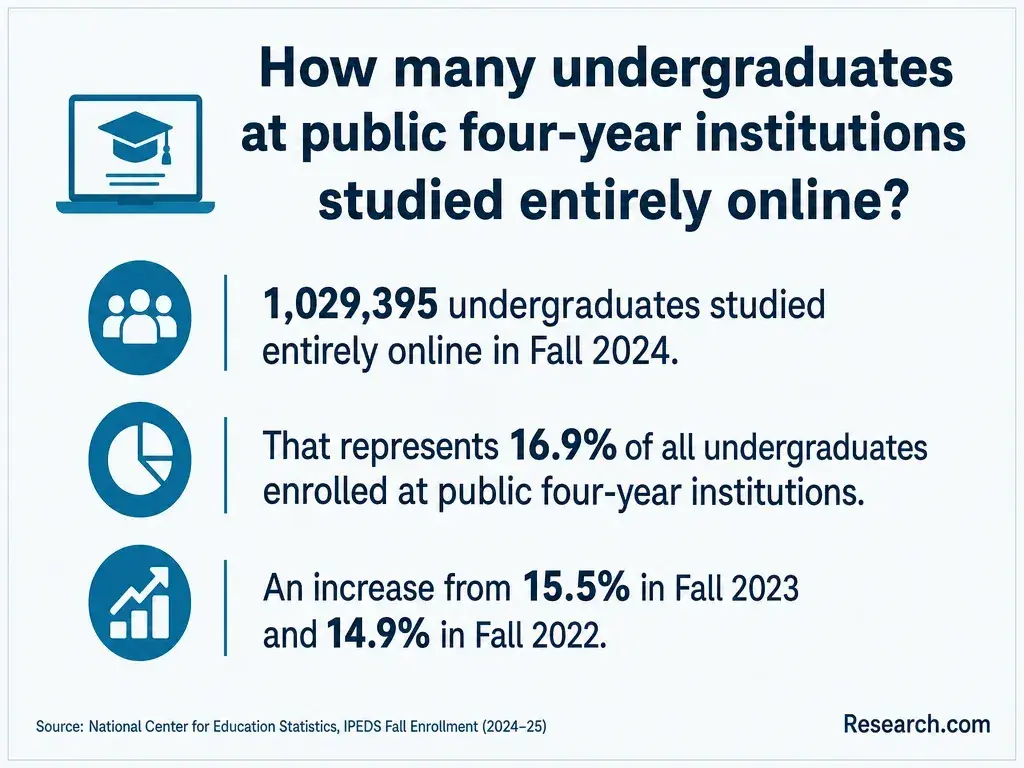
Purdue Global offers online study, but online does not mean self-paced or free of live commitments. Before enrolling, confirm whether required business courses involve scheduled seminars, group meetings, timed assessments, presentations, or proctoring.
Ask separately whether your chosen concentration or an optional internship introduces any in-person requirement.
A capstone may be workable from home while still demanding recurring time to gather evidence, obtain feedback, revise work, and meet deadlines. Compare an actual sample course schedule with your work or caregiving calendar.
A US online business college selection guide can help frame that comparison, but the course schedule and assignment rules determine whether this particular degree is feasible for you.
Ask Purdue Global admissions which secondary-school credential, previous-college transcripts, and other documents apply to your situation.
Admission to the university, acceptance of transfer credit, and application of that credit to the business degree are separate decisions. An academic adviser or transfer evaluator should confirm the last of these in a degree audit.
If you are bringing credits from another major, request a requirement-by-requirement evaluation, especially for accounting, quantitative courses, concentration work, and the capstone.
A previous internship or project may be relevant evidence without automatically replacing either requirement. Students comparing a more specialized path can also examine online HR bachelor's programs accepting transfer credits; compare credits applied to each degree, not merely credits accepted.
Your completion time depends on credits applied to the degree, course load, prerequisite sequencing, and when required courses are offered. Your cost depends on the tuition and fees effective for your enrollment, remaining credits, materials, and any optional experiential activity.
Without an individual degree audit and current tuition schedule, a precise completion date or total price would be misleading.
Request a written estimate that separates tuition from fees and shows the remaining courses by term. Then ask whether an optional internship adds a course charge or delays completion, and whether a capstone requires paid software or other materials.
Compare that estimate with online business programs for cost-conscious students using the same assumptions about transferred credits and enrollment pace.
Depending on prior experience and demonstrated skills, graduates may seek work in business operations, marketing coordination, HR support, or project coordination. An internship can provide supervised evidence of workplace tasks; a capstone can provide evidence of analysis and communication.
Neither substitutes automatically for experience an employer requires, and graduation alone does not qualify someone for management.
For context, the US Bureau of Labor Statistics reports a May 2025 median annual wage of $78,760 for market research analysts. That is an occupation-wide median, not an expected starting salary for Purdue Global graduates.
If project coordination is your specific target, compare job postings and work samples before deciding whether a broad business degree or a specialized route, and its potential FAFSA grants and scholarships for project management students, better fits your plans.
Which certifications or professional standards complement this business degree?
Choose a credential only after identifying a target function. HR, project management, accounting, and analytics credentials have different eligibility rules and assessments; a business degree, concentration, internship, or capstone does not automatically award one.
Employer job postings and the credentialing organization's current rules are better guides than a generic list of certifications.
A well-scoped capstone can nonetheless help you demonstrate relevant habits: stating assumptions, documenting evidence, respecting data rights, and explaining recommendations to a decision-maker.
If your intended work is specifically project management, compare certification prerequisites and targeted training with economical project management degree programs before paying for another qualification.
Other Things You Should Know About Business Administration
Ask the instructor before changing it. A new topic may need revised approval, evidence, and deliverables, while course deadlines may remain unchanged.
Ownership and reuse depend on university rules, your employment agreement, and any project permissions. Check those terms before submitting or publicly sharing the work.
Not without checking instructor guidance, organizational permission, and applicable privacy or research-review rules. Public or fictional data may be a safer project foundation.
Ask an adviser for a written course sequence and an alternative graduation plan before registering for the preceding term. Do not assume another elective can replace it.
- Fact Sheet #71: Internship Programs Under The Fair Labor Standards Act | U.S. Department of Labor https://www.dol.gov/agencies/whd/fact-sheets/71-flsa-internships
- 5 CFR Part 362 Subpart B -- Internship Program | ecfr.gov https://www.ecfr.gov/current/title-5/chapter-I/subchapter-B/part-362/subpart-B
- Qualified Ed expenses | Internal Revenue Service https://www.irs.gov/credits-deductions/individuals/qualified-ed-expenses
- Guidelines and Requirements to Gain Course Credit | Judd Leighton School of Business and Economics https://business.iusb.edu/academic-centers/center-for-experiential-learning/guidelines-and-requirements.html
- Capstone - Washington, DC | American University https://www.american.edu/provost/undergrad/core/capstone.cfm
- Bachelor of Science in Business Administration | Purdue University Global Academic Catalog https://catalog.purdueglobal.edu/undergraduate/business-information-technology/business-administration-bs/
- Transfer of Credit Policy | South University https://catalog.southuniversity.edu/transfer-of-credit-policy
- Credit for Prior Learning - Wayne State College Nebraska https://www.wsc.edu/records-registration/credit-prior-learning
- Program: Transfer Credit and Credit for Prior Learning | charlotte.edu https://catalog.charlotte.edu/preview_program.php
- What's a Capstone Project? And Why Do I Have to Take It? | Thomas Edison State University https://www.tesu.edu/about/blog/2014/capstone-project.php