2027 Best Occupational Therapy School Loans

Student Finance & Loan Expert
Many prospective occupational therapy students face the challenge of financing advanced education without adequate savings or employer support. The rising costs of graduate programs can create a significant financial burden, especially for those switching careers or balancing work and study.
Choosing the right loan can mean the difference between manageable repayment and long-term debt stress. This article reviews the best occupational therapy school loans available, comparing key features such as interest rates, repayment terms, and borrower benefits. It aims to guide readers in selecting loan options that align with their financial situation and future career goals.
- What types of student loans are best for occupational therapy programs? Best OT loans
- How do federal and private loans compare for OT school financing? Federal vs private
- How much can you borrow for occupational therapy school and living expenses? OT loan limits
- What are typical interest rates and costs for OT student loans? OT loan rates
- How do you apply for OT school loans, from FAFSA to private lenders? Apply for loans
- Which federal repayment plans work best for occupational therapy graduates? OT repayment
- What loan forgiveness and repayment assistance programs exist for occupational therapists? OT forgiveness
- When does OT student loan repayment start, and what grace options exist? Repayment start
- Should occupational therapists refinance or consolidate their student loans? Refi vs consolidate
- How do student loans impact an occupational therapist's credit and financial future? Credit impact
What types of student loans are best for occupational therapy programs?
Federal student loans remain the most advantageous choice for occupational therapy students thanks to their lower interest rates, flexible repayment options, and borrower protections.
Direct Unsubsidized Loans provide fixed rates without requiring proof of financial need, while income-driven repayment plans adjust monthly payments based on income and family size, helping graduates manage debt more effectively. Exploring student loans for occupational therapy degrees with these federal options can reduce financial strain.
Parent PLUS and Grad PLUS loans serve as additional funding sources but carry higher interest and fees; these should only be used after exhausting federal Direct Loan limits.
Private student loans may fill remaining gaps but typically offer variable rates and fewer protections, so it's important for borrowers to compare terms thoroughly. Students often find the best financing options for occupational therapy students come by prioritizing federal aid before considering private alternatives.
The cost of OT doctorate programs is significant-recent data from the American Occupational Therapy Association shows a median total cost around $160,000, with over 40% of students expecting debt exceeding $150,000.
Federal forgiveness programs like Public Service Loan Forgiveness (PSLF) can alleviate debt after 10 years of qualifying work in eligible roles, making repayment assistance programs crucial for managing debt post-graduation.
For additional resources on managing health-related school expenses, consider exploring dental school financial aid. Proper planning and understanding loan terms help prevent unnecessary debt stress throughout occupational therapy training.
How do federal and private loans compare for OT school financing?
Federal and private loans for occupational therapy school differ notably in borrowing limits, interest rates, repayment options, and borrower protections. The Department of Education's proposed rules classify OT master's and doctoral programs as graduate programs, with federal Direct Loan limits capped at $20,500 annually and $100,000 total.
Meanwhile, professional programs have higher limits-up to $50,000 per year and $200,000 total-leaving many OT students with lower federal borrowing ceilings and potentially needing extra private loans.
Federal loans come with benefits like fixed interest rates, income-driven repayment plans, deferment options, and possible loan forgiveness. These safeguards help manage finances during and after school, especially important for OT graduates who may initially face variable income or unemployment. This system reflects well in occupational therapy school loan options and repayment plans designed to reduce borrower risk.
Private loans often cover costs beyond federal limits but typically have variable interest rates and fewer repayment protections. Credit checks and cosigner requirements may pose qualification challenges. Without income-driven repayment plans, private loans can be tougher for recent graduates to manage.
Students should first maximize federal loan options due to stronger protections and lower default risk. When additional funding is necessary for tuition, housing, or supplies, private loans may be considered after comparing interest rates and fees. For more details on eligibility and options, see ascent student loans eligibility.
How much can you borrow for occupational therapy school and living expenses?
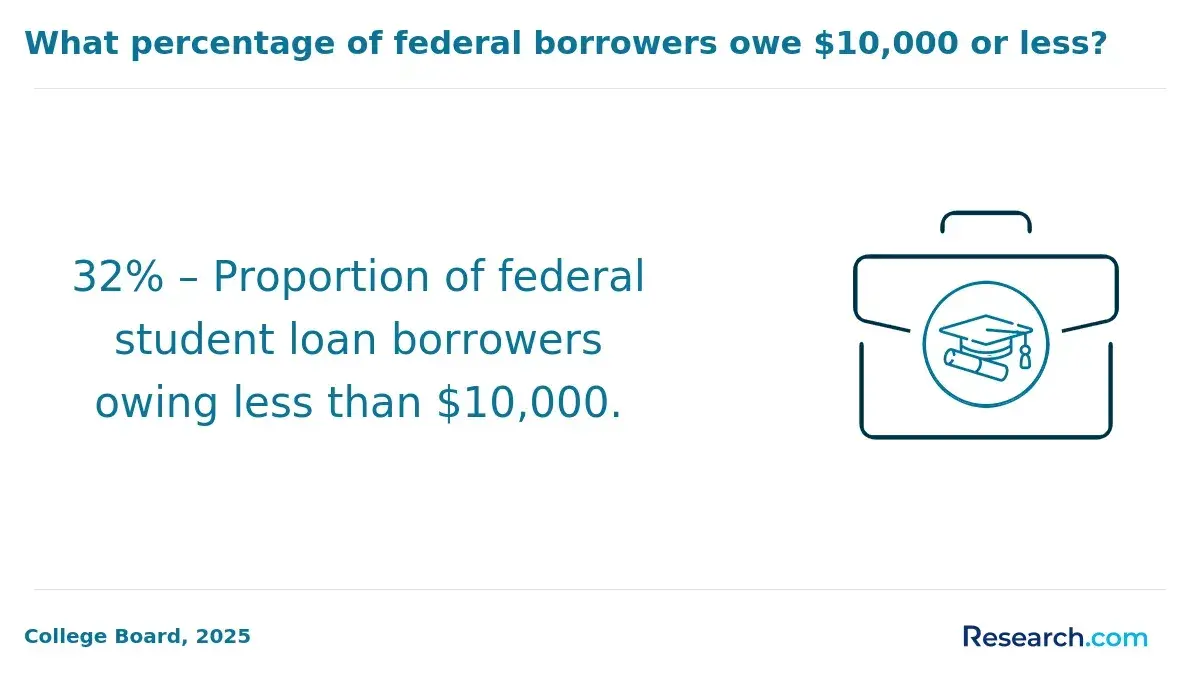
Occupational therapy students can borrow up to the federal loan limits for graduate and professional students, with a maximum of about $138,500 in Direct Unsubsidized Loans, including any undergraduate borrowing. Despite this, many find these federal loan limits do not cover the full tuition and living costs associated with their programs.
A 2025 American Occupational Therapy Association (AOTA) analysis revealed that over 60% of OT students rely on federal loans exceeding $100,000, showing how borrowing limits often fall short of actual expenses.
Starting in 2027, a new $100,000 federal loan cap will limit borrowing options for future occupational therapy cohorts. This will require students to explore additional financing methods. Private student loans vary widely in interest rates and loan amounts, and some institutions offer aid to help bridge gaps in funding.
Living expenses significantly add to the cost of attendance. Housing, food, and transportation can total $15,000 to $25,000 annually depending on location, especially in higher-cost metropolitan areas. Accurately estimating these living costs is essential when planning how much to borrow for occupational therapy school and living costs.
Many students manage borrowing by:
- Maximizing federal loan limits while applying for scholarships and grants.
- Using private loans to cover any shortfall caused by the loan cap.
- Budgeting carefully to limit borrowing for living expenses.
Careful financial planning combined with early research on alternatives can help manage the substantial loan amounts required. For those seeking ways to reduce debt after graduation, exploring options like a cash bonus for refinancing student loans may offer some benefits.
Understanding the maximum loan amounts for occupational therapy students is crucial to avoid unexpected financial challenges and ensure completion of their education.
What are typical interest rates and costs for OT student loans?
Typical interest rates for occupational therapy student loans vary widely between federal and private lenders. Federal graduate Direct Unsubsidized Loans offer fixed rates around 6.3%, which is favorable compared to private loans. These federal loans also provide borrower protections such as income-driven repayment options and the possibility of loan forgiveness, helping manage debt over time.
Private student loans for OT programs usually carry higher variable interest rates, often between 7% and 13%, influenced by credit scores, cosigners, and market trends. Unlike federal loans, private loans generally lack flexible repayment plans or borrower protections, potentially increasing financial risk. Borrowers should expect additional costs like origination fees, which raise the effective interest rate and overall repayment amount.
The average costs of OT school loans in the United States highlight the importance of exhausting federal loan options before turning to private lenders. For example, a $50,000 federal Grad PLUS loan includes a 6.3% interest rate plus a 4.228% origination fee paid upfront, increasing the loan amount. Many therapy professionals managing debt over $200,000 combine both federal and private loans, reflecting varied financing strategies.
Maintaining strong credit and exploring options such as student loan refinancing after graduation can reduce interest costs. Prioritizing early repayment and refinancing may ease the long-term burden of OT school loans.
How do you apply for OT school loans, from FAFSA to private lenders?
Start your occupational therapy (OT) school loan process with the Free Application for Federal Student Aid (FAFSA), available every year from October 1. This determines eligibility for federal loans and grants. Graduate OT students often rely on Federal Direct Unsubsidized Loans with an interest rate of 6.54% and a 1.057% origination fee, according to a 2025 Forbes Advisor analysis.
After submitting FAFSA, your school will send an award letter outlining federal aid amounts. If federal loans aren't sufficient, explore private student loans. These vary widely, offering fixed rates from 4.5% to over 14%, but typically require a creditworthy co-signer and lack federal protections like income-driven repayment plans or loan forgiveness.
Private loans usually need direct application through lender websites, including credit applications and proof of enrollment. Deadlines are not fixed, but applying early can improve terms.
Additional financing options include school-based aid or state-specific loan programs that may not require FAFSA. Carefully review lender criteria and repayment terms to avoid unexpected financial challenges.
Effective strategies combine federal aid via FAFSA with selective private borrowing once federal options are exhausted, balancing cost and borrower protections. This approach is essential for OT students managing significant educational expenses.
Which federal repayment plans work best for occupational therapy graduates?
Occupational therapy graduates benefit most from federal Income-Driven Repayment (IDR) plans like Pay As You Earn (PAYE), Revised Pay As You Earn (REPAYE), and Income-Based Repayment (IBR). These plans adjust monthly payments based on discretionary income and family size, allowing manageable payments during early career stages or income fluctuations.
REPAYE is especially helpful as it caps payments at 10% of discretionary income and offers loan forgiveness after 20 years of qualifying payments. This option is well-suited for occupational therapy graduates who often start with moderate salaries compared to other healthcare fields.
PAYE limits initial payments to what they would be under a 10-year standard plan and offers forgiveness after 20 years. IBR requires proof of partial financial hardship and provides forgiveness after 25 years. Both differ slightly in eligibility and calculation methods.
Graduates in nonprofit or government jobs may also qualify for Public Service Loan Forgiveness (PSLF), which cancels remaining balances after 120 qualifying payments when combined with an IDR plan. This approach can reduce payment burdens and shorten repayment timelines.
- Manage payments with IDR plans based on income and family size.
- Use REPAYE for capped payments and 20-year forgiveness.
- Combine PSLF with IDR plans for faster loan forgiveness.
- Consider scholarships, such as those from the American Occupational Therapy Foundation offering over $80,000 in awards.
What loan forgiveness and repayment assistance programs exist for occupational therapists?
Occupational therapists can significantly reduce student loan debt through various forgiveness and repayment programs. The Indian Health Service (IHS) Loan Repayment Program provides up to $40,000 in loan repayment for healthcare professionals, including occupational therapists, who commit to two years at an IHS or tribal facility, often in underserved areas.
Public Service Loan Forgiveness (PSLF) offers debt forgiveness after 120 qualifying payments while working full-time for government or nonprofit organizations under an eligible repayment plan.
State-specific programs vary widely but frequently incentivize occupational therapists to work in rural or shortage areas, with service commitments ranging from one to four years.
Income-driven repayment options like Revised Pay As You Earn (REPAYE) and Income-Based Repayment (IBR) reduce monthly payments based on income and family size and may lead to forgiveness after 20-25 years.
Those in academia might be eligible for Teacher Loan Forgiveness by teaching full-time at qualifying schools.
- Indian Health Service Loan Repayment Program.
- Public Service Loan Forgiveness (PSLF).
- State-specific loan repayment programs.
- Income-driven repayment plans.
- Teacher Loan Forgiveness.
When does OT student loan repayment start, and what grace options exist?
Occupational therapy (OT) student loan repayment typically begins six months after graduation or once enrollment drops below half-time. This federal grace period, common for Direct Subsidized and Unsubsidized Loans, provides graduates time to transition smoothly into repayment. Private lenders may have varying grace options depending on the loan agreement.
Borrowers experiencing difficulties during repayment should explore deferment or forbearance options. Federal programs may offer deferment for economic hardship or unemployment, allowing payment postponement. Forbearance, while temporarily reducing or suspending payments, usually accrues interest, increasing total debt.
A 2024 analysis from Student Loan Planner reveals that OT graduates average $180,000 in student loan debt at graduation, with some Doctor of Occupational Therapy (OTD) graduates exceeding $220,000. This significant debt load makes managing grace periods and repayment plans essential to avoid default.
Graduates working in public service or nonprofit sectors may qualify for Public Service Loan Forgiveness (PSLF) after 120 qualifying payments, which can substantially impact repayment strategies. Those with private loans might consider refinancing or negotiating terms after the grace period to lower interest rates or monthly payments.
- Contact loan servicers early to confirm repayment start dates.
- Investigate income-driven repayment plans to adjust payments based on income.
- Plan ahead to reduce financial strain and improve long-term affordability.
Should occupational therapists refinance or consolidate their student loans?
Occupational therapists weighing student loan options should consider refinancing and consolidation according to their financial situation and career path. Refinancing replaces multiple loans with a new private loan, often reducing interest rates and monthly payments.
This option benefits those with good credit and steady income aiming to reduce interest costs or pay off loans faster. For instance, an occupational therapist earning the median salary of $99,710 might lower a 6% interest rate to 4%, saving thousands over time.
However, refinancing federal loans means losing access to federal protections such as income-driven repayment plans and Public Service Loan Forgiveness, important for therapists in nonprofit or government roles.
Consolidation merges federal loans into a single Direct Consolidation Loan, simplifying repayment though it does not reduce interest rates. This approach suits those managing multiple federal loans who prefer streamlined monthly payments and federal benefits.
It can extend repayment terms up to 30 years, lowering monthly payments but increasing total interest. This is often practical earlier in a career when income is still growing.
Questions occupational therapists commonly have include:
- Will refinancing affect eligibility for forgiveness programs?
- Do I qualify for better rates based on my credit?
- Is consolidation or refinancing better for my financial goals?
With occupational therapy employment expected to grow by 12%, planning ahead is crucial. Refinancing is useful for those seeking to optimize costs, while consolidation offers convenience and federal safeguards for others.
How do student loans impact an occupational therapist's credit and financial future?
Student loans impact occupational therapists' credit by affecting credit utilization, payment history, and debt-to-income ratios. Timely payments can build positive credit, enhancing eligibility for mortgages, car loans, and credit cards.
However, missed or late payments harm credit scores and increase borrowing costs. Defaulted loans remain on credit reports for up to seven years, limiting financial opportunities long-term.
Loan amounts vary widely depending on program costs. Data from a Reddit OT community spreadsheet shows in-state tuition ranging from about $20,000 to over $80,000 annually.
Opting for less expensive public programs can lower total debt by over $100,000 across a typical three-year occupational therapy degree. This large cost difference influences monthly repayments and the ability to save or invest early in one's career.
Repayment periods often extend ten years or more, delaying milestones like homeownership or retirement savings. Graduates with significant debt may qualify for income-driven repayment plans that adjust monthly payments based on earnings but may increase total interest.
Federal loan forgiveness programs are available for occupational therapists in qualifying public service jobs, potentially reducing debt after consistent payments.
Strategies to lessen loan impact include:
- Choosing affordable degree programs to minimize borrowing.
- Making interest-only or extra payments while in school to lower principal balances.
- Using federal repayment options and applying for loan forgiveness early.
These approaches help occupational therapy students and graduates manage debt responsibly and protect credit health for a stable financial future.
Other Things You Should Know About
Yes, student loans often cover more than just tuition and fees. Many loans can also be used to pay for living expenses, books, supplies, and sometimes even transportation costs related to attending occupational therapy school. It's important to check the terms of your specific loan to understand what expenses are eligible.
Most federal student loans, commonly used for occupational therapy programs, do not have prepayment penalties. This means you can pay off your loans early or make extra payments without incurring additional fees. However, some private loans may have terms that include penalties, so review your loan agreement carefully.
Yes, occupational therapy students can apply for scholarships to reduce their borrowing needs. Many organizations and schools offer scholarships specifically for occupational therapy programs. Applying for these scholarships can help minimize reliance on student loans, ultimately reducing the overall financial burden.