2027 Best Online PharmD Programs for Students Seeking Community Pharmacy Careers

Co-Founder and Chief Data Scientist
Choosing an online PharmD is really a licensure, cost, and career-fit decision. Community pharmacists remain central to medication access, immunization, chronic disease support, and patient counseling; the U.S. Bureau of Labor Statistics reported a May 2024 median pharmacist wage of $137,480. This guide is for students comparing online or hybrid PharmD pathways with community pharmacy in mind. You'll learn how to judge accreditation, state licensure fit, coursework, cost, timeline, and career outcomes so you can shortlist programs with fewer expensive surprises.
Key Things You Should Know
- The best online PharmD programs for community pharmacy careers are ACPE-accredited, include in-person IPPE and APPE rotations, and explicitly prepare students for NAPLEX, MPJE or state law exams, immunization practice, and patient counseling.
- Online PharmD usually means online didactic coursework plus required in-person labs, simulations, exams, and clinical rotations; a fully remote PharmD is not realistic for U.S. pharmacist licensure.
- Cost and ROI vary widely, so compare total tuition, fees, travel, lost work time, federal loan rates, and BLS 2024 pharmacist salary data rather than choosing by headline tuition alone.
What makes an online PharmD program suitable for community pharmacy careers?
A strong online PharmD program for community pharmacy is not simply the most flexible or cheapest option. It is a Doctor of Pharmacy pathway that leads to pharmacist licensure and gives you repeated practice with the work community pharmacists actually do: verifying prescriptions, counseling patients, coordinating with prescribers, administering vaccines, managing medication therapy, and using pharmacy technology safely.
The table below summarizes the most important "best-fit" signals to compare before applying. Use it to separate programs that are convenient from programs that are genuinely aligned with community pharmacy practice.
| Program feature | Why it matters for community pharmacy | What to verify before applying |
| ACPE accreditation | Accreditation is essential for U.S. pharmacist licensure eligibility. | Confirm the program's current status and whether the specific pathway you want is included. |
| Community pharmacy rotations | Retail, independent, grocery, hospital outpatient, and ambulatory pharmacy experiences build job-ready skills. | Ask where IPPE and APPE placements occur and whether students must find their own sites. |
| Patient-care training | Community pharmacists increasingly provide immunizations, medication therapy management, adherence support, and chronic disease counseling. | Look for simulation labs, standardized patient encounters, immunization training, and communication assessments. |
| Licensure preparation | Graduates must pass required exams and complete state internship-hour rules. | Ask for NAPLEX preparation support, state law exam support, and recent board-pass disclosures. |
| Online student support | Remote learners need advising, tutoring, technical help, and placement coordination that work outside normal campus routines. | Confirm response times, remote office hours, exam proctoring requirements, and student success resources. |
For most community pharmacy students, the best program is one that balances three things: licensure eligibility, local rotation access, and manageable total cost. A prestigious program that cannot place you near your state or requires frequent travel may be a weaker fit than a less famous school with strong regional pharmacy partnerships.
Common red flags include vague language about "preparing students for pharmacy careers" without clear ACPE status, no published experiential education plan, limited state authorization information, or admissions promises that sound too easy for a professional doctorate. Before enrolling, ask the program to explain exactly how online students complete labs, rotations, exams, and state-specific requirements.
Is the PharmD program accredited by ACPE?
Yes, accreditation should be the first filter. In the United States, the Accreditation Council for Pharmacy Education, commonly called ACPE, accredits professional PharmD programs. Graduation from an ACPE-accredited PharmD program is generally required to sit for pharmacist licensure exams, although each state board controls its own final rules.
Do not rely only on a school's marketing page. Accreditation can have statuses such as accredited, candidate, precandidate, probationary, or withdrawn, and those distinctions can matter. A program may also offer multiple pathways, such as campus, distance, or accelerated formats, so the pathway you choose should be clearly covered by the school's professional pharmacy accreditation disclosures.
Use this practical checklist before you submit an application or deposit. It can help you avoid one of the most expensive mistakes in pharmacy education: enrolling in a pathway that does not support licensure where you plan to practice.
- Confirm the professional PharmD program's ACPE status directly through the accreditor's public directory or the school's accreditation page.
- Ask whether the online or distance pathway is part of the accredited PharmD program, not a separate non-licensure option.
- Request the most recent NAPLEX performance information the school is allowed to share and ask how it supports students who struggle academically.
- Check whether the school has any teach-out, probation, or monitoring disclosures that could affect your cohort.
- Save written confirmation from admissions or the registrar about accreditation, program pathway, and expected licensure eligibility.
If you are comparing a standard pathway with an accelerated PharmD, be especially careful about accreditation and sequencing. A faster schedule can be worthwhile for students with strong prerequisites and financial pressure to enter the workforce sooner, but it leaves less room to recover from academic setbacks.
Do online PharmD programs meet state licensure requirements?
Online PharmD programs can meet state licensure requirements, but you should never assume they do automatically. Pharmacy licensure is state-based, and requirements commonly include graduating from an ACPE-accredited PharmD program, passing the North American Pharmacist Licensure Examination, passing a state-specific law exam or MPJE where required, completing internship or experiential hours, and meeting background-check or character-and-fitness standards.
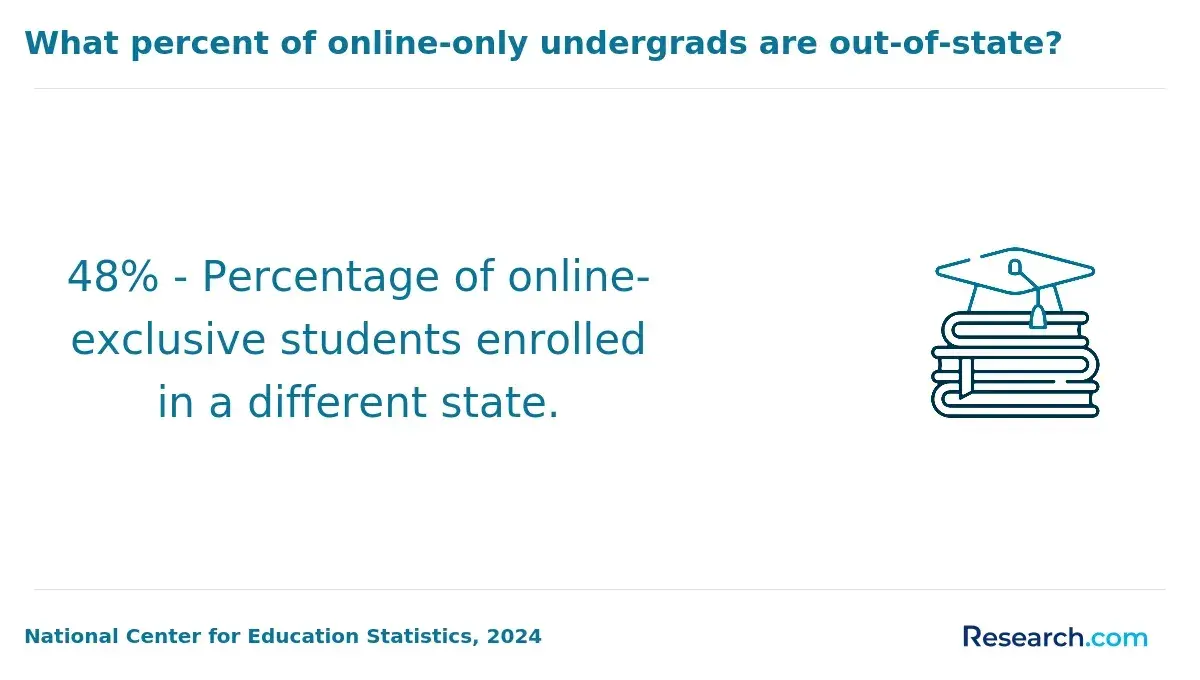
The key issue for online students is location. You may take coursework through a university in one state, complete rotations in another, and plan to practice in a third. That creates practical questions about state authorization, preceptor approval, intern registration, and whether the school can place you in acceptable sites.
Before choosing a program, ask admissions and your state board these questions. They are more useful than asking whether the program is "online-friendly."
- Does the program enroll students from my state, and is it authorized to provide distance education there?
- Will I need to register as a pharmacy intern before IPPE or APPE rotations begin?
- Can the school arrange rotations in my state or region, or must I relocate for part of the program?
- Does the state require a specific law exam, internship documentation, background check, or jurisprudence module?
- If I plan to move after graduation, what additional steps are needed for initial licensure or license transfer?
A smart approach is to work backward from the state where you want your first pharmacist license. If the program cannot explain how its online students complete that state's requirements, keep comparing options before committing.
How do online and campus PharmD formats differ?
Online and campus PharmD programs lead to the same professional credential when they are ACPE-accredited, but the learning experience can feel very different. Online PharmD students usually complete didactic courses remotely while still attending in-person labs, immersions, exams, and required pharmacy practice experiences.
The comparison below shows the practical trade-offs. This matters because the "best" format depends on your work schedule, learning style, travel flexibility, and access to approved rotation sites.
| Factor | Online or hybrid PharmD | Campus PharmD |
| Course delivery | Lectures, discussions, and some assessments may be online, either live or asynchronous. | Most didactic instruction occurs in classrooms, labs, and campus facilities. |
| Flexibility | Often better for students who need geographic flexibility, though synchronous sessions may still be required. | More predictable campus routine but less flexible for students living far from school. |
| Hands-on training | Still requires in-person skills labs, simulations, and clinical rotations. | Hands-on activities are usually easier to schedule because facilities and faculty are nearby. |
| Peer interaction | Requires more intentional networking through virtual groups, residencies, associations, and rotations. | More spontaneous interaction with classmates, faculty, and campus organizations. |
| Travel costs | May include immersion travel, hotel stays, rotation travel, and proctored exam logistics. | May include relocation, commuting, parking, and campus living costs. |
| Best fit | Students who are self-directed, comfortable with technology, and able to plan in-person requirements early. | Students who prefer face-to-face structure, immediate lab access, and a traditional cohort experience. |
Online learning is not easier; it is differently structured. Students who succeed tend to manage calendars tightly, communicate early with faculty, and treat asynchronous coursework like scheduled class time. Students who need frequent in-person accountability may be better served by a campus pathway.
Technology is also changing the online PharmD experience. Programs increasingly use virtual simulations, electronic health record exercises, remote proctoring, digital drug information tools, and dispensing-system training. These tools can be helpful, but they do not replace supervised patient-care experiences in pharmacies.
What coursework is included in a PharmD curriculum?
A PharmD curriculum combines biomedical science, pharmacotherapy, patient care, law, ethics, communication, and experiential education. For community pharmacy careers, the most valuable coursework is the coursework that connects drug knowledge with real patient decisions.
The table below outlines common curriculum areas and how they translate into community pharmacy practice. Course names vary by school, but ACPE-accredited programs generally cover these professional competencies.
| Curriculum area | What students learn | Community pharmacy relevance |
| Pharmacology and medicinal chemistry | How drugs work, interact, and affect body systems. | Supports safe verification, counseling, and drug interaction screening. |
| Pharmacotherapy | Medication treatment for common and complex conditions. | Helps pharmacists advise patients with diabetes, hypertension, asthma, infections, pain, and mental health needs. |
| Pharmaceutics and compounding | Dosage forms, drug delivery, stability, and preparation. | Useful for compounding, formulation counseling, and special patient populations. |
| Pharmacy law and ethics | Controlled substances, prescription validity, privacy, scope of practice, and professional responsibility. | Critical for daily dispensing decisions and legal risk management. |
| Patient communication | Motivational interviewing, counseling, health literacy, and cultural responsiveness. | Directly supports adherence conversations, vaccine discussions, and medication therapy management. |
| Pharmacy management | Operations, workflow, quality improvement, inventory, staffing, and reimbursement basics. | Important for retail leadership, independent pharmacy ownership, and district management paths. |
| Experiential education | Introductory and advanced pharmacy practice experiences in real settings. | Builds confidence with patients, prescribers, technicians, and pharmacy systems. |
Students aiming for community pharmacy should look for electives or certificates in immunization delivery, medication therapy management, diabetes care, pharmacogenomics, substance use treatment support, public health, or pharmacy entrepreneurship. These areas reflect how community pharmacy is expanding beyond dispensing alone.
One current trend to watch is automation. Central-fill systems, robotics, e-prescribing, inventory platforms, and AI-assisted drug information tools are changing workflow. That does not remove the need for pharmacists, but it increases the value of clinical judgment, patient counseling, verification accuracy, and the ability to supervise technology safely.
What are the admission requirements for PharmD programs?
PharmD admissions requirements vary by school, but applicants typically need college-level prerequisites in sciences and math, a competitive GPA, letters of recommendation, a personal statement, an interview, and evidence that they understand the pharmacy profession. Some programs require a bachelor's degree before matriculation, while others admit students after completion of prerequisite coursework.
Admissions committees are looking for academic readiness and professional fit. The following items are commonly reviewed because they help schools judge whether applicants can handle a rigorous clinical doctorate.
- Prerequisite coursework in biology, general chemistry, organic chemistry, anatomy or physiology, microbiology, calculus or statistics, English, and social sciences.
- College GPA and science GPA, with attention to course rigor and recent academic performance.
- Pharmacy exposure through work as a pharmacy technician, shadowing, volunteering, or healthcare employment.
- Letters of recommendation from faculty, pharmacists, supervisors, or healthcare professionals who can speak to reliability and judgment.
- Interview performance, including communication skills, ethical reasoning, teamwork, and motivation for pharmacy.
- Technical standards, background checks, immunization records, drug screening, and other clinical-site requirements.
The PCAT has become less central than it once was, and many programs no longer require it. That makes your prerequisite grades, healthcare experience, and interview preparation even more important.
Applicants from other healthcare fields should compare paths before assuming PharmD is the right next step. For example, a licensed nurse deciding between medication-focused pharmacy work and nursing advancement may find that a bridge pathway such as an RN to BSN in 3 months better matches their timeline, scope of practice, or employer tuition benefits.
A common mistake is applying only to schools with the lowest stated GPA threshold. Minimum requirements are not the same as a strong application. If your academic record is uneven, contact admissions early, ask how repeated science courses are evaluated, and consider strengthening your application with recent upper-level science coursework or pharmacy experience.
How long does it take to complete an online PharmD?
Most PharmD programs take about four professional years after prerequisite coursework, but timelines vary. Some students complete a 0-6 pathway that includes preprofessional and professional years at the same institution, while others enter after two to four years of undergraduate coursework. Online or hybrid delivery does not automatically shorten the degree because clinical rotations and competency requirements still take time.
The table below compares common timeline models. Use it to estimate not only graduation date but also opportunity cost, work flexibility, and academic intensity.
| Pathway | Typical structure | Best fit | Trade-off |
| Traditional PharmD | Pre-pharmacy coursework followed by about four professional years. | Students who want a standard pace and more room for electives, work, or leadership activities. | Longer time before full pharmacist earnings. |
| Accelerated PharmD | Compressed calendar, often using year-round coursework or shorter breaks. | Highly prepared students who can handle a dense schedule and want to enter practice sooner. | Less downtime and fewer chances to recover from academic or personal disruptions. |
| Early assurance or 0-6 pathway | Undergraduate and professional phases are planned through one institution. | Students who decide on pharmacy early and want a structured path. | Less flexibility if your career interests change. |
| Online or hybrid PharmD | Remote coursework with required in-person labs and rotations. | Students who need location flexibility and can travel for required experiences. | Requires strong self-management and careful rotation planning. |
If speed is a priority, compare calendar structure rather than program labels. Some schools advertise flexibility but still take the same number of professional years, while some compressed programs reduce time by increasing weekly workload. Students considering an accelerated PharmD should ask how many hours per week students typically spend in class, labs, studying, and rotations.
Do not choose the fastest timeline if you need to work substantial hours, care for family members, or rebuild science fundamentals. A slightly longer pathway can produce a better outcome if it improves academic performance, board preparation, and rotation evaluations.
How much does an online PharmD program cost?
The cost of an online PharmD includes more than tuition. Students should calculate the full cost of attendance, including fees, books, technology, travel for campus immersions, immunizations, background checks, exam costs, rotation transportation, housing during away rotations, and interest on borrowed funds.
For federal student loans first disbursed in the 2025-2026 award year, the fixed interest rate is 7.94% for Direct Unsubsidized graduate or professional loans and 8.94% for Direct PLUS loans. That matters because a lower advertised tuition can be offset by borrowing costs, travel, or taking longer to finish.
When comparing program prices, organize costs into concrete categories rather than relying on one tuition number. This list can help you build a realistic side-by-side budget.
- Tuition and mandatory fees: compare the full professional-program total, not just cost per credit or first-year tuition.
- Online learning fees and technology: include software, laptop requirements, remote proctoring, and digital course materials.
- In-person requirements: estimate travel, lodging, meals, parking, and time away from work for immersions or labs.
- Experiential education costs: include transportation to IPPE and APPE sites, temporary housing for distant rotations, immunizations, background checks, and drug screens.
- Licensure and exam costs: budget for NAPLEX, state law exams, license applications, and test preparation resources.
- Financing costs: compare grants, scholarships, employer support, federal loan rates, private loan terms, and repayment options.
Students who want healthcare leadership but do not specifically want pharmacist licensure should compare alternatives before borrowing for a PharmD. A lower-cost management route, such as the cheapest master's in healthcare administration, may make more sense for students focused on operations, policy, or administration rather than medication dispensing and patient-care pharmacy.
To evaluate ROI, estimate your likely borrowing, expected time to graduation, local pharmacist wages, and whether you plan to work in chain retail, independent pharmacy, grocery pharmacy, ambulatory care, or another setting. Avoid assuming that the national median salary will reflect your first job, your location, or your preferred schedule.
What jobs can you get in community pharmacy after a PharmD?
A PharmD prepares graduates for pharmacist licensure, and many graduates start in community-based roles. Community pharmacy is broader than a traditional chain drugstore counter; it can include independent pharmacies, grocery pharmacies, mass retailers, specialty pharmacies, outpatient hospital pharmacies, long-term care support, and medication therapy management services.
The table below shows common community pharmacy career options and how the work differs. Use it to think beyond job title and compare the setting, pace, and patient interaction you want.
| Role | Typical responsibilities | Good fit for students who enjoy |
| Staff community pharmacist | Verify prescriptions, counsel patients, administer vaccines, monitor interactions, supervise technicians, and communicate with prescribers. | Direct patient contact, fast-paced workflow, and practical medication problem-solving. |
| Pharmacy manager | Oversee workflow, staffing, compliance, inventory, quality metrics, patient services, and business operations. | Leadership, operations, coaching, and accountability for pharmacy performance. |
| Independent pharmacy pharmacist | Provide dispensing, counseling, community health services, compounding or niche services, and local prescriber relationships. | Entrepreneurship, community relationships, and flexible service models. |
| Ambulatory care or clinic-affiliated pharmacist | Support chronic disease management, medication optimization, transitions of care, and collaborative care teams. | Longitudinal patient care and deeper clinical collaboration. |
| Specialty pharmacy pharmacist | Manage complex therapies, prior authorizations, adherence monitoring, patient education, and safety follow-up. | Complex medications, documentation, and high-touch patient support. |
| Medication therapy management pharmacist | Review medication regimens, identify therapy problems, improve adherence, and document interventions. | Consultative work, patient education, and clinical reasoning. |
Residency is not required for many community pharmacist jobs, but it can help if you want ambulatory care, clinical services leadership, academia, or specialized practice. Certifications may also become useful after licensure and experience, especially in immunization delivery, diabetes education, medication therapy management, or board certification areas.
If your interest is patient diagnosis and prescribing authority rather than medication-use expertise, compare pharmacy with other licensed healthcare paths before enrolling. Nurses considering behavioral health practice, for instance, may evaluate a fastest psych NP program instead of a PharmD because the scopes of practice, prerequisites, and daily responsibilities are very different.
What salary and job outlook do community pharmacists have?
Community pharmacists have a relatively high wage floor compared with many healthcare roles, but salary varies by employer, region, experience, schedule, and whether the role includes management or clinical services. The U.S. Bureau of Labor Statistics reported a May 2024 median annual wage of $137,480 for pharmacists. Treat that as a national benchmark, not a guaranteed outcome for any graduate or program.
The BLS projects pharmacist employment to grow 5% from 2024 to 2034, which is about as fast as the average for all occupations. For students, this means the market is not disappearing, but it is competitive and evolving. Strong candidates are likely to be those who can combine dispensing accuracy with immunization services, patient counseling, chronic disease support, technology fluency, and leadership.
Several trends affect community pharmacy career decisions. Pharmacies are expanding clinical services in some markets, but staffing pressure, reimbursement challenges, automation, and retail consolidation can influence workload and job satisfaction. At the same time, aging patients, complex medication regimens, vaccine delivery, specialty therapies, and transitions-of-care needs continue to create demand for medication experts.
To make a realistic salary decision, compare local job postings, state workforce reports, internship opportunities, and rotation feedback. Ask practicing pharmacists in your target area about schedules, staffing ratios, technician support, clinical-service expectations, and advancement paths. The best PharmD investment is the one that fits both licensure requirements and the type of pharmacy work you can see yourself doing for years.
Other Things You Should Know About PharmD
Some students work part time, especially during didactic coursework, but full-time work is difficult once labs, exams, IPPEs, and APPE rotations intensify. Ask each program for weekly workload expectations before assuming employment will be manageable.
Usually, no. Many community pharmacist roles hire licensed PharmD graduates without residency training. A residency may help if you want ambulatory care, clinical services leadership, academia, or specialized practice.
Key skills for PharmD graduates seeking community pharmacy roles in 2027 include strong communication, interpersonal skills, and proficiency in patient care. Familiarity with digital pharmacy technologies and adaptability to evolving healthcare systems also enhance competitiveness in the community pharmacy sector.
References
- Accreditation Council for Pharmacy Education - (ACPE) https://www.chea.org/accreditation-council-pharmacy-education
- Career Paths in Pharmacy | University of Health Sciences and Pharmacy in St. Louis https://www.uhsp.edu/academics/pharmd-program/career-paths-in-pharmacy/
- Community pharmacist https://www.stepintothenhs.nhs.uk/careers/community-pharmacist
- How Long Does It Take to Become a Pharmacist? https://pharmddegree.com/careers/how-long-does-it-take-to-become-a-pharmacist
- Pharmacy (Doctor of Pharmacy) Costs https://www.creighton.edu/cost-aid/find-costs/pharmacy-pharmd-costs
- Community pharmacists: Salary, career path, job outlook, education and more - RaiseMe https://www.raise.me/careers/healthcare/pharmacists/community-pharmacists/
- Distance Doctor of Pharmacy Program https://pharmdonline.findlay.edu/programs/online-pharm-d
- Getting Your PharmD: How Long is Pharmacy School? https://www.pacificu.edu/blog/getting-your-pharmd-how-long-pharmacy-school
- How to apply to Pharmacy School https://capsi.ca/pharmacy-school/
- Careers in Pharmacy https://pharmacyforme.org/careers-in-pharmacy