2027 What Is a Master's Degree?

Co-Founder and Chief Data Scientist
Deciding whether to earn a master's degree often comes down to time, cost, and career payoff. The Bureau of Labor Statistics reported 2024 median weekly earnings of $1,840 for workers with a master's degree, compared with $1,543 for bachelor's degree holders, but outcomes vary by field.
This guide is for students, working adults, career changers, military learners, and returning students who want a clear, practical view of master's programs, admissions, costs, online options, accreditation, and career outcomes before committing.
Key Things You Should Know
- A master's degree is a graduate-level credential that typically requires 30 to 60 credits and is usually completed in one to three years, depending on the field, enrollment status, and whether a thesis, capstone, practicum, or clinical placement is required.
- The financial return depends heavily on the discipline: BLS 2024 data shows higher median weekly earnings for master's degree holders than bachelor's degree holders overall, but ROI is strongest when the degree is tied to a clear licensure requirement, promotion path, or high-demand occupation.
- Before enrolling, students should verify institutional and programmatic accreditation, total cost of attendance, transfer-credit policies, state licensure alignment, career outcomes, and whether online or campus delivery better fits their schedule and learning needs.
What is a master's degree and how does it differ from a bachelor's?
A master's degree is an academic credential earned after a bachelor's degree. It usually focuses on advanced knowledge, applied skills, research methods, leadership preparation, or professional practice in a specific field such as business, education, nursing, engineering, public health, counseling, data science, or social work.
The main difference between a bachelor's and a master's degree is depth. A bachelor's degree introduces a broad field of study and general education, while a master's degree narrows the focus and expects students to analyze complex problems, apply specialized methods, and often produce a major project, thesis, exam, portfolio, practicum, or capstone.
This comparison shows how the two credentials usually differ and why the distinction matters when planning a career or graduate-school budget.
| Factor | Bachelor's degree | Master's degree |
| Academic level | Undergraduate | Graduate |
| Typical purpose | Build broad academic and career foundation | Develop advanced, specialized, or professional expertise |
| Typical length | About four years full time | About one to three years, depending on program format |
| Course expectations | General education, major courses, electives | Advanced seminars, applied projects, research, labs, practicums, or clinical work |
| Career use | Entry-level and mid-level roles | Specialized, leadership, licensed, research, or advanced-practice roles |
| Common final requirement | Senior project, internship, or standard coursework | Thesis, capstone, portfolio, comprehensive exam, practicum, or clinical placement |
A master's degree is not automatically "better" than a bachelor's degree. It is more useful when it solves a specific career problem: qualifying for a licensed role, meeting promotion requirements, shifting into a technical specialty, preparing for doctoral study, or gaining credibility in a competitive field.
What types of master's degrees are offered in the United States?
U.S. universities offer many master's degrees, but most fall into two broad categories: academic degrees and professional degrees. Academic programs often emphasize research and theory, while professional programs focus on applied practice, licensure preparation, leadership, or technical skill development.
The table below summarizes common master's degree types and the kinds of goals they usually support. Program names can vary by university, so students should compare curriculum and outcomes rather than relying only on the degree abbreviation.
| Degree type | Common examples | Best fit |
| Master of Arts | MA in English, history, communication, psychology, education | Students pursuing humanities, social science, teaching, writing, policy, or doctoral preparation |
| Master of Science | MS in computer science, data science, biology, engineering, finance | Students seeking technical, scientific, analytical, or research-oriented roles |
| Professional master's | MBA, MPA, MPH, MSW, MEd, MSN | Working adults seeking management, public service, healthcare, education, or advanced-practice roles |
| Fine arts and design | MFA, MDes, MM | Students building advanced creative portfolios or preparing for teaching, performance, or studio careers |
| Licensure-focused master's | Counseling, social work, nursing, teaching, speech-language pathology | Students entering fields where state licensure, supervised practice, or programmatic accreditation may be required |
| Research master's | Thesis-based MS or MA programs | Students considering doctoral study or research-intensive work |
Some fields also offer graduate certificates, post-master's certificates, dual degrees, and accelerated bachelor's-to-master's pathways. A certificate may make more sense than a full master's degree when the goal is a narrow skill upgrade, such as project management, cybersecurity fundamentals, data analytics, or instructional design. Students comparing shorter credentials can review certificates I can get online to understand when a focused credential may be enough.
Who should consider earning a master's degree, and what are the benefits?
A master's degree is worth considering when the credential clearly connects to a career requirement, salary step, promotion track, professional license, or specialized skill gap. It is a weaker investment when a student chooses a program mainly because of prestige, uncertainty, or the belief that any graduate degree will automatically improve earnings.
The strongest candidates usually have a defined goal. That does not mean they must know every job title they want, but they should know what problem the degree is supposed to solve. The following examples show when a master's degree often makes practical sense.
- Career advancement: A teacher, engineer, analyst, nurse, or public-sector employee may need graduate education to qualify for leadership, advanced practice, or higher pay bands.
- Licensure preparation: Counseling, social work, school psychology, speech-language pathology, nursing, and some teaching roles may require a qualifying graduate program and supervised experience.
- Career change: A bachelor's degree holder may use a master's in fields such as data science, accounting, public health, or information systems to build structured, employer-recognized expertise.
- Research or doctoral preparation: A thesis-based master's can help students strengthen research methods, faculty relationships, and academic writing before applying to PhD or professional doctoral programs.
- Professional credibility: In some industries, a graduate credential can signal advanced preparation, especially when paired with experience, certifications, licensure, or a strong portfolio.
Some students should pause before enrolling. A master's may not be the best first move if the target career accepts bachelor's-trained applicants, if employers prioritize work samples over degrees, if the student is unsure of the field, or if the debt required would be hard to manage. Returning learners also have age, scheduling, and advising needs that differ from traditional graduate students; those exploring later-life study can compare options for college degrees for seniors before choosing a format.
The key question is not "Is a master's degree worth it?" but "Is this specific master's degree worth it for this specific goal, at this specific cost, from this specific school?"
What are the typical admission requirements for U.S. master's programs?
Admission requirements vary by university and field, but most U.S. master's programs evaluate academic preparation, professional readiness, writing ability, and fit with the program. Highly technical or licensed fields may have prerequisite courses, minimum grades in key subjects, or required work experience.
Applicants should review requirements early because missing prerequisites can add time and cost before enrollment. Most programs ask for some combination of the following materials.
- Bachelor's degree from an accredited institution, often with official transcripts from all colleges attended.
- Minimum GPA, commonly evaluated overall and sometimes within the major or recent coursework.
- Statement of purpose explaining academic background, career goals, and why the program fits those goals.
- Letters of recommendation from professors, supervisors, or professional mentors who can comment on readiness for graduate study.
- Resume or curriculum vitae showing work experience, internships, research, leadership, publications, or service.
- Writing sample, portfolio, audition, interview, or prerequisite exam for programs where communication, creative work, research, or clinical readiness matters.
- Standardized tests such as the GRE or GMAT only when required; many programs have test-optional or test-waiver policies, especially for experienced applicants.
Students applying to licensed fields should check state-specific rules before admission, not after graduation. For example, a counseling or teaching master's may meet requirements in one state but not another unless the program has designed its curriculum and clinical hours around that state's licensure standards.
Military-affiliated students should also ask about transfer credit, deployment flexibility, tuition assistance, Yellow Ribbon participation, and dedicated advising. Those comparing flexible options can start with online college for military programs to identify schools that understand military learner needs.
How long does it take to complete a master's degree, full-time or part-time?
Most master's degrees take one to three years to complete. The timeline depends on credit requirements, course load, program structure, prerequisites, internships, clinical placements, thesis expectations, and whether the student studies full time or part time.
The table below gives a practical timeline comparison. It is not a guarantee, but it helps students estimate the trade-off between speed, workload, and flexibility.
| Enrollment format | Typical completion time | Best fit | Main trade-off |
| Full-time traditional | About one to two years | Students who can reduce work hours or study as their primary commitment | Faster completion but higher weekly workload and possible lost income |
| Part-time | About two to four years | Working adults, caregivers, and students paying as they go | More manageable schedule but longer time to credential |
| Accelerated | Sometimes under two years | Students with strong preparation and predictable schedules | Fast pace may leave less room for work, internships, or recovery from setbacks |
| Cohort-based | Often fixed by the program | Students who want a structured sequence and peer network | Less flexibility if a course is missed |
| Clinical or practicum-heavy | Often two or more years | Nursing, counseling, social work, education, and allied health students | Field placement schedules may be harder to control |
Students looking for speed should be careful not to choose only the shortest program. A fast program can be a smart choice when it is accredited, affordable, well-supported, and aligned with the target career. It can be risky if it compresses demanding coursework into terms that do not fit the student's work or family obligations. Learners comparing accelerated options can explore fast online degrees while still checking accreditation, workload, and career fit.
A realistic timeline should include application preparation, prerequisite courses, financial aid processing, practicum clearance, and any post-graduation licensure or certification steps.
What is the curriculum like in a master's program, and what coursework is common?
Master's curricula are more specialized than undergraduate programs. Instead of broad general education, students usually take advanced core courses, electives, research or methods courses, and a culminating experience. Professional programs may also include labs, simulations, clinical hours, internships, school placements, consulting projects, or supervised fieldwork.
The exact coursework depends on the discipline, but most programs combine theory with application. The following components are common because they help students move from learning concepts to demonstrating graduate-level competence.
- Core courses that establish advanced knowledge in the discipline, such as organizational strategy in an MBA, epidemiology in public health, or learning theory in education.
- Methods or research courses that teach students how to evaluate evidence, interpret data, design studies, or use professional tools responsibly.
- Specialization electives that let students focus on areas such as cybersecurity, healthcare administration, literacy education, analytics, family counseling, or nonprofit leadership.
- Applied projects that require students to solve a real or simulated problem using field-specific methods.
- Capstone, thesis, portfolio, comprehensive exam, or practicum that demonstrates readiness for professional or academic next steps.
AI and automation are changing graduate curricula, especially in business, computer science, education, healthcare administration, and analytics. Strong programs do not simply add one AI course; they teach students how to use AI tools ethically, evaluate outputs, protect privacy, understand bias, and apply human judgment in professional settings.
Students should read course descriptions closely. Two programs with the same degree title can differ sharply: one may emphasize research, another management, another licensure, and another technical implementation. The best curriculum is the one that matches the student's target role and includes enough practical work to demonstrate skills to employers.
How do online master's degrees compare with campus-based programs in quality and format?
Online master's degrees can be comparable in quality to campus programs when they are offered by accredited institutions, taught by qualified faculty, and held to the same academic standards. The difference is usually not whether online is easier or harder; it is how the learning experience is delivered and supported.
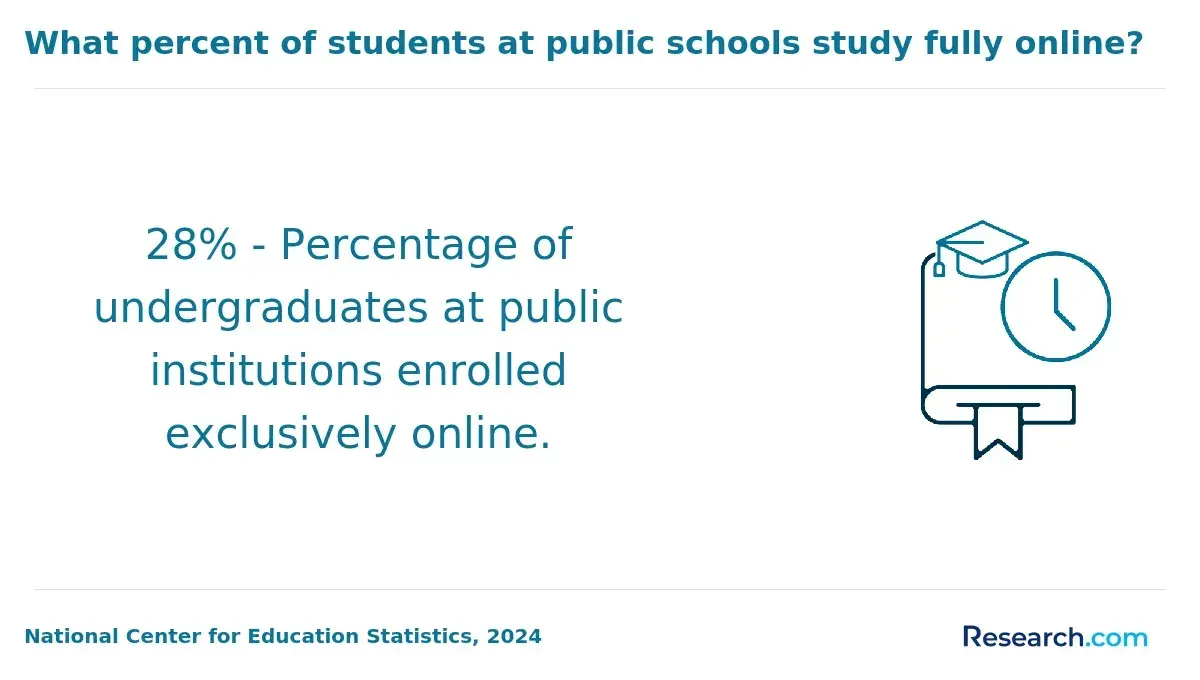
Online learning is now a mainstream graduate option, especially for working adults. Federal and institutional data published in recent years shows continued demand for distance education, and universities have expanded online advising, tutoring, library access, virtual labs, and career services in response. For students, the main decision is whether the format fits their schedule, learning style, and field requirements.
This table compares the practical differences students should weigh before choosing online or campus-based study.
| Factor | Online master's | Campus-based master's |
| Schedule | Often asynchronous or evening-based, with more flexibility | More fixed class times and campus commitments |
| Interaction | Discussion boards, video meetings, group projects, virtual office hours | Face-to-face seminars, labs, networking events, and campus organizations |
| Best fit | Working adults, remote learners, caregivers, military students, and students far from campus | Students who want in-person labs, close campus networking, or local field placements |
| Hands-on requirements | May require local practicums, residencies, proctored exams, or campus intensives | Often easier access to campus labs, clinics, studios, and faculty offices |
| Quality signal | Depends on accreditation, faculty, curriculum, support, and outcomes | Depends on the same factors, not merely physical location |
Online is often better when flexibility determines whether a student can enroll at all. Campus may be better when the field depends heavily on labs, studio work, local networking, or intensive faculty mentorship. Students comparing distance programs should prioritize online universities that are accredited rather than assuming every online option carries the same credibility.
Before enrolling online, students should ask whether the transcript or diploma differs from the campus version, whether faculty are full-time or adjunct-heavy, how clinical placements are arranged, and whether the program is authorized to enroll students in their state.
How much does a master's degree cost, and what financial aid options are available?
The cost of a master's degree depends on tuition, fees, program length, residency status, books, technology, travel, clinical expenses, exam fees, and lost income if the student reduces work hours. Published tuition is only one part of the total cost of attendance, so students should compare full program cost rather than cost per credit alone.
Federal Student Aid rules allow graduate and professional students to borrow up to $20,500 per academic year in Direct Unsubsidized Loans, with Grad PLUS Loans potentially covering remaining eligible cost of attendance after other aid. That borrowing capacity can make graduate school accessible, but it also means students need a repayment plan before enrolling.
Common cost categories include the following, and each can change the true price of attendance.
- Tuition charged per credit, per term, or per program.
- University fees, technology fees, graduation fees, clinical fees, lab fees, and online course fees.
- Books, software, equipment, background checks, immunizations, testing, licensing exams, and professional memberships.
- Travel for campus residencies, internships, field placements, conferences, or required intensives.
- Opportunity cost from reducing work hours or delaying full-time employment.
- Loan interest and repayment costs if the student borrows to attend.
Students should consider several funding sources before using high-interest debt. Employer tuition assistance, graduate assistantships, fellowships, scholarships, military education benefits, public-service programs, payment plans, and part-time enrollment can reduce borrowing. Some students also lower costs by choosing public universities, in-state options, competency-based formats, or programs that accept relevant transfer credits.
To evaluate affordability, estimate the total cost, subtract grants and employer aid, calculate likely borrowing, and compare the monthly loan payment with expected earnings in the target field. Avoid assuming a high salary will follow automatically; use conservative salary ranges, local labor-market data, and placement outcomes from the program.
What careers, salaries, and job outlook can a master's degree lead to?
A master's degree can lead to advanced roles in education, healthcare, business, technology, public administration, social services, engineering, and research. It can also help workers move into management or specialized practice. However, salary and job outlook vary widely by occupation, region, employer, licensure status, and experience.
BLS 2024 earnings data shows that workers with a master's degree had median weekly earnings of $1,840 and a 2.2% unemployment rate. This does not mean every program produces the same result; it shows that graduate education is associated with stronger labor-market outcomes overall, while field choice remains the most important ROI factor.
The table below highlights common career directions connected to master's study. These are broad examples, so students should verify requirements for the exact occupation and state where they plan to work.
| Field | Common master's pathway | Possible roles | What to verify |
| Business and management | MBA, MS in management, MS in finance, MS in analytics | Operations manager, business analyst, finance manager, product manager, consultant | Whether employers value experience, certifications, or portfolio work as much as the degree |
| Education | MEd, MAT, MA in curriculum, educational leadership | Teacher leader, instructional coordinator, school administrator, curriculum specialist | State licensure, endorsement rules, and district salary schedules |
| Healthcare | MSN, MHA, MPH, allied health master's | Nurse practitioner, healthcare administrator, public health analyst, clinical educator | Programmatic accreditation, clinical placement support, and state board requirements |
| Technology and data | MS in computer science, cybersecurity, data science, information systems | Data scientist, cybersecurity analyst, software engineer, systems architect, AI product specialist | Prerequisites, hands-on projects, employer-recognized tools, and portfolio quality |
| Social services and counseling | MSW, counseling, marriage and family therapy, school counseling | Clinical social worker, counselor, casework supervisor, school counselor | Accreditation, supervised hours, state licensure, and exam requirements |
| Research and academia | Thesis-based MA or MS | Research assistant, lab manager, policy analyst, doctoral student | Faculty mentorship, thesis expectations, research funding, and doctoral placement history |
Technology is reshaping many graduate-level jobs. AI tools can automate routine drafting, coding, analysis, scheduling, and reporting, but employers still need people who can frame problems, check accuracy, interpret results, manage risk, and communicate decisions. Programs that combine technical fluency with judgment, ethics, and domain knowledge are likely to be more durable than programs focused only on narrow software training.
Students should ask programs for recent career outcomes, but they should treat those figures carefully. Outcomes may reflect graduates who responded to surveys, students already employed before enrolling, or regional labor-market strengths. The best evidence combines school-reported outcomes with independent labor-market data and conversations with employers or alumni.
How can students evaluate accreditation and choose a reputable master's program?
Accreditation is one of the most important quality checks for a master's program. Institutional accreditation means a recognized accreditor has reviewed the university's academic and administrative standards. Programmatic accreditation applies to specific professional programs, especially in fields such as nursing, counseling, social work, education, business, public health, and allied health.
Students should not rely only on rankings, advertising, or fast admissions promises. A reputable program should be transparent about accreditation, faculty qualifications, curriculum, costs, outcomes, licensure alignment, and student support. Use the following steps before applying or paying a deposit.
- Confirm institutional accreditation through the U.S. Department of Education or the Council for Higher Education Accreditation databases.
- Check whether the field requires programmatic accreditation for licensure, certification, employment, or doctoral admission.
- Ask whether the program meets licensure requirements in the state where you plan to work.
- Compare total program cost, not just tuition per credit.
- Review faculty credentials, course sequencing, practicum support, research opportunities, and career services.
- Ask for recent graduation, placement, licensure-exam, and student-debt information when available.
- Speak with current students or alumni about workload, advising, responsiveness, and whether advertised support matches reality.
Common red flags include pressure to enroll immediately, unclear accreditation claims, vague tuition information, unusually high fees, no published curriculum, weak faculty information, poor student support, and refusal to explain licensure limitations. Another mistake is assuming that private, public, nonprofit, for-profit, online, or campus status alone determines quality. Those categories matter, but accreditation, curriculum, support, outcomes, and fit matter more.
A strong final shortlist usually includes programs that meet the student's career requirements, offer a manageable schedule, provide clear support, publish transparent costs, and have credible evidence that graduates can use the credential in the intended field.
Other Things You Should Know About
Yes. A master's degree is a graduate-level credential completed after a bachelor's degree. It involves more advanced coursework, greater specialization, and often a thesis, capstone, practicum, portfolio, or comprehensive exam.
Not always. Many strong careers require only a bachelor's degree, associate degree, certificate, apprenticeship, license, or portfolio. A master's degree is most useful when it is required for licensure, improves promotion prospects, or builds specialized skills that employers in the target field value.
Yes. Many accredited U.S. universities offer online master's programs. Students should confirm accreditation, state authorization, licensure alignment, field placement support, faculty access, and whether any campus residencies or in-person requirements apply.
A thesis is usually a research project that asks and answers an academic question. A capstone is typically an applied project that solves a practical problem or demonstrates professional competence. Some programs let students choose between the two based on career goals.
References
- How Accreditation Affects the Quality and Recognition of a Master’s Degree https://www.idsnews.com/article/2026/04/sponsored-how-accreditation-affects-the-quality-and-recogintion-04092026
- How to Pay for Graduate School Outside of the U.S. (+39 Scholarship Resources) https://www.collegeessayguy.com/blog/financial-aid-non-us-graduate-school
- How Long Does It Take To Earn a Master’s Degree? | ACE Blog https://ace.edu/blog/how-long-does-it-take-to-earn-a-masters-degree/
- Paying for a Master's Degree: Scholarships & Financial Aid Options https://www.gograd.org/paying-for-your-masters-degree/
- Study Masters Degree in USA for International Students https://ausstudies.com/blog/study-masters-degree-in-usa
- Exploring the benefits of studying for a master's degree https://www.rcl.ac.uk/news/benefits-of-a-masters-degree/
- How Long Does It Take to Complete a Master’s Degree Program? https://www.calsouthern.edu/articles/how-long-is-a-masters-degree
- How long does it take to get a master's degree? | edX https://www.edx.org/resources/how-long-does-a-masters-degree-take
- Average Cost of a Master's Degree: 2025 Analysis https://educationdata.org/average-cost-of-a-masters-degree