2027 Beginner's Guide to Understanding How College Really Works

Co-Founder and Chief Data Scientist
Choosing a college means making decisions about cost, time, learning format, career fit, and risk. College Board's 2024 pricing report lists average published tuition and fees at $11,610 for in-state public four-year colleges and $43,350 for private nonprofit four-year colleges, before aid.
This guide is for first-time students, adult learners, transfer students, and families who want a clear explanation of how college really works. You will learn how programs, admissions, credits, financial aid, accreditation, and career outcomes fit together so you can choose a path with fewer surprises.
Key Things You Should Know
- College is built around credits, degree requirements, academic terms, advising, grades, and graduation audits; finishing on time usually depends on taking the right courses in the right sequence.
- Costs vary widely: College Board reported 2024-25 average published tuition and fees of $4,050 at public two-year colleges, $11,610 at in-state public four-year colleges, and $43,350 at private nonprofit four-year colleges.
- Degree choice matters, but it does not guarantee an outcome; NCES' 2024 Condition of Education reported median annual earnings of $66,600 for bachelor's degree holders ages 25-34 working full time, compared with $41,800 for high school graduates.
How does college work in the U.S., from applications to graduation?
In the U.S., college works as a structured path from application to admission, enrollment, coursework, credits, academic progress, and graduation. The details vary by school, but most colleges use the same basic building blocks: academic terms, credit hours, general education, major requirements, electives, grades, and student support services.
A typical student journey looks like this. Understanding each stage helps you avoid missed deadlines, wasted credits, and programs that do not match your goals.
| Stage | What usually happens | Why it matters |
| Exploration | You compare majors, degree levels, costs, formats, accreditation, and career outcomes. | This is where you decide whether college, a certificate, transfer pathway, or direct workforce route makes the most sense. |
| Application | You submit forms, transcripts, test scores if required, essays if requested, and fees or fee waivers. | Application choices affect admission odds, cost, and how quickly you can start. |
| Admission and aid review | The college evaluates your academic record and sends an admission and financial aid decision. | The best offer is not always the lowest tuition; grants, scholarships, transfer credit, and housing costs matter. |
| Enrollment | You accept an offer, complete placement steps, meet an advisor, register for classes, and arrange payment. | Early advising helps prevent unnecessary courses and schedule conflicts. |
| Academic progress | You complete required courses, maintain grades, meet credit minimums, and use tutoring or advising when needed. | Falling below satisfactory academic progress can affect graduation timing and financial aid eligibility. |
| Graduation | The school checks that you completed all degree, GPA, residency, and program requirements. | A graduation audit confirms that your credits actually meet the credential requirements. |
Credits are the unit colleges use to measure academic work. A bachelor's degree commonly requires about 120 credits, while an associate degree often requires about 60 credits. However, the number alone is not enough; the credits must fit the right categories. A student can have many credits and still be short of graduation if the credits do not satisfy major, lab, writing, residency, or upper-division requirements.
If application fees are a barrier, you can compare online colleges free application options, but still check accreditation, transfer policies, and total cost before applying.
One of the biggest mistakes beginners make is treating admission as the finish line. Admission only gets you into the institution. Your real success depends on registering for the right courses, understanding financial aid rules, communicating with advisors, and monitoring degree progress every term.
What types of college degrees and programs can you choose from today?
College programs differ by credential level, academic depth, time commitment, and career purpose. Some are designed for quick job preparation, while others support long-term professional, graduate, or licensed career paths.
The table below compares common U.S. college credentials so you can see which level fits your starting point and goal.
| Credential | Typical purpose | Common length | Best fit |
| Certificate | Focused training in a specific skill or occupation. | A few months to about one year, depending on field and intensity. | Students who want a faster workforce credential, career change, or add-on skill. |
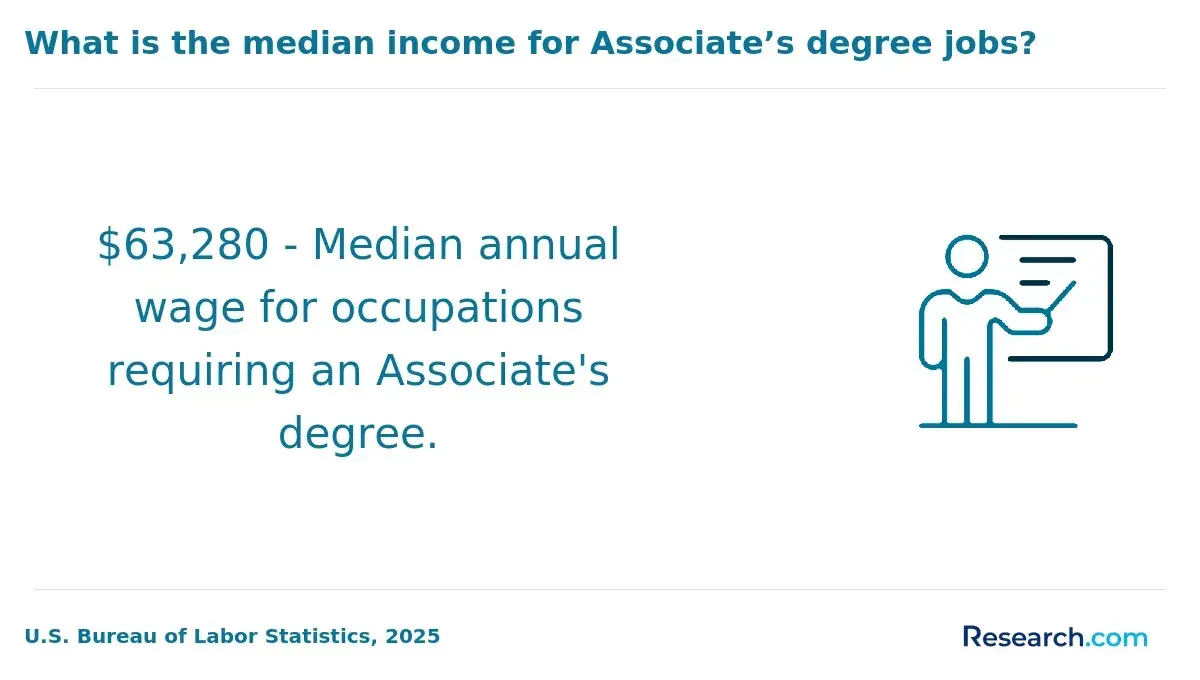
| Associate degree | Two-year academic or career preparation, often at a community college. | About two years full time. | Students seeking lower-cost study, transfer to a bachelor's program, or technical employment. |
| Bachelor's degree | Broad undergraduate education plus a major field of study. | About four years full time. | Students pursuing careers that commonly require a degree or graduate school preparation. |
| Master's degree | Advanced study in a professional or academic field. | Often one to three years. | Professionals seeking advancement, specialization, licensure eligibility, or career transition. |
| Doctoral degree | Highest-level academic, research, or professional preparation. | Often three or more years, though timing varies widely. | Students pursuing research, university teaching, advanced clinical practice, or senior expertise. |
Degree names can be confusing. An associate of arts may be transfer-focused, while an associate of applied science may be workforce-focused. A bachelor of arts may include more humanities or language requirements, while a bachelor of science may include more technical or quantitative coursework. These differences are not universal, so always read the curriculum rather than relying only on the degree label.
Certificates can be valuable when they connect directly to a skill employers recognize, such as medical billing, project management, cybersecurity fundamentals, bookkeeping, or data analytics. They are usually not a substitute for a degree in fields that legally require licensure or where employers consistently ask for a bachelor's or graduate credential.
A practical way to choose among credentials is to start with the job you want, then work backward. Check whether the role usually requires a degree, license, portfolio, certification, apprenticeship, or experience. If your target career does not require a four-year degree, a certificate or associate program may reduce cost and time. If your target career requires graduate study, choose an undergraduate program that prepares you academically and meets prerequisite requirements.
How do you choose the right major and align it with career goals?
A major is your main field of study, but it is not the same as a career. Some majors connect directly to specific jobs, such as nursing, accounting, teaching, engineering, or computer science. Others build flexible skills in communication, analysis, research, writing, leadership, or problem-solving that can apply across many industries.
The smartest major choice balances interest, ability, cost, market demand, graduate school plans, and risk tolerance. Before declaring or changing a major, work through these steps in order.
- Write down three career outcomes you would realistically accept, not just your dream job.
- Look up job postings for those roles and note repeated requirements for degrees, software, licenses, portfolios, internships, or experience.
- Compare the required courses in each major, especially math, science, writing, clinical, internship, or lab expectations.
- Ask the department about retention, internship access, graduate school placement, and common first jobs.
- Estimate total cost and time to completion, including prerequisite courses and delayed graduation risk.
- Choose electives, minors, projects, or certificates that make the major more employable.
Current hiring trends make this step more important. AI tools are changing entry-level work in writing, coding, customer support, marketing, and data tasks. That does not mean students should avoid those fields. It means they should build stronger judgment, domain knowledge, communication skills, ethical reasoning, and hands-on project experience instead of relying only on classroom theory.
Common mistakes include choosing a major only because it sounds prestigious, avoiding math without checking whether the career requires quantitative work, assuming a high salary applies to every graduate, or ignoring graduate school prerequisites. A better approach is to compare several realistic paths: the major you like most, the major with the clearest employment route, and the lower-cost path that still keeps your options open.
If you are undecided, start with general education courses that transfer well, meet with an advisor early, and avoid accumulating random credits. Undecided is not a problem by itself; drifting without a plan is the expensive part.
How can you compare accredited colleges and universities, including online schools?
Accreditation is one of the most important quality checks in U.S. higher education. In simple terms, accreditation means an outside accrediting organization has reviewed a college or program for academic standards, governance, student support, faculty qualifications, and continuous improvement.
There are two main levels to understand. Institutional accreditation applies to the whole college or university. Programmatic accreditation applies to a specific program, such as nursing, social work, education, business, engineering, counseling, or public health. Some careers and licenses require graduation from a program with specific programmatic accreditation, not just a school that is generally accredited.
The table below summarizes quality signals that are useful when comparing accredited schools, including online colleges.
| Comparison factor | What it tells you | Why it affects your decision |
| Institutional accreditation | The school meets recognized institutional standards. | It can affect financial aid eligibility, credit transfer, graduate admission, and employer recognition. |
| Programmatic accreditation | A specific program meets standards in a profession. | It may be required for licensure, certification exams, or professional credibility. |
| Transfer credit policy | How previously earned credits are accepted and applied. | A generous policy can reduce cost, but only if credits count toward degree requirements. |
| Graduation and retention context | Whether students persist and complete programs. | Low completion can signal poor fit, weak support, affordability issues, or academic barriers. |
| Total cost of attendance | Tuition plus fees, books, technology, transportation, housing, and lost work time. | The lowest tuition is not always the lowest total cost. |
| Career support | Access to internships, job boards, employer partnerships, licensure guidance, and alumni networks. | Support services can matter as much as curriculum for first-generation or career-changing students. |
Do not rely only on rankings, advertising, or a school's brand name. A respected university can still have a program that does not fit your schedule, budget, or licensure needs. A smaller or less famous school can be a strong option if it is properly accredited, transparent about outcomes, and aligned with your goals.
Students focused on affordability can start by comparing cheap online colleges, then narrow the list using accreditation, transfer credit, student support, and career fit rather than price alone.
Red flags include pressure to enroll immediately, unclear accreditation language, refusal to provide total cost estimates, vague answers about licensure, unusually aggressive financial aid promises, or credits that "may transfer" without a written evaluation. If a school cannot clearly explain how its program helps you reach your stated goal, keep looking.
What is the difference between online, hybrid, and on-campus college programs?
Online, hybrid, and on-campus programs can lead to the same type of credential, but the learning experience is different. The right format depends on your schedule, learning style, location, technology access, need for campus services, and whether the program includes labs, clinical hours, fieldwork, student teaching, or internships.
This comparison shows how the main formats differ. Use it to decide which environment supports your life and your academic success.
| Format | How it works | Best fit | Possible trade-off |
| Online asynchronous | You complete coursework on your own schedule within weekly deadlines. | Working adults, caregivers, military students, and self-directed learners. | Requires strong time management and less spontaneous interaction. |
| Online synchronous | You attend live virtual classes at scheduled times. | Students who want structure without commuting. | Less flexible for shift workers or students in different time zones. |
| Hybrid | You combine online coursework with scheduled campus, lab, clinical, or residency meetings. | Programs needing hands-on practice or students who want some in-person connection. | Travel and scheduling still matter. |
| On-campus | You attend classes and use campus facilities in person. | Students who want face-to-face learning, residential life, labs, athletics, or campus networking. | Can involve higher housing, transportation, and opportunity costs. |
Online college has become more accepted, especially when the institution is accredited and the transcript does not separate the online program from the school's academic standards. However, online is not automatically easier. Many students underestimate the discipline required to read, submit assignments, participate in discussions, and ask for help without regular face-to-face reminders.
Hybrid programs can be ideal for fields that require hands-on learning. Nursing, education, counseling, social work, allied health, engineering technology, and lab sciences may require supervised experiences that cannot be completed fully online. Before enrolling, ask where placements happen, who arranges them, and whether your state accepts the program for licensure.
On-campus programs may be worth the extra cost for students who benefit from structured routines, labs, mentoring, research opportunities, campus employment, athletics, or strong local employer networks. The best format is not the trendiest one; it is the one you can complete successfully at a cost you can justify.
What are typical admission requirements and application steps for U.S. colleges?
Admission requirements depend on the school type, selectivity, program level, and major. Open-admission community colleges may require a high school diploma or equivalent and placement steps. Selective universities may review grades, course rigor, essays, recommendations, activities, and standardized test scores if required or submitted.
Most applicants should expect some version of the following application process. These steps are especially important because missing one document can delay admission, financial aid, registration, or transfer credit evaluation.
- Build a school list that includes academic fit, cost fit, format fit, and at least one realistic financial option.
- Confirm admission deadlines, financial aid deadlines, scholarship deadlines, and program-specific deadlines.
- Gather official transcripts from high school, GED programs, prior colleges, military training, or other institutions.
- Prepare essays, recommendations, resumes, portfolios, or auditions only if the school or major requires them.
- Submit the FAFSA and any institutional aid forms as early as possible.
- Request a written transfer credit evaluation if you have prior college, AP, IB, CLEP, military, or workplace learning credits.
- Compare admission offers by net cost, degree fit, credit acceptance, support services, and graduation timeline.
Test policies continue to vary. Some colleges are test-optional, some are test-free, and some require SAT or ACT scores for admission, scholarships, placement, honors programs, or specific majors. Do not assume a school's general policy applies to every program.
Adult learners and transfer students should pay special attention to credit evaluation. A school may accept your credits as electives but not apply them to the major, which can leave you paying for more courses than expected. Ask for a degree plan before enrolling, not after the first term begins.
Applicants with criminal records should ask separate questions about admission, housing, internships, clinical placements, background checks, and licensure. Some colleges admit students but specific career pathways may still have restrictions. For a focused starting point, review online colleges that accept felons and then verify state and employer rules for your intended field.
How long do degree programs usually take, and what do you study in them?
Program length depends on degree level, course load, transfer credit, prerequisites, term structure, and whether you study full time or part time. The advertised timeline usually assumes steady progress with the right courses available when you need them.
Most degree programs include several categories of study. Knowing these categories helps you understand why college is not just "taking classes" until you reach a credit number.
| Degree component | What it usually includes | Why it matters |
| General education | Writing, math, science, social science, humanities, communication, and sometimes diversity or civic learning. | Builds broad skills and often transfers between institutions. |
| Major requirements | Core courses in your academic field, often sequenced from introductory to advanced work. | Provides the specialized knowledge employers, graduate schools, or licensing boards may expect. |
| Electives | Courses you choose inside or outside your major. | Can add career-relevant skills, prerequisites, or personal exploration. |
| Experiential learning | Internships, clinicals, practicums, labs, student teaching, research, studios, or capstones. | Connects coursework to real-world performance and may be required for graduation or licensure. |
| Residency requirement | A minimum number of credits that must be completed at the institution granting the degree. | Affects transfer students and students trying to finish quickly. |
Full-time associate and bachelor's students often plan around two-year and four-year timelines, but many students take longer because they work, attend part time, change majors, repeat courses, or cannot get required classes at the right time. Part-time study can be the right decision if it prevents burnout or reduces borrowing, but it may delay career entry.
Accelerated programs can save time, but they compress workload. Before choosing one, ask whether courses run year-round, whether financial aid covers the schedule, whether clinical or internship placements are available, and whether you can manage the pace while working.
Doctoral timelines vary more than undergraduate timelines. Professional doctorates, research doctorates, dissertations, residencies, and capstone models can be very different. If you are comparing 1-year PhD programs online, read the fine print carefully because prior graduate credits, dissertation status, professional experience, and program design often determine whether a short timeline is realistic.
How much does college really cost, and what financial aid can help you pay?
College cost is more than tuition. You should compare the full cost of attendance, including mandatory fees, books, course materials, technology, housing, food, transportation, childcare, health insurance, and lost income from reducing work hours. Net price after grants and scholarships is usually more useful than sticker price.
College Board's 2024 pricing report gives a helpful baseline for published tuition and fees in 2024-25. These figures do not include every expense, but they show why school type and residency status strongly affect cost.
| Institution type | Average published tuition and fees for 2024-25 | What it means for students |
| Public two-year, in-district | $4,050 | Often the lowest-cost starting point, especially for transfer or career programs. |
| Public four-year, in-state | $11,610 | Can offer a strong balance of cost, campus resources, and bachelor's degree pathways. |
| Public four-year, out-of-state | $30,780 | Usually requires a clear reason, such as a unique program, scholarship, or residency plan. |
| Private nonprofit four-year | $43,350 | Sticker prices are high, but institutional grants can significantly change net price. |
Financial aid can come from federal, state, institutional, private, employer, military, or community sources. The FAFSA is the main gateway for federal grants, federal loans, work-study, and many state or school aid programs. For the 2024-25 award year, the maximum Federal Pell Grant was $7,395, which can be especially important for lower-income students because it generally does not have to be repaid.
Use this order when thinking about how to pay. It helps reduce unnecessary borrowing and keeps the focus on net cost.
- Start with grants and scholarships that do not need to be repaid.
- Compare net price after aid, not only tuition.
- Use savings, payment plans, employer tuition benefits, or part-time work if they do not derail academic progress.
- Borrow federal student loans before considering private loans because federal loans usually offer stronger borrower protections.
- Estimate monthly repayment before borrowing, especially if the degree leads to a modest starting salary.
Common cost mistakes include ignoring fees, assuming online always costs less, borrowing for living expenses without a budget, choosing a school before comparing aid offers, or starting at a college where few credits will transfer to the final degree. A lower-cost school is not automatically better if it lacks the program, accreditation, support, or licensure pathway you need. But a higher-cost school should have a clear reason to justify the investment.
What careers, salaries, and job outlooks can different degrees lead to?
Different degrees can lead to different career options, but outcomes vary by location, experience, internships, professional networks, licensing, employer demand, and economic conditions. A degree should be evaluated as one part of a career plan, not as a stand-alone promise.
BLS May 2024 wage data offers a useful snapshot of national salary context. These figures are medians for occupations, not guarantees for new graduates or graduates from a specific program.
| Field or role | Common education pathway | May 2024 median annual wage | Decision point |
| Registered nurse | Associate or bachelor's nursing degree plus RN licensure. | $93,600 | Check state board approval, clinical placement access, and NCLEX preparation. |
| Software developer | Bachelor's degree in computer science or related field, though portfolios and experience also matter. | $133,080 | Build projects, internships, and AI-aware technical skills rather than relying only on coursework. |
| Accountant or auditor | Bachelor's degree in accounting or related field; CPA eligibility may require additional credits. | $81,680 | Confirm whether your program supports CPA exam and state licensing requirements. |
| Elementary school teacher | Bachelor's degree in education or approved teacher preparation route. | $64,120 | Verify state approval, student teaching requirements, and licensure reciprocity. |
| Medical and health services manager | Bachelor's or master's degree in health administration, business, public health, or related field. | $117,960 | Experience in healthcare operations often matters alongside the degree. |
The BLS projects employment growth across the U.S. economy from 2023 to 2033, but growth is uneven. Healthcare, data, technology, infrastructure, education, and business operations may offer strong opportunities in some roles, while other roles are more competitive or region-specific. Use job outlook data to compare direction, not to predict your personal outcome.
Skills-based hiring is also changing how employers evaluate candidates. More job postings emphasize software tools, communication, project experience, problem-solving, data literacy, compliance knowledge, and adaptability. This trend does not make degrees irrelevant; it means students should use college to produce evidence of skill, such as internships, portfolios, research projects, clinical evaluations, certifications, or supervised practice.
To judge whether a degree is worth it, compare the total cost and time against realistic first roles, median occupation wages, advancement potential, required credentials, and your ability to complete the program. A lower-paying field can still be worth it if it fits your values and budget. A high-paying field may not be worth it if you dislike the work, cannot complete the prerequisites, or would need to borrow far more than the expected payoff supports.
When do you need licensing or certification, and how do degrees support it?
Licensing and certification matter when a career is regulated or when employers expect proof of specific skills. A license is usually a legal permission to practice in a state-regulated field. Certification is usually a professional credential showing competence in a skill, technology, or body of knowledge, though some certifications are tied closely to employment or licensure.
Degrees often support licensing by providing required coursework, supervised hours, clinical experience, student teaching, or eligibility for exams. However, the degree alone may not be enough. Nursing, teaching, counseling, social work, accounting, engineering, architecture, and many allied health fields can involve state-specific rules.
Before enrolling in a program connected to a licensed career, complete these checks. They can prevent one of the most expensive college mistakes: finishing a degree that does not qualify you for the credential you need.
- Identify the exact job title you want and the state where you plan to work.
- Find the licensing board or official regulator for that occupation.
- Confirm required degree level, program approval, accreditation, exams, supervised hours, background checks, and renewal rules.
- Ask the school in writing whether the program meets educational requirements in your state.
- Check whether online, out-of-state, clinical, internship, or field placement rules affect eligibility.
- Save documentation from the school and licensing board before you commit.
Certifications can also help students and graduates show job-ready skills, especially in technology, healthcare administration, business, bookkeeping, project coordination, digital marketing, and data tools. If you are not ready for a full degree or want a lower-cost skill boost, compare easy certifications to get online, but choose credentials based on employer demand rather than convenience alone.
The key rule is simple: never assume. Licensing requirements can change, and they can differ by state, employer, age, criminal background, prior education, and supervised experience. When a license is involved, official board rules matter more than a college brochure.
Other Things You Should Know About
No. College can be worth it when the program fits your career goal, budget, learning style, and credential requirements. It may not be the best first step if your target job values apprenticeships, portfolios, military training, certifications, or direct experience more than a degree.
Think of credits as units that count toward specific degree requirements. You need enough credits to graduate, but they must also fit the right categories, such as general education, major courses, electives, upper-division work, and residency requirements.
Community college can be a smart lower-cost start, especially for transfer or career programs. A four-year university may be better if you need campus housing, a direct-entry major, research opportunities, athletics, or a highly sequenced program that is hard to transfer into later.
Check institutional accreditation, programmatic accreditation if your career requires it, transparent tuition, student support, transfer policies, and licensure disclosures. Be cautious if a school pressures you to enroll quickly or cannot clearly explain whether the program meets your career requirements.
References
- Higher Ed: The US Education System Explained https://shorelight.com/student-stories/the-us-higher-education-system-explained
- Top 10 College Majors https://www.princetonreview.com/college-advice/top-ten-college-majors
- 10 Must-Know Application Requirements Before You Apply to College in the U.S. https://www.collegeessayguy.com/blog/international-students-us-college-application-requirements
- Certificate vs Certification vs Licenses | Differences To Know https://honorlock.com/blog/differences-certificate-certification-licensure/
- How does a college degree improve graduates’ employment and earnings potential? - APLU https://www.aplu.org/our-work/4-policy-and-advocacy/publicuvalues/employment-earnings/
- Steps to Get Selected in US University for International Students - ERES Blogs https://eres.com/blog/how-to-get-selected-in-a-usa-university/
- Types of College Degrees https://www.act.org/content/act/en/students-and-parents/high-school-success/what-to-do-after-high-school/college-degrees.html
- Difference between Hybrid, Online & In-Class Degree Programmes | BSBI https://www.berlinsbi.com/blog/what-is-the-difference-between-hybrid-online-and-in-class-degree-programmes
- The True Cost of College: How Much Does Your Education Really Cost? https://www.citizensbank.com/student/articles/true-cost-of-college.aspx