2027 Why Colleges Put Holds on Student Accounts

Co-Founder and Chief Data Scientist
A student account hold can stop a routine task-registering, graduating, or sending a transcript-at the worst possible time. The issue matters because college costs remain high: College Board reported average published in-state tuition and fees of $11,610 at public four-year colleges for 2024-25.
This guide is for students, parents, transfer applicants, and returning adults who need to understand what a hold means, who controls it, and how to resolve it without making costly enrollment decisions under pressure.
Key Things You Should Know
- Colleges use account holds as administrative controls; depending on the hold type, they may block registration, transcripts, diplomas, housing, financial aid disbursement, or access to campus services.
- Financial holds are common because unpaid tuition, fees, parking fines, library charges, housing balances, or returned payments can create institutional debt; the 2024-25 maximum federal Pell Grant is $7,395, so even aid-eligible students may still owe a balance.
- Since July 1, 2024, federal rules have limited some transcript withholding tied to periods paid for with federal student aid, but policies still vary by school, state law, debt type, and whether the student is asking for an official or unofficial record.
Why do colleges place holds on student accounts and what do they block?
Colleges place holds on student accounts to make sure required steps are completed before a student receives additional services. A "hold" is a flag in the student information system that tells another office not to release something until a condition is met. Some holds are serious, such as a past-due balance. Others are routine, such as signing a financial responsibility agreement or submitting immunization records.
What a hold blocks depends on the office that placed it and the school's policy. A financial hold from the bursar may affect registration or transcripts, while an advising hold may only block course enrollment until a student meets with an advisor. Understanding the scope of the hold matters because students sometimes assume every hold is a punishment when many are compliance, advising, or documentation checks.
The table below summarizes common hold categories and the services they most often affect. Use it to identify whether your hold is likely a quick administrative fix or a problem that may require payment, documentation, or an appeal.
| Hold type | Office that often places it | What it may block | Typical reason |
| Financial hold | Bursar, student accounts, cashier | Registration, transcripts, diploma release, payment plan access | Unpaid balance, returned payment, late fee, housing or meal-plan charge |
| Advising hold | Academic advising, department, registrar | Course registration or schedule changes | Required advising appointment, degree plan review, first-year course planning |
| Health hold | Student health services | Registration, housing, clinical placement | Missing immunization records, health forms, insurance verification |
| Conduct hold | Student conduct, dean of students | Registration, transcript release, graduation clearance | Unresolved disciplinary case, sanction, or safety-related requirement |
| Admissions or records hold | Admissions, registrar | Enrollment, transfer credit posting, financial aid review | Missing final transcript, residency document, identity verification |
Because holds can overlap, a student may clear one requirement and still be blocked by another. Always check the exact hold code and office name rather than relying on a general "account hold" message.
What are the most common reasons a college might put a financial hold on my account?
Financial holds usually appear when the college believes the student owes money or has not completed a required financial agreement. The balance does not always come from tuition alone. It may come from small charges that accumulate, aid that was reduced after enrollment changed, or a payment that failed after the student thought the bill was settled.
College Board's 2024-25 pricing data shows why small timing problems can become major barriers: published tuition and fees averaged $4,050 at public two-year colleges and $43,350 at private nonprofit four-year colleges. Those figures do not include every housing, course, technology, and transportation cost, so students should treat the account ledger as the source of truth, not the original tuition estimate.
These are the financial issues most likely to trigger a hold. Review them before contacting the school so you can ask targeted questions instead of waiting for a general account review.
- Past-due tuition or mandatory fees: A balance remains after grants, loans, scholarships, or payments are applied.
- Returned or failed payment: A bank transaction, card payment, or payment plan installment did not clear.
- Changed enrollment status: Dropping below full-time, withdrawing, or repeating a course can change aid eligibility and leave a balance.
- Housing, meal-plan, or campus service charges: Residence hall fees, dining charges, parking fines, library fees, or equipment replacement costs may post separately from tuition.
- Unfinished financial aid requirements: Verification documents, loan entrance counseling, master promissory notes, or satisfactory academic progress appeals may delay aid.
- Third-party payment delays: Employer tuition benefits, veterans benefits, scholarships, or sponsor payments may not arrive before the school's deadline.
A common mistake is assuming that "financial aid awarded" means "bill paid." Aid must be accepted, disbursed, and applied to eligible charges. If any step is incomplete, the student account can still show a balance and trigger a hold.
How can I find out exactly why I have a hold and which office to contact?
The fastest way to resolve a hold is to identify the exact office that owns it. A registrar may display the hold, but the registrar often cannot remove a bursar, health, conduct, or advising hold. Most colleges list the hold name, code, contact office, phone number, email, and blocked services in the student portal.
Follow this sequence before you call or email. It helps you avoid being bounced between offices and creates a record if you need to appeal later.
- Log in to the student portal and open the student account, registration, or holds page.
- Write down the hold name, code, date placed, office, dollar amount if shown, and services blocked.
- Open your account activity or bill detail and compare charges, payments, aid disbursements, refunds, and reversals.
- Check your school email for notices from the bursar, financial aid office, registrar, advising office, health office, or dean of students.
- Contact the office listed on the hold and ask what exact action will remove it, how long removal takes, and whether temporary clearance is possible.
- Save screenshots, receipts, emails, appeal forms, and names of staff members you speak with.
If you are comparing schools after a transfer setback or a stop-out, this same process can help you evaluate whether a new institution is more transparent about billing and holds. For students trying to lower future risk, researching the cheapest bachelor degree online options can be useful, but affordability should include fees, transfer credit rules, payment plan terms, and transcript policies-not tuition alone.
What steps can I take to remove a financial hold if I can't pay in full right away?
If you cannot pay in full immediately, do not ignore the hold. Colleges are more likely to offer options when students communicate before deadlines, explain their situation clearly, and propose a realistic plan. The goal is to separate what you can resolve quickly from what requires a formal payment arrangement, aid review, or hardship request.
Use the following steps to work toward removal or temporary clearance. The order matters because you need to confirm the balance before agreeing to pay it.
- Ask for an itemized account statement showing original charges, aid, payments, refunds, late fees, and the current balance.
- Confirm whether pending aid, scholarships, employer benefits, veterans benefits, or outside payments are expected to apply.
- Ask whether the hold can be lifted after a partial payment, signed payment plan, hardship review, or proof of pending third-party funds.
- Request a financial aid review if your income, family situation, dependency status, or enrollment plans changed.
- Ask whether late fees, collection costs, or small administrative charges can be waived as part of a resolution.
- If registration is blocked, ask whether a temporary registration override is available while a payment plan or aid correction is processed.
- Get the agreement in writing, including due dates, consequences for missed payments, and the date the hold will be removed.
Avoid borrowing impulsively just to clear a hold. The Federal Reserve Bank of New York reported that U.S. student loan balances were about $1.62 trillion in early 2025, a reminder that quick debt decisions can have long-term consequences. Compare the cost of a payment plan, federal loan, private loan, employer assistance, emergency grant, or reduced course load before choosing.
Can account holds stop me from registering, graduating, or getting transcripts, and how?
Yes, account holds can stop registration, graduation, or transcript access, but the impact depends on the school's policy, the hold type, and current federal or state rules. Registration holds are often used before a new term starts. Graduation holds may appear during degree clearance. Transcript holds are especially sensitive because they can affect transfer admission, employment, licensing, and graduate school applications.
The U.S. Department of Education implemented rules effective July 1, 2024, that restrict institutions from withholding transcripts for academic credits paid for with federal student aid in certain circumstances. This does not mean every transcript must be released in every situation. Schools may still have policies for debts tied to non-Title IV periods, non-institutional charges, or other records, and some states have additional restrictions.
The table below explains the practical difference between common blocked services. It can help you decide whether you need an immediate override, a payment agreement, or an alternative document.
| Blocked service | Why it matters | What to ask the school |
| Course registration | You may lose seats in required classes or delay graduation. | Ask whether a temporary override is available after a partial payment, advising meeting, or aid review. |
| Official transcript | Transfer, employment, licensure, or graduate admission may be delayed. | Ask whether federal or state transcript rules apply and whether an unofficial transcript can be released. |
| Diploma release | You may have completed degree requirements but not receive the physical diploma. | Ask whether degree conferral will still appear on the transcript and what balance must be resolved. |
| Graduation clearance | The school may delay final approval for commencement or degree posting. | Ask whether the hold affects ceremony participation, degree conferral, or only diploma mailing. |
| Financial aid disbursement | Aid may not apply to charges until documents or eligibility issues are resolved. | Ask which requirement is incomplete and whether aid can disburse before the payment deadline. |
One red flag is a vague answer such as "you just have a hold" without a written explanation of what is blocked. Ask for the policy citation, not just the balance amount, especially if transcript access affects a transfer or job deadline.
Besides money, what academic, health, or conduct issues can trigger student account holds?
Not every hold is about money. Colleges also use holds to enforce academic planning, health requirements, identity verification, safety rules, and conduct procedures. These holds can feel frustrating, but many are designed to prevent students from enrolling in the wrong courses, entering clinical or residential settings without required documents, or ignoring unresolved disciplinary requirements.
The most common non-financial holds fall into a few categories. Knowing the category helps you bring the right documentation and avoid contacting the wrong office.
- Academic advising holds: Often used for first-year students, students on probation, athletes, veterans, or students entering restricted majors.
- Prerequisite or placement holds: Used when math, writing, language, lab, or clinical requirements must be verified before registration.
- Immunization or health insurance holds: Common for campus residents, health science students, international students, and students in clinical placements.
- Admissions document holds: Triggered by missing final high school transcripts, transfer transcripts, residency forms, test scores when required, or identity documents.
- Conduct or disciplinary holds: Used when a student has not completed a sanction, meeting, investigation step, or safety-related requirement.
- Technology or orientation holds: Used when students must complete cybersecurity training, orientation modules, or policy acknowledgments.
Students with prior justice involvement should pay close attention to admissions, conduct, and clinical placement policies because requirements vary widely by program and state. If this applies to you, reviewing resources on college degrees for felons can help you focus on programs where background check rules, licensure limits, and support services are clearer before you enroll.
How do holds affect online students differently than campus-based students, if at all?
Online students can receive the same types of holds as campus-based students, but the consequences often show up differently. Instead of being unable to visit an office in person, online students may face delays caused by time zones, remote identity verification, digital document submission, proctored exam requirements, or third-party learning platforms.
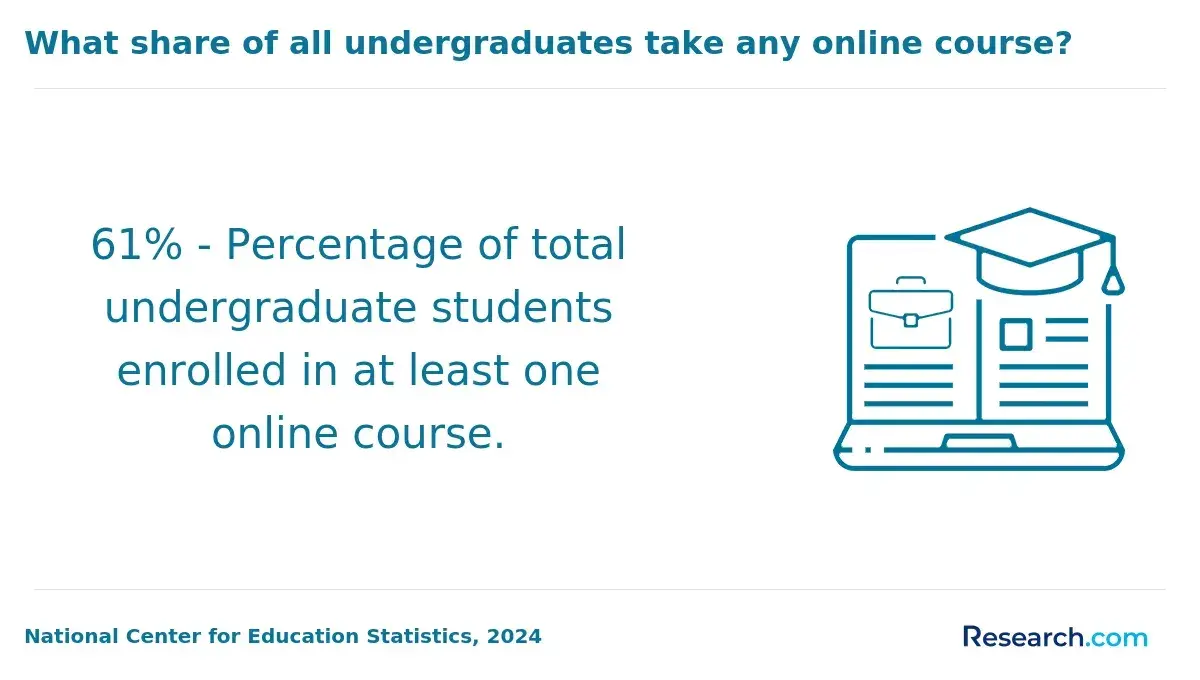
Online learning has become a normal part of U.S. higher education. NCES data released in 2024 showed that millions of U.S. college students took at least one distance education course in recent years, which means hold policies increasingly affect students who may never set foot on campus. For online learners, clear portal communication and fast document processing are not conveniences; they are essential parts of student support.
The table below compares how holds typically affect online and campus-based students. This can help you decide what to ask before enrolling in an online program.
| Issue | Online students | Campus-based students |
| Document submission | Often depends on uploads, e-signatures, mailed records, or third-party verification. | May be able to deliver documents directly to an office. |
| Advising holds | Usually resolved through video, phone, chat, or asynchronous advising systems. | May include in-person advising days or walk-in appointments. |
| Health holds | May be limited unless the program has clinical, practicum, or residency requirements. | More common for housing, athletics, campus health, and in-person labs. |
| Technology holds | Can block access to learning platforms, proctoring tools, or orientation modules. | May affect campus systems but students may have on-site IT help. |
| Payment deadlines | Often tied to accelerated terms or multiple start dates. | Often tied to semester or quarter billing cycles. |
If you are choosing an online program, ask how holds are displayed, how quickly online documents are reviewed, and whether support is available outside standard business hours. Students who need a faster credential should also compare hold policies in accelerated degree programs, because shorter terms leave less time to fix billing or documentation problems before registration closes.
What policies or legal regulations guide how U.S. colleges use administrative holds?
Administrative holds are shaped by institutional policy, contracts students sign, accreditation expectations, federal financial aid rules, and state consumer protection laws. There is no single national rule that covers every type of hold, but several legal and policy areas matter when a hold affects records, aid, enrollment, or debt collection.
One major current development is transcript withholding reform. Federal rules effective July 1, 2024, limit the ability of colleges to withhold transcripts for credits paid for with federal student aid under specified conditions. Some states have also restricted transcript withholding for certain institutional debts. Students should check both the school policy and their state's rule because the stronger protection may depend on where the institution operates.
These policy areas commonly affect how holds are used. They are not a substitute for legal advice, but they show what to look for when asking a college to explain its decision.
- Federal student aid rules: These govern Title IV aid eligibility, satisfactory academic progress, return of funds after withdrawal, and some transcript withholding practices.
- State transcript laws: Some states restrict withholding transcripts for unpaid balances, especially when records are needed for employment, transfer, or military purposes.
- Institutional financial responsibility agreements: Students may sign terms covering tuition payment, late fees, collections, electronic billing, and communication methods.
- FERPA: The Family Educational Rights and Privacy Act governs access to education records, but it does not automatically require release of every official document in every debt situation.
- Accreditation and program rules: Health, education, aviation, counseling, and other regulated programs may require documentation before clinical or field placement.
- Debt collection rules: If an account goes to collections, separate federal and state debt collection protections may apply.
The practical takeaway is simple: ask the school to identify the written policy behind the hold. If the hold affects transcripts, also ask whether federal Title IV transcript rules or state transcript-withholding limits apply to your specific credits and balance.
How can I prevent future holds through better use of my student portal and advising?
The best way to avoid future holds is to treat the student portal as an early-warning system, not just a place to register for classes. Holds often appear weeks before they cause damage. Students who check their portal regularly have more time to fix missing documents, correct aid problems, or arrange payment before registration opens.
Build these habits into every term. They are especially important if you receive financial aid, take accelerated courses, use employer benefits, or plan to transfer.
- Check the holds page, student account balance, financial aid checklist, and school email at least weekly during billing and registration periods.
- Accept or decline aid early, and complete loan counseling, promissory notes, verification, and satisfactory academic progress forms before the deadline.
- Compare your registered credits with aid requirements so you know whether dropping a class will change your bill.
- Meet with an advisor before registration opens, especially if your school uses advising holds for degree planning.
- Save proof of payments, scholarship awards, employer approvals, veterans benefit submissions, and financial aid documents.
- Read the refund, withdrawal, repeat-course, and payment plan policies before changing your schedule.
- Ask about transcript and diploma release rules before your final term, not after graduation clearance begins.
If a hold is making you rethink your path, compare options carefully rather than restarting at the first school that admits you. Some students may benefit from flexible completion routes, including 1-year master's programs after finishing a bachelor's degree, but only if prior transcripts, financial obligations, and admission requirements are manageable.
Do colleges offer appeals, payment plans, or hardship options when holds block enrollment?
Many colleges offer appeals, payment plans, emergency grants, temporary registration clearances, or hardship options, but they are rarely automatic. Students usually need to ask, document the problem, and meet deadlines. The strongest requests explain both the barrier and the plan for preventing the balance from growing.
When a hold blocks enrollment, ask about these options in writing. Not every school will offer all of them, but each is common enough to be worth requesting.
- Payment plan: Spreads a balance across installments, usually with deadlines and possible setup fees.
- Temporary registration clearance: Allows enrollment while a payment, aid correction, or third-party payment is pending.
- Financial aid professional judgment review: Lets the aid office consider changed financial circumstances when allowed by federal rules.
- Satisfactory academic progress appeal: May restore aid eligibility if the student documents circumstances and an academic plan.
- Emergency grant or completion grant: Some schools use limited funds to help students close small balances that block enrollment or graduation.
- Fee waiver or late-fee adjustment: May reduce non-tuition charges when there was an error, delay, or documented hardship.
- Transcript exception request: May apply when a transcript is needed for transfer, employment, military service, licensure, or completion at another institution.
If the hold makes continued enrollment unrealistic, consider whether a shorter, lower-cost credential could help you keep moving while resolving the balance. Carefully selected certification programs online may support career progress, but they should not be used as a substitute for a degree plan unless the credential fits your field and employer expectations.
A common mistake is making a verbal agreement and assuming the hold will disappear immediately. Always ask when the hold will be lifted, whether you can register while payments are pending, and what happens if a payment is late by even one day.
Other Things You Should Know About
Usually, schools disclose billing, registration, and documentation requirements through the student portal, email, catalog, or financial responsibility agreement. However, students may miss notices if they do not check school email. Ask for the date the hold was placed and the policy behind it.
Not always. Some holds lift automatically after payment posts, while others require manual review by the bursar, registrar, health office, or conduct office. Ask for the expected removal timeline and whether you need to send proof of payment.
You may be able to apply, but transfer admission often requires official transcripts. Federal and state transcript rules may help in some cases, but not all debts or records are covered. Contact the registrar and ask what can be released.
Start with the office listed next to the hold in your student portal. If the hold is financial, contact student accounts or the bursar. If it involves aid, contact financial aid. If it blocks registration without a balance, contact advising or the registrar.
References
- How to use Hold Assist and Hold for Me on Office Calls – IT Solver Support https://support.itsolver.net/hc/en-au/articles/14529574905999-How-to-use-Hold-Assist-and-Hold-for-Me-on-Office-Calls
- Online vs. On-Campus: Which Mode of Learning Is Best for You? https://www.onlinemastersdegrees.org/student-resources/which-mode-of-learning-is-best/
- Three Reasons Customers Get Stuck on Hold – and How to Address Them https://www.verint.com/blog/three-reasons-customers-get-stuck-on-hold-and-how-to-address-them/
- Got stuck with a massive financial hold -- how can I proceed? https://talk.collegeconfidential.com/t/got-stuck-with-a-massive-financial-hold-how-can-i-proceed/1959016
- College Problems: Surprise reasons for a hold being placed on a student's account. | Student Strategy Blog https://studentstrategy101.com/blog/surprise-reasons-for-a-hold-being-placed-on-a-students-account/
- Time Management for Students: How to Take Control of Your Academic Life - CIS University https://www.cis-spain.com/en/blog/time-management-for-students-how-to-take-control-of-your-academic-life/
- Overcome These Top Three Challenges to Academic Planning https://www.ellucian.com/blog/overcome-these-top-three-challenges-academic-planning
- Preventing Administrative Holds From Holding Up Student Success https://www.cael.org/resouces/pathways-blog/preventing-administrative-holds-from-holding-up-student-success
- Want to improve fall persistence? Reform your school's registration holds https://eab.com/resources/blog/student-success-blog/improve-fall-retention-reform-registration-holds/
- How To Appeal for More Financial Aid for College https://www.savingforcollege.com/article/how-to-appeal-for-more-financial-aid-for-college