2027 Biggest College Process Mistakes Students Make

Co-Founder and Chief Data Scientist
College decisions can go off track long before an acceptance letter arrives. College Board reports that published tuition and fees for 2024-25 average $11,610 at public four-year in-state colleges and $43,350 at private nonprofit colleges, making small planning mistakes expensive. This guide is for high school students, transfer applicants, adult learners, and families comparing college options.
You will learn where applicants misjudge admissions, cost, accreditation, deadlines, online quality, majors, and career outcomes so you can build a stronger, more affordable, and more realistic college plan.
Key Things You Should Know
- The biggest college process mistakes are usually not one dramatic error; they are a chain of small failures involving college list balance, deadlines, affordability, program fit, and outcome verification.
- For 2024-25, the maximum federal Pell Grant is $7,395, which helps many students but rarely covers the full annual cost of attendance at a four-year college.
- BLS 2024 data shows workers with a bachelor's degree had median weekly earnings of $1,543, but salary outcomes vary sharply by major, occupation, location, experience, and licensure.
What are the biggest college application mistakes that derail admission chances?
The biggest application mistakes are strategic, not just clerical. Students often assume strong grades are enough, then submit applications that do not show academic fit, program readiness, sustained interests, or careful school research.
Admission offices evaluate whether a student is likely to succeed in that specific academic environment. That means an application should connect coursework, activities, essays, recommendations, and intended interests into a coherent picture. Test-optional policies, increased application volume, and AI-assisted writing have made authenticity and specificity more important, not less.
The table below summarizes common application mistakes and why they can weaken an otherwise qualified application. Use it to identify which risks apply to your own materials before submission.
| Mistake | Why it hurts | Better approach |
| Applying with a generic academic story | The application does not explain why the student fits the college or program. | Connect coursework, activities, goals, and school-specific opportunities. |
| Overloading reach schools | A strong profile may still face very low odds at highly selective colleges. | Build a balanced list with admissible and affordable options. |
| Ignoring major-specific expectations | Engineering, nursing, business, arts, and education programs may have extra requirements. | Check program pages, prerequisite courses, portfolio rules, and testing policies. |
| Submitting near the deadline without review | Small errors can become permanent after submission. | Finish at least several days early and confirm every section. |
A strong application process should follow a sequence rather than a last-minute sprint. The most useful order is to define goals, confirm requirements, draft essays early, request recommendations, verify costs, and submit only after checking each portal.
- Create a master spreadsheet with each college's deadline, program requirements, scholarship deadline, testing policy, and portal status.
- Match every major activity to a skill, value, or academic interest rather than listing activities without context.
- Ask a counselor, teacher, or trusted reviewer to check for gaps, vague claims, and missing school-specific details.
- After submitting, log in to each college portal and confirm that transcripts, scores if used, recommendations, and financial aid documents were received.
The goal is not to manufacture a perfect profile. The goal is to make sure the application clearly represents what the student has done, why it matters, and why the college is a reasonable fit.
How do students most often misjudge college affordability, tuition, and financial aid?
Students often compare colleges by sticker price or emotional preference instead of net cost. Net cost is the amount a family pays after grants and scholarships, plus any loans, work-study, transportation, housing, books, fees, and personal expenses that remain.
The biggest affordability mistake is assuming financial aid will "work out later." The maximum federal Pell Grant for 2024-25 is $7,395, which can be meaningful for eligible students, but it may cover only part of tuition and a much smaller share of total cost of attendance at many four-year colleges. Families should calculate annual and four-year affordability before committing.
The table below separates the major cost categories students should compare. This matters because a college with lower tuition can still be expensive if housing, transportation, fees, or lost transfer credits raise the final bill.
| Cost factor | What students overlook | Why it matters |
| Tuition and mandatory fees | Program fees, lab fees, technology fees, and differential tuition | Some majors cost more than the published base tuition. |
| Housing and food | Meal plan requirements, local rent, and summer housing gaps | Living costs can change the affordability ranking of schools. |
| Transportation | Flights, parking, commuting, car insurance, and travel home | Distance can add recurring costs that are easy to miss. |
| Time to completion | Extra semesters caused by course sequencing or credit loss | One additional term can add tuition and delay full-time earnings. |
| Loan terms | Interest, repayment timeline, and parent borrowing | The monthly payment after graduation may be more important than the first-year award. |
Students who need speed or lower opportunity cost should compare transfer policies, prior learning credit, summer enrollment, and accelerated formats. For example, some adult learners review 2-year accelerated bachelor degrees online, but the faster timeline only helps if the program is accredited, manageable with work obligations, and aligned with career goals.
Before choosing a college, families should do a side-by-side affordability check using the same assumptions for every school. This prevents a generous-sounding scholarship from hiding a higher final cost.
- Compare net price, not just tuition, using each school's official aid offer and estimated cost of attendance.
- Separate gift aid from loans so scholarships and grants are not confused with borrowed money.
- Check whether scholarships renew automatically or require a minimum GPA, full-time enrollment, or a specific major.
- Estimate the cost of changing majors, losing credits, or needing an extra semester.
- Discuss a borrowing limit before enrollment so the final decision fits long-term household finances.
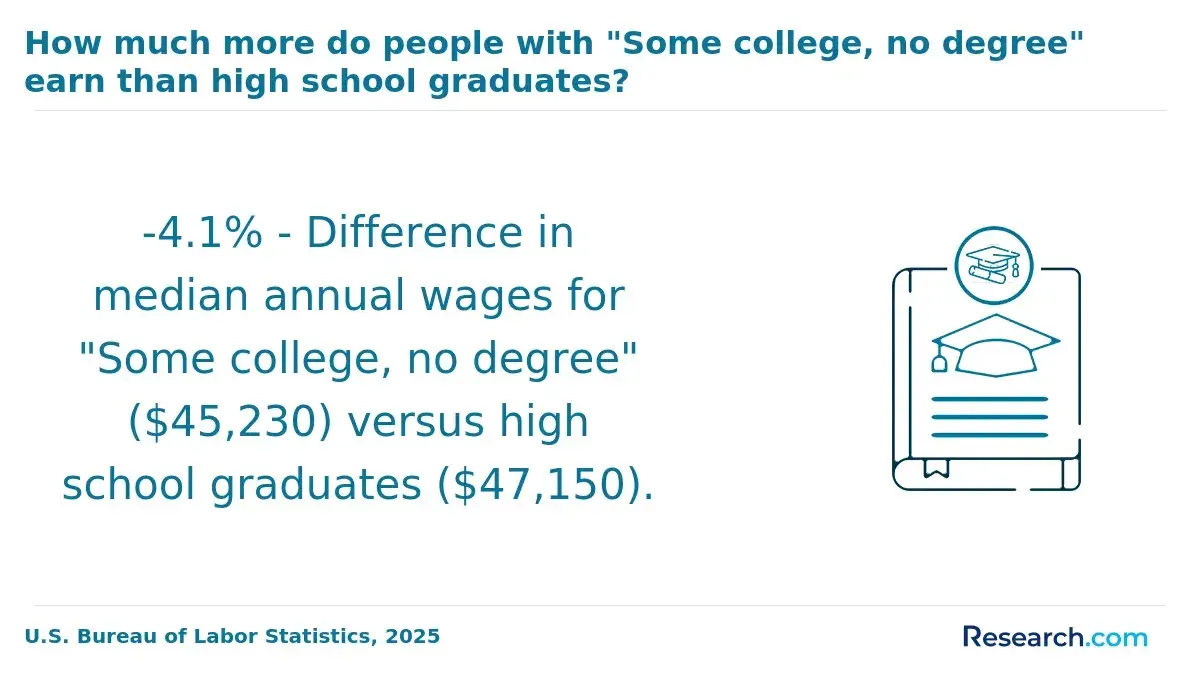
What common errors do families make when comparing accredited colleges and programs?
Accreditation is a quality assurance process in which an outside recognized agency reviews a college or program. The mistake families make is checking whether a school "sounds legitimate" instead of confirming the specific accreditation needed for credit transfer, graduate admission, financial aid, licensure, or employer recognition.
Institutional accreditation applies to the college as a whole, while programmatic accreditation applies to specific fields such as nursing, education, counseling, social work, engineering, business, or allied health. A college may be institutionally accredited but still offer a program that lacks the specialized approval required for a certain license or credential.
The table below explains the accreditation checks that matter most when comparing colleges. It is especially important for students entering licensed fields or planning to transfer credits later.
| What to verify | Why it matters | Example of a risk |
| Institutional accreditation | Supports federal financial aid eligibility and broader academic recognition. | Credits from an unrecognized institution may not transfer. |
| Programmatic accreditation | May be required for licensure, certification exams, or graduate admission. | A nursing or counseling graduate may need an approved program to qualify for next steps. |
| State authorization | Online programs must be authorized to enroll students in certain states. | A student may be unable to complete fieldwork or clinical placement locally. |
| Transfer agreements | Accreditation alone does not guarantee that credits transfer. | A receiving college may reject credits that do not match its curriculum. |
| Public, private nonprofit, and private for-profit status | Institution type can affect mission, pricing, and student support, but it does not determine quality by itself. | A family may assume nonprofit automatically means affordable or that private automatically means better. |
Students comparing online options should look beyond marketing language and verify accreditation directly with recognized databases and state agencies. Lists of non profit online universities can be a helpful starting point, but the final check should always be program-specific.
A practical accreditation review should include these steps before any deposit is paid:
- Search the college in the U.S. Department of Education or Council for Higher Education Accreditation database.
- Search the specific program's accreditor if the field commonly requires programmatic approval.
- Ask the department whether the program meets licensure or certification requirements in your state.
- Request written information about transfer credit limits, residency requirements, and clinical or internship placement support.
- Confirm that the program's name on your application matches the accredited program, not just a related department.
In what ways do applicants build an unbalanced or unrealistic college list?
An unbalanced college list is one that does not include enough realistic academic, financial, and personal-fit options. Students often build lists around rankings, campus aesthetics, athletic conferences, peer pressure, or a single dream school instead of using evidence.
A realistic list should include academic fit, admission probability, program strength, affordability, location, support services, and career pathways. Selectivity is only one factor. A college can be hard to enter but weak for a student's intended major, or easier to enter but excellent for the student's goals.
The table below shows how to think about list balance without treating any category as a guarantee. Admission decisions depend on the applicant pool, institutional priorities, program capacity, and the strength of the student's application.
| College list category | What it means | Common mistake |
| Reach | Admission is uncertain even for qualified applicants. | Applying to too many and assuming high grades overcome low admit rates. |
| Match | The student's profile is broadly aligned with typical admitted students and program expectations. | Ignoring whether the college is affordable or strong in the intended field. |
| Likely | Admission appears more realistic based on available data and requirements. | Treating it as unimportant and submitting weaker essays or late materials. |
| Financial safety | The college is likely affordable based on net price, aid, commuting, or guaranteed scholarships. | Confusing admission safety with cost safety. |
| Transfer or community college pathway | A planned route to a bachelor's degree through lower-cost initial coursework. | Failing to confirm articulation agreements and major prerequisites. |
Students should build a list that survives multiple scenarios: a denied application, a smaller-than-expected aid offer, a changed major, or a need to stay closer to home. The strongest list gives a student real choices at decision time.
- Include at least one college that is academically realistic, financially realistic, and personally acceptable.
- Check major capacity because some colleges admit students to the university but not directly to competitive majors.
- Compare graduation requirements and course sequencing for the intended major, not just general admission data.
- Do not remove affordable local or public options just because they feel less exciting during application season.
- Discuss non-negotiables early, such as maximum borrowing, distance from home, religious environment, disability services, or ROTC participation.
How do students misunderstand online vs campus program quality and outcomes?
The mistake is assuming online programs are automatically easier, weaker, cheaper, or more flexible. Quality depends on accreditation, faculty involvement, student support, clinical or internship access, assessment standards, technology, and employer recognition.
Online learning can work well for self-directed students, working adults, military learners, caregivers, and students who cannot relocate. Campus learning may be better for students who need structured routines, hands-on labs, residential networking, or frequent in-person mentoring. Hybrid programs can offer a middle ground, but they may still require campus visits or local placements.
The table below compares online and campus factors that affect outcomes. It is meant to help students choose the format that matches their learning style and career requirements, not to label one format as universally better.
| Factor | Online program considerations | Campus program considerations |
| Flexibility | May offer asynchronous classes, part-time pacing, or year-round terms. | Often follows fixed class schedules and term calendars. |
| Support | Quality depends on online advising, tutoring, career services, and faculty access. | Students may have easier access to walk-in services and campus resources. |
| Hands-on requirements | Labs, student teaching, clinicals, or internships may need local arrangements. | Campus programs may already have nearby facilities and placement relationships. |
| Networking | Requires intentional participation in discussion boards, virtual events, and professional groups. | Informal networking may be easier through clubs, labs, residence life, and events. |
| Cost | May reduce relocation and commuting costs, but online fees can still be significant. | May include housing, transportation, and campus fees, but can offer local scholarships or work opportunities. |
Online formats now extend well beyond associate and bachelor's degrees. Students considering advanced credentials should compare admissions standards, residency requirements, dissertation or capstone expectations, and faculty mentoring in online doctorate programs before assuming speed equals simplicity.
Before enrolling in an online or hybrid program, ask questions that reveal whether the format fits the student's goals and obligations.
- Are courses synchronous, asynchronous, or a mix of both?
- How many hours per week do successful students typically spend on coursework?
- Does the school arrange clinical, internship, lab, or fieldwork placements, or must students find their own?
- Will the transcript or diploma identify the program as online, and does that matter in the intended field?
- What happens if the student moves to another state during the program?
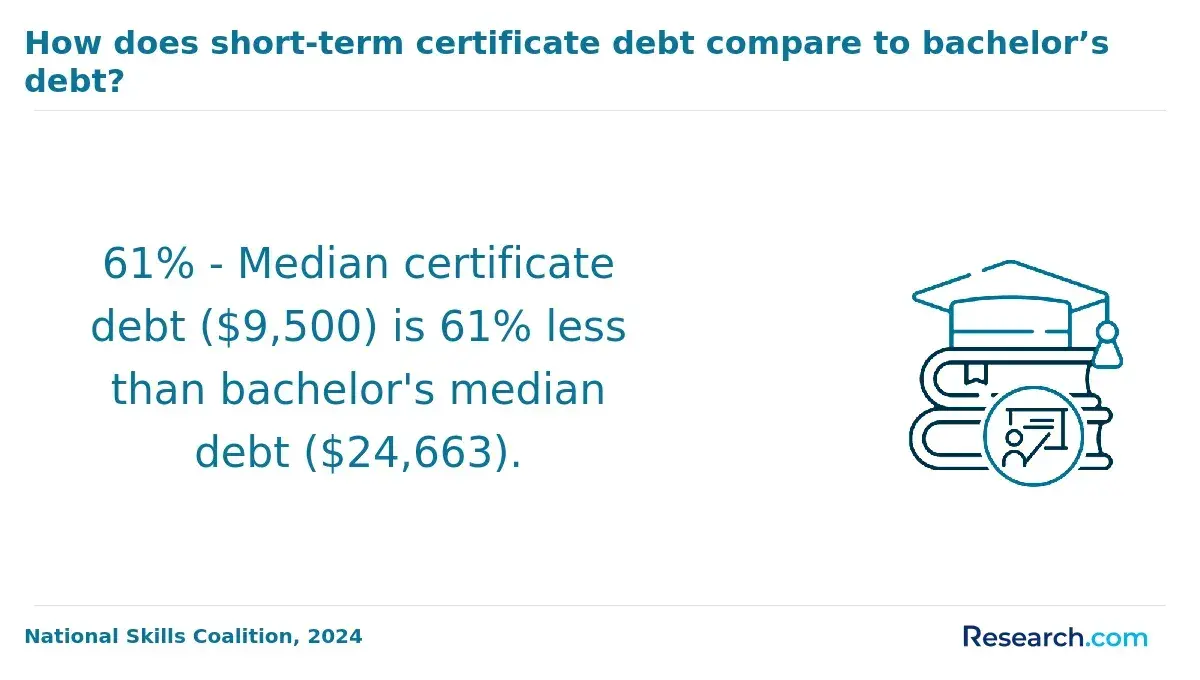
What mistakes do students make when choosing a major and planning career paths?
Many students choose a major based on favorite classes, family expectations, perceived prestige, or a broad interest without checking what jobs the major commonly leads to. A major is not the same as a career, but it can shape prerequisites, internships, licensure eligibility, graduate school options, and early-career opportunities.
BLS 2024 education data shows bachelor's degree holders had median weekly earnings of $1,543, compared with $1,099 for associate degree holders. That gap supports the value of postsecondary education in general, but it does not mean every bachelor's program produces the same return. Field of study, work experience, geographic market, and required credentials matter.
The table below shows common major-choice mistakes and the planning issue behind each one. It can help students connect academic decisions to actual next steps after graduation.
| Major planning mistake | What students miss | Career planning implication |
| Choosing only by interest | Interest does not automatically translate into a viable first job. | Students should identify entry-level roles, internships, and required skills. |
| Choosing only by salary | High-paying fields may require advanced math, licensing, long hours, or competitive screening. | Students should test fit through coursework, shadowing, or projects. |
| Ignoring prerequisites | Some majors require sequenced courses that start early. | Late changes can delay graduation. |
| Assuming graduate school will fix uncertainty | Graduate programs cost money and may require specific experience. | Students should confirm whether graduate school is necessary for the desired role. |
| Not building employable skills | A transcript alone may not show technical, communication, or project experience. | Internships, portfolios, certifications, and work samples can improve readiness. |
Some students do not need a four-year degree immediately to make progress toward a career. Depending on the field, short term certificate programs may help adults, career changers, or undecided students build job-specific skills before committing to a longer degree path.
A better major decision starts with career testing, not guesswork. Students can reduce the risk of choosing poorly by taking concrete steps before declaring or changing a major.
- Identify three job titles connected to the major and read current job postings for skills, software, credentials, and experience requirements.
- Meet with both an academic advisor and a career services advisor because they answer different questions.
- Ask the department which internships, research opportunities, clinical placements, or portfolios are typical for successful students.
- Check whether the major leads directly to work or usually requires graduate school, licensure, or certification.
- Calculate the cost of switching majors, including extra credits, delayed graduation, and lost scholarship eligibility.
How do applicants mishandle admission requirements, deadlines, and application platforms?
Application platforms simplify submission, but they do not eliminate responsibility. Students still need to manage school-specific supplements, transcript rules, recommendation deadlines, fee waivers, test score choices, portfolio uploads, audition dates, financial aid forms, and post-submission portals.
A common error is treating the application deadline as the only deadline. In reality, priority scholarship deadlines, honors college deadlines, housing deadlines, program deadlines, and financial aid deadlines may come earlier. Missing one of these can reduce options even if the general application is submitted on time.
The table below highlights process points where students often lose control. These are administrative issues, but they can affect admission review, scholarship eligibility, and enrollment options.
| Process area | Common problem | Potential consequence |
| Application platform | Assuming one platform shows every requirement for every college. | Students may miss school-specific supplements or program materials. |
| Transcripts | Requesting transcripts too late or sending the wrong version. | Applications may be incomplete at the deadline. |
| Test scores | Misreading test-optional, test-free, and test-required policies. | Students may withhold helpful scores or fail to submit required scores. |
| Recommendations | Inviting recommenders late or choosing people who cannot add detail. | Letters may be rushed, generic, or missing. |
| Applicant portals | Not checking portals after submission. | Missing documents or action items may go unnoticed. |
Students should treat college applications like a project with dependencies. One missed document can delay the whole file, especially for programs with separate review processes such as nursing, music, architecture, theater, education, or direct-entry professional tracks.
- Record every deadline in one calendar, including early action, regular decision, scholarship, honors, housing, financial aid, and program-specific dates.
- Check whether materials must be submitted or merely postmarked by the deadline.
- Request transcripts and recommendations at least several weeks before the first deadline.
- Save confirmation pages, submission receipts, and portal screenshots until decisions and aid offers are final.
- After submission, check each portal at least weekly until the application is marked complete.
What are the biggest college essay and recommendation pitfalls students overlook?
Essays and recommendations are where admission officers look for context, voice, judgment, maturity, and evidence of how a student contributes to a learning community. The mistake is treating them as decoration instead of decision-support materials.
AI writing tools have also changed the essay landscape. Using technology to brainstorm or edit can be acceptable under some school policies, but submitting an essay that sounds generic, exaggerated, or unlike the student can weaken credibility. Students should follow each college's stated AI policy and make sure the final work reflects their own thinking and experience.
The table below explains common essay and recommendation pitfalls. It focuses on the issues that make an application less persuasive even when the student is academically qualified.
| Material | Pitfall | Why it matters |
| Personal statement | Trying to impress instead of revealing how the student thinks. | Readers need insight, not a résumé in paragraph form. |
| Supplemental essays | Reusing generic "why this college" answers. | Colleges look for evidence that the student understands their programs and community. |
| Activity descriptions | Listing titles without explaining impact or responsibility. | Titles alone do not show initiative, growth, or contribution. |
| Recommendations | Choosing the most prestigious adult instead of the most informed recommender. | Specific observations usually help more than a famous name. |
| Additional information section | Overusing it for excuses or unrelated details. | It should clarify important context, not repeat the application. |
Effective essays are specific, reflective, and grounded in real experience. They do not need dramatic trauma, perfect conclusions, or unusual achievements to work.
- Start with a real moment, problem, question, or decision rather than a broad life summary.
- Explain what changed in the student's thinking, behavior, or goals.
- Use concrete details that only the student could write.
- Cut repeated achievements already listed elsewhere in the application.
- Read the final essay aloud to check whether it sounds like the student, not a committee or chatbot.
For recommendations, students should provide teachers with context, not scripts. A short brag sheet with coursework, projects, challenges, intended majors, and deadlines can help recommenders write detailed letters while preserving their own voice.
How do prospective students fail to verify licensing, certification, and job eligibility?
Licensure and certification mistakes can be costly because they may not appear until after a student has completed coursework. This is especially important in fields such as nursing, teaching, counseling, social work, psychology, accounting, engineering, dental hygiene, radiologic technology, and some allied health roles.
The key distinction is that a degree is awarded by a college, while a license is granted by a state board or regulatory agency. A program can lead to a degree without automatically qualifying a student for a specific license in every state.
The table below shows where eligibility problems often arise. Students in licensed or regulated fields should treat these checks as essential before enrollment, not as graduation tasks.
| Eligibility issue | Why students miss it | Possible result |
| State-by-state licensure rules | Students assume one state's approval applies everywhere. | Relocating can require extra coursework, exams, or supervised hours. |
| Clinical or field placement requirements | Students focus on online convenience and overlook in-person requirements. | They may struggle to complete required hours locally. |
| Exam eligibility | Students assume graduation automatically permits certification testing. | The program may not meet exam board standards. |
| Background checks | Students do not ask how criminal history, health records, or drug screening affect placement. | They may be blocked from clinical sites or licensure. |
| Employer requirements | Students check school admission requirements but not job postings. | They may graduate without a credential employers expect. |
Short credentials can be useful, but they also require careful verification. Students looking at 6 week certification programs online should confirm whether the credential is recognized by employers, qualifies them for an exam, or simply provides continuing education or skill development.
Before enrolling in any program tied to a license, certification, or regulated occupation, students should complete a formal eligibility check.
- Identify the exact job title or license the student wants, including the state where they plan to work.
- Visit the state licensing board or certification agency website and read education, exam, supervised experience, and background requirements.
- Ask the college in writing whether the program meets requirements in the student's state.
- Confirm who arranges fieldwork, clinicals, practicums, or student teaching placements.
- Review current job postings to see whether employers require additional credentials beyond the degree.
What are common mistakes when evaluating salary potential and long-term job outlook?
The biggest salary mistake is treating averages as promises. Salary data describes labor market patterns, not individual outcomes. A student's earnings can vary by occupation, region, major, internship experience, licensure, employer type, economic conditions, and willingness to relocate.
BLS projections released in 2024 estimate total U.S. employment growth of 4% from 2023 to 2033. That broad figure is useful as a baseline, but students should compare outlook by occupation rather than assuming every college major is connected to fast-growing jobs.
The table below shows how students should interpret common career data points. It helps separate useful evidence from misleading shortcuts.
| Data point | What it can tell you | What it cannot tell you |
| Median salary | The midpoint of pay for an occupation or education level. | It does not predict a specific graduate's first salary. |
| Job growth projection | Whether an occupation is expected to expand or contract nationally. | It may not reflect openings in a specific city or state. |
| Job postings | Current employer expectations for skills, credentials, and tools. | They may overstate requirements or reflect short-term demand. |
| College outcome reports | Potential employment, graduate school, or earnings patterns for alumni. | They may be based on limited survey responses or broad program groups. |
| Licensure pass rates | How program completers perform on required exams. | They do not guarantee that every student will pass or find work. |
Students should evaluate return on investment by combining cost, completion likelihood, career fit, and realistic earnings. A lower-cost program with strong completion support and clear pathways can be a better decision than a higher-ranked option that requires heavy borrowing and offers no advantage in the intended field.
- Compare occupation-specific salary data from BLS or state labor agencies instead of relying only on college marketing claims.
- Look at entry-level job postings, not just mid-career salaries, because first jobs affect repayment and early momentum.
- Ask colleges for program-level outcomes, internship placement support, graduate school acceptance context, and licensure pass rates when relevant.
- Estimate monthly loan payments before committing and compare them with conservative entry-level salary expectations.
- Consider non-salary factors such as schedule, burnout risk, geographic flexibility, advancement path, and required graduate education.
A smart college decision does not require predicting the future perfectly. It requires choosing a path where the cost, timeline, academic fit, credential requirements, and labor market evidence all point in the same direction.
Other Things You Should Know About
The most common mistake is making decisions in isolation. Students may choose colleges before calculating net cost, choose majors before checking career requirements, or submit applications before confirming program-specific deadlines. The safer approach is to connect admissions, affordability, academic fit, and career goals from the beginning.
Students should begin serious planning during junior year of high school, or at least several months before transfer or adult learner deadlines. Essays, recommendations, testing decisions, financial aid forms, and scholarship requirements all take more time than applicants expect.
Applying test-optional can make sense if scores do not reflect the student's academic strength or are below the college's typical range. However, students should check program rules, scholarship requirements, and admitted student data before deciding whether to submit scores.
Families should compare net price, renewal conditions for aid, total borrowing, housing and transportation costs, and the likely time to graduation. They should also set a borrowing limit before deposits are due and avoid treating loans as if they were scholarships.
References
- Common Challenges Colleges Face During Accreditation (And How to Overcome Them) https://ukeducationbridge.co.uk/common-challenges-colleges-face-during-accreditation-and-how-to-overcome-them/
- Building a Balanced College List: Unlikely, Reach, Target, and Safety Defined https://www.fineeducationalsolutions.com/blog-post/building-a-balanced-college-list-unlikely-reach-target-and-safety-defined
- THE BIGGEST COLLEGE ESSAY MISTAKES - Much Ado About Teaching https://muchadoaboutteaching.com/the-biggest-college-essay-mistakes/
- Missed the Application Deadline? Here's What You Can Still Do https://edu-all.com/id-en/blog/missed-the-application-deadline-heres-what-you-can-still-do
- Accredited vs. Non-Accredited Schools: What Every Parent Should Know https://www.ieac.org.uk/66-Accredited-vs-Non-Accredited-Schools-What-Every-Parent-Should-Know--blog.php
- University Admission Challenges: How Technology Improves ... https://vigilearn.com/university-admission-challenges-technology/
- 10 Career Planning Mistakes Students Make (And How to Avoid Them) - Strengths Masters https://www.strengthsmasters.com/10-career-planning-mistakes-students-make-and-how-to-avoid-them/
- Misconceptions About Online Learning | University of Phoenix https://www.phoenix.edu/articles/online-college/misconceptions-about-online-learning.html
- College Affordability Still Out of Reach for Students with Lowest Incomes, Students of Color https://www.ihep.org/college-affordability-still-out-of-reach-for-students-with-lowest-incomes-students-of-color/
- 7 common performance review mistakes https://blog.myhr.works/en-ca/7-common-performance-review-mistakes