2027 What Is a Nondegree Student?

Co-Founder and Chief Data Scientist
Choosing a class without committing to a full degree can be smart, but only if you understand the limits. National Student Clearinghouse data showed undergraduate enrollment rose 3.5% in spring 2025, signaling renewed demand for flexible college pathways.
This guide explains what a nondegree student is, how enrollment works, who benefits, what it costs, and how credits may or may not apply later. It is designed for career changers, adult learners, visiting students, military families, and future graduate applicants who want a lower-risk way to test college coursework before making a bigger investment.
Key Things You Should Know
- A nondegree student takes college courses without being formally admitted to a degree program; schools may call this status nonmatriculated, visiting, special, transient, or continuing education enrollment.
- Credits may appear on an official transcript, but transfer is not automatic; students should confirm course level, grade requirements, residency rules, and maximum transferable credits before enrolling.
- Federal financial aid is usually limited for nondegree study, while College Board's 2024 pricing data shows published tuition and fees ranging from about $4,050 at public two-year colleges to $43,350 at private nonprofit four-year colleges for full-time annual enrollment.
What is a nondegree student in U.S. colleges and universities, and how does it work?
A nondegree student is someone who enrolls in one or more college courses without being admitted into a certificate, associate, bachelor's, master's, or doctoral program. In U.S. colleges and universities, this status is often used by learners who want academic credit, personal enrichment, professional development, prerequisite completion, or a trial run before applying to a degree program.
Nondegree enrollment usually works through a shorter application process than degree admission. The school may ask for basic personal information, proof of high school completion or prior college work, residency information, and prerequisite documentation. Once approved, nondegree students register for eligible courses, pay tuition and fees, complete the same assignments as other students in credit-bearing classes, and may receive an official grade.
The key point is that nondegree status describes the student's relationship to the institution, not necessarily the academic level of the course. A nondegree student might take an undergraduate psychology class, a graduate statistics prerequisite, a continuing education course, or an online professional course depending on the school's rules.
The table below shows common nondegree course types and why the distinction matters. It helps you avoid assuming that every class labeled "college" produces transferable academic credit.
| Course type | Typical result | Best use | Main caution |
| Credit-bearing undergraduate course | Grade may appear on an official transcript | Prerequisites, transfer preparation, degree exploration | Credits may not apply to a future major or school |
| Credit-bearing graduate course | Graduate-level transcript record if allowed | Graduate school preparation or professional upskilling | Many programs cap how many credits can later count |
| Noncredit continuing education course | Certificate of completion or continuing education units | Workplace skills, licensure renewal, personal enrichment | Usually does not transfer into a degree |
| Audit enrollment | No standard academic credit or grade | Learning without grade pressure | Rarely useful for transfer, prerequisites, or financial aid |
Because schools define nondegree categories differently, always read the institution's catalog language. "Nondegree," "noncredit," and "not currently in a major" can sound similar but have very different consequences.
How is a nondegree student different from a degree-seeking or matriculated student?
A degree-seeking student, also called a matriculated student, has been formally admitted into a program and is working toward a credential. A nondegree student is taking classes without that program commitment. This difference affects registration priority, advising, financial aid, academic standing, and how credits are evaluated later.
The table below summarizes the practical differences. Use it to decide whether nondegree enrollment gives you enough access for your goal or whether applying directly to a program is the better move.
| Category | Nondegree student | Degree-seeking or matriculated student |
| Admission goal | Course access without full program admission | Admission into a specific credential pathway |
| Course registration | Often after degree students and subject to space | Usually receives priority within program requirements |
| Academic advising | May be limited or optional | Usually assigned through program, department, or college |
| Financial aid | Usually limited unless an exception applies | Potentially eligible for federal, state, institutional, and private aid |
| Credit application | Possible but not guaranteed | Planned into curriculum, major, electives, or general education |
| Credential outcome | No degree awarded from the coursework alone | Degree or certificate awarded after requirements are completed |
The biggest mistake is treating nondegree enrollment as "degree admission in smaller pieces." It is not. A course may be real, rigorous, and transcripted, yet still fail to count toward a future program if the department does not accept it, the grade is too low, the course is too old, or the school limits pre-admission credits.
Nondegree status makes the most sense when you need flexibility and are comfortable verifying policies yourself. Degree-seeking status makes more sense when your goal is a credential, licensure, structured advising, or access to aid.
Why do people enroll as nondegree students, and who is this option best for?
People enroll as nondegree students because they want access to college learning without immediately committing to a full credential. This can be a practical option when your goal is narrow, time-sensitive, exploratory, or employer-driven.
Nondegree enrollment is often a good fit for these situations because each has a clear short-term purpose:
- Testing a field before applying: A student considering accounting, data analytics, nursing prerequisites, or computer science can take one course before committing to a major.
- Completing prerequisites: Applicants to graduate, health, or teacher preparation programs may need missing courses before they qualify for admission.
- Upskilling for work: Professionals may take targeted courses in project management, statistics, cybersecurity, writing, or leadership.
- Visiting during summer or winter terms: Students enrolled elsewhere may use nondegree status to complete a transferable class closer to home or online.
- Learning for personal reasons: Adults may study history, languages, art, or public policy without needing a credential.
This option is less ideal if you need a full financial aid package, structured academic planning, licensure preparation, or guaranteed access to required courses. For example, a student aiming for a regulated profession should verify whether nondegree courses satisfy prerequisites before paying tuition.
Career changers should also compare the course with the broader return on investment. If the end goal is higher earnings, it may help to review fields associated with highest paying jobs and then work backward to the exact coursework or credential employers expect.
What admission requirements and eligibility rules apply to nondegree students?
Nondegree admission requirements vary widely by institution and course level. Community colleges may allow open enrollment for many undergraduate classes, while universities may restrict nondegree registration in high-demand majors, graduate courses, clinical courses, labs, or classes with safety requirements.
Most schools use requirements like the ones below to decide whether a nondegree applicant is eligible. These documents matter because they help the school place you in the right course and confirm that you can handle the academic level.
- Completed nondegree, visiting student, transient student, or continuing education application
- Proof of high school diploma, GED, prior college enrollment, or bachelor's degree for graduate-level coursework
- Official or unofficial transcripts showing prerequisites
- Minimum GPA for some upper-division or graduate courses
- Instructor, department, or dean approval for restricted courses
- Immunization, background check, placement test, or residency documentation when required
If you are applying as a visiting student from another college, your home institution may require a transient student form or written permission before it accepts the course later. This is especially important for students trying to save money during a summer term because a low-cost course is not a bargain if it does not transfer.
A practical application sequence can reduce surprises. Follow these steps before you submit payment or enroll:
- Identify the exact course number, title, credits, delivery format, and term dates.
- Check prerequisites and whether nondegree students are allowed to register.
- Ask whether the class is credit-bearing, noncredit, or audit-only.
- Confirm whether you need instructor, department, or advisor approval.
- Request written confirmation if the course is intended for transfer, prerequisite completion, or future program admission.
Common red flags include vague promises such as "it should transfer," pressure to register before prerequisites are reviewed, unclear transcript status, and no published policy on how nondegree credits are treated.
Do nondegree students earn college credit, and can those credits transfer into a degree?
Nondegree students can earn college credit when they enroll in credit-bearing courses. The credit may appear on an official transcript just like a course taken by a degree-seeking student. However, earning credit and applying that credit to a future degree are two separate decisions.
Transfer depends on the receiving institution, the academic department, the grade earned, the course level, accreditation, residency requirements, and whether the course matches the curriculum. Many colleges also limit how many credits taken before formal admission can count toward a degree or graduate program.
Use the table below to understand the most common credit outcomes. This can help you decide whether the course is worth taking now or whether you should wait until after admission.
| Scenario | Credit likely appears on transcript? | May count toward future degree? | What to verify |
| Credit course at regionally accredited college | Usually yes | Possible | Equivalency, grade minimum, and transfer limit |
| Graduate course taken before admission | Usually yes if approved | Sometimes | Maximum pre-admission credits and department approval |
| Continuing education noncredit course | Usually no standard academic transcript credit | Usually no | Whether it provides CEUs or only completion documentation |
| Audit course | May show audit status | Rarely | Whether audit can ever be converted to credit |
Before enrolling, take these steps if you want the credits to transfer or apply later:
- Ask the receiving school for a course equivalency review before registration when possible.
- Save the syllabus, course description, textbook list, assignments, and learning outcomes.
- Confirm the minimum grade required for transfer or prerequisite acceptance.
- Ask whether credits expire for your intended program, especially in science, technology, and health-related fields.
- Keep written documentation from advisors, departments, or registrars.
The safest approach is to treat transfer credit as conditional until the receiving school evaluates it officially. Verbal advice can be helpful, but written approval is better when tuition, time, and admission eligibility are at stake.
How do nondegree program formats, online options, and campus-based classes compare?
Nondegree study can be offered online, on campus, hybrid, self-paced, or through short-term continuing education formats. The right choice depends on whether you need flexibility, lab access, networking, immediate feedback, or a transcripted academic record.
Online nondegree classes are especially useful for working adults, caregivers, active-duty service members, and families who relocate frequently. Students with military-connected mobility needs may also compare flexible institutions such as the best online colleges for military spouses when they need programs that can support study across locations.
The table below compares common formats. It is useful because course format can affect scheduling, cost, learning support, and whether you can complete required labs or proctored assessments.
| Format | Strengths | Trade-offs | Best fit |
| Fully online asynchronous | Flexible schedule and location | Requires strong self-management | Working adults and students across time zones |
| Online synchronous | Live interaction with instructor and classmates | Fixed meeting times | Students who want structure without commuting |
| On-campus | In-person labs, facilities, networking, and immediate support | Commute and schedule constraints | Science labs, studio courses, and students who learn best face to face |
| Hybrid | Mixes flexibility with in-person experiences | May still require campus access | Students near campus who want some flexibility |
| Self-paced or continuing education | Fast skill-building and low scheduling pressure | May be noncredit | Professional development or personal enrichment |
A current trend affecting nondegree learners is the growth of short, skills-focused online offerings. These can be useful for reskilling, but students should check whether the course is transcripted, instructor-led, employer-recognized, or only a self-study module. The format should match the outcome you need, not just the schedule you prefer.
What costs, financial aid options, and funding limits do nondegree students face?
Nondegree students often pay the same per-credit tuition as other students, but they may have fewer aid options. Cost depends on institution type, residency, course level, fees, textbooks, technology charges, lab fees, and whether the course is credit-bearing or noncredit.
College Board's 2024 data reported average published tuition and fees of about $4,050 at public two-year colleges, $11,610 for in-state students at public four-year institutions, and $43,350 at private nonprofit four-year institutions for full-time annual enrollment. For a nondegree student taking one course, the practical lesson is to calculate the per-credit and fee total rather than comparing annual sticker prices alone.
The table below outlines cost factors that commonly affect nondegree enrollment. It can help you ask better billing questions before you register.
| Cost factor | How it affects nondegree students | What to check |
| Per-credit tuition | Main cost for credit-bearing classes | Resident, nonresident, online, undergraduate, and graduate rates |
| Mandatory fees | Can add substantially to a single course | Technology, student services, lab, course, and registration fees |
| Textbooks and materials | May be high for technical, science, or access-code courses | Open educational resources and used-book options |
| Payment deadlines | Nonpayment can trigger course drops or late fees | Refund dates, withdrawal dates, and installment plans |
| Employer funding | May reduce out-of-pocket cost | Tuition reimbursement rules and grade requirements |
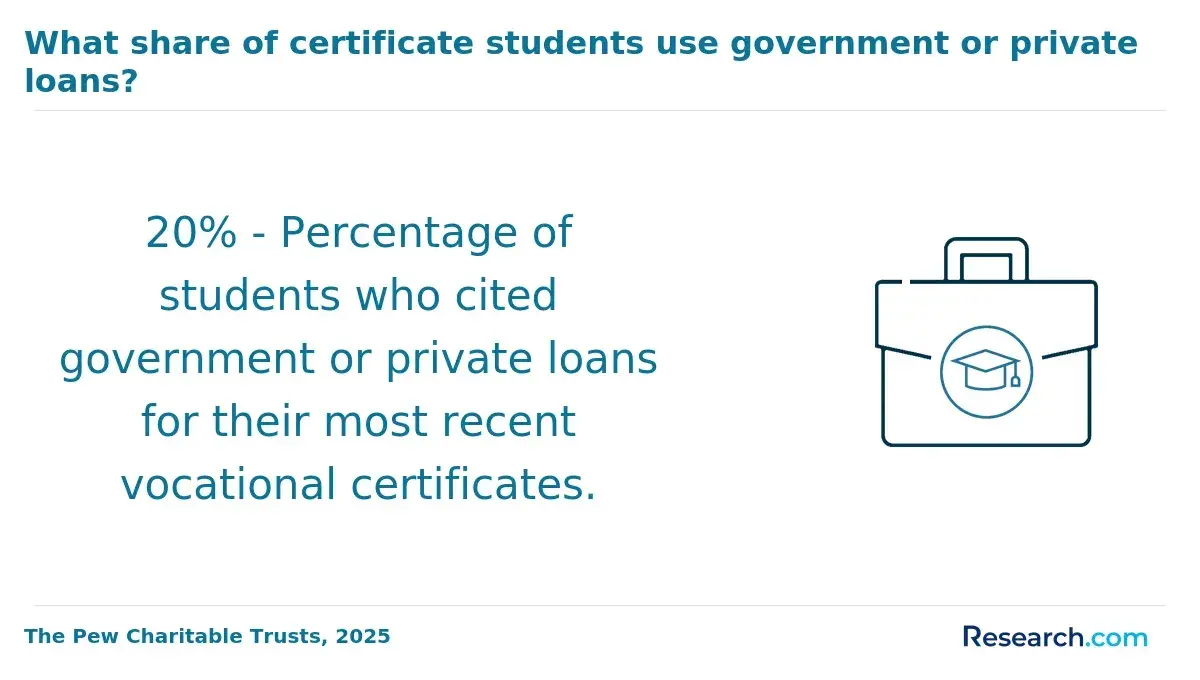
Federal aid is usually the biggest limitation. Nondegree students are generally not eligible for Pell Grants or federal student loans unless they are enrolled in an aid-eligible certificate program or qualify under limited preparatory coursework rules. The maximum Pell Grant for the 2024-25 award year was $7,395, which shows why aid eligibility can materially change affordability for students who qualify.
If affordability is the main issue, compare nondegree study with aid-eligible online programs and public institutions. A useful starting point is reviewing colleges online that accept FAFSA, then asking whether the course or credential you want is actually aid-eligible.
How can nondegree coursework support career advancement, reskilling, or graduate school preparation?
Nondegree coursework can support career advancement when the class closes a specific skills gap, satisfies a prerequisite, documents recent academic ability, or helps you test a new field before committing to a credential. It works best when the course has a clear link to a job requirement, promotion pathway, certification, or graduate admission plan.
BLS education data released with 2024 labor market measures continues to show a wage premium for higher educational attainment; for example, workers with a master's degree had higher median weekly earnings than workers with a bachelor's degree. That does not mean every course pays off, but it does suggest that targeted coursework can be valuable when it moves you toward a credential or skill set employers actually reward.
Nondegree study is commonly useful for these career and education goals:
- Career advancement: A manager may take data analytics, finance, supervision, or communication courses to prepare for broader responsibilities.
- Reskilling: A worker moving into technology, healthcare administration, education, or business operations may start with one foundational course.
- Graduate school preparation: Applicants may complete statistics, research methods, anatomy, accounting, programming, or writing prerequisites.
- Academic repair: Students with older or weaker transcripts may use recent coursework to show readiness, though admission committees vary in how they weigh it.
- Employer reimbursement: Some workers use tuition benefits for individual courses instead of immediately starting a full degree.
For graduate-bound students, nondegree coursework should align with the eventual program, not just general interest. If you are still deciding on a field, compare outcomes and demand across most useful masters degrees before paying for prerequisites that may only apply to one pathway.
AI and automation are also changing the value of standalone coursework. Short courses in data literacy, AI-assisted productivity, cybersecurity awareness, and process improvement may help professionals stay current, but they are most persuasive when paired with projects, portfolios, certifications, or a recognized degree plan.
What role do accreditation and institutional quality play when choosing nondegree studies?
Accreditation matters because it affects transfer credit, employer recognition, graduate admission, and access to federal aid for eligible programs. In the U.S., institutional accreditation recognized by the U.S. Department of Education or the Council for Higher Education Accreditation is a key quality signal, especially when you want credits to move into a degree later.
For nondegree students, accreditation is not just a technical detail. A low-cost course from an unaccredited provider may teach useful material, but it may not satisfy prerequisites, transfer into a degree, qualify for employer reimbursement, or meet licensing-board expectations. This is especially important in education, nursing, counseling, accounting, engineering technology, and other fields where program approval or specialized accreditation may matter.
Use the following checks before enrolling if quality and transferability are important:
- Confirm the institution's accreditation status through official accreditor or federal databases.
- Ask whether the specific course is credit-bearing and appears on an official transcript.
- Check whether the department offering the course is the same department that controls the future major or graduate program.
- Verify specialized accreditation or approval if the course supports licensure preparation.
- Review student support, faculty qualifications, course outcomes, withdrawal policies, and complaint procedures.
Red flags include unclear accreditation claims, no registrar-issued transcript, unrealistic promises about guaranteed transfer, aggressive enrollment pressure, missing refund policies, and course descriptions that do not identify credit hours or learning outcomes. A legitimate nondegree option should make its limits clear.
How can you choose the right nondegree courses and plan a pathway into a degree?
Choosing the right nondegree course starts with the outcome you want. A course selected for curiosity can be flexible, but a course selected for transfer, licensure, graduate admission, or promotion needs a documented pathway.
The table below compares common pathways. It helps clarify when nondegree study is a smart first step and when a formal program may be more efficient.
| Goal | Best nondegree use | When to consider degree admission instead |
| Explore a major | Take one introductory course before applying | When you already know the credential is required |
| Transfer credit | Complete a pre-approved course equivalent | When too many credits remain or transfer rules are unclear |
| Graduate preparation | Finish prerequisites or show recent academic readiness | When the program limits pre-admission credits |
| Career upskilling | Target one skill tied to a job task or promotion | When employers require a full certificate or degree |
| Personal enrichment | Choose based on interest, schedule, and instructor quality | Usually not necessary unless a credential becomes the goal |
A strong pathway plan should be specific enough that an advisor, registrar, employer, or admissions committee can confirm whether the course supports your goal. Use this sequence before paying tuition:
- Write down the exact outcome you need, such as transfer credit, prerequisite completion, a portfolio project, or employer reimbursement.
- Identify the receiving program, employer policy, licensing rule, or degree plan that will evaluate the course.
- Compare course numbers, descriptions, credit hours, prerequisites, and delivery formats.
- Ask for written confirmation from the relevant office, not only a general admissions representative.
- Estimate the total cost, including fees, books, commute, software, and time away from work.
- Decide whether one course, a certificate, or full degree admission is the most efficient next step.
If your nondegree coursework is meant to lead into graduate study, compare program cost early. Some learners take prerequisites first and then search for the cheapest masters degree that still meets accreditation, career, and scheduling needs.
The most common planning mistake is enrolling because a course sounds useful without confirming how it fits. A better approach is to treat each course as part of a decision tree: if it transfers, continue the pathway; if it does not, decide whether the learning value alone justifies the cost.
Other Things You Should Know About
Yes. Many schools allow nondegree students to apply for regular admission later, but acceptance is not automatic. You may need a separate application, transcripts, test scores, prerequisites, and department approval.
If the course is credit-bearing, the grade usually appears on an official transcript. Noncredit or audit courses may produce a completion record instead, so confirm the transcript status before enrolling.
It can be worth it when the course has a clear purpose, such as a prerequisite, transferable credit, employer-funded skill, or graduate preparation. It is less useful when you need financial aid, advising, or guaranteed progress toward a credential.
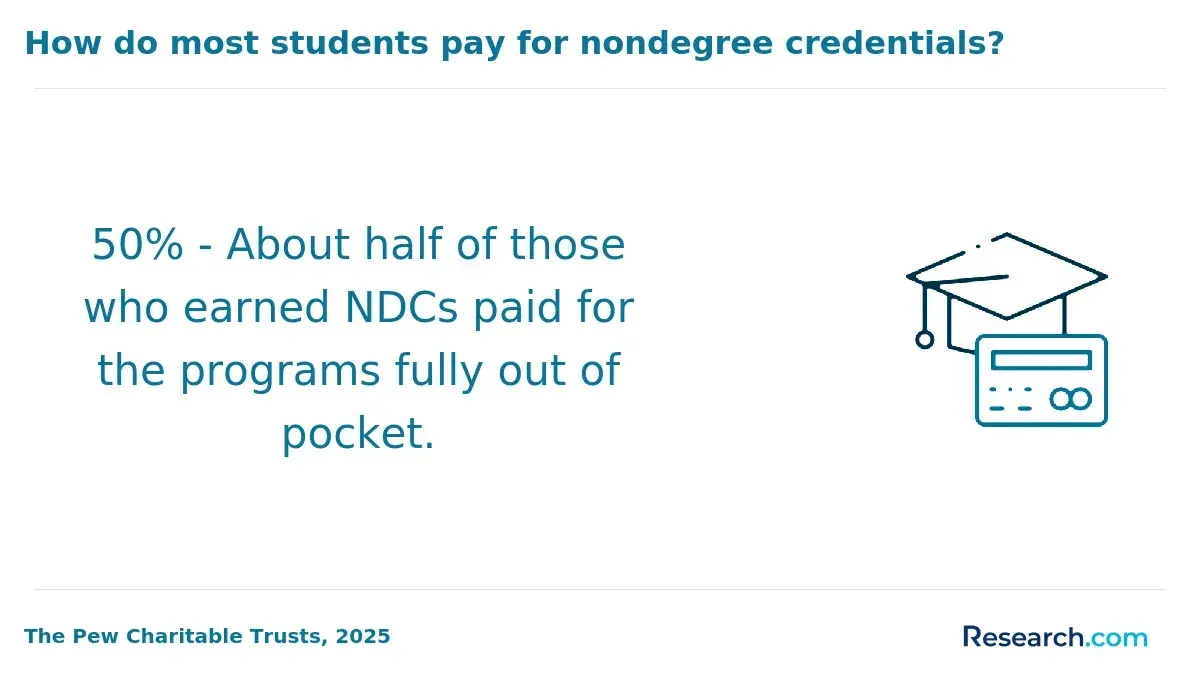
Usually not through standard federal aid unless the student is in an eligible certificate program or qualifies under limited preparatory coursework rules. Institutional, employer, military, or private funding may be available depending on the situation.
References
- The Essential Role of Accreditation in Higher Education Institutions https://www.qahe.org/article/the-essential-role-of-accreditation-in-higher-education-institutions/
- In-Person vs. Online Courses: Which Is Right for You? | StraighterLine https://www.straighterline.com/blog/in-person-vs-online-courses
- Financial Aid for Undergraduate International Students https://www.nafsa.org/about/about-international-education/financial-aid-undergraduate-international-students
- 5 Advantages of Accreditation for Academic Institutions https://www.ieac.org.uk/37-5-Advantages-of-Accreditation-for-Academic-Institutions-blog.php
- Beyond Degrees https://www.jff.org/idea/beyond-degrees-2/
- Online Degree vs. Traditional: Choosing the Right Path https://beal.edu/online-degree-vs-traditional/
- Financial aid for students without financial need: Why do colleges offer it? | Brookings https://www.brookings.edu/articles/financial-aid-for-students-without-financial-need-why-do-colleges-offer-it/
- Choosing the Right Degree: How to Find the Path That Fits Your Goals - CIS University https://www.cis-spain.com/en/blog/choosing-the-right-degree-how-to-find-the-path-that-fits-your-goals/
- Nondegree Pathways That Meet Students Where They Are https://britebound.org/insights/nondegree-pathway-programs-meet-students-where-they-are
- Understanding the Viability and Growth of the Non-Degree Market https://www.encoura.org/resources/wake-up-call/understanding-the-viability-and-growth-of-the-non-degree-market/