2027 What Is Office Hours in College?

Co-Founder and Chief Data Scientist
Office hours can turn a confusing course into a manageable one, but many students do not use them until they are already behind. With the maximum Federal Pell Grant set at $7,395 for 2024-25, protecting your grades and credits can also protect your financial-aid progress.
This guide is for new, returning, online, and transfer students who want to understand what office hours are, how to attend them, what to ask, and how to use professor access to make smarter academic and career decisions.
Key Things You Should Know
- Office hours are set times when professors are available to help students with coursework, feedback, academic planning, research interests, and professional development.
- The 2024-25 maximum Federal Pell Grant is $7,395, so using office hours early can help students avoid preventable course failure, withdrawals, and financial-aid progress problems.
- Office hours are useful even when you are not struggling, they can support stronger recommendation letters, research opportunities, internships, major decisions, and graduate-school planning.
What are office hours in college and how do they work with professors?
Office hours in college are scheduled blocks of time when instructors, professors, teaching assistants, or academic staff are available to meet with students outside of regular class. They may be held in a faculty office, department suite, tutoring space, video meeting, phone call, or course chat platform. The purpose is simple: give students a direct way to ask questions, clarify expectations, get feedback, and build an academic relationship with the person teaching the course.
Office hours usually work in one of three ways. Some professors offer drop-in hours, where students can arrive without an appointment during a posted time. Others require appointments through email, a booking calendar, or the learning management system. Many use a hybrid model: a few fixed hours each week plus separate appointment slots for students whose schedules do not fit.
The format can change depending on class size and course type. A professor teaching a small seminar may use office hours for detailed conversations about essays, research ideas, or participation. A professor teaching a large lecture may rely on teaching assistants for problem-solving sessions, exam review, or lab help. In either case, office hours are part of the learning environment, not a favor you are asking for.
The table below summarizes the most common office-hour formats so you can choose the right approach before you attend.
| Format | How it usually works | Best for |
| Drop-in office hours | Students arrive during a posted time and wait if others are ahead of them. | Quick questions, clarification, brief check-ins, or early introductions. |
| Appointment-based office hours | Students reserve a specific time by email, calendar link, or course platform. | Longer discussions, grade concerns, project planning, or confidential topics. |
| Teaching assistant office hours | A graduate assistant or peer instructor helps students with course material. | Problem sets, labs, exam practice, and technical course questions. |
| Virtual office hours | Students meet through video, chat, phone, or an online classroom tool. | Online courses, commuter students, working students, and schedule conflicts. |
The key point is that office hours are not only for emergencies. They are a built-in academic support system, and students who use them before a crisis often get more useful guidance than students who wait until the final week of class.
Why are college office hours important for academic success and learning?
College office hours matter because they create a feedback loop that lectures, readings, and recorded videos cannot always provide. In class, professors usually teach to the whole group. During office hours, they can explain what you misunderstood, show you how to improve, and help you see how one assignment connects to the broader goals of the course.
They are especially important when a course uses cumulative skills. In subjects such as math, writing, accounting, chemistry, computer science, statistics, and foreign language, small gaps can become larger problems over time. Meeting early allows you to correct errors while there is still enough time to change study habits, revise work, or prepare differently for the next exam.
Office hours also help students interpret feedback. A grade alone tells you where you stand, but it may not tell you what to do next. A professor can explain whether your issue is content knowledge, study strategy, writing structure, time management, assignment interpretation, or exam technique.
Financially, office hours can matter because academic progress affects enrollment status, scholarships, athletic eligibility, and federal aid requirements. The 2024-25 maximum Pell Grant of $7,395 is not a reason to panic over one difficult course, but it is a reminder that avoidable academic setbacks can have consequences beyond the transcript. If you are at risk of failing or withdrawing, office hours should be one of your first steps, along with academic advising and financial-aid counseling.
Office hours are most valuable when you use them for specific academic decisions. These are common situations where a meeting can change your next move:
- You earned a lower grade than expected and need to understand whether the issue was preparation, accuracy, analysis, writing, or following instructions.
- You are choosing between staying in a course, requesting tutoring, changing study methods, or speaking with an advisor about withdrawal deadlines.
- You understand the general topic but cannot apply it to homework, labs, case studies, or exam questions.
- You want to improve from a passing grade to a stronger grade and need targeted feedback instead of generic study advice.
The best use of office hours is not asking a professor to "re-teach everything." It is identifying where your understanding breaks down and asking for help on that specific point.

What can you talk about during office hours besides class questions?
You can talk about much more than homework during office hours. Professors are often useful sources of academic direction because they understand how courses connect to majors, graduate school, research, internships, and professional skills. That does not mean every professor can answer every question, but office hours are a good place to ask who can help if they are not the right person.
Students in an associate's degree program, a bachelor's program, or a graduate program can use office hours to understand how a course fits into transfer plans, major requirements, or career pathways. This is especially helpful if you are unsure whether a subject is difficult because it is new, difficult because you need more preparation, or difficult because it may not match your long-term goals.
Useful office-hour topics often fall into several categories. Before you go, decide which type of conversation you need so the meeting stays focused.
- Course performance: Ask how to improve your approach to readings, exams, essays, presentations, labs, or problem sets.
- Assignment feedback: Ask what separates an average submission from a strong one, especially before a major paper or project is due.
- Academic planning: Ask which follow-up courses build on the class and what preparation students should have before taking them.
- Major exploration: Ask what kind of students tend to thrive in the field and what misconceptions beginners often have.
- Research interests: Ask what research questions, methods, labs, archives, datasets, or faculty projects are connected to the topic.
- Career direction: Ask how course concepts appear in real jobs, internships, graduate programs, or professional settings.
There are also topics that require care. Professors can usually discuss academic performance, but they may not be able to change grades without a clear grading error, provide personal counseling, or override institutional policies. If your issue involves mental health, disability accommodations, financial aid, immigration status, or a conduct matter, the professor may refer you to the appropriate campus office.
How do you find, schedule, and attend office hours for your courses?
You can usually find office-hour information in the course syllabus, learning management system, department website, professor's faculty page, or course announcements. If you cannot find it, ask after class or send a short email. Most professors expect this question, especially during the first few weeks of the term.
Use the following process to find and attend office hours without overcomplicating it:
- Check the syllabus for the professor's office location, office-hour times, email address, booking link, and policy for appointments.
- Look in the learning management system for announcements, Zoom links, calendar tools, or discussion-board instructions.
- If the listed time does not work, email with two or three alternative times and briefly explain what you want to discuss.
- Bring the relevant material, such as the assignment prompt, graded work, notes, textbook section, draft, or specific problem.
- Arrive on time, state your main question early, take notes, and confirm the next step before leaving.
A good scheduling email is short and specific. You do not need to write a long apology or explain every detail in advance. The goal is to make it easy for the professor to understand the topic and offer a time.
Example: "Dear Professor Rivera, I'm in your Tuesday/Thursday Biology 101 class. I'm having trouble understanding how to apply the enzyme kinetics concepts to the homework problems. Could I come to your office hours this Wednesday, or schedule another time if that slot is full? Thank you."
If you are nervous, start with a low-stakes visit early in the term. Introduce yourself, ask one question about how to study for the course, and leave after a few minutes. That first visit makes it easier to return later if you need more serious help.
How should you prepare for office hours to make the most of the meeting?
Preparing for office hours does not mean you must already know the answer. It means you should arrive with enough context for the professor to help you efficiently. The more specific your question, the more specific the guidance can be.
Before the meeting, review what you already tried. This helps the professor distinguish between a content problem, a study strategy problem, and a communication problem. For example, "I do not understand chapter four" is hard to answer. "I understand the definition, but I cannot tell when to use this formula in word problems" is much easier to address.
Use this preparation checklist when you want the meeting to produce a clear next step:
- Write down your top one to three questions before the meeting so you do not forget them under pressure.
- Mark the exact page, slide, problem, rubric item, or feedback comment that confused you.
- Bring evidence of your attempt, such as a draft, outline, calculation, code, notes, or practice answer.
- Decide what outcome you want, such as understanding a concept, improving a draft, planning a study routine, or discussing whether to continue in the course.
- Ask at the end, "What should I do next before the next class or assignment?"
Several common mistakes can make office hours less helpful. Avoid arriving with no materials, asking "Did I miss anything important?" after skipping class, requesting grade changes without reviewing the rubric, or expecting the professor to predict your final grade with certainty. A better approach is to ask what actions are still within your control.
It is also smart to keep a brief record after the meeting. Note the professor's advice, deadlines, suggested resources, and any follow-up you promised. If you later ask for a recommendation or research opportunity, this history of thoughtful engagement can help the professor remember your effort and growth.
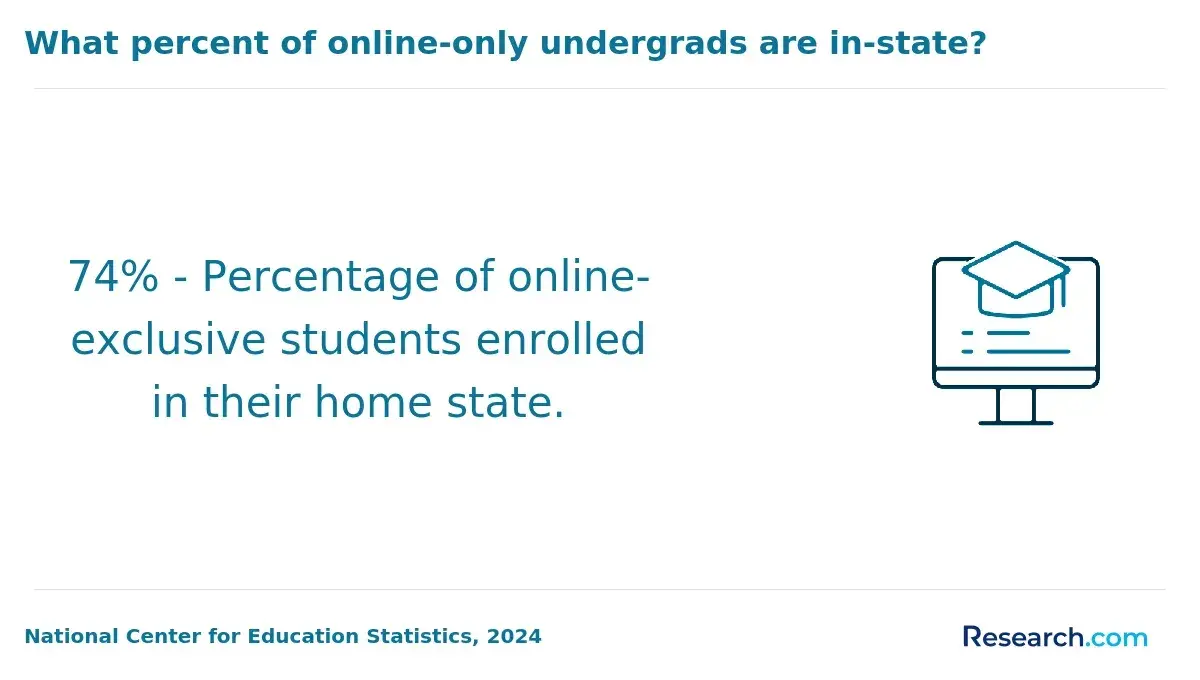
How do online students use virtual office hours differently from on-campus students?
Online students use office hours for the same core reasons as on-campus students, but the logistics are different. Instead of walking to a faculty office, online students may use video calls, chat, email, discussion boards, collaborative documents, or appointment tools. This can be more flexible, but it also requires more intentional communication.
Students comparing campus programs with online degrees should look closely at faculty access. A flexible program is more useful when students can still reach instructors, receive timely feedback, and build relationships for advising or recommendations.
The table below compares how office hours usually differ by format. Use it to decide what habits you need to build based on how your course is delivered.
| Student format | Typical access pattern | Main advantage | Main challenge |
| On-campus student | In-person drop-in hours, appointments, and after-class questions. | More spontaneous contact and easier informal follow-up. | Office hours may conflict with work, commuting, labs, or back-to-back classes. |
| Online synchronous student | Live video office hours, scheduled calls, and chat during or after class sessions. | Real-time discussion without traveling to campus. | Time zones, work schedules, and video fatigue can limit participation. |
| Online asynchronous student | Appointment links, email, recorded feedback, discussion boards, or messaging tools. | More flexibility for working adults and students with family responsibilities. | Students must ask clear questions because immediate back-and-forth may be limited. |
| Hybrid student | A mix of campus visits, virtual meetings, and online course tools. | Multiple ways to connect depending on the issue. | Students may miss support options if they do not monitor course announcements. |
Virtual office hours work best when you reduce friction. Test your audio, use a professional display name, join from a quiet place if possible, and keep your document or assignment ready to share. If your question involves a calculation, spreadsheet, code sample, or essay draft, ask whether screen sharing is appropriate.
AI tools have also changed how students approach office hours. It is usually acceptable to ask about concepts you explored with AI, but do not present AI-generated work as your own if your course policy prohibits it. A productive question would be, "I used an AI tool to summarize this concept, but I'm not sure the explanation matches our lecture. Can we compare it with the course method?"
How can office hours help you choose a major, plan courses, and explore careers?
Office hours can help you choose a major because professors can explain what a field is really like beyond the course catalog. A class may introduce only one part of a discipline. During office hours, you can ask what advanced courses involve, what skills matter most, what students often underestimate, and what career paths connect to the subject.
This is especially useful if you are choosing between a broad interest and a practical outcome. For example, a student interested in psychology might ask about research methods, counseling pathways, human resources, user experience, or graduate-school expectations. A student interested in business might ask how accounting, analytics, management, marketing, finance, and supply chain coursework lead to different roles.
If remote work is part of your career plan, office hours can help you test whether your major is building portable skills such as writing, data analysis, project coordination, software use, communication, and independent problem-solving. Students exploring degrees for work from home jobs should ask professors which assignments or electives demonstrate those skills to employers.
Ask targeted questions when you are using office hours for academic and career planning. These questions help move the conversation from vague interest to practical decision-making:
- Which upper-level courses best show whether I am a good fit for this major?
- What skills do students need before they take the next course in the sequence?
- What careers do students from this department commonly explore, and which require graduate school?
- Are there minors, certificates, labs, internships, or student organizations that pair well with this field?
- What mistakes do students make when choosing this major for the wrong reasons?
Use professor advice alongside academic advising, career services, degree audits, and labor-market research. A professor can offer field-specific insight, but an advisor is usually the best person to confirm graduation requirements, transfer rules, course sequencing, and institutional deadlines.
How can office hours help you secure recommendations, research roles, and internships?
Office hours can support recommendations, research roles, internships, and graduate-school planning because they help professors learn more about you than your grade alone. Strong recommendation letters usually come from faculty who can describe your work habits, intellectual curiosity, communication skills, improvement, and readiness for the opportunity you are pursuing.
The labor-market value of these relationships is practical. The U.S. Bureau of Labor Statistics reported a May 2024 median annual wage of $49,500 for all workers, but many professional pathways vary widely by field, credential, experience, and location. Office hours cannot guarantee a job outcome, but they can help you make better choices about skills, applications, internships, and further education before you invest more time or money.
If you are considering graduate study, ask professors whether the credential is commonly expected in your target field or whether experience, certification, a portfolio, or a shorter program may be enough. Students comparing flexible graduate options can also research one-year online master's programs, but they should still ask faculty whether an accelerated format gives enough time for research, networking, and skill development in their discipline.
Use office hours to build toward opportunities before you need them. The following steps are especially helpful for students who want a recommendation, research role, or internship lead:
- Attend early enough in the term for the professor to see your engagement, not just your final grade.
- Ask for feedback on how to strengthen your work before requesting an opportunity.
- Discuss your interests specifically, such as a research topic, industry, population, method, or type of organization.
- Ask what preparation would make you a stronger candidate, such as coursework, software skills, writing samples, lab experience, or a portfolio.
- When requesting a recommendation, provide your resume, transcript if appropriate, deadline, program or employer details, and a reminder of work you completed in the course.
A common mistake is asking for a recommendation from the professor who gave the highest grade but does not know you well. A slightly lower grade in a course where the professor saw your persistence, analysis, leadership, or improvement may lead to a more detailed and credible letter.
What etiquette and communication expectations apply when you meet professors in office hours?
Office-hour etiquette is mostly about respect, clarity, and professional communication. You do not need to be overly formal, but you should treat the meeting like a real academic appointment. That means arriving on time, bringing relevant materials, listening carefully, and following through on agreed next steps.
Professors also have boundaries. They may have other students waiting, research obligations, committee work, clinical duties, or advising responsibilities. If the issue is complex, ask whether you should schedule a longer appointment rather than trying to solve everything during a crowded drop-in period.
These expectations will help you make a positive impression without pretending to know everything:
- Use the professor's preferred name or title unless they have told the class otherwise.
- Begin with a concise purpose, such as "I want to understand the feedback on my essay introduction."
- Be honest about what you have and have not done, including missed classes, late work, or confusion about instructions.
- Do not ask the professor to repeat an entire lecture if notes, slides, recordings, or classmates can help you catch up first.
- Respect privacy by discussing sensitive topics in a scheduled appointment rather than in a crowded hallway or public chat.
- Send a brief thank-you or follow-up when the professor spent significant time helping you or provided a resource.
Grade conversations require extra care. It is reasonable to ask how an assignment was evaluated, what you can improve, or whether there was a calculation error. It is usually not effective to argue that you "worked hard" and therefore deserve a higher grade. Effort matters, but grades are generally based on the course criteria, rubric, and demonstrated performance.
If you disagree with a grade, start by asking for clarification. If you still believe there was an error or unfair application of policy, follow the department or college appeal process. Keep the conversation factual, professional, and tied to written course expectations.
How often should you go to office hours and when is it too late to start?
You do not need to attend office hours every week for every class. The right frequency depends on course difficulty, your goals, your performance, and the kind of relationship you want to build with the professor. A student doing well may visit once or twice to ask deeper questions or discuss future opportunities. A student struggling in a required course may need more frequent check-ins until their study strategy improves.
It is rarely too late to start, but the type of help available changes over time. In week three, a professor may help you correct habits before the first major exam. In the final week, they may only be able to explain your current standing, clarify remaining assignments, and point you toward limited options. Earlier visits create more choices.
Students in accelerated schedules need to be especially proactive. In fast track programs, a delayed question can become a major problem because assignments and exams arrive quickly. If a course runs for five, six, or eight weeks, treat the first sign of confusion as the right time to attend office hours.
Use this timing guide to decide when to go:
- Go in the first two weeks if the course is required for your major, has a reputation for difficulty, or uses unfamiliar methods.
- Go before the first major assignment if you are unsure what the professor expects or how the rubric will be applied.
- Go immediately after a disappointing grade while there is still time to change your approach for the next assessment.
- Go before withdrawal or pass/fail deadlines if you are unsure whether staying in the course is academically or financially wise.
- Go near the end of the term for final project feedback, future course advice, or relationship-building, but do not expect last-minute rescue options.
The best rule is simple: if a question affects your grade, schedule, confidence, major, or next opportunity, it is worth bringing to office hours sooner rather than later.
Other Things You Should Know About
No. Office hours are for any student who wants clarification, feedback, academic planning, research guidance, or career advice. High-performing students often use them to deepen learning and prepare for future opportunities.
Start with your name, course section, and the reason you came. For example: "I wanted to ask about the feedback on my first essay and how to improve the next one." Clear, specific questions make the meeting easier.
Office hours are not a guaranteed path to a higher grade. A professor may correct an error or explain how grading works, but grade changes usually depend on course policy, rubrics, documented mistakes, or formal appeal procedures.
Email the professor as early as possible and ask whether another appointment time is available. Include your course, the topic you want to discuss, and two or three times that work for you.
References
- Building Better Office Hours https://www.albany.edu/teaching-and-learning/teaching-resources/make-office-hours-better
- When did you go (or should have gone) to office hours? https://talk.collegeconfidential.com/t/when-did-you-go-or-should-have-gone-to-office-hours/1731089
- Make office hours powerful with these 10 tips https://www.retrievalpractice.org/strategies/2019/9/12/office-hours
- 10 Topics You Can Talk About During Office Hours — Unfiltered Life at UCI https://www.uciunfiltered.com/home/10-topics-you-can-talk-about-during-office-hours
- How To Balance Career College Studying While Working https://myaolcc.com/studying-while-working-full-time-career-college/
- Virtual Office Hours: How-tos and Best Practices | Dialpad https://www.dialpad.com/blog/virtual-office-hours/
- Career Planning and Personal Exploration https://oercommons.org/courseware/lesson/71477/student/207545
- How to schedule virtual office hours | Calendly https://calendly.com/blog/office-hours