2027 What Is Early Decision?

Co-Founder and Chief Data Scientist
Early decision can simplify college admissions, but it can also lock you into a school before you compare offers. Common App reported that first-year applications submitted by March 1 in the 2023-24 cycle rose 7%, making timing and strategy more important for competitive applicants.
This guide is for students and families deciding whether to apply ED, EA, or regular decision. You will learn how early decision works, what the binding agreement means, how financial aid affects the choice, and how to build a safer application plan.
Key Things You Should Know
- Early decision is usually binding: if admitted, you are expected to enroll and withdraw other applications unless the financial aid package is not affordable.
- Most ED I deadlines fall around November 1, while ED II deadlines often fall in early January, giving students two different early commitment windows.
- Cost comparison matters because College Board's 2024-25 data lists average published tuition and fees at $43,350 for private nonprofit four-year colleges and $11,610 for in-state public four-year colleges.
What is early decision in college admissions and how does it work?
Early decision, often shortened to ED, is a college admissions plan that lets a student apply early to one first-choice college and receive a decision before regular decision applicants. The key difference is commitment: ED is designed for applicants who have already decided that one college is their clear top choice.
In a typical ED process, the student submits an application by an early deadline, the school reviews the file in an early applicant pool, and the student receives one of several outcomes: admitted, denied, deferred, or sometimes waitlisted. If admitted, the student usually sends an enrollment deposit, withdraws applications elsewhere, and stops applying to other colleges.
Early decision is not mainly about applying faster. It is about signaling strong interest and giving the college confidence that an admitted student will enroll. That is why ED can be attractive to colleges managing class size and yield, but it also means students give up flexibility.
The process usually works like this:
- Build a college list and identify whether one school is clearly the first choice academically, socially, financially, and geographically.
- Complete the application, essays, recommendations, test score decisions, and financial aid forms before the ED deadline.
- Submit only one binding ED application, although nonbinding early action applications may be allowed depending on the school's rules.
- Receive the admission decision earlier than regular decision applicants.
- If admitted and the aid package is affordable, enroll and withdraw other active applications.
Students should read each college's ED policy carefully because restrictions vary. Some colleges allow ED applicants to apply to public universities through nonbinding early action plans, while others limit what other early applications a student may submit.
Is early decision binding, and what agreement are students making?
Early decision is generally binding. A student, parent or guardian, and school counselor typically sign an agreement stating that the student will attend if admitted and if the financial aid offer makes attendance possible. The agreement is not usually discussed as a court-enforced contract, but it is a serious admissions commitment that colleges, counselors, and applicants are expected to honor.
The agreement usually includes several promises. Understanding them matters because breaking an ED commitment casually can affect the student's relationship with the college and the high school counselor's credibility with admissions offices.
- The student is applying to one college as a clear first-choice institution under a binding early decision plan.
- The student agrees to enroll if admitted and if the financial aid package is affordable for the family.
- The student agrees to withdraw applications from other colleges after accepting the ED offer.
- The school counselor confirms that the student understands the commitment and is not using ED only as an admissions tactic.
The major exception is affordability. If the admitted student's financial aid package does not make attendance realistic, the family should contact the college's financial aid office promptly, explain the gap, and ask whether the offer can be reviewed. If the college cannot make the cost workable, the student may usually be released from the ED commitment. The student should not simply ignore the offer or keep multiple deposits active without communicating.
A common mistake is assuming that "binding" means a family must pay any price. That is not the intent. The better interpretation is that students should apply ED only after making a good-faith effort to estimate net price, discuss affordability with family, and understand that comparison shopping will be limited if admitted.
How does early decision compare to early action and regular decision?
Early decision, early action, restrictive early action, and regular decision all change the timing and flexibility of the application process. The right choice depends on how confident the student is, how much financial comparison the family needs, and whether the application is strongest by the early deadline.
The table below summarizes the main practical differences. Use it to decide which admission plan fits your certainty level and financial situation.
| Application plan | Is it binding? | Typical deadline | Best for | Main trade-off |
| Early decision | Yes, if admitted and affordable | Usually November for ED I or January for ED II | Students with one clear first-choice college | Less ability to compare admission and aid offers |
| Early action | No | Usually October or November | Students who want early answers without committing | Some schools have restrictions or limited early options |
| Restrictive or single-choice early action | No, but restrictive | Usually November | Students applying early to a highly selective school while keeping final choice open | May limit other early private-college applications |
| Regular decision | No | Usually January or February | Students who need more time or want full comparison of offers | Later notification and more competition in the full pool |
Early action is often the safer early route for students who want options. Regular decision can also be the better choice if senior-year grades, test scores, portfolio work, or essays will be stronger after more preparation.
Families should also separate admissions strategy from degree strategy. A student who needs flexibility may be better served by keeping multiple options open, including public universities, transfer-friendly institutions, or later pathways such as accelerated online degrees if time-to-completion becomes a priority.
When are early decision deadlines and notification dates, including ED I and ED II?
Early decision deadlines vary by college, but most follow a predictable calendar. ED I usually has a fall deadline and a December notification date, while ED II usually has a winter deadline and a February notification date. ED II is still binding, but it gives students more time to refine essays, include early senior grades, or apply after an ED I deferral or denial.
The table below shows common timing patterns. Always verify dates on the college's admissions website because deadlines can shift by campus, program, scholarship priority date, or financial aid form requirement.
| Timeline item | ED I | ED II | What students should prepare |
| Common application deadline | Often around November 1 | Often around January 1 | Application, essays, recommendations, transcript, test score choice, and application fee or waiver |
| Financial aid forms | Usually due near the application deadline | Usually due near the application deadline | FAFSA, CSS Profile if required, tax details, and institutional forms |
| Admission notification | Often mid-December | Often February | Plan responses for admit, defer, deny, or waitlist outcomes |
| Enrollment response | Usually shortly after admission | Usually shortly after admission | Deposit, withdrawal of other applications, or financial aid appeal if needed |
One important current trend is that financial aid timing has become more sensitive because federal aid processing changes and FAFSA delays have affected families in recent cycles. Even when admissions dates are clear, students should submit aid documents early and monitor portals closely so they do not make a binding decision with incomplete cost information.
Students applying to talent-based majors, such as music, theater, art, architecture, or some engineering programs, should check whether portfolio reviews, auditions, or departmental deadlines happen earlier than the general ED date. Missing a program-specific deadline can make the ED application incomplete even if the main application is submitted on time.
Does applying early decision increase your chances of admission to competitive colleges?
Applying early decision may improve an applicant's odds at some colleges, but it is not a shortcut around academic fit, course rigor, essays, recommendations, or institutional priorities. ED pools often include recruited athletes, legacy applicants where considered, students with very strong preparation, and applicants who can commit without comparing offers. That makes ED admit rates difficult to compare directly with regular decision rates.
For example, Brown reported admitting 898 students from 6,244 early decision applicants for the class entering in 2024, an ED admit rate of about 14%. That figure was higher than the university's overall admit rate, but it does not prove that every similar applicant would be more likely to get in by applying ED. The applicant pool itself is different.
Early decision can help most when the student is already competitive for the college. It can signal that the school is the student's top choice and may be useful at institutions that track demonstrated interest or manage enrollment carefully. However, it rarely compensates for a weak academic match. A student far below the college's typical academic profile should not rely on ED alone to change the outcome.
Use this practical test before applying ED:
- Your grades, curriculum rigor, and academic interests align with the college's admitted-student profile or published expectations.
- Your essays and recommendations are ready by the early deadline and do not feel rushed.
- You have researched the major, campus culture, advising, outcomes, and cost enough to make a real commitment.
- You would be genuinely relieved, not trapped, if admitted and required to withdraw other applications.
The biggest mistake is treating ED as a lottery ticket. A smarter strategy is to apply ED only when the school is both aspirational and realistic, then keep a balanced list of target and likely schools ready in case of deferral or denial.
How does early decision affect financial aid, scholarships, and cost comparisons?
Early decision can limit financial flexibility because admitted students usually do not get to compare multiple need-based aid, merit scholarship, and institutional grant offers before committing. This matters especially for families who are unsure about net price or who need scholarships to make college affordable.
College Board's 2024-25 figures show why the cost conversation should happen before applying ED: average published tuition and fees were $43,350 at private nonprofit four-year colleges and $11,610 for in-state students at public four-year colleges. Published price is not the same as net price after aid, but the gap shows how much the type of institution can affect family budgeting.
Before submitting an ED application, families should complete these steps:
- Run the college's net price calculator using realistic income, asset, household, and sibling-enrollment information.
- Check whether the college awards merit scholarships to ED applicants and whether scholarship deadlines are earlier than regular admission deadlines.
- Ask whether financial aid estimates are based on current-year data and what documents are required to finalize the offer.
- Compare the estimated net price with a realistic annual family contribution, not just the maximum loan amount available.
- Decide in advance what cost would be unaffordable and what evidence you would provide if an aid appeal is needed.
Students who need the lowest possible price should be cautious with ED. A nonbinding plan may allow comparison among public universities, scholarship-heavy colleges, and options such as a lowest cost online bachelor's degree if affordability is the top priority.
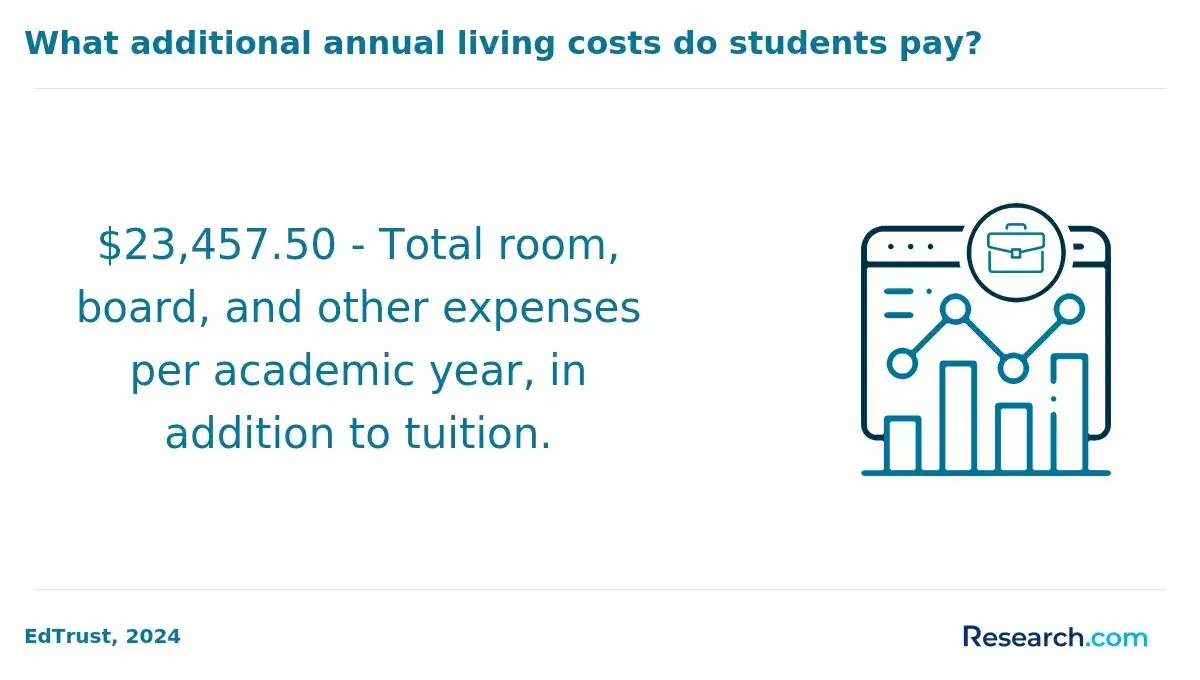
A red flag is applying ED without showing the net price estimate to everyone responsible for paying. Students may love a school, but the final decision must account for tuition, housing, travel, health insurance, books, fees, and likely borrowing.
Who is a good candidate for early decision, and when should you avoid it?
A good early decision candidate is not simply a student who likes a college. The best ED applicant has a clear academic, personal, and financial match with one institution and would choose it over all other realistic options. ED works best when certainty is high and the application is ready early.
You may be a strong ED candidate if several of the following are true:
- You have visited, attended virtual sessions, spoken with students or faculty, and researched the academic program beyond the college's brand name.
- Your family has reviewed net price estimates and agrees the school is affordable if the aid package matches expectations.
- Your application is already strong by the ED deadline, including essays, recommendations, grades, and testing decisions if applicable.
- You are not waiting on senior-year achievements that could significantly improve your regular decision application.
- You would not regret losing the ability to compare other colleges, scholarships, locations, or honors programs.
You should avoid ED if the college is only your favorite because of prestige, rankings, athletics, social media, or pressure from others. You should also avoid it if your family needs to compare aid packages, if you are undecided between very different majors, or if you have not checked whether the school supports your academic goals.
Another common mistake is choosing a school because it seems like the easiest degree to get rather than because it fits your long-term goals. ED is a commitment to an institution, not just a faster way into college.
Students should also be careful if they are applying to programs with strict progression rules, portfolio requirements, clinical placements, licensure pathways, or limited major changes. A college can be a great school overall but still be a poor ED choice if the specific program is not the right fit.
How should students research and evaluate a college before committing via early decision?
Before applying early decision, students should research the college as if they are already deciding to attend. The goal is not to prove that the school is perfect; it is to identify whether there are any academic, financial, social, or practical deal-breakers before the binding commitment.
Start with questions that affect daily life and long-term outcomes:
- Does the college offer your intended major, and how difficult is it to enter or change into that program?
- What are the first-year advising, tutoring, writing, mental health, disability, and career services like?
- What is the likely four-year cost after grants, scholarships, work-study, and loans?
- Are internships, research, clinical placements, study abroad, or co-op opportunities accessible to students in your major?
- What housing, transportation, travel, and campus-life realities would affect your experience?
- What outcomes does the college publish for retention, graduation, employment, graduate school, and debt?
The table below organizes the major research areas. It is meant to help students spot gaps before they sign an ED agreement.
| Research area | Why it matters before ED | Warning sign |
| Academic fit | The college must support the major, learning style, and advising needs you actually have. | The major is restricted, oversubscribed, or not available to first-year students. |
| Cost and aid | ED limits offer comparison, so estimated net price needs to be realistic. | The family has not reviewed the net price calculator or aid requirements. |
| Campus environment | You are committing to a living and learning community, not just a ranking. | You have not explored student life, housing, location, or support services. |
| Outcomes | Graduation, retention, and career support affect value over time. | The college provides limited outcome data for your program or student profile. |
| Institutional quality | Accreditation, governance, and student support affect transferability and credibility. | You cannot confirm accreditation or basic consumer information. |
Institution type is only one part of quality, but it can help students understand governance and mission. If you are comparing online or flexible options as part of your backup plan, reviewing non profit universities in USA can help you think more carefully about accreditation, student support, and institutional transparency.
Do not rely only on rankings or admit rates. A better ED decision comes from matching the college to your academic plan, budget, learning environment, and realistic alternatives.
What are the typical outcomes of an early decision application and what happens next?
An early decision application usually leads to one of four outcomes: admit, deny, defer, or waitlist. Each outcome requires a different next step, and students should prepare for all of them before decisions are released.
The table below explains what each result usually means. Policies vary by college, so students should follow the instructions in their admission portal and decision letter.
| Outcome | What it means | What happens next |
| Admitted | The college is offering a place under the binding ED plan. | Review aid, confirm affordability, submit deposit, and withdraw other applications. |
| Denied | The application is not moving forward for that admission cycle. | Submit regular decision or ED II applications to other colleges on the list. |
| Deferred | The college will reconsider the application in the regular decision pool. | Send requested updates, continue other applications, and avoid assuming later admission. |
| Waitlisted | The college may offer admission later if space remains. | Accept a place at another college by the deadline while following waitlist instructions. |
If admitted, the student should not delay the financial review. Compare the aid offer with the net price estimate, confirm whether grants are renewable, and ask about any unclear work-study, loan, or outside scholarship rules. If the package is unaffordable, contact the financial aid office quickly and professionally.
If deferred, students should avoid panic. A deferral is not an admission, but it is not a denial. The best response is to follow the college's instructions, submit a concise letter of continued interest if allowed, update major achievements, and complete other applications. Do not send excessive materials unless the college requests them.
If denied, the healthiest next step is to treat the rest of the list seriously. Many students are happy at colleges that were not their first emotional choice in the fall. A balanced list with academic, financial, and personal fit can protect students from over-investing in one outcome.
How should you plan your senior year application strategy around early decision?
A strong senior-year application strategy treats early decision as one part of a larger plan, not the entire plan. Even if ED is the first choice, students should prepare regular decision and early action applications before the ED result arrives. December can be too late to start essays from scratch.
Use this planning sequence to reduce risk:
- Finalize a balanced college list by early fall with reach, target, likely, and financial safety schools.
- Choose an ED school only if it is the clear first choice and the estimated cost is workable.
- Prepare early action applications to nonbinding schools if allowed by the ED college's rules.
- Draft regular decision essays before ED results are released so you can move quickly if deferred or denied.
- Track financial aid forms, scholarship deadlines, honors college deadlines, and program-specific requirements separately from admission deadlines.
- Keep senior-year grades strong because colleges can review midyear reports and may rescind offers for serious academic decline or conduct issues.
Current admissions trends make planning more important. Test policies continue to vary by college, essay authenticity is under closer scrutiny as AI tools become more common, and families are paying closer attention to net price because tuition and living costs remain high. Students should use AI tools cautiously for brainstorming or organization, never to fabricate experiences or replace their own voice.
Students should also build a longer-term education plan. If graduate study may be part of the path, undergraduate debt matters even more; some students later consider options such as 12-month master's programs online to manage time and cost after earning a bachelor's degree.
The safest ED strategy is simple: apply early only when the school is a true fit, keep strong alternatives ready, and make the financial decision before the admission decision arrives.
Other Things You Should Know About
Students should apply to only one binding early decision college at a time. Some colleges may allow nonbinding early action applications elsewhere, but you must check each school's rules.
Usually, yes, if the aid package makes attendance unaffordable. Contact the college's financial aid office immediately, explain the situation, and request a review before asking to be released.
ED II can still be competitive because it attracts strong applicants who need more time or were deferred or denied in ED I. The better question is whether your application is stronger by the ED II deadline.
Only if the college is a strong fit across several possible majors and makes it easy to explore or change programs. If your interests are still very broad, a nonbinding plan may be safer.
References
- Preparing for Early Decision: Timeline, Tips, and Checklist https://www.fastweb.com/college-search/articles/early-decision-preparation-timeline-tips
- College Application Timeline: 10 Proven Steps to Senior Year Success https://brightspotlabs.com/senior-year-college-application-timeline/
- Class of 2031 Early Decision/Early Action Notification Dates | Ivy Coach https://www.ivycoach.com/the-ivy-coach-blog/college-admissions/early-action-early-decision-notification-dates/
- College Application Strategy: Early Decision, Early Action, or Regular Decision — Hollenback Consulting https://www.hollenbackconsulting.com/blog/college-application-strategy-early-decision-early-action-or-regular-decision
- Early Action vs. Regular Decision | University of Bridgeport https://www.bridgeport.edu/news/early-action-vs-regular-decision/
- Early Decision Is the New Regular Decision: Why Applying Early Can Triple the Chances for Admission to Dream Colleges https://www.c2educate.com/trends-in-education/early-decision-is-the-new-regular-decision-why-applying-early-can-triple-the-chances-for-admission-to-dream-colleges/
- What happens if you back out of early decision? https://www.citizensbank.com/student/articles/happens-back-early-decision.aspx
- Should Your Student Apply Early Decision (and to Where)? - Top Tier Admissions https://toptieradmissions.com/should-you-apply-early-decision/
- Class of 2030 Early Decision Notification Dates https://www.ivywise.com/blog/early-decision-notification-dates/
- What Happens If You Break an Early Decision Agreement? 100% Rescind Rate and Real Consequences https://orieladmissions.com/what-happens-break-early-decision-agreement/