2027 What Is a Bursar in College?

Co-Founder and Chief Data Scientist
College bills can be confusing, and the bursar is the office that turns tuition, fees, aid credits, payments, refunds, and holds into one official student account. The stakes are high: College Board reported average published in-state tuition and fees of $11,610 at public four-year colleges for 2024-25.
This guide is for students, parents, adult learners, and career changers who want to understand college billing or work in student finance. You will learn what bursars do, when to contact them, and how to evaluate bursar services before enrolling.
Key Things You Should Know
- A college bursar manages student accounts, including tuition bills, payment posting, refunds, payment plans, late fees, financial holds, and federal tax forms such as the 1098-T.
- The bursar is not the same as financial aid or the registrar: financial aid awards grants and loans, the registrar controls enrollment records, and the bursar calculates what the student must pay or receive back.
- BLS data for May 2024 lists the median annual wage for postsecondary education administrators at $103,960, but bursar earnings vary widely by institution size, responsibility level, region, and whether the role is entry-level student accounts work or senior finance leadership.
What does a bursar do in college and how does the bursar's office work?
A bursar in college is the official responsible for student financial accounts. In practical terms, the bursar's office is where a student's charges and credits come together: tuition, mandatory fees, housing, meal plans, course fees, scholarships, grants, loans, payments, refunds, late fees, and account holds.
The bursar's office usually sits within a larger finance, treasury, controller, or student financial services division. Its job is not to decide whether you qualify for aid or whether a class counts toward your degree. Its job is to keep the student account accurate, collect money owed to the institution, disburse eligible refunds, and apply institutional and federal rules consistently.
For students, the bursar's office matters because it can affect registration, graduation, transcript release, housing access, and refund timing. A small billing problem can become a larger academic problem if it triggers a registration hold before the next term.
The core responsibilities usually include the following account functions, and understanding them helps students know where to go first when something looks wrong:
- Issuing tuition and fee bills after enrollment, housing, meal plans, lab fees, insurance charges, and other institutional charges are added to the account.
- Posting payments from students, parents, employers, veterans benefits, college savings plans, third-party sponsors, and approved payment vendors.
- Applying financial aid credits after the financial aid office authorizes disbursement and enrollment conditions are met.
- Managing payment plans, due dates, late payment penalties, returned payments, and past-due balances.
- Issuing refunds when credits exceed charges, often after aid disbursement, course withdrawal adjustments, or overpayment corrections.
- Placing and removing financial holds based on unpaid balances, returned payments, missing forms, or unresolved account disputes.
- Producing account statements and tax documents, including Form 1098-T for eligible educational expenses reported by the institution.
The office works best when students treat it as a financial operations center rather than a general help desk. If the issue is "Why did I lose my scholarship?" the answer may start with financial aid. If the issue is "Why is my account still showing a balance after my scholarship posted?" the bursar is usually the right office.
How is the bursar different from the financial aid office and the registrar?
The bursar, financial aid office, and registrar are closely connected, but they control different parts of the student experience. Confusing these offices is one of the most common reasons students wait too long to fix an account problem.
The table below shows the practical difference between the three offices. Use it to decide where to start before calling or emailing several departments at once.
| Office | Main responsibility | Typical student questions | Documents or systems it controls |
| Bursar or student accounts | Student billing, payments, refunds, account balances, and financial holds | Why do I owe this amount? When will my refund arrive? Can I set up a payment plan? | Student account statements, payment records, refund records, 1098-T forms |
| Financial aid | Eligibility, award packaging, grants, scholarships, loans, verification, and aid disbursement authorization | Why did my aid change? Am I eligible for loans? What documents are missing? | FAFSA records, aid awards, loan counseling status, satisfactory academic progress records |
| Registrar | Enrollment records, course registration, transcripts, degree audits, withdrawals, and academic calendars | Am I enrolled full time? Did my withdrawal process? Is my transcript available? | Class schedules, enrollment status, transcripts, academic records |
Here is the simplest way to think about it: the registrar confirms what you are enrolled in, financial aid determines what assistance you may receive, and the bursar calculates the final account balance after charges and credits are applied. Many colleges now combine these services into a "one-stop" student services center, but the back-end responsibilities are still separate.
A useful rule is to follow the source of the number. If the charge is tied to a class, enrollment status, or withdrawal date, start with the registrar. If the credit is a grant, scholarship, or loan, start with financial aid. If the final amount due, refund, or hold looks wrong after those pieces are in place, contact the bursar.
When should students contact the bursar's office and what issues can it resolve?
Students should contact the bursar's office whenever the amount on the student account does not match what they expected, a payment or aid credit has not posted, a refund is delayed, or a financial hold appears. Waiting can be costly because billing deadlines often move faster than academic appeals.
Contacting the bursar is especially important before the payment deadline, before adding or dropping courses, before withdrawing, and before relying on a refund for rent, books, transportation, or childcare. Refund timing can vary by school policy, aid disbursement rules, bank processing, and whether direct deposit is set up correctly.
Before contacting the bursar, students should gather the information that helps staff resolve the issue quickly. This short checklist can prevent multiple follow-up messages:
- Your student ID number, term, and current account statement.
- Proof of payment, bank confirmation, employer authorization, 529 plan confirmation, or third-party sponsor document if a payment is missing.
- Financial aid award notice or scholarship letter if a credit is expected but has not appeared.
- Course add, drop, or withdrawal confirmation if tuition or fee adjustments are in question.
- Any email from the bursar, financial aid office, registrar, housing office, or collections unit related to the balance.
The bursar can usually resolve payment posting errors, billing questions, payment plan setup, refund method problems, late fee questions, and many hold issues. However, it may need another office to change the underlying data. For example, the bursar may not be able to remove a tuition charge until the registrar confirms a withdrawal date, and it may not be able to apply an aid credit until financial aid authorizes the disbursement.
Common mistakes include assuming financial aid automatically covers every charge, ignoring small unpaid fees that trigger holds, and waiting until registration week to dispute an old balance. A better approach is to review the student account after every schedule change and again after aid is disbursed.
What education, training, and skills are typically required to become a college bursar?
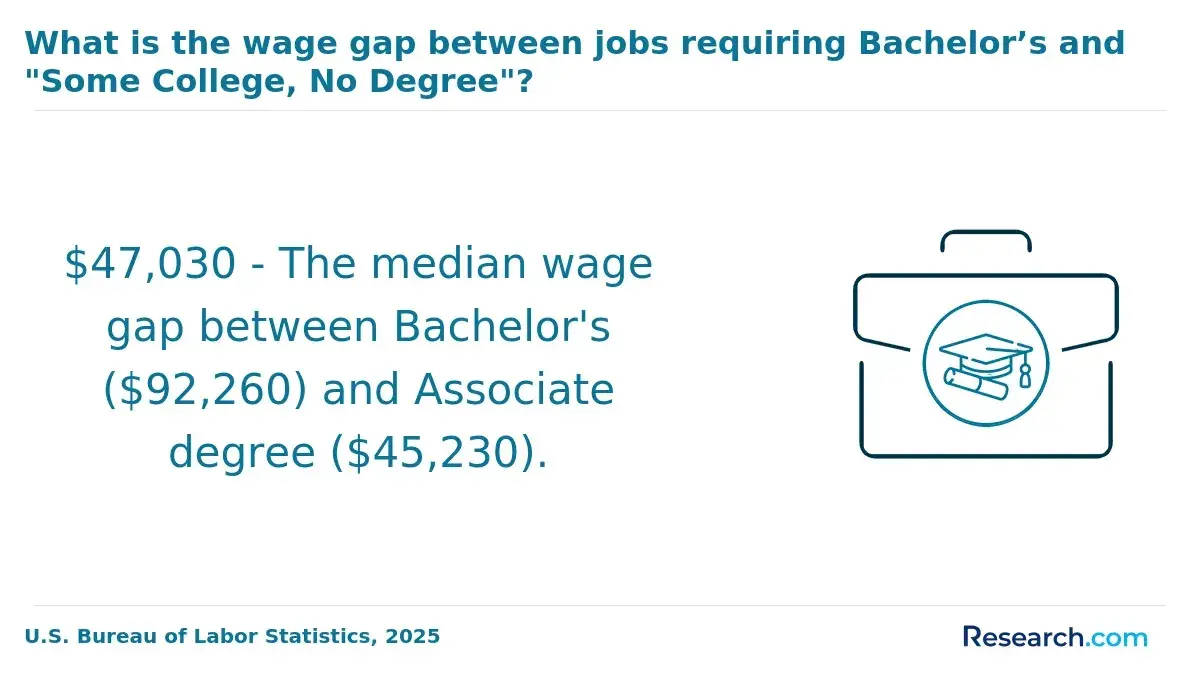
There is no single national license required to become a college bursar, but most bursars build a background in accounting, finance, business administration, higher education administration, public administration, or a related field. Entry-level student accounts jobs may require an associate or bachelor's degree plus customer service and bookkeeping experience, while director-level bursar positions often expect several years of finance, supervisory, compliance, and higher education systems experience.
Because bursars handle sensitive financial and student data, employers usually value accuracy, judgment, privacy awareness, and the ability to communicate clearly with people under financial stress. The role is both technical and service-oriented.
The skills below are especially important because bursars work at the intersection of money, compliance, software, and student support:
- Accounting and reconciliation skills for matching charges, credits, deposits, receivables, refunds, and write-offs.
- Knowledge of student information systems, payment platforms, enterprise resource planning systems, spreadsheets, and reporting tools.
- Understanding of FERPA, payment security practices, institutional policy, federal student aid timing, and tax reporting basics.
- Customer service skills for explaining balances, deadlines, payment options, refunds, and consequences without creating confusion or panic.
- Leadership and process improvement skills for managing staff, reducing billing errors, improving call-center workflows, and coordinating with financial aid and the registrar.
For advancement, a bachelor's degree is typically more useful than a short certificate alone, and a master's degree can help candidates move into student financial services leadership, enrollment management, or higher education administration. Career changers who already have accounting or finance experience may not need the most demanding graduate path; comparing easiest master's degrees can help identify flexible options that still match professional goals.
Technology is changing the role. Bursars increasingly work with automated billing rules, online payment systems, refund platforms, chatbots, digital document workflows, and analytics dashboards. AI may reduce repetitive account inquiries, but it also raises the value of staff who can audit exceptions, explain complex cases, and make fair policy decisions.
What degree programs best prepare you for bursar and student finance careers?
The best degree for a bursar career depends on whether the student wants to work in front-line student accounts, accounting operations, financial leadership, enrollment services, or higher education administration. A practical program should build business literacy, data skills, compliance awareness, and communication ability.
The table below compares common education paths. It is useful because bursar careers are not limited to one major, but some degree choices align better with specific roles.
| Program type | Best fit | Typical strengths | Limitations to consider |
| Associate degree in accounting or business | Students seeking entry-level student accounts, cashiering, or bookkeeping roles | Lower cost, faster completion, practical accounting basics | May limit advancement into director-level roles without later bachelor's study |
| Bachelor's in accounting | Students interested in billing, reconciliation, receivables, auditing, and financial controls | Strong preparation for finance-heavy bursar and controller-adjacent work | May include less higher education policy content unless electives are chosen carefully |
| Bachelor's in business administration or finance | Students who want broad student finance, operations, or management roles | Flexible preparation for budgeting, systems, service operations, and supervision | Students may need extra accounting coursework for technical finance roles |
| Bachelor's in higher education administration or organizational leadership | Students focused on student services and college operations | Good fit for enrollment services, student support, and policy coordination | May be less quantitative than accounting or finance programs |
| Master's in higher education, business, public administration, or finance | Professionals aiming for bursar director, student financial services director, or enrollment leadership | Can strengthen leadership, policy, budgeting, and institutional management skills | Best pursued after confirming that the role's salary range justifies the cost and time |
Online programs can be a strong fit for working adults because many bursar-related skills can be learned through accounting, business, finance, and higher education administration coursework delivered remotely. Students who want to finish a bachelor's degree faster should compare transfer policies, term length, credit for prior learning, and whether the school is properly accredited; a guide to accelerated bachelor's degree online accredited options can be a helpful starting point.
Admission requirements vary, but undergraduate programs commonly ask for a high school diploma or equivalent, transcripts, and sometimes placement information. Graduate programs may require a bachelor's degree, resume, statement of purpose, recommendations, and professional experience. Students should also ask whether accounting courses are aligned with CPA prerequisites if they might later pursue public accounting, even though CPA licensure is not required for a bursar role.
How do bursars manage tuition billing, payment plans, refunds, and tax documents?
Bursars manage the student account lifecycle from the first bill to the final settlement of charges and credits. The details vary by college, but the process is usually built around academic terms, payment deadlines, financial aid disbursement dates, add/drop periods, and refund schedules.
Tuition billing starts when a student registers for classes or is assessed a flat-rate tuition charge. The bursar system adds mandatory fees and other charges such as housing, meal plans, health insurance, course materials, parking, or program-specific fees. College Board's 2024-25 data shows average published tuition and fees of $43,350 at private nonprofit four-year institutions, which means billing transparency is especially important for families comparing schools with very different sticker prices.
Payment plans are designed to spread a term bill across installments, but they are not the same as financial aid. They may include enrollment fees, deadlines, late penalties, and rules about missed payments. Students should compare the total payment plan cost with other options before enrolling.
Refunds usually occur when payments and credits exceed charges. This can happen after grants, loans, scholarships, outside awards, employer payments, course adjustments, or overpayments. Students should avoid building a monthly budget around an estimated refund until the college confirms the amount, release date, and method.
A typical bursar workflow includes several steps, and understanding the order helps students identify where delays occur:
- The registrar or enrollment system confirms course registration, enrollment intensity, housing status, and relevant fees.
- The bursar generates charges and publishes the term bill or account statement.
- Financial aid authorizes eligible credits after required documents, enrollment rules, and disbursement conditions are satisfied.
- The student, parent, sponsor, or aid source submits payment or credits to the account.
- The bursar applies credits, reconciles the account, and issues a refund if the account has an eligible credit balance.
- The bursar places or removes holds depending on whether the balance is paid, disputed, past due, or covered by an approved arrangement.
Tax documents are another key responsibility. Colleges generally issue Form 1098-T to report qualified tuition and related expenses and certain payments or scholarships, but students should not treat the form as tax advice. Families should compare the form with their own payment records and consult a qualified tax professional when deciding whether they qualify for education tax benefits.
What is the difference between online and campus-based bursar services for students?
Online and campus-based bursar services perform the same core functions, but the student experience can feel very different. Online students often rely on portals, email, secure document upload, electronic refunds, and virtual appointments, while campus students may also use in-person cashiering, walk-in advising, and local ID verification services.
The table below compares the formats from a student decision standpoint. It can help you decide whether a school's support model matches your schedule, location, and comfort with self-service technology.
| Service factor | Online bursar services | Campus-based bursar services |
| Access | Best for students who need evening, remote, or asynchronous help through portals and secure messaging | Best for students who prefer in-person conversations or need same-day help on campus |
| Payments | Usually centered on electronic payments, automated payment plans, and direct deposit refunds | May include online options plus in-person cashiering depending on institutional policy |
| Documentation | Often uses upload portals, e-signatures, and email confirmations | May allow in-person document review, though many campuses still require digital submission |
| Risk points | Students may miss portal notifications or misunderstand automated holds | Students may rely on verbal answers without saving written confirmation |
Online bursar service works well for students who are organized, comfortable checking portals, and able to keep digital records. It can be especially helpful for working adults and students comparing cheap online degrees, because lower tuition is only part of affordability; billing clarity, refund reliability, and payment flexibility also affect total cost.
Campus-based service may be better for students who need complex, face-to-face help with third-party sponsorships, veteran benefits coordination, international payment questions, or urgent holds. However, even campus students should get important billing decisions in writing, because written records are easier to reference if a deadline, appeal, or payment dispute arises later.
What is the typical salary range and earning potential for bursars in higher education?
Bursar salaries vary because "bursar" can describe several levels of responsibility. A front-line student accounts representative, cashiering supervisor, assistant bursar, associate bursar, and university bursar may all work in the same functional area but have very different pay, decision authority, and staff supervision duties.
BLS does not publish a separate national wage category only for bursars. The closest broad comparison for senior bursar and student finance leadership roles is "postsecondary education administrators." BLS reported a median annual wage of $103,960 for that occupation in May 2024. This figure is useful as context, not a guaranteed bursar salary, because it includes administrators across admissions, student affairs, academic affairs, and other postsecondary functions.
The table below summarizes how earning potential generally changes by role level. The salary benchmark is most relevant to experienced administrators rather than every student accounts employee.
| Role level | Common titles | Pay context | What usually increases earning potential |
| Entry level | Student accounts clerk, cashier, billing assistant, customer service representative | Often closer to clerical, accounting support, or customer service pay bands than administrator pay | Accounting coursework, strong service skills, accuracy, and experience with student systems |
| Mid level | Student accounts specialist, collections coordinator, refund specialist, payment plan coordinator | Typically higher than entry-level support roles when the job includes reconciliation and policy knowledge | System expertise, account analysis, compliance knowledge, and cross-office coordination |
| Supervisory level | Assistant bursar, associate bursar, student accounts manager | May align more closely with administrative and finance management salary structures | Supervision, process improvement, reporting, collections oversight, and audit readiness |
| Senior level | Bursar, director of student accounts, director of student financial services | Most comparable to broader postsecondary administrator salary data | Leadership experience, finance credentials, budget responsibility, compliance expertise, and institutional scale |
The biggest salary drivers are institution size, public versus private pay structures, cost of living, union or civil service rules, supervisory scope, systems responsibility, and whether the bursar reports into finance leadership or a one-stop student services model. Candidates should review actual job postings in their region rather than relying on a single national number.
What is the job outlook for bursars and student financial services professionals?
The job outlook for bursars is tied to higher education enrollment, institutional finances, student service expectations, compliance requirements, and the modernization of student account systems. Bursar work is unlikely to disappear, but the mix of duties is changing.
BLS projects employment for postsecondary education administrators to grow 3% from 2024 to 2034, which signals steady rather than explosive demand. For readers considering this career, that means the smartest strategy is to build a combination of finance, systems, compliance, and student service skills rather than relying on job growth alone.
Several trends are shaping the field right now. Colleges are investing in self-service portals, electronic refunds, automated payment plans, text reminders, digital forms, and one-stop student service centers. These tools can reduce routine calls, but they also create demand for professionals who can troubleshoot exceptions, review system logic, protect sensitive data, and explain complex policies in plain language.
AI and automation are also influencing student finance operations. Chatbots may answer basic questions about deadlines, payment methods, or refund timing, but human staff is still needed for disputes, appeals, unusual sponsorship arrangements, hardship situations, fraud concerns, and policy interpretation. The most resilient bursar professionals are likely to be those who can use technology while maintaining sound financial judgment.
Students preparing for the field should focus on the career path as a sequence. These steps can help convert general education into employable experience:
- Build a foundation in accounting, business, finance, data systems, or higher education administration.
- Seek campus employment, internship experience, bookkeeping work, call-center experience, or administrative roles involving confidential records.
- Learn common tools such as spreadsheets, payment systems, customer relationship management platforms, and student information systems when available.
- Develop a working understanding of FERPA, payment security, collections policies, refund rules, and financial aid terminology.
- Move from transaction processing into reconciliation, reporting, supervision, systems testing, or policy coordination to qualify for higher-level roles.
Career changers from banking, accounting, collections, customer service, payroll, financial aid, registrar operations, or public administration may already have transferable skills. The key is to show that those skills apply to student accounts, deadlines, compliance, and service quality in a college environment.
Students with criminal records should not assume college is off limits, but finance-related campus jobs may involve background checks depending on the employer and role. If this applies, reviewing options around what can a felon go to college for can help identify programs and career paths where admission, licensing, and employment barriers are more manageable.
How can you evaluate a college's bursar or student accounts office before enrolling?
Students rarely evaluate the bursar's office before enrolling, but they should. A college's billing process can affect cash flow, refund timing, registration access, and stress levels throughout the program. A school with clear pricing, responsive student accounts staff, and transparent payment policies can be easier to navigate than one with confusing bills and slow answers.
Start by reviewing the school's published tuition and fee pages, payment deadlines, refund policy, withdrawal policy, payment plan terms, financial hold rules, and 1098-T information. If you cannot find these basics before enrolling, that is a warning sign.
Before committing to a school, ask direct questions that reveal how the bursar's office works in real situations:
- When is the first bill issued, and how will I be notified?
- What charges are not included in advertised tuition?
- How do payment plans work, and what fees or penalties apply?
- When are financial aid refunds usually released after the term begins?
- What happens if outside scholarships, employer payments, or veterans benefits arrive late?
- What balance triggers a registration hold, transcript hold, housing hold, or graduation hold?
- How long does the office usually take to answer emails or resolve account disputes?
- Can I get written confirmation of billing estimates, payment arrangements, and refund timelines?
Cost comparison should include more than tuition. Application fees, technology fees, course materials, payment plan fees, late fees, transcript fees, housing charges, insurance waivers, and refund delays can all affect affordability. Students comparing schools with lower upfront costs may also want to review free application online colleges to reduce the cost of applying while they evaluate fit.
Red flags include vague billing pages, inconsistent answers from different offices, pressure to enroll before receiving a cost breakdown, unclear refund policies, very short payment deadlines, and no secure way to submit financial documents. A strong bursar office should make charges, credits, deadlines, and consequences understandable before you are financially committed.
Other Things You Should Know About
Sometimes, but not always. At some colleges, the cashier's office is part of the bursar's office and mainly handles payments. The bursar usually has broader responsibility for billing, student account balances, refunds, payment plans, holds, and account reconciliation.
No. The bursar can apply aid to your account after it is authorized, but the financial aid office determines eligibility, award amounts, verification requirements, and loan processing. If aid is missing, ask financial aid why it has not disbursed, then ask the bursar how it affects your balance.
Financial aid may not cover every charge, or it may not have been disbursed yet. Housing, meal plans, course fees, health insurance, prior balances, enrollment changes, and loan fees can also change the final amount due. Review the account statement line by line and contact the bursar if the balance does not make sense.
Good options include accounting, finance, business administration, public administration, higher education administration, or organizational leadership. For senior roles, employers often value a bachelor's degree, several years of student finance or accounting experience, systems knowledge, and supervisory ability.
References
- Student Financial Support Policy https://www.hruc.ac.uk/documents/hruc-policies/93-student-financial-support-policy
- What does a Bursar do? Career Overview, Roles, Jobs | HEUG https://careers.heug.org/career/bursar
- Bursar | Ursuline - Liberal Arts College in OH https://www.ursuline.edu/cost-aid/bursar
- 2026 Bursar Fundamentals https://www.nacubo.org/Events/2026/2026-Bursar-Fundamentals
- The Bursars Professional Certificate — Higher Education Training Services https://www.training-ed.com/the-bursars-certificate
- What Major is Best for Finance? Top 10 Picks https://zoetalentsolutions.com/what-major-is-best-for-finance/
- Starting Out: Why graduates are choosing financial services careers https://www.moneymarketing.co.uk/features/starting-out-why-graduates-are-choosing-financial-services-careers/
- Understanding university and college finances - Office for Students https://www.officeforstudents.org.uk/for-students/student-rights/understanding-university-and-college-finances/
- Financial Advisor Job Outlook for 2026 and Beyond https://smartasset.com/advisor-resources/financial-advisor-job-outlook
- Financial Support and Bursaries - Activate Learning https://www.activatelearning.ac.uk/starting-your-course/starting-your-fe-course/financial-support-and-bursaries/