2027 What Is a Program of Study?

Co-Founder and Chief Data Scientist
Choosing a program of study is really choosing a path: the credential, courses, timeline, cost, and career options that come with it. That decision matters because BLS 2024 education data shows workers with a bachelor's degree had median weekly earnings of $1,543, compared with $930 for those with only a high school diploma.
This guide is for students, parents, adult learners, transfer students, and career changers who want a clear, practical explanation of how programs of study work and how to compare options before enrolling.
Key Things You Should Know
- A program of study is an organized set of courses and requirements leading to a credential, such as a certificate, associate degree, bachelor's degree, master's degree, or career and technical education pathway.
- Cost and time vary widely: College Board's 2024-25 data lists average published tuition and fees at $4,050 for public two-year in-district colleges, $11,610 for public four-year in-state colleges, and $43,350 for private nonprofit four-year colleges.
- Before enrolling, verify institutional and programmatic accreditation, transfer-credit rules, licensure alignment, total cost, completion requirements, and career outcomes; the cheapest or fastest option is not always the best fit.
What is a program of study in U.S. education, and how is it officially defined?
A program of study is the full academic plan a school uses to move a student from admission to completion of a defined educational goal. In U.S. education, it usually includes required courses, electives, credit hours, general education requirements, prerequisites, clinical or fieldwork requirements when relevant, and the credential awarded at the end.
The official federal concept is broader than everyday student language. The U.S. Department of Education's Classification of Instructional Programs describes instructional programs as combinations of courses and experiences organized around a subject-matter objective. In practice, colleges use this structure to classify fields such as nursing, accounting, cybersecurity, psychology, welding, or elementary education.
A simple way to understand it is this: a course is one class, a major is the main field of study in many degree programs, and a program of study is the complete, approved route to a credential. It tells you what you must complete, in what sequence, and under what academic standards.
Programs of study matter because they connect academic choices to real consequences. They affect financial aid eligibility, transfer credit, graduation timing, licensure preparation, employer recognition, and whether your coursework builds toward the job or next credential you actually want.
How does a program of study differ from a major, degree, or single course?
The terms "program of study," "major," "degree," and "course" are often used together, but they are not interchangeable. Understanding the difference helps you read college catalogs, compare schools, and avoid enrolling in something that does not match your goal.
The table below separates the terms by what each one means and how students typically use it when planning an education path.
| Term | What it means | Example | Why it matters |
| Course | One class within a curriculum | English Composition I | Courses earn credits, but one course alone usually does not lead to a credential. |
| Major | The primary academic subject within many bachelor's degrees | Biology major | A major shapes upper-division coursework and career or graduate-school preparation. |
| Degree | The credential awarded after completing an approved level of study | Associate of Applied Science or Bachelor of Arts | The degree level affects eligibility for jobs, graduate study, and some licenses. |
| Program of study | The complete approved plan of courses and requirements leading to a credential | A.S. in Nursing program | It shows the full pathway, including prerequisites, credit hours, sequencing, and completion rules. |
For example, "psychology" might be a major, but a bachelor's program of study in psychology may include general education, statistics, research methods, lab or capstone work, electives, and graduation requirements. Similarly, a welding certificate may not have a "major" in the traditional sense, but it is still a program of study because it has defined courses and outcomes.
This distinction also matters for online learners. Some students search for easy online degrees, but the better question is whether the whole program of study fits your schedule, transfer credits, career goal, and academic strengths.
What types of programs of study exist (certificate, associate, bachelor's, graduate, CTE)?
Programs of study exist at nearly every level of U.S. education. The right type depends on whether you need fast job preparation, a broad undergraduate degree, advanced specialization, licensure preparation, or a stepping-stone credential.
The comparison below summarizes the most common types so you can match the credential to your goal rather than choosing based only on name recognition.
| Program type | Typical credential | Best fit | Common caution |
| Certificate | Undergraduate or post-baccalaureate certificate | Students seeking targeted skills, job entry, career switching, or promotion preparation | Some certificates are not eligible for the same financial aid options as degrees. |
| Associate | A.A., A.S., A.A.S., or similar | Students seeking transfer preparation, technical employment, or a lower-cost starting point | Transfer-focused and career-focused associate degrees may have different course designs. |
| Bachelor's | B.A., B.S., B.F.A., B.S.N., or similar | Students seeking broad undergraduate preparation and access to many professional roles | Changing majors late can add credits, time, and cost. |
| Graduate | Master's, doctoral, or graduate certificate | Professionals seeking specialization, leadership roles, licensure, research training, or salary mobility | Admissions, prerequisites, and ROI vary strongly by field. |
| Career and technical education | Certificate, diploma, associate degree, apprenticeship-linked pathway, or industry credential | Students preparing for skilled trades, healthcare support, information technology, manufacturing, transportation, or public safety | Employer recognition and licensing requirements can be local or state-specific. |
Certificates can make sense when you need a targeted skill and already have a degree or work experience. Associate degrees can be strong value choices, especially when transfer agreements are clear. Bachelor's programs are often better for fields where employers expect a four-year credential. Graduate programs should be evaluated by career outcome, licensure fit, and opportunity cost, not prestige alone.
Adult learners and retirees may also choose non-degree or enrichment pathways. For example, people comparing open university free courses for over 60s should distinguish personal enrichment from credential-bearing programs that lead to financial aid, transfer credit, or professional eligibility.
How is a program of study structured, and what coursework or curriculum does it include?
A program of study is usually structured as a sequence, not just a menu of classes. Schools design it so students build foundational knowledge first, then move into intermediate and advanced work, applied experiences, and final assessments.
Most college programs include several curriculum layers. Knowing these layers helps you read a degree plan and estimate whether your prior credits, work experience, or scheduling limits will help or slow you down.
- General education courses: Broad classes in writing, math, science, humanities, social science, communication, or quantitative reasoning that support college-level learning.
- Major or technical core courses: Required classes that teach the central knowledge and skills of the field, such as anatomy for nursing, programming for computer science, or financial accounting for business.
- Prerequisites and co-requisites: Courses or competencies you must complete before or alongside another course; these often affect how quickly you can progress.
- Electives or concentrations: Flexible courses that let you specialize, explore related fields, or meet credit-hour minimums.
- Applied learning: Labs, practicums, internships, clinical rotations, student teaching, simulations, studio work, apprenticeships, or capstones, depending on the field.
- Assessment requirements: Exams, portfolios, projects, competency demonstrations, minimum grades, or program-specific progression standards.
Programs also differ in how tightly sequenced they are. A history bachelor's degree may allow more flexible course ordering, while a nursing or engineering program may require strict progression because each course depends on prior competencies.
Before choosing a program, ask the school for a term-by-term plan. This is especially important if you work full time, need evening classes, rely on financial aid, or plan to transfer. A program that looks short on paper can take longer if key courses are offered only once per year or require prerequisites you have not completed.
What are the typical admission requirements for starting a program of study?
Admission requirements vary by school, credential level, selectivity, and field. Open-admission community colleges may require only a high school diploma or equivalent for general entry, while selective healthcare, education, engineering, graduate, or arts programs may require additional screening.
Here are the requirements students most often encounter, along with why each one matters during planning.
- Proof of prior education: High school transcript, GED, prior college transcript, bachelor's degree, or prerequisite credential, depending on the program level.
- Minimum GPA or placement readiness: Some programs require a minimum GPA or placement into college-level math, reading, or writing before starting core courses.
- Prerequisite courses: Science, math, language, computer, or foundational professional courses may be required before admission or before advanced coursework.
- Application materials: Programs may ask for essays, recommendations, resumes, portfolios, interviews, auditions, or background information.
- Testing or competency evidence: Some schools use placement tests, standardized tests, skills assessments, or prior learning evaluations, though test-optional policies are common in many undergraduate settings.
- Field-specific checks: Healthcare, education, public safety, and some technical programs may require immunizations, background checks, drug screening, CPR certification, liability insurance, or physical ability documentation.
Do not assume admission to the college means admission to every program. A student may be accepted by a university but still need separate admission to nursing, social work, teacher education, business, engineering, or a graduate program.
If you want a lower-friction start, some schools reduce upfront barriers. Comparing online colleges no application fee can be useful, but application cost should be only one factor; accreditation, transfer policy, support services, and program fit matter more over the full enrollment period.
How long does a program of study usually take, and what does it cost?
The length and cost of a program of study depend on credential level, enrollment intensity, transfer credits, residency status, course availability, books and supplies, technology fees, lab fees, transportation, housing, and whether you attend a public, private nonprofit, or private for-profit institution.
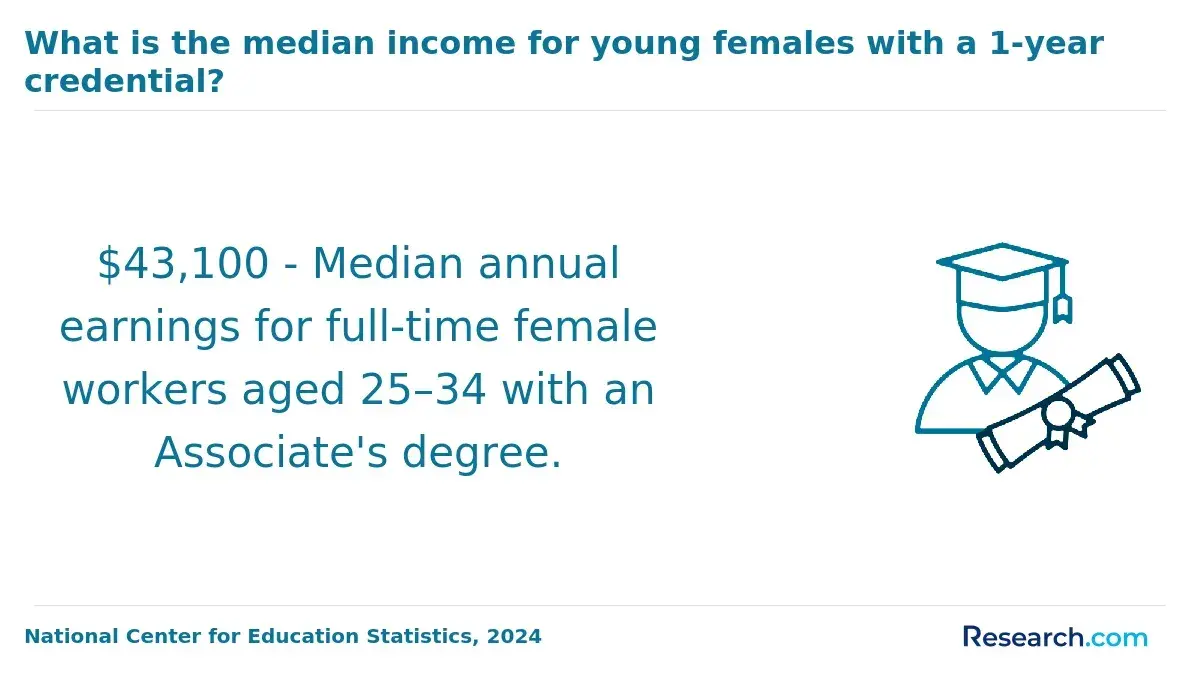
College Board's 2024-25 figures provide a useful benchmark for published tuition and fees before grants and scholarships: $4,050 for public two-year in-district colleges, $11,610 for public four-year in-state colleges, $30,780 for public four-year out-of-state colleges, and $43,350 for private nonprofit four-year colleges. These are sticker prices, not necessarily what every student pays, but they show why residency, institution type, and financial aid can change the economics of the same credential.
The table below gives a practical planning view of common completion timelines and cost considerations. Use it to identify where time, credits, and hidden costs may affect your decision.
| Program level | Common full-time timeline | Common cost drivers | Best value strategy |
| Short certificate | A few months to one year | Program fees, tools, certification exams, books, and whether aid applies | Choose employer-recognized programs with clear skill outcomes. |
| Associate degree | About two years | Tuition, prerequisites, transfer pathway, commuting, and part-time enrollment | Use transfer agreements if a bachelor's degree is the long-term goal. |
| Bachelor's degree | About four years | Tuition, housing, major changes, excess credits, and internship requirements | Map credits early and avoid unnecessary course repeats. |
| Master's degree | One to three years | Per-credit tuition, employer reimbursement, practicum hours, and opportunity cost | Compare career relevance, licensure alignment, and total credits required. |
| Doctoral or professional program | Several years | Tuition, research time, clinical requirements, exams, and lost earnings | Confirm the credential is required for the target role before enrolling. |
Program length can change if you attend part time, need developmental coursework, fail or withdraw from a course, change your field, or cannot access required courses in sequence. Conversely, transfer credits, dual enrollment, credit for prior learning, summer courses, and accelerated formats can shorten the timeline.
To reduce cost, compare total program price rather than just tuition. Include fees, books, equipment, exam costs, commuting, childcare, lost work hours, and whether credits will transfer if you change schools. For graduate students, accelerated online master's programs may reduce time away from the workforce, but only if the pace is realistic and the credential fits the career goal.
How do online and campus-based programs of study compare for flexibility and quality?
Online and campus-based programs can both be high quality, but they serve different learners best. The right format depends on your schedule, learning style, field requirements, access to technology, need for hands-on training, and whether the program meets licensure or employer expectations.
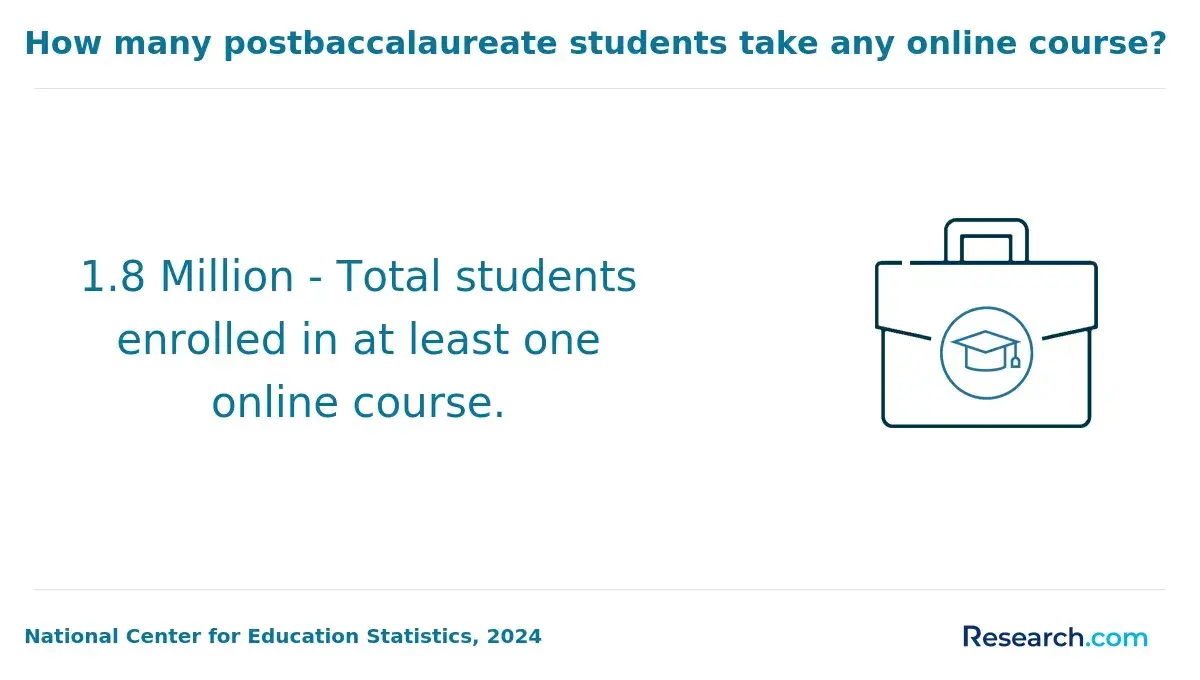
NCES reporting on distance education after the pandemic shows that online learning remains a standard part of U.S. higher education rather than a temporary substitute. For students, that means more options, but also more responsibility to verify quality, support, and fit.
The table below compares online and campus-based study across the factors that most often affect student success.
| Factor | Online program of study | Campus-based program of study | Decision tip |
| Schedule flexibility | Often better for working adults, caregivers, military learners, and students far from campus | Usually better for students who prefer fixed class times and in-person structure | Choose online if flexibility is essential; choose campus if structure keeps you accountable. |
| Hands-on learning | May require local placements, intensives, labs, simulations, or approved sites | Often easier for labs, studios, clinics, workshops, and face-to-face practice | Check placement support before enrolling in online healthcare, education, or counseling programs. |
| Student support | Quality varies; strong programs provide advising, tutoring, library access, tech help, and career services remotely | Support may be easier to access in person, though availability still varies | Ask how online students access the same services as campus students. |
| Networking | Can be strong through cohort models, discussion boards, virtual events, and employer partnerships | Often stronger for informal networking, clubs, faculty contact, and local internships | Career changers should look for intentional networking opportunities in either format. |
| Quality signal | Depends on accreditation, curriculum, faculty, outcomes, and assessment quality | Depends on the same academic quality indicators, not simply physical location | Do not assume online means easier or campus means better. |
Online programs work well for self-directed students who can manage deadlines, communicate proactively, and study consistently without commuting. Campus programs may be better for students who need in-person labs, direct supervision, structured routines, or a local professional network.
A common mistake is choosing online only because it looks convenient. Before enrolling, confirm whether exams are proctored, classes are synchronous or asynchronous, internships are available near you, and out-of-state students can meet licensure requirements where they live.
Why does accreditation matter for a program of study, and how can you verify it?
Accreditation is one of the most important quality checks for a program of study. It affects federal financial aid eligibility, credit transfer, graduate school admission, employer recognition, and licensure pathways in fields such as nursing, teaching, counseling, social work, engineering, and allied health.
There are two main layers to understand. Institutional accreditation applies to the college or university as a whole. Programmatic accreditation applies to a specific program or professional field. Some careers require or strongly prefer graduation from a program with the relevant programmatic accreditation.
Use the following steps to verify accreditation before you apply or pay a deposit.
- Search the school in the U.S. Department of Education's recognized accreditation database or the accreditor's official directory.
- Confirm the exact campus, online division, school name, and credential level because similar names can be confusing.
- Check whether your specific program has required programmatic accreditation for your field, not only whether the institution is accredited.
- Ask the admissions office whether the program meets licensure or certification requirements in your state.
- Get transfer and licensure claims in writing, especially if you plan to move, transfer, or apply to graduate school.
Red flags include vague claims such as "fully recognized" without naming an accreditor, pressure to enroll immediately, unclear credit-transfer policies, unusually short timelines for regulated fields, or refusal to provide written information about licensure alignment.
If you are comparing remote options, start with accredited online degree programs and then verify the exact program, not just the institution. Accreditation status can change, and licensure boards may apply rules that differ from general college accreditation.
What careers, salaries, and job outlook can a program of study prepare you for?
A program of study can prepare you for employment by building technical knowledge, transferable skills, supervised practice, professional networks, and credentials that employers understand. However, career outcomes depend on the field, local labor market, experience, internships, licensure, portfolio quality, and how well the program aligns with employer needs.
BLS 2024 education data shows a broad earnings pattern: workers with higher educational attainment generally had higher median weekly earnings and lower unemployment than those with less education. This does not mean every degree pays off automatically, but it does show why the credential level and field of study should be evaluated together.
The table below connects broad program categories to common career directions and decision factors. It is not a salary guarantee; it is a planning tool for evaluating fit and likely next steps.
| Program area | Career directions | Typical preparation value | What to verify |
| Business and accounting | Bookkeeping, management, marketing, finance, operations, human resources | Builds quantitative, communication, and organizational skills used across industries | Whether advanced roles require a bachelor's, master's, CPA path, or specialized experience |
| Healthcare | Nursing, medical assisting, radiologic technology, health information, therapy support | Often links coursework with labs, clinical hours, and licensure or certification preparation | Programmatic accreditation, clinical placement availability, exam pass rates, and state eligibility |
| Information technology | Help desk, cybersecurity, software development, cloud support, data analytics | Can combine academic learning with projects, certifications, and portfolios | Hands-on labs, current tools, employer partnerships, and whether skills match job postings |
| Education and human services | Teaching, childcare leadership, social services, counseling support, nonprofit work | Prepares students for people-centered roles and, in some cases, state licensure | Student teaching, field hours, background checks, and state approval |
| Skilled trades and technical fields | Welding, HVAC, automotive, electrical, advanced manufacturing, logistics | Provides hands-on training and may align with apprenticeships or industry credentials | Equipment quality, employer recognition, safety training, and local demand |
AI and automation are also changing the value of programs of study. Employers increasingly look for graduates who can use digital tools, interpret data, communicate clearly, and adapt as tasks change. Programs that update curriculum, include applied projects, and teach problem-solving may be more useful than programs that rely only on static textbook knowledge.
To evaluate career fit, look beyond advertised job titles. Review job postings in your target region, identify required credentials, compare salary ranges from reliable sources, and ask whether the program provides internships, portfolios, clinical experience, certification preparation, or employer connections. A strong program should help you show what you can do, not just list courses you completed.
How do licensing, certification, and stackable credentials connect to a program of study?
Licensing, certification, and stackable credentials are closely connected to many programs of study, but they serve different purposes. A degree or certificate from a school shows academic completion. A license is legal permission to practice in a regulated role. A professional certification usually signals competence to employers or industry groups. Stackable credentials let you build smaller credentials toward a larger goal.
This distinction is critical in regulated fields. For example, nursing, teaching, counseling, social work, real estate, cosmetology, emergency medical services, and some allied health roles may require state approval, exams, supervised hours, background checks, or graduation from an approved program.
Use this checklist before enrolling in a program connected to a regulated or credential-driven career.
- Identify the exact job title you want, because similar roles may have different credential rules.
- Check your state licensing board or professional regulator for education, exam, and supervised-experience requirements.
- Confirm whether the program is approved for your state, especially if the school is online or located elsewhere.
- Ask whether certification exam preparation is built into the curriculum or offered separately.
- Find out whether credits or credentials stack into a higher certificate, associate degree, bachelor's degree, or graduate program.
- Verify whether employers in your region recognize the credential before you commit time and money.
Stackable pathways can be valuable when they create multiple exit points. A student might earn a short healthcare certificate, work in an entry-level role, apply credits to an associate degree, and later pursue a bachelor's degree. This approach can reduce risk because each step has potential labor-market value.
The risk is assuming every credential stacks automatically. Some noncredit certificates, bootcamps, continuing education courses, and vendor credentials do not transfer into academic credit. Always ask whether the credential is credit-bearing, whether credits expire, and whether the receiving school has a written transfer agreement.
Other Things You Should Know About
It usually means the academic pathway or credential you want to pursue, such as a biology bachelor's degree, nursing associate degree, cybersecurity certificate, or MBA. The school uses it to place you in the correct curriculum and advising track.
Not exactly. A major is the main subject area in many degree programs, while a program of study is the complete set of requirements leading to a credential. Some programs, especially certificates and technical pathways, may not use the word "major" at all.
Usually yes, but changing can affect graduation time, financial aid eligibility, transfer credits, prerequisites, and total cost. Before switching, ask an advisor to map which completed credits still apply to the new program.
Compare total cost, completion time, accreditation, transfer options, licensure fit, job requirements, salary context, and your ability to finish. A program is more likely to be worthwhile when it clearly connects to your goals and avoids unnecessary credits or debt.
References
- Admissions for international candidates - SWPS University https://english.swps.pl/programs/apply/application-for-international-candidates
- What Is College Accreditation? How to Check If a School Is Legit https://abound.college/finishcollege/advice/accreditation-why-is-it-so-important/
- How long does it take to get a bachelor's degree? | edX https://www.edx.org/resources/how-long-does-it-take-to-get-a-bachelors-degree
- College Degree vs Major: What's the Difference? https://www.aiuniv.edu/degrees/business/articles/degree-vs-major-difference
- What is the difference between a Major and a Minor at Franklin Switzerland? https://www.fus.edu/blog/what-s-the-difference-between-a-major-and-a-minor
- Why Accreditation Matters: Ensuring Quality in Higher Education https://ukeducationbridge.co.uk/why-accreditation-matters-ensuring-quality-in-higher-education/
- Higher Ed: The US Education System Explained https://shorelight.com/student-stories/the-us-higher-education-system-explained
- What's the Difference Between a Degree and a Major? - University of the Potomac https://potomac.edu/difference-between-degree-and-major/
- Admissions Criteria https://ed.wum.edu.pl/pl/admissions-criteria
- Top 7 Programs That Lead to High-Paying Jobs After Graduation - Glinks https://www.glinksgroup.com/om/top-7-programs-that-lead-to-high-paying-jobs-after-graduation/