2027 How College Works: Key Systems Every Student Should Understand

Co-Founder and Chief Data Scientist
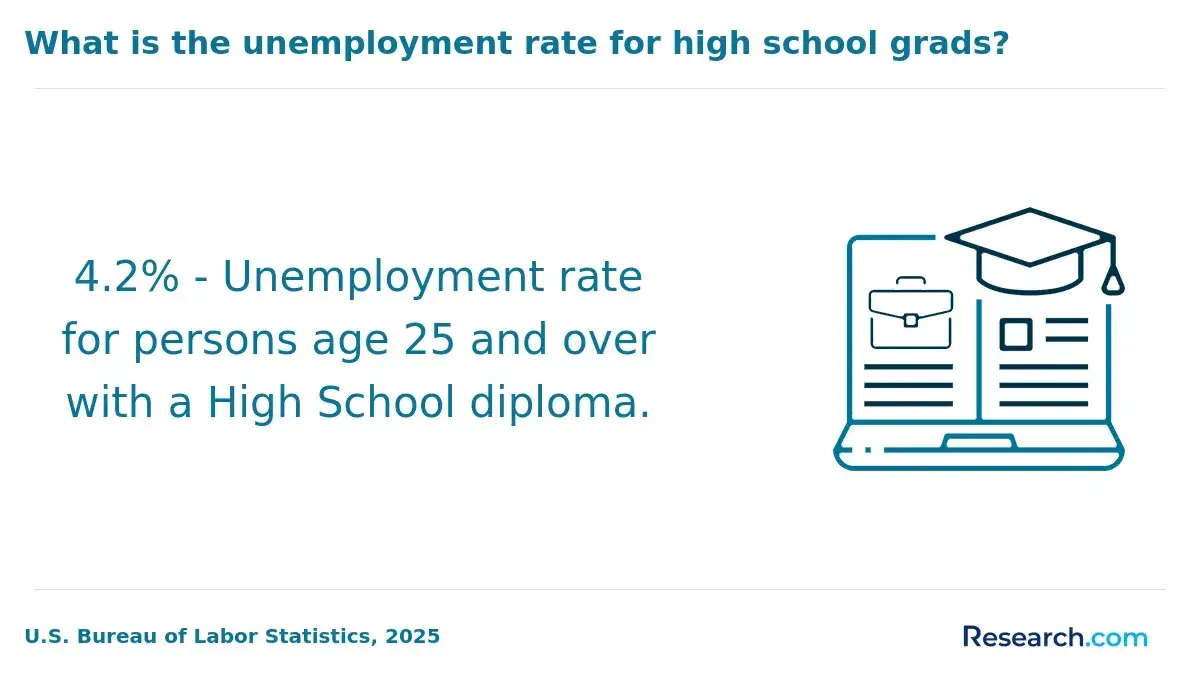
Choosing a college means decoding credits, majors, tuition bills, aid offers, transfer rules, and career claims before you commit money and time. The decision matters because education still changes earnings potential. BLS 2024 data show bachelor's degree holders had median weekly earnings of $1,543, compared with $930 for workers whose highest credential was a high school diploma.
This guide is for students, parents, adult learners, and transfer students who want a clear map of how college works so they can compare programs, avoid costly mistakes, and choose a path that fits their goals.
Key Things You Should Know
- College is built around credits: most bachelor's degrees require about 120 semester credits, associate degrees commonly require about 60, and certificates vary widely by field and school.
- Cost depends on more than tuition. College Board's 2024 pricing data list average published tuition and fees at $11,610 for in-state public four-year students and $43,350 at private nonprofit four-year colleges for 2024-25.
- Accreditation, transfer policy, financial aid eligibility, and career alignment are the systems that most often determine whether a college choice pays off or creates avoidable barriers.
How is the U.S. college system structured, and what does "how college works" really mean?
"How college works" means understanding the systems that turn enrollment into a credential: admissions, credits, degree requirements, academic calendars, grading, financial aid, advising, accreditation, and career preparation. Colleges may look different on the surface, but most use the same basic building blocks: students take courses, courses carry credits, credits satisfy requirements, and completed requirements lead to a certificate or degree.
U.S. higher education is decentralized. Federal rules shape financial aid and consumer protections, states oversee public institutions and licensing rules, accrediting agencies review quality, and individual colleges set many academic policies. This is why two programs with the same major can differ in cost, transfer friendliness, class format, graduation timeline, and career outcomes.
The table below summarizes the major systems students interact with. Use it as a quick map for understanding which office or policy affects each decision.
| College system | What it controls | Why it matters to students |
| Admissions | Entry requirements, deadlines, test policies, application review | Determines whether you can start, when you can start, and what documents you need |
| Academic requirements | Majors, general education, electives, grades, credit minimums | Determines what you must complete to graduate |
| Registrar | Enrollment records, transcripts, transfer credits, graduation audits | Determines how completed work is recorded and applied |
| Financial aid and billing | FAFSA, grants, loans, scholarships, payment deadlines | Determines your net price and when money is due |
| Accreditation and compliance | Institutional quality review and program-level standards | Affects aid eligibility, transfer, licensure, and employer recognition |
| Career services | Internships, resumes, employer connections, career planning | Helps translate coursework into job readiness |
A practical way to think about college is this: the school sells access to instruction, credentials, support systems, and networks. The student's job is to choose a credible program, understand the rules early, use the support available, and keep the degree plan aligned with a realistic academic and career goal.
What are the main types of colleges and degree pathways, from certificates to graduate school?
College pathways are not one-size-fits-all. The right route depends on your career goal, budget, timeline, academic preparation, and whether the occupation requires a license or specific credential. A short certificate may be enough for some technical roles, while teaching, nursing, engineering, counseling, law, and healthcare professions often require specific degrees and approvals.
The table below compares common credential levels. It is especially useful if you are deciding whether to start with a certificate, community college, bachelor's program, or graduate degree.
| Credential or pathway | Common length | Best fit | Important caution |
| Certificate | A few months to about one year, depending on field | Students seeking focused workforce skills, career changes, or a lower-cost entry point | Some certificates do not transfer into degrees or qualify for federal aid |
| Associate degree | About two years full time | Students planning technical employment or transfer to a bachelor's program | Transfer rules vary; not every course applies to every bachelor's major |
| Bachelor's degree | About four years full time | Students pursuing broad professional roles, graduate school, or fields where employers expect a four-year degree | Cost and time can rise if students change majors late or lose credits when transferring |
| Post-baccalaureate certificate | Often less than two years | Bachelor's degree holders adding a specialty, prerequisite sequence, or career pivot | May not replace a required graduate degree or license |
| Master's degree | Often one to three years | Students seeking advanced practice, leadership roles, specialization, or licensure preparation | ROI depends heavily on field, employer, and state requirements |
| Doctoral or professional degree | Several years beyond the bachelor's degree | Students pursuing research, clinical practice, law, medicine, academia, or advanced professional authority | Admissions can be competitive and opportunity cost can be high |
Institution type also matters, but it should not be judged too simplistically. Public colleges are usually state-supported and may offer lower in-state tuition. Private nonprofit colleges include many mission-driven institutions with varied price points and scholarship policies. Private for-profit colleges may offer flexible career-focused programs but require careful review of accreditation, completion rates, debt, and employer recognition.
If you need a flexible starting point and want a lower academic barrier, an easiest online degree guide can help you compare majors that are often more accessible for working adults, transfer students, or learners returning after time away.
Before choosing a pathway, work backward from the job you want. Ask employers, licensing boards, and program advisors what credential is actually required. A shorter program makes sense when it leads directly to the job or stacks into a later degree; it is risky when it postpones a credential that your target career clearly requires.
How do majors, general education, and electives fit together to form a college degree?
A college degree is usually made of three parts: general education, major requirements, and electives. General education builds broad skills in writing, math, science, humanities, social science, and communication. The major develops depth in one field. Electives give students room to explore interests, add a minor, complete prerequisites, or build job-specific skills.
For many bachelor's programs, the total requirement is about 120 semester credits. A typical course is worth three credits, though labs, studios, clinicals, internships, and accelerated courses may work differently. The exact structure varies by institution, but the pattern below is common enough to help students understand how a degree plan is assembled.
| Degree component | Typical role in the degree | Decision impact |
| General education | Builds broad academic skills and satisfies institutional or state requirements | Can be transfer-friendly if courses are chosen carefully |
| Major core | Provides required courses in the main field of study | Drives career preparation and graduate school eligibility |
| Major electives or concentrations | Adds specialization within the major | Helps tailor the degree toward roles such as data analysis, public health, cybersecurity, or management |
| Free electives | Fills remaining credit space | Can support a minor, certificate, internship, or career skill set |
| Capstone, practicum, clinical, or internship | Applies learning in a final project or supervised setting | Often important for portfolios, licensure, or employer readiness |
Students often lose time when they treat all credits as equal. Credits can count toward the total number needed for graduation without satisfying the correct requirement. For example, a course may transfer as an elective but not count toward a nursing prerequisite, business core, or engineering sequence.
To avoid excess credits and delayed graduation, take these steps before registering each term:
- Review your degree audit and confirm which requirement each course will satisfy.
- Ask whether major courses must be taken in a sequence and whether they are offered every term.
- Check minimum grade rules, especially for prerequisites, major courses, and transfer credits.
- Use electives strategically for internships, minors, technical skills, writing-intensive courses, or graduate school prerequisites.
- Meet with an academic advisor before changing majors, dropping courses, or switching to part-time status.
A common mistake is choosing a major based only on interest without checking the required math, science, writing, fieldwork, or licensure expectations. Interest matters, but fit also includes your strengths, schedule, finances, and the path from coursework to employment.
How does college accreditation work, and why is it critical when choosing a school?
Accreditation is a quality review process that evaluates whether a college or program meets recognized standards. It is one of the most important systems in higher education because it can affect federal financial aid eligibility, transfer credit, graduate admissions, professional licensure, and employer acceptance.
There are two broad accreditation categories students should understand. Institutional accreditation reviews the college or university as a whole. Programmatic accreditation reviews specific programs, often in fields such as nursing, education, social work, counseling, engineering, business, public health, and allied health.
The table below explains when each type matters most. It can help you spot whether a school's accreditation is sufficient for your goal or whether you need a program-specific approval.
| Accreditation type | What it reviews | Why it matters | Examples of when to verify carefully |
| Institutional accreditation | The college or university overall | Often tied to federal aid eligibility and broad academic recognition | Any degree program, especially online or transfer programs |
| Programmatic accreditation | A specific academic program or professional field | May be required or strongly preferred for licensure, certification, or graduate study | Nursing, teacher preparation, counseling, engineering, social work, dietetics, healthcare fields |
| State authorization or approval | Permission to operate or enroll students in a state | Important for online students and licensure-track programs | Online programs serving students outside the school's home state |
Accreditation should be verified through recognized official sources, not only a school's marketing page. Students can check institutional accreditation through the U.S. Department of Education's Database of Accredited Postsecondary Institutions and Programs, and they should confirm programmatic accreditation through the relevant professional accreditor or state licensing board.
Red flags include vague phrases like "fully recognized" without naming the accreditor, pressure to enroll before you verify aid eligibility, unclear licensure disclosures, or claims that credits will transfer anywhere. No college can guarantee that another institution will accept its credits.
The safest approach is to ask direct questions in writing: Who accredits the institution? Is the specific program accredited? Does the program meet licensing requirements in your state? Will the school provide a transfer equivalency or degree audit before you enroll? Clear answers reduce the risk of paying for credits that do not serve your goal.
What are the key differences between online, hybrid, and campus-based college programs?
Online, hybrid, and campus-based programs can lead to the same credential, but the learning experience and support structure can feel very different. The best format depends on your schedule, learning style, commute, technology access, field requirements, and need for in-person labs, clinicals, studios, or networking.
Online learning has become a mainstream part of U.S. higher education, but format quality varies. A strong online program should provide regular instructor interaction, clear deadlines, tutoring access, library resources, career services, technical support, and transparent information about in-person requirements.
The table below compares the major formats. Use it to decide which model fits your life, not just which one looks most convenient.
| Format | How it works | Best fit | Trade-off |
| Online asynchronous | Coursework is completed online with deadlines but no required live class meeting time | Working adults, caregivers, military students, and students in different time zones | Requires strong self-management and comfort with written communication |
| Online synchronous | Students attend live virtual class meetings at scheduled times | Students who want structure without commuting | Less schedule flexibility than asynchronous courses |
| Hybrid | Some work is online and some meetings, labs, or exams are in person | Students who need flexibility but benefit from face-to-face learning | Commute and scheduling requirements still matter |
| Campus-based | Most instruction and services happen in person | Students who want campus life, labs, peer community, and direct access to facilities | May be less flexible and more expensive when housing and commuting are included |
Financial aid can also work for online programs, but only when the school and program meet eligibility rules. Students comparing remote options should review online schools that accept FAFSA and then verify each program's accreditation, state authorization, and aid participation before applying.
Do not assume online means easier. Many online courses require more independent reading, writing, discussion participation, and calendar discipline than in-person courses. Hybrid and campus programs may be better for students who need physical labs, supervised practice, immediate accountability, or a strong social learning environment.
How do admissions, placement, and transfer credit systems work across U.S. colleges?
Admissions determines whether you can enter a college or program, placement determines which starting courses fit your current skill level, and transfer credit determines how prior learning applies to the new credential. These systems can save time and money when they work well, but they can also create delays if students make assumptions.
Admissions requirements vary widely. Open-access community colleges may admit most applicants with a high school diploma or equivalent, while selective universities and competitive majors may review GPA, course rigor, essays, recommendations, portfolios, auditions, test scores, or prerequisite grades. Some colleges are test-optional, but test-optional does not always mean test-blind, and some scholarships or programs may still use scores.
Placement is different from admission. A student can be admitted to a college but still placed into developmental, co-requisite, or introductory courses in math, writing, or reading. Placement may be based on high school records, GPA, standardized tests, prior college work, or institutional assessments.
Transfer credit is one of the most important cost-control systems in college. To improve your odds of keeping credits, follow this sequence before enrolling:
- Request official transcripts from every college you previously attended.
- Ask for a written transfer credit evaluation, not just a verbal estimate.
- Confirm whether each transferred course counts toward general education, the major, prerequisites, or only free electives.
- Check residency requirements, because most colleges require a minimum number of credits completed at their institution.
- Appeal transfer decisions when you have syllabi, course descriptions, lab details, or proof that the course matches the requirement.
Common transfer mistakes include enrolling before the evaluation is complete, assuming an associate degree automatically satisfies all lower-division requirements, and changing majors after transfer without checking whether the transferred courses still apply. Transfer pathways work best when students choose courses that match the destination program from the start.
Adult learners should also ask about credit for prior learning, military credit, professional certifications, exams, and portfolio review. These options can reduce time to completion, but policies vary and may include fees, credit limits, or restrictions on whether credits apply to major requirements.
How long does college typically take, and what credit, pacing, and scheduling systems determine this?
College length depends on the credential, credits required, course load, term structure, prerequisites, transfer credits, and whether students attend full time or part time. The advertised timeline assumes that required courses are available when needed and that students complete enough credits each year to stay on pace.
A bachelor's degree is often described as a four-year degree because many programs require about 120 semester credits. To finish in four academic years, a student generally needs to complete about 30 credits per year. Taking 12 credits per semester may count as full time for aid purposes, but it often leads to a five-year pace unless the student also takes summer courses or enters with transfer, AP, IB, dual enrollment, or prior learning credits.
The table below shows how pacing affects completion. It does not guarantee a finish date, but it helps explain why course load decisions matter.
| Enrollment pattern | Typical credit load | Likely impact on timeline | Best fit |
| Full-time traditional pace | About 15 credits per semester | Can support four-year bachelor's completion if requirements are sequenced well | Students who can prioritize school and manage a heavier workload |
| Minimum full-time aid pace | About 12 credits per semester | May extend a 120-credit degree beyond four years without summer or transfer credits | Students balancing work, family, health, or adjustment to college |
| Part-time | Often fewer than 12 credits per semester | Extends completion but may improve persistence for busy students | Working adults, caregivers, and students managing limited time |
| Accelerated or self-paced | Varies by program and competency model | Can shorten time for highly organized students with prior knowledge | Independent learners who can sustain fast progress |
Accelerated formats can be helpful, but speed is not automatically better. Short terms compress reading, assignments, exams, and projects. Self-paced formats can be efficient for students who already understand the material, but they can stall students who need frequent deadlines or live instruction. If flexibility is your top priority, compare options in a best self-paced online college guide and then ask each school how academic progress, instructor access, and financial aid pacing are handled.
Students can protect their timeline by planning around course sequences. Some required classes are offered only once per year or require prerequisites. Missing one course can delay several others, especially in STEM, nursing, education, and cohort-based programs.
Before choosing a schedule, ask the school these questions:
- How many credits are required to graduate, and how many should I complete each year to stay on my target timeline?
- Which required courses are offered only in fall, spring, summer, or specific sequences?
- Will my job schedule conflict with labs, clinicals, internships, student teaching, or synchronous sessions?
- How does dropping below full time affect my aid, housing, insurance, scholarship, or visa status?
- Can summer, transfer, dual enrollment, AP, CLEP, military, or prior learning credits shorten my path?
How do tuition, financial aid, and billing systems work, and what affects your total cost?
College cost has several layers: published tuition, required fees, books and supplies, technology, transportation, housing, food, health insurance, program fees, and the opportunity cost of reduced work hours. The number that matters most is net price, which is the cost of attendance minus grants and scholarships that do not need to be repaid.
Published tuition varies sharply by institution type. College Board's 2024 data show average published tuition and fees for 2024-25 at $4,050 for public two-year in-district students, $11,610 for in-state public four-year students, and $43,350 for private nonprofit four-year students. These are sticker prices, not final bills, but they show why residency, institution type, and aid strategy can change affordability.
The table below separates major cost categories from aid sources. It helps students compare offers more accurately instead of focusing only on tuition.
| Cost or aid item | What it means | How to evaluate it |
| Tuition and mandatory fees | Charges for instruction and required institutional services | Compare by credit, term, and program, especially if fees differ by major |
| Living costs | Housing, meals, transportation, and personal expenses | Can make a lower-tuition campus more expensive than an online or local option |
| Books, supplies, and technology | Materials, software, equipment, uniforms, or lab tools | Ask whether open educational resources or included materials reduce costs |
| Grants and scholarships | Aid that generally does not require repayment | Prioritize renewable awards and understand GPA or enrollment requirements |
| Federal loans | Borrowed aid that must be repaid with interest | Borrow only what you need and compare projected payments to likely earnings |
| Payment plans and employer aid | Installment billing or workplace tuition support | Check fees, reimbursement timing, grade rules, and tax implications |
The FAFSA is the gateway for federal grants, loans, and work-study, and many states and colleges also use it to award aid. For 2024-25, the maximum Federal Pell Grant is $7,395, but eligibility depends on federal formulas, enrollment intensity, cost of attendance, and other aid. A Pell Grant can reduce borrowing, but it usually does not cover the full cost of a four-year residential program.
Students trying to reduce cost should compare accredited low-cost programs early. A cheapest accredited online college search can be useful, but the lowest tuition is not automatically the best value if credits do not transfer, support is weak, or the program does not match the career goal.
Use this process to compare real affordability:
- Calculate the full cost of attendance, not just tuition.
- Subtract grants and scholarships before considering loans.
- Separate renewable aid from one-time awards.
- Check whether aid changes if you enroll part time, online, in summer, or in a shorter term.
- Estimate borrowing for the entire credential, not just the first year.
- Compare expected debt with realistic entry-level wages in your field and location.
A major red flag is a school that pressures you to borrow before you understand graduation requirements, accreditation, transfer policy, and career outcomes. The best financial decision is not always the cheapest program; it is the credible program that gets you to the right credential with the least unnecessary debt and delay.
How do advising, student support services, and campus resources help students succeed in college?
College success is not only about attending class. Students also need advising, tutoring, library access, technology support, mental health resources, disability accommodations, financial aid counseling, career planning, and a clear process for solving problems. These services are part of what tuition and fees support, so students should use them early rather than waiting for a crisis.
Advising is especially important because it connects academic rules to personal goals. An advisor can help interpret the degree audit, explain prerequisites, identify graduation bottlenecks, and flag policies that may affect aid or transfer. However, students should still keep their own records and ask for written confirmation when a decision affects graduation.
The table below shows common support services and when students should use them. It can help new students understand that asking for help is a normal part of college, not a sign of failure.
| Support service | What it helps with | When to use it |
| Academic advising | Degree planning, course selection, policies, graduation checks | Before registration, changing majors, transferring, or dropping courses |
| Tutoring and writing centers | Subject support, papers, study skills, exam preparation | Early in the term, not only after poor grades |
| Financial aid office | FAFSA, aid offers, satisfactory academic progress, loan questions | Before enrollment changes, withdrawals, or borrowing decisions |
| Disability services | Approved accommodations for documented disabilities | Before classes begin or as soon as a need is identified |
| Mental health and wellness services | Counseling, crisis support, referrals, stress management | When stress, anxiety, depression, or personal issues affect functioning |
| Career services | Resumes, internships, interviews, job search strategy | Starting in the first year, not only before graduation |
Students sometimes avoid support because they think college expects total independence. In reality, successful students often use resources consistently. The key is to seek help before a missed deadline, failed prerequisite, unpaid balance, or unresolved accommodation issue becomes harder to fix.
Practical habits make support systems more effective:
- Save your degree plan, transfer evaluation, aid offer, and important emails in one folder.
- Meet with an advisor at least once per term and before any major academic change.
- Use tutoring after the first confusing assignment, not after the first failing exam.
- Contact financial aid before dropping or withdrawing from a course.
- Visit career services early to connect coursework with internships, projects, and job skills.
Support quality should be part of your college comparison. Ask whether online students receive the same advising, tutoring, library, disability, and career services as campus students. If services are hard to access before enrollment, they may not become easier after you pay a deposit.
How do college programs connect to careers, salaries, and licensing or certification requirements?
A college program connects to careers through curriculum, skill development, internships, portfolios, clinical hours, employer networks, career services, and professional requirements. The connection is strongest when the program's courses and experiences match the job market or licensing pathway the student wants to enter.
Education level is associated with labor market outcomes, but it does not guarantee a specific job or salary. BLS 2024 education data show median weekly earnings of $1,099 for associate degree holders and $1,543 for bachelor's degree holders. The gap can be meaningful over time, but outcomes vary by major, occupation, region, work experience, internships, licensure, and industry demand.
The table below helps students think about career alignment by separating broad employment preparation from regulated professional pathways.
| Career connection | How college supports it | What students should verify |
| General professional roles | Builds communication, analysis, technology, teamwork, and field knowledge | Whether internships, projects, and career services help create job-ready evidence |
| Technical or applied roles | Provides hands-on labs, software tools, equipment practice, or industry-aligned coursework | Whether employers in the region recognize the program and credential |
| Licensed professions | Includes required coursework, clinicals, fieldwork, supervised practice, or exam preparation | Whether the program meets requirements in the state where you plan to work |
| Graduate school pathways | Provides prerequisites, research, faculty recommendations, and academic preparation | Whether the curriculum meets admissions expectations for target graduate programs |
| Career change pathways | Adds a new credential or skill set to prior experience | Whether a certificate, second bachelor's, or master's degree is the most efficient route |
Licensing and certification are especially important. Fields such as nursing, teaching, counseling, social work, accounting, engineering, and many healthcare roles may require state approval, supervised hours, exams, or accredited program completion. Online students must be careful because a program approved in one state may not automatically meet another state's requirements.
Career fit also includes work environment. Some students choose a major because of salary potential but later discover they dislike the daily tasks, pace, social demands, or setting. If work style matters to you, career exploration resources such as good jobs for introverts can help you think beyond the degree title and focus on day-to-day fit.
Before enrolling, evaluate career ROI with these questions:
- What job titles do graduates commonly pursue, and are those roles available in my region or remotely?
- Does the program include internships, clinicals, fieldwork, capstones, portfolios, or employer projects?
- Is licensure or certification required, and does this program meet the requirement in my state?
- What skills, tools, software, or exams should I be ready for by graduation?
- How much debt would I need, and how does that compare with realistic entry-level pay?
- What alternative pathway could reach the same goal with less cost or less time?
The strongest career decisions combine interest, ability, credential requirements, labor market evidence, and affordability. A degree is most useful when it is part of a deliberate plan, not just a default next step.
Other Things You Should Know About
Full-time students often take four or five classes per semester, depending on credit values. A 15-credit semester is commonly used to stay on a four-year bachelor's pace, while 12 credits may meet full-time aid status but can extend the timeline.
Online college can be respected when the institution is properly accredited, the program matches the field, and the student can show relevant skills or experience. Employers are usually more concerned with accreditation, competencies, work samples, licenses, and experience than whether every class met on campus.
Yes, but changing majors can affect graduation timing, financial aid, and total cost. The earlier you change, the easier it is to apply completed credits. Before switching, ask for a new degree audit and confirm which courses still count.
One of the biggest mistakes is enrolling before verifying accreditation, total cost, transfer rules, and career or licensure alignment. A school may be convenient or well marketed, but the program still needs to fit your academic, financial, and professional goal.
References
- Overcoming Challenges in College Credit Transfer: How Institutions Can Empower Students https://www.parchment.com/blog/overcoming-challenges-in-the-college-credit-transfer-process/
- Difference between Hybrid, Online & In-Class Degree Programmes | BSBI https://www.berlinsbi.com/blog/what-is-the-difference-between-hybrid-online-and-in-class-degree-programmes
- Applying for Transfer Credit in Canada or the U.S. https://www.wes.org/resource-library/blog/credential-advice/applying-for-transfer-credit/
- The Importance of Student Services in Higher Education - Beal University https://beal.edu/the-importance-of-student-services-in-higher-education/
- Student supports only work if students know they exist https://www.luminafoundation.org/news-and-views/student-supports-only-work-if-students-know-they-exist/
- How Long Is College in 2025? https://bold.org/blog/how-long-is-college/
- Student Support Services Best Practices Guide https://www.amerigoeducation.com/news/student-support-services-best-practices-guide
- Reports https://workcred.org/Publications-and-Events/Reports
- Financial Aid Glossary of Terms https://www.dickinson.edu/info/20263/financial_aid_resources/3009/financial_aid_glossary_of_terms
- Types of Post-Secondary Degrees - Upopolis https://www.upopolis.com/docs/types-of-post-secondary-degrees/