2027 What Is the Student Code of Conduct?

Co-Founder and Chief Data Scientist
A student code of conduct can affect more than campus behavior; it can influence your enrollment status, clinical placement, financial investment, graduation timeline, and professional eligibility. The National Center for Education Statistics projects about 19.1 million students will attend U.S. colleges in fall 2024, which means millions are agreeing to conduct rules before classes begin.
This guide is for prospective and current students who want to understand those rules, avoid costly mistakes, compare schools more carefully, and know what to do if a conduct issue arises.
Key Things You Should Know
- A student code of conduct is a binding school policy that usually covers academic integrity, harassment, safety, technology use, professional behavior, disciplinary procedures, and appeal rights.
- Conduct rules matter financially: College Board's 2024 data places average published annual undergraduate budgets at about $29,910 for in-state public colleges and $62,990 for private nonprofit colleges, so suspension or dismissal can carry major cost consequences.
- Before enrolling, students should compare due process protections, online behavior rules, clinical or field-placement standards, AI-use policies, appeal deadlines, and whether violations can affect licensure or professional certification.
What is a student code of conduct and why do colleges use it?
A student code of conduct is a written set of rules that explains what behavior a college expects from students and what happens when those expectations are not met. It often appears in the student handbook, catalog, housing agreement, online learning policy, academic integrity policy, or professional program manual.
Colleges use conduct codes for several practical reasons: to protect learning environments, comply with federal and state obligations, manage safety risks, preserve academic credibility, and set consistent expectations across classrooms, residence halls, labs, clinical sites, internships, and online platforms. The code is not just a "campus manners" document. In many cases, it functions like a contract between the student and the institution.
For students, the key point is simple: once you enroll, you are typically responsible for following the current code even if you did not read it closely. That makes the code especially important for students entering selective, cohort-based, clinical, education, counseling, nursing, business, law, public safety, or doctoral programs where professionalism standards may be higher than general campus rules.
The table below summarizes the main purposes of a student code of conduct and why each one matters when you compare colleges.
| Purpose | What it means in practice | Why it matters to students |
| Academic integrity | Defines cheating, plagiarism, unauthorized collaboration, fabrication, and improper use of tools such as AI systems | Violations can lead to failing grades, transcript notations, suspension, or dismissal |
| Campus and online safety | Sets rules on threats, harassment, weapons, alcohol, drugs, and disruptive conduct | Students know what behavior can trigger emergency action or disciplinary review |
| Professional standards | Applies conduct expectations to labs, clinical sites, internships, student teaching, and fieldwork | Professional programs may remove students from placements even when classroom grades are strong |
| Fair process | Explains notice, evidence review, hearings, sanctions, and appeals | Students can evaluate whether the school provides a clear and timely process |
A strong code should be specific enough to guide behavior but flexible enough to handle serious misconduct. A red flag is a policy that gives the school broad disciplinary power without explaining student rights, evidence standards, appeal procedures, or who makes final decisions.
What behaviors and academic standards are usually covered in a student code of conduct?
Most student conduct codes cover two broad categories: academic misconduct and nonacademic misconduct. Academic rules protect the integrity of coursework, exams, research, and credentials. Nonacademic rules protect people, property, institutional systems, and learning environments.
Students should pay close attention to the exact wording because schools differ in how they define violations. The same behavior may be treated as a warning at one college and as grounds for suspension at another, especially in programs tied to licensure or public trust.
Commonly covered conduct areas include the following:
- Academic integrity: plagiarism, cheating, unauthorized collaboration, falsifying citations, contract cheating, exam misconduct, data fabrication, and misuse of generative AI.
- Safety and disruption: threats, assault, hazing, stalking, disorderly conduct, classroom disruption, residence hall violations, and misuse of emergency systems.
- Harassment and discrimination: conduct based on protected characteristics, sexual harassment, retaliation, and hostile learning environments.
- Technology and records: unauthorized system access, recording without permission, cyberbullying, sharing confidential information, and misusing student or institutional data.
- Substance-related conduct: alcohol violations, drug use or possession, impaired behavior, and conduct that violates housing or program placement rules.
- Professional behavior: ethics violations, boundary issues, poor judgment in clinical or field settings, dress or safety protocol violations, and failure to follow supervisor instructions.
One current trend is the rapid expansion of AI-related rules. Many schools now distinguish between allowed support, such as brainstorming or grammar checking, and prohibited conduct, such as submitting AI-generated work as original analysis. Because AI policies can vary by course, students should not assume that a tool allowed in one class is acceptable in another.
Another common mistake is thinking "off-campus" behavior is outside the school's reach. Many codes apply when conduct affects campus safety, school operations, another student's access to education, or the student's fitness for a professional program.
How does the student code of conduct apply to online, hybrid, and campus-based programs?
A student code of conduct usually applies across all learning formats: online, hybrid, and campus-based. The difference is not whether the code applies, but where the behavior occurs and what evidence the school may review. Online students may never enter a residence hall, but they can still face conduct action for academic dishonesty, harassment in discussion boards, inappropriate recordings, identity misrepresentation, or misuse of learning management systems.
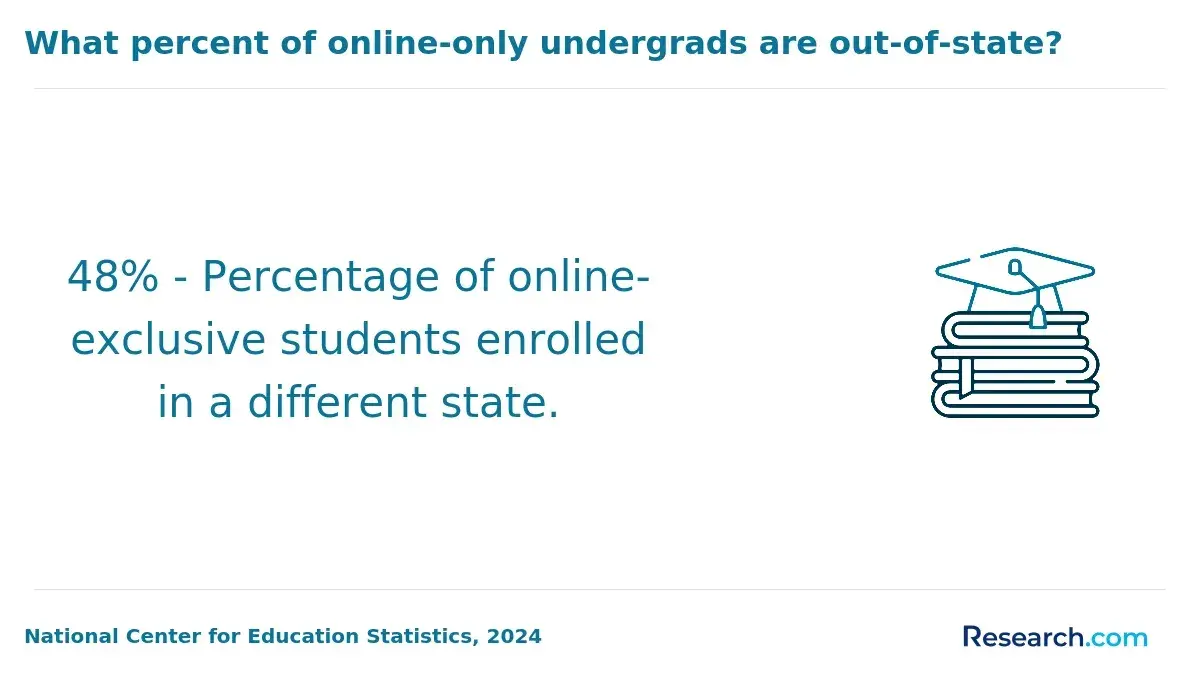
This matters because online learning is no longer a side option. NCES data released in 2024 shows that distance education remains a major part of U.S. higher education, and many working adults now compare flexible online programs with campus programs before enrolling. Students exploring advanced options such as PhD online programs should review not only admissions and dissertation requirements but also residency, research ethics, identity verification, and professional conduct rules.
The table below compares how conduct issues commonly show up in different delivery formats. Use it to spot which policies deserve extra attention based on how you plan to study.
| Program format | Common conduct issues | Policy details to review |
| Online | Proctoring violations, identity verification problems, discussion-board harassment, unauthorized AI use, sharing course files | Remote exam rules, recording policies, technology requirements, acceptable collaboration, AI-use policy |
| Hybrid | Inconsistent expectations between online and in-person work, missed required sessions, lab safety violations | Attendance rules, lab or residency requirements, participation standards, make-up policies |
| Campus-based | Residence life issues, classroom disruption, alcohol or drug violations, campus safety concerns | Housing policies, campus jurisdiction, emergency removal procedures, student organization rules |
| Clinical or field-based | Confidentiality breaches, unsafe practice, unprofessional communication, failure to follow site rules | Placement handbook, background check rules, supervisor evaluation process, dismissal criteria |
The best choice depends on your needs and risk profile. Online programs can be excellent for working adults, military-connected students, caregivers, and students far from campus, but they require strong self-management and careful attention to digital conduct rules. Campus programs may provide more face-to-face support, but students should still review housing, attendance, and safety policies before committing.
What rights, responsibilities, and protections do students have under a code of conduct?
Students have responsibilities under a conduct code, but they also have procedural rights and protections. The exact rights depend on the institution, state law, program type, and whether the school is public or private. Public colleges are generally bound by constitutional due process principles, while private colleges are usually governed by contract law, institutional policy, and applicable federal and state rules.
Most schools provide a basic framework so students can understand the allegation and respond. Before enrolling, it is worth checking whether the process is clear, balanced, and accessible.
Common student protections may include:
- Notice of allegations: the school should explain what rule was allegedly violated and describe the conduct at issue.
- Opportunity to respond: the student should have a chance to share information, present evidence, or explain context.
- Access to policy information: the school should identify applicable rules, procedures, possible sanctions, and deadlines.
- Impartial decision-making: the people deciding the case should not have conflicts of interest that undermine fairness.
- Appeal or review rights: many schools allow appeals based on procedural error, new evidence, excessive sanction, or bias.
- Supportive measures: schools may provide academic, safety, housing, or scheduling adjustments while a matter is pending.
Student responsibilities usually include reading the code, checking course-specific rules, responding to official notices, preserving relevant records, and meeting deadlines. Ignoring an email from student conduct, academic integrity, or a program director can make the situation worse, even if the underlying issue is minor.
A major red flag is a school that does not clearly explain appeal timelines or evidence standards. If you cannot tell how a decision is made, who makes it, or how to challenge it, ask for clarification before you enroll or before you respond to a complaint.
How do colleges enforce the student code of conduct and handle violations?
Colleges usually enforce conduct rules through a staged process. Minor issues may be handled through warnings, educational conversations, grade penalties, or informal resolution. More serious issues may involve a formal investigation, hearing, sanctions, and an appeal.
Students should understand the process before there is a problem. The steps below describe a typical conduct case, but actual procedures vary by school and by the type of allegation.
- Report or referral: a faculty member, staff member, student, proctoring vendor, campus police office, or placement supervisor reports a possible violation.
- Initial review: the conduct office or academic integrity officer decides whether the report falls under the code and whether interim measures are needed.
- Notice to the student: the school sends the allegation, relevant policy sections, possible consequences, and response instructions.
- Information gathering: the school may review documents, exam logs, emails, video, witness statements, assignment history, or placement evaluations.
- Meeting or hearing: the student may be invited to respond, provide context, question evidence under school rules, or accept responsibility.
- Decision and sanction: the school decides whether a violation occurred and assigns outcomes such as warning, probation, restitution, grade penalty, suspension, dismissal, or required training.
- Appeal: the student may be able to challenge the decision by the stated deadline if the appeal grounds are met.
The table below explains common sanctions. This can help students understand the difference between a correctable violation and one that may threaten enrollment or professional progress.
| Sanction | What it usually means | Potential student impact |
| Warning | Formal notice that behavior violated or approached a violation | Usually low immediate impact, but it may count if future issues occur |
| Educational requirement | Training, reflection paper, workshop, or academic integrity module | Can resolve lower-level issues if completed on time |
| Probation | Student remains enrolled but is under conduct monitoring | Future violations may lead to suspension or dismissal |
| Grade penalty | Reduced assignment grade, failed exam, or failed course | May affect GPA, financial aid progress, prerequisites, or graduation timeline |
| Suspension | Temporary separation from the institution | Can delay graduation and affect housing, aid, visas, or program sequencing |
| Dismissal or expulsion | Permanent separation from the school or program | May affect transfer options, licensure disclosures, and future admissions |
Common mistakes include missing response deadlines, deleting messages, discussing the case publicly, assuming intent is required for every violation, or responding emotionally before reading the policy. A better approach is to gather documents, write a timeline, identify the exact policy language, and ask what support resources are available.
What is considered academic misconduct under most student codes of conduct?
Academic misconduct is conduct that undermines the honesty, authorship, reliability, or fairness of academic work. It is one of the most common and consequential areas of student discipline because it can affect grades, program standing, scholarships, transfer credit, and graduate or professional school applications.
Academic integrity rules are especially important as students combine degree programs, short credentials, and career-focused training. If you are taking online courses with certificates while enrolled in college, do not assume the same collaboration, exam, or AI rules apply across providers.
Most codes identify several types of academic misconduct. The categories below are worth reviewing before your first assignment or exam.
- Plagiarism: using another person's words, structure, ideas, code, images, or analysis without proper acknowledgment.
- Cheating: using unauthorized notes, devices, websites, apps, people, or exam materials.
- Unauthorized collaboration: working with classmates, tutors, or online communities when the instructor required independent work.
- Fabrication: inventing data, sources, clinical hours, lab results, attendance records, or field observations.
- Contract cheating: submitting work completed by another person or paid service.
- Improper AI use: using generative AI beyond what the instructor or program permits, especially when submitting the output as original work.
- Research misconduct: falsification, fabrication, plagiarism, or unethical treatment of human subjects in research settings.
The hardest cases often involve unclear expectations. For example, a student may think a writing tool is allowed because it improves grammar, while an instructor may see the same tool as unauthorized content generation. To avoid this, ask instructors to define permitted uses in writing, especially for AI, group study, tutoring, code libraries, citation tools, and exam preparation platforms.
A practical rule is to keep evidence of your process: notes, drafts, version history, research logs, lab records, and correspondence. These materials can help show how you completed the work if a question arises.
How can a student code of conduct affect program dismissal, graduation, and licensure?
A conduct issue can affect more than one course. In some programs, it can delay graduation, block a clinical or internship placement, trigger program dismissal, or create a disclosure obligation for licensing boards. The risk is highest in fields where students work with patients, clients, minors, financial records, confidential data, public safety responsibilities, or regulated professional standards.
This is why conduct policies should be part of your enrollment decision, not something you review only after a problem occurs. Students weighing degrees against shorter credentials or certifications that pay well should compare not only completion time and career payoff but also character, background check, ethics, and disclosure requirements.
The table below shows common points where conduct history can affect academic or career progression. It does not replace school or licensing-board guidance, but it highlights questions to ask early.
| Decision point | How conduct may matter | What to verify |
| Program continuation | Some departments can dismiss students for professional misconduct even if the university does not expel them | Department handbook, progression policy, remediation options |
| Clinical or field placement | Sites may reject students with safety, background, confidentiality, or professionalism concerns | Placement eligibility, background checks, drug screening, site-specific rules |
| Graduation | Unresolved conduct holds may delay degree posting or participation in commencement | Graduation clearance policy, pending-case rules, conduct holds |
| Licensure | Boards may ask about discipline, criminal history, substance issues, or professional misconduct | State licensing board questions, reporting duties, character and fitness standards |
| Transfer or graduate admission | Applications may ask about suspension, dismissal, or academic integrity violations | Transcript notations, disciplinary record release policies, application disclosures |
One important limitation: conduct consequences are not uniform. A first-time plagiarism violation in a general education course may lead to a grade penalty and training, while a confidentiality breach in a nursing, counseling, education, or social work placement may be treated as a serious professionalism issue.
Before enrolling in a regulated career pathway, ask the program whether any conduct violation must be reported to a licensing board, whether dismissal from a placement can prevent graduation, and whether there is a remediation process before dismissal.
How do honor codes and conduct codes differ across U.S. colleges and universities?
Honor codes and student conduct codes overlap, but they are not always the same. A student conduct code is usually a broad institutional policy covering academic and nonacademic behavior. An honor code is often a narrower academic integrity system built around student responsibility, trust, and sometimes student-led adjudication.
Colleges also differ by mission, student population, governance, and program mix. For example, service members and veterans comparing military friendly online colleges may want to review deployment accommodations, military leave policies, respectful conduct rules, and how the school handles absences or documentation connected to service obligations.
The table below compares common models. The labels are general, so always read the actual policy rather than relying on a school's description of itself.
| Model | Typical features | Best fit for students who value |
| Traditional conduct code | Centralized student conduct office, defined sanctions, broad behavioral jurisdiction | Clear administrative process and predictable procedures |
| Honor code system | Strong emphasis on academic honesty, student pledges, peer accountability, and community trust | High-trust academic culture and clear integrity expectations |
| Professional school code | Fitness-to-practice standards, ethics rules, clinical expectations, remediation or dismissal procedures | Career preparation in regulated or client-facing fields |
| Religious or mission-based code | Behavioral expectations tied to institutional values, community standards, or lifestyle commitments | A campus culture aligned with personal beliefs and expectations |
| Online program conduct code | Digital communication rules, remote proctoring, identity verification, technology use, virtual professionalism | Flexible study with clear online participation and integrity rules |
The biggest mistake is assuming "all colleges have basically the same rules." They do not. Some schools emphasize education and restoration; others use more formal disciplinary systems. Some allow advisors or attorneys in hearings; others limit participation. Some define off-campus jurisdiction narrowly; others apply the code broadly when school interests are affected.
When comparing schools, look for clarity, proportional sanctions, transparent appeals, and policies that match your learning format and career goal. A strict code is not automatically bad if it is clear and fairly administered. A vague code, however, creates uncertainty.
What should prospective students review in a school's code of conduct before enrolling?
Prospective students should review the student code of conduct before paying deposits, registering for classes, accepting housing, or entering a professional program. This is especially important if you have prior academic discipline, criminal history, military obligations, disability accommodations, employment constraints, or a career goal involving licensure.
Students with criminal records should pay particular attention to admission disclosures, placement eligibility, and professional licensing rules. If you are comparing online colleges that accept felons, the conduct code is only one document to review; you should also check background check policies, internship requirements, and state licensing restrictions.
Use the following checklist to evaluate a conduct code before enrollment. It is designed to help you avoid surprises that could affect cost, time to completion, or eligibility for your intended career.
- Definitions: check how the school defines plagiarism, cheating, harassment, disruption, retaliation, professional misconduct, and misuse of technology.
- AI policy: find out whether AI use is addressed at the institution, program, and course level.
- Jurisdiction: confirm whether the code applies off campus, online, during internships, while studying abroad, or during school breaks.
- Professional standards: review department handbooks for clinical, field, lab, research, or student teaching requirements.
- Sanctions: identify which violations can lead to warning, probation, grade penalties, suspension, dismissal, or transcript notation.
- Appeals: note deadlines, permitted grounds for appeal, documentation requirements, and who reviews appeals.
- Records: ask how long disciplinary records are kept and when they may be disclosed to transfer schools, employers, or licensing boards.
- Support options: look for ombuds services, student advocacy offices, disability services, legal clinics, counseling, and academic support.
Cost should also shape your review. College Board's 2024 published-price data shows that a single year of attendance can represent a major financial commitment, so students should understand whether a conduct hold, failed course, or suspension could affect financial aid, housing, employer tuition reimbursement, veterans benefits, or satisfactory academic progress.
If a policy is hard to find, outdated, or inconsistent across the catalog, handbook, and program manual, ask admissions or the student conduct office for the current controlling version in writing.
How can students get support or appeal decisions related to the code of conduct?
If you receive a conduct notice, take it seriously and act quickly. Even a low-level case can become more difficult if you miss a deadline, fail to respond, or submit an incomplete explanation. Read the notice, identify the exact rule involved, and look up the school's procedure before replying.
Students usually have several support options, though availability varies by institution. The goal is not to "win" through volume, but to understand the process, provide accurate information, and preserve your rights.
- Student conduct office: can explain procedures, deadlines, hearing formats, possible sanctions, and appeal steps.
- Academic advisor or program director: can clarify degree, progression, placement, or graduation consequences.
- Student advocacy or ombuds office: may help students understand policies and communicate with offices.
- Disability services: can address accommodation-related issues, though accommodations usually do not erase conduct expectations.
- Counseling or wellness services: can support students dealing with stress, conflict, substance concerns, or crisis situations.
- Legal counsel: may be appropriate for serious cases involving suspension, dismissal, criminal allegations, licensure, immigration, or major financial impact.
If you plan to appeal, focus on the school's permitted appeal grounds. Most appeals are not a chance to reargue everything. They typically require a specific basis, such as procedural error, new evidence unavailable earlier, bias, conflict of interest, or a sanction that is disproportionate to the violation.
A practical appeal process usually looks like this:
- Read the decision letter and note the appeal deadline immediately.
- Identify the allowed appeal grounds in the conduct policy.
- Collect documents that directly support those grounds, such as emails, syllabi, screenshots, medical documentation, proctoring records, or witness names.
- Write a clear timeline separating facts from interpretation.
- Explain the specific outcome you are requesting, such as a new hearing, reduced sanction, corrected record, or reconsideration based on new evidence.
- Submit through the required channel and keep proof of submission.
Students should avoid emotional accusations, unsupported claims, and irrelevant character statements. A concise, evidence-based appeal is usually stronger than a long narrative that does not address the appeal standard.
Other Things You Should Know About
It can be. Courts often treat college policies as part of the relationship between the student and the institution, especially at private colleges. Public colleges also must follow applicable constitutional and statutory requirements. The exact legal effect depends on the school, policy language, and state law.
Yes, if the code gives the school jurisdiction and the conduct affects the campus community, school operations, another student's access to education, safety, or a required program activity. Off-campus jurisdiction varies, so students should read the policy carefully.
No. Many violations do not appear on transcripts, especially minor or resolved cases. However, suspension, dismissal, or certain academic integrity findings may result in transcript notations at some schools. Students should ask how records are kept and disclosed.
Read the notice carefully, check the deadline, locate the exact policy, and avoid deleting records. Then contact the conduct office or a student support resource to understand the process before submitting a response.
References
- Observations from a (Pretend) Prospective Student: The Do’s and Don’ts of Enrollment Communication - UPCEA https://upcea.edu/observations-from-a-pretend-prospective-student-the-dos-and-donts-of-enrollment-communication/
- Student Conduct & Education Glossary | AdvocatED https://www.getadvocated.com/glossary
- Code of conduct for students https://www.international-school.edu.rs/code-of-conduct-for-students-2/
- Model Code of Student Conduct https://www.fire.org/research-learn/model-code-student-conduct
- How Student Conduct Can Affect Your Future Career - Landon White Law https://landonwhitelaw.com/2026/03/how-student-misconduct-can-affect-your-future-career/
- Code Of Conduct https://www.christhillschools.com/about
- Student Codes of Conduct - FindLaw https://www.findlaw.com/education/student-conduct-and-discipline/codes-of-conduct.html
- Code of Conduct: Student Rights and Responsibilities - Fonda-Fultonville Central Schools https://www.fondafultonvilleschools.org/code-of-conduct/student-rights-and-responsibilities/
- Student Code of Conduct Definition | Law Insider https://www.lawinsider.com/dictionary/student-code-of-conduct
- Office of Student Conduct and Community Standards https://www.utoledo.edu/studentaffairs/conduct/processinformation