2027 What Is Dismissal From College?

Co-Founder and Chief Data Scientist
Academic dismissal can feel like the end of college, but it is usually a serious academic reset rather than a permanent ban. The issue matters because the National Student Clearinghouse Research Center reported in 2024 that 36.8 million U.S. adults under 65 had some college credit but no credential.
This guide is for students, parents, and returning learners who need to understand dismissal, appeals, financial aid consequences, transfer options, and realistic next steps so they can protect credits, money, and future enrollment choices.
Key Things You Should Know
- Academic dismissal usually means a student failed to meet a college's minimum academic progress standard, often after warning or probation; it is different from disciplinary expulsion.
- Many colleges use a cumulative GPA near 2.0 as the minimum for good academic standing, but exact dismissal rules vary by institution, credits attempted, major, and academic level.
- Dismissal can affect federal aid because schools must enforce satisfactory academic progress; for 2024-25, the maximum Federal Pell Grant is $7,395, so losing eligibility can materially change a student's ability to continue.
What does academic dismissal from college mean, and how is it different from expulsion?
Academic dismissal from college means the school has ended a student's enrollment because the student did not meet required academic standards. The most common trigger is poor academic performance over time, such as a low cumulative GPA, failing too many credits, or not completing enough attempted courses. It is usually handled through the registrar, academic affairs office, or academic standards committee.
Expulsion is different. Expulsion is typically a disciplinary action for serious misconduct, such as violence, academic dishonesty, major policy violations, or criminal behavior. Academic dismissal is about academic progress; expulsion is about conduct. That distinction matters because a dismissed student may have a clearer path to appeal, readmission, or transfer than a student expelled for misconduct.
The table below compares the two outcomes so students can understand what kind of record, appeal route, and future enrollment challenge they may be facing.
| Issue | Academic dismissal | Expulsion |
| Main reason | Not meeting academic standards such as GPA, course completion, or program progress | Serious violation of conduct, safety, integrity, or institutional policy |
| Typical process | Academic warning, probation, review, then dismissal decision | Student conduct investigation, hearing, sanction, and appeal rights |
| Transcript impact | Courses, grades, and academic standing may appear depending on school policy | Disciplinary notation may appear if the institution records it that way |
| Return possibility | Often possible after a waiting period, successful appeal, or evidence of improvement | May be more restricted and depends heavily on the conduct case |
| Best next step | Review academic standing policy and speak with an advisor immediately | Review conduct appeal policy and consider legal or student advocacy support if appropriate |
A key limitation is that colleges use different terms. Some institutions use "academic suspension" for a temporary separation and "academic dismissal" for a more serious or final separation, while others use the words differently. Students should read the exact notice and the catalog policy before assuming what the decision means.
Why are students most commonly dismissed from college, and what GPA thresholds apply?
Students are most commonly dismissed because they remain below the school's minimum academic standard after one or more chances to improve. A low cumulative GPA is the best-known reason, but dismissal can also happen when a student repeatedly withdraws, fails required courses in a selective major, exceeds the maximum time allowed for a program, or earns too few credits compared with attempted credits.
For many undergraduate programs, a 2.0 cumulative GPA is the practical benchmark for good academic standing because it is the minimum "C" average many colleges require for graduation. However, some majors, scholarships, athletic eligibility rules, and graduate programs require higher standards. Nursing, education, engineering, business, and teacher-preparation programs may also require minimum grades in specific prerequisite or professional courses.
The table below summarizes common academic standards. These are not universal rules; they are typical patterns students should compare with their own catalog and dismissal letter.
| Academic measure | Common threshold or rule | Why it matters |
| Cumulative GPA | Often around 2.0 for undergraduate good standing | A GPA below the minimum may trigger warning, probation, suspension, or dismissal |
| Term GPA | May be reviewed each semester or quarter | A very low term GPA can accelerate academic review even if the cumulative GPA is higher |
| Completion rate | Often evaluated as credits completed compared with credits attempted | Repeated withdrawals, incompletes, or failures can show insufficient progress |
| Major-specific grades | May require minimum grades such as C or higher in required courses | A student can be removed from a major even if not dismissed from the college |
| Maximum time frame | Programs may limit how long students can receive aid or remain enrolled without completing | Students with many repeated or changed courses can run into progress limits |
One common mistake is focusing only on GPA and ignoring withdrawals. A student who withdraws from several courses may avoid F grades, but the attempted credits can still count against completion-rate standards for academic standing and financial aid. Before dropping a class, students should ask how it affects both GPA and satisfactory academic progress.
What academic probation and warning policies usually precede dismissal from a U.S. college?
Most U.S. colleges do not dismiss students after one ordinary bad semester unless performance is extremely poor or the student violates a specific program rule. The usual sequence is academic warning, academic probation, continued probation or suspension risk, and then dismissal if performance does not improve. The goal is to alert students early enough to recover.
Academic warning is often the first notice that a student's GPA or progress has fallen below expectations. Probation is more serious: the student may be allowed to enroll only under conditions such as meeting an advisor, limiting credit load, repeating failed courses, attending tutoring, or earning a required term GPA.
Students who receive warning or probation notices should treat them as decision deadlines, not routine emails. The following steps can reduce the risk of moving from probation to dismissal:
- Read the academic standing notice and identify the exact GPA, credit completion, or course requirement that was not met.
- Meet with an academic advisor before registering for the next term, not after classes begin.
- Retake the highest-impact failed course first if the school's repeat policy can improve the GPA.
- Reduce work hours, course load, or extracurricular obligations if the previous schedule was unrealistic.
- Use tutoring, writing centers, disability accommodations, counseling, or success coaching before midterm grades arrive.
- Confirm how withdrawals, incompletes, and repeated courses affect both academic standing and financial aid.
The most important trend is that colleges increasingly use early-alert systems and learning analytics to flag missed assignments, poor attendance, or low exam scores before final grades post. These tools can help, but they do not replace student follow-through. If a school sends an early alert, students should respond quickly because the alert may become part of the record showing whether the student used available support.
How does dismissal affect your transcript, financial aid, and future enrollment options?
Academic dismissal can affect three areas at once: the academic record, financial aid eligibility, and future enrollment options. The impact is not the same at every college, so students should request written clarification from the registrar, financial aid office, and academic advising office.
Federal aid is especially important. Colleges that participate in federal student aid must apply satisfactory academic progress standards, usually involving GPA, pace of completion, and maximum time frame. If dismissal is tied to failure to meet those standards, the student may also lose aid eligibility until an appeal is approved or the student regains eligibility under the school's rules.
The table below shows the most common effects and what they usually mean in practice. It is designed to help students prioritize which office to contact first.
| Area affected | Possible consequence | What the student should verify |
| Transcript | Completed courses and grades remain on the record; academic standing notation may vary | Whether the dismissal itself appears on official or unofficial transcripts |
| Federal aid | Aid may be suspended if satisfactory academic progress was not met | Whether a SAP appeal is separate from an academic dismissal appeal |
| Scholarships | Institutional or private awards may be canceled for GPA or enrollment reasons | Whether reinstatement is possible after readmission or improved grades elsewhere |
| Student loans | Enrollment changes may start grace-period or repayment timelines | Loan servicer status and whether deferment applies if enrolling elsewhere |
| Transfer admission | Other colleges may require transcripts and ask about academic standing | Whether the receiving institution admits dismissed students immediately or after conditions are met |
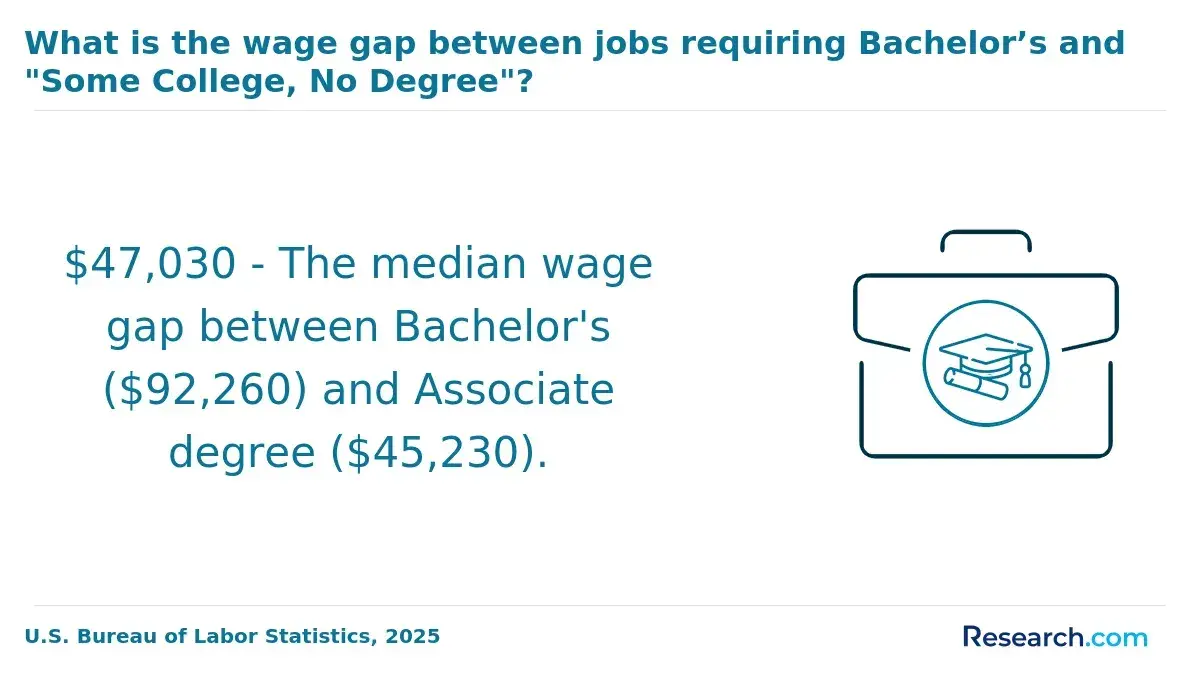
The economic stakes can be significant. The U.S. Bureau of Labor Statistics reported in 2024 that workers age 25 and older with a bachelor's degree had median weekly earnings of $1,493 in 2023, compared with $992 for those with some college but no degree. That does not mean every student should continue in the same program, but it does show why preserving a path to completion can matter; students comparing long-term outcomes can also review bachelor's degrees job outlook data by field.
A common red flag is assuming dismissal automatically erases debt or tuition obligations. It does not. Students may still owe balances for completed terms, may lose future aid, and may need transcripts released before transferring. The practical move is to settle account issues early and ask whether the school offers a payment plan, balance hold exception, or transcript release option under current state rules.
Can you appeal an academic dismissal, and what makes an appeal successful?
Many colleges allow students to appeal academic dismissal. An appeal is a formal request asking the institution to reverse or delay the dismissal because the student had documented circumstances and now has a realistic plan to succeed. Appeals are not won by saying "I will try harder." They are more persuasive when they connect the problem, evidence, and solution.
Successful appeals often involve circumstances such as illness, family crisis, housing insecurity, military obligations, disability-related barriers, major work schedule disruption, or documented advising or administrative errors. The student should be honest and specific without oversharing unnecessary personal details.
A strong appeal usually includes the following elements. Use the school's exact form and deadline first, then build the evidence around these points:
- State the reason for poor performance clearly and take responsibility for the academic result.
- Attach documentation, such as medical records, counselor letters, employer schedule changes, death notices, or accommodation records when relevant.
- Explain what has changed since the poor semester, not just what went wrong.
- Propose a realistic academic plan, including fewer credits, repeated courses, tutoring, advising meetings, or a changed major if needed.
- Address financial aid separately if the school requires a separate satisfactory academic progress appeal.
- Submit before the deadline and keep copies of every document, email, and decision notice.
The best appeals are practical rather than emotional. A committee wants evidence that the student can meet standards in the next term. If the appeal is denied, students should ask whether there is a second-level appeal, a required waiting period, or a readmission pathway after completing credits elsewhere.
How long does academic dismissal typically last, and can you return to the same college?
The length of academic dismissal varies widely. Some colleges require students to sit out one semester; others require one full academic year; some treat dismissal as indefinite until the student applies for readmission and proves readiness. Graduate and professional programs may have stricter or less flexible rules than general undergraduate colleges.
Returning to the same college is often possible, but it usually requires more than waiting. The school may ask for a readmission application, a personal statement, transcripts from any courses completed elsewhere, a minimum GPA earned during the time away, or proof that the original barrier has been addressed. Students should not assume that sitting out automatically restores enrollment or financial aid.
If cost contributed to the original academic problem, the time away should be used to redesign the enrollment plan. The College Board's 2024 pricing data lists average published 2024-25 tuition and fees at $4,050 for public two-year in-district colleges and $11,610 for public four-year in-state colleges. That gap can make a lower-cost restart more realistic, and students comparing FAFSA-friendly options may want to research the cheapest online college choices before returning.
Students planning to return should ask the original college whether credits taken elsewhere will transfer back, whether grade forgiveness or academic renewal is available, and whether the student must re-enter under a new catalog year. A new catalog year can change degree requirements, so this detail can affect both timeline and cost.
What steps can dismissed students take to continue their education at another institution?
Dismissed students can often continue their education at another institution, but they need to be strategic. The goal is not simply to enroll somewhere quickly; it is to choose a path that repairs the academic record, protects transferable credits, and fits the student's current life constraints.
The main options are community college, another four-year college, an online program, nondegree coursework, or a temporary stop-out with a structured return plan. The best choice depends on GPA, finances, intended major, transfer credit, and whether the student needs federal aid immediately.
The table below compares common continuation routes. It is meant to clarify trade-offs, not to suggest that one route is best for every dismissed student.
| Option | Best fit | Main trade-off |
| Community college | Students who need lower tuition, smaller classes, or a GPA rebuild | Not all credits may apply to a future bachelor's degree without careful transfer planning |
| Different four-year college | Students with a clear major fit and enough transferable credits | Admission may be harder if the dismissal is recent or GPA is very low |
| Online college | Working adults, caregivers, military students, or those needing flexible scheduling | Requires strong time management and careful accreditation review |
| Nondegree coursework | Students who need to demonstrate readiness before formal readmission | May not qualify for federal aid and may not count toward a degree |
| Structured stop-out | Students whose health, housing, work, or family issues are not yet stable | Delaying too long can make reentry harder without a written plan |
Before enrolling elsewhere, students should complete a short sequence of practical checks. These steps help prevent wasted credits and unexpected aid problems:
- Order unofficial and official transcripts so every receiving school can evaluate the full record.
- Ask whether the new institution admits students who are not in good standing at a prior college.
- Confirm regional or national accreditation and whether the credits are accepted by the target transfer school.
- Request a degree audit before committing if the school offers one for transfer applicants.
- Check whether federal aid is available immediately or whether a SAP appeal is required at the new institution.
- Choose a first-term schedule designed for recovery, not maximum speed.
Some students need a faster route after stabilizing academically. In that case, an accelerated degree program can be useful, but only after the student has proven they can handle compressed coursework. Speed is not a solution if the original issue was overload, weak study systems, or limited time.
How do online colleges and community colleges handle dismissal and readmission differently?
Online colleges and community colleges often serve more adult, transfer, working, and returning students, so their dismissal and readmission processes may feel more flexible than those at residential four-year institutions. Flexibility does not mean lower academic standards. These schools still monitor GPA, course completion, and federal aid progress.
Community colleges may offer open-access admission, placement support, developmental coursework, academic renewal, and smaller restart schedules. This can help a dismissed student rebuild confidence and complete general education credits at a lower cost. The risk is poor transfer planning: a student may complete courses that raise GPA locally but do not apply efficiently to the intended bachelor's program.
Online colleges may allow multiple start dates, asynchronous courses, part-time pacing, and adult-focused advising. Those features can help students who were dismissed because campus attendance, transportation, work schedules, or caregiving responsibilities made traditional enrollment difficult. Students comparing top online colleges should still verify accreditation, transfer rules, student support availability, and whether the program fits their learning habits.
The most important difference is pacing. Online courses can be convenient, but they can also hide problems until deadlines pile up. A dismissed student should avoid enrolling in a full online load immediately unless they already have a reliable weekly study schedule, quiet work environment, and a plan for contacting instructors early.
What support services and academic strategies help students avoid dismissal or succeed after it?
The support services that help students avoid dismissal are often the same services that help them succeed after dismissal. The difference is timing. Support works best when used before midterms, before financial aid deadlines, and before the student stops attending class.
Students should build an academic recovery plan around the cause of the problem. A student who failed because of unclear writing expectations needs different support from a student who missed class because of depression, transportation, or a night-shift job. Generic motivation is rarely enough.
These services and strategies are especially useful when they are matched to the actual barrier:
- Academic advising can help students choose repeat courses, reduce course load, change majors, and understand dismissal or readmission rules.
- Tutoring and writing centers can address course-specific gaps before low grades become final.
- Disability services can evaluate accommodations for documented conditions, but students usually must request accommodations before they apply.
- Counseling and health services can help when stress, grief, anxiety, depression, or medical issues are affecting attendance and performance.
- Financial aid counseling can explain SAP appeals, loan status, Pell Grant eligibility, and the cost of retaking courses.
- Career services can help students decide whether the current major still matches their goals before they invest more time and money.
One current trend is the growth of flexible and mastery-based formats for returning students. A competency-based degree may help disciplined learners progress by demonstrating mastery rather than sitting through a fixed weekly schedule. It is not ideal for students who need frequent live instruction, external structure, or a slower academic rebuild.
Common mistakes include repeating the same full-time schedule that led to dismissal, avoiding professors out of embarrassment, taking only difficult major courses during a comeback term, and ignoring mental health or disability support until the end of the semester. The safer approach is to make the first term back intentionally manageable and measurable.
How can prospective students assess academic policies to reduce their risk of dismissal?
Prospective students can reduce dismissal risk by checking academic policies before enrolling, especially if they are first-generation students, working adults, transfer students, student-athletes, or learners returning after a long break. Policies are not just fine print; they determine what happens when life disrupts school.
College affordability is also part of academic risk. When students work excessive hours to cover tuition, housing, or transportation, academic performance can suffer. The College Board's 2024 data shows average published 2024-25 tuition and fees of $30,780 for public four-year out-of-state students and $43,350 for private nonprofit four-year colleges, so the total cost plan should be realistic before enrollment begins.
The table below identifies policy areas students should compare during college selection. These factors help reveal whether a school is supportive, transparent, and realistic for the student's circumstances.
| Policy area | Why it matters | Risk sign |
| Academic standing rules | Shows the GPA and completion standards required to stay enrolled | Rules are hard to find or use vague terms without thresholds |
| SAP policy | Determines whether poor grades or withdrawals can affect federal aid | The aid office cannot explain how GPA, pace, and maximum time frame are calculated |
| Repeat-course policy | Controls whether retaking a course can improve GPA or aid eligibility | Repeated courses add cost but do not improve the academic calculation much |
| Withdrawal deadlines | Helps students avoid unnecessary failing grades while understanding completion-rate effects | Students are not told how withdrawals affect aid and progress |
| Transfer-credit policy | Determines whether prior or future credits will count toward the degree | Credit evaluations are delayed until after enrollment deposits |
| Readmission policy | Explains whether students can return after academic difficulty | No clear path exists for students who improve elsewhere |
Students should also consider format fit. Online programs can help working adults, while campus programs may provide more structure and face-to-face accountability. Part-time study can reduce overload, while full-time study may preserve aid or housing eligibility. The best choice is the one the student can sustain academically and financially, not simply the fastest or most prestigious option.
Other Things You Should Know About
Not always. Many colleges allow students to appeal, sit out for a required period, complete coursework elsewhere, or apply for readmission. The exact rule depends on the institution and the dismissal notice.
Courses and grades remain on the transcript. Whether the dismissal status itself appears depends on the school's transcript policy, so students should ask the registrar what official transcripts will show.
Possibly, but dismissal can affect satisfactory academic progress. A student may need an approved SAP appeal, successful coursework without aid, or readmission under specific conditions before federal aid is restored.
Some colleges consider prior academic standing in transfer admission. Others may admit dismissed students conditionally, especially if they have a recovery plan or complete successful credits after dismissal.
References
- How to Get Back Into College After Being Academically Dismissed https://www.wikihow.com/Get-Back-Into-College-After-Being-Academically-Dismissed
- How to Appeal an Academic Dismissal: Step-by-Step Guide https://www.getadvocated.com/blog/how-to-appeal-academic-dismissal
- What’s the Difference Between Expulsion and Dismissal? Understanding Education Sanctions | JD Supra https://www.jdsupra.com/legalnews/what-s-the-difference-between-expulsion-9718351/
- 2026-2027 Academic Catalog https://catalog.vcccd.edu/ventura/academic-policies/probation-dismissal-readmission/
- Understanding the Difference Between Expulsion and Dismissal - Nesenoff & Miltenberg, LLP https://www.duffylawct.com/understanding-the-difference-between-expulsion-and-dismissal/
- How to Support Students: 20 Effective Tips — Talkspace https://business.talkspace.com/articles/how-to-support-students
- 5 common techniques for helping struggling students https://www.understood.org/en/articles/5-common-techniques-for-helping-struggling-students
- Navigating Academic Dismissal: Steps to Reclaim Your Academic Journey - The Scholarship System https://thescholarshipsystem.com/blog-for-students-families/navigating-academic-dismissal-steps-to-reclaim-your-academic-journey/
- I Failed Out of College. Can I Go Back? (And Which Online Schools Accept You) https://www.collegetransitions.com/blog/failed-out-of-college-can-i-go-back/
- 2025-2026 Academic Catalog https://curriculum.pasadena.edu/student-support-learning-services/probation-dismissal-readmission/