2027 Why College Terminology Matters More Than Students Expect

Co-Founder and Chief Data Scientist
College decisions often go wrong because students misunderstand the language schools use. A term like "accredited, " "full-time, " "net price, " or "certificate" can change your cost, timeline, transfer options, and career eligibility.
College Board's 2024 pricing report placed average published in-state tuition and fees at public four-year colleges at $11,610 for 2024-25, before living costs and aid. This guide is for prospective students, parents, career changers, and online learners who want to compare programs confidently and avoid expensive surprises.
Key Things You Should Know
- College Board's 2024 pricing report placed average published in-state tuition and fees at $11,610 at public four-year colleges for 2024-25, before housing, books, fees, and aid.
- BLS 2024 data reported median usual weekly earnings of $1,543 for bachelor's-degree holders and $1,099 for associate-degree holders, but major, licensure, employer, and location shape outcomes.
- Institutional accreditation affects federal aid and transferability, while programmatic accreditation can determine eligibility for fields such as nursing, teaching, counseling, and allied health.
How does college terminology shape students' understanding of programs, costs, and expectations?
College terminology shapes how students understand three major things: what a program actually includes, what it will cost, and what the school expects from them. These terms are not just academic labels. They affect whether credits transfer, whether financial aid applies, whether an online program fits your schedule, and whether the credential supports your career goal.
One reason terminology matters is that colleges often use similar words differently. "Tuition" may exclude mandatory fees. "Online" may still require live class meetings. "Accelerated" may shorten the calendar but increase weekly workload. "Career-ready" may not mean "eligible for licensure."
The table below summarizes common terms that can change a student's decision. Use it to spot which words require follow-up before you apply, enroll, or accept financial aid.
| Term | What it usually means | Why it matters |
| Tuition | The instructional charge for courses, usually by credit, term, or year | It may not include fees, books, equipment, housing, commuting, or technology costs |
| Net price | Estimated cost after grants and scholarships | It is usually more useful than sticker price when comparing affordability |
| Credit hour | A unit used to measure course workload and degree progress | It determines tuition, full-time status, transfer evaluation, and graduation pace |
| Accreditation | Quality review by a recognized accrediting agency | It affects federal aid eligibility, transfer options, employer recognition, and licensure pathways |
| Programmatic accreditation | Specialized accreditation for a field or professional program | It can be required for careers in nursing, counseling, education, engineering, and allied health |
| Modality | How classes are delivered, such as online, hybrid, or on campus | It affects schedule flexibility, commuting, technology needs, and interaction style |
Students should treat unfamiliar terms as decision points rather than fine print. If a word affects cost, time, transfer credit, accreditation, or licensure, ask the school to explain it in writing before committing.
Which college terms most affect choosing between online and campus-based programs?
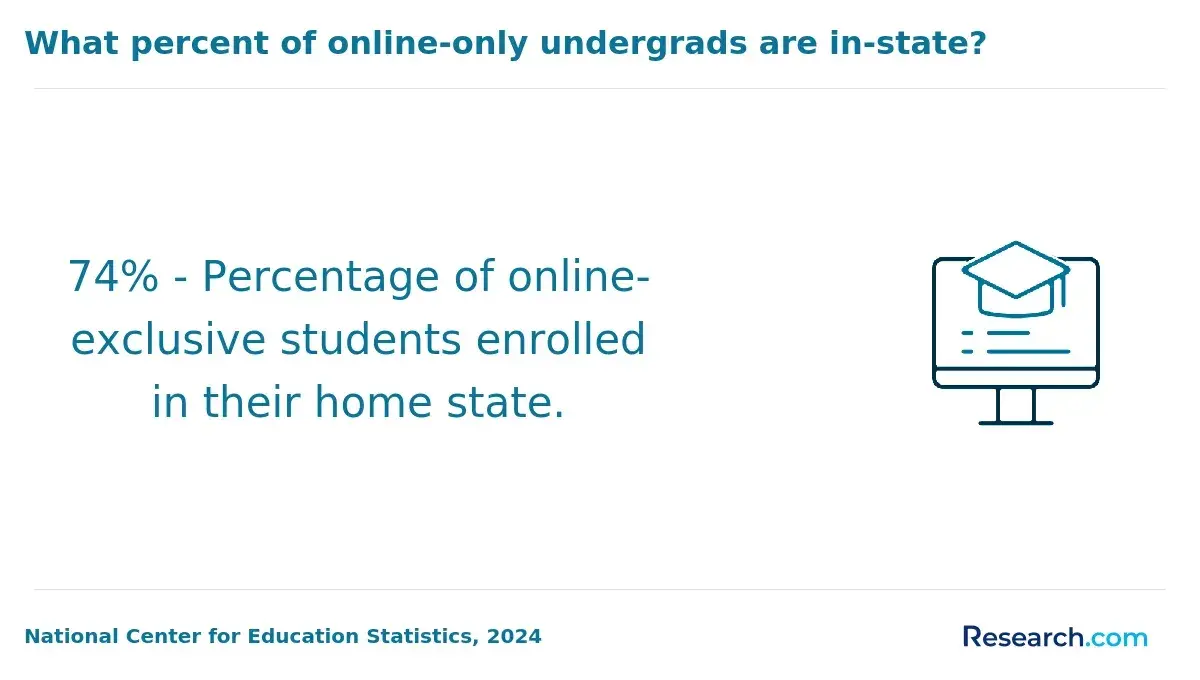
Online and campus-based programs can lead to the same degree name, but the learning experience can be very different. The most important terminology usually describes delivery format, attendance expectations, testing rules, and in-person requirements.
Students comparing online options should pay close attention to whether a program is asynchronous, synchronous, hybrid, low-residency, or campus-based. For learners planning location-flexible careers, it can also help to compare program language with career goals, such as exploring online degrees for remote jobs when remote work is a priority.
The table below explains the terms that most often separate truly flexible programs from programs that simply use online tools.
| Term | What students should expect | Best fit |
| Asynchronous online | Coursework is completed on your schedule within deadlines | Working adults, caregivers, military students, and students in different time zones |
| Synchronous online | Classes meet live at scheduled times through video or virtual platforms | Students who want structure but do not want to commute |
| Hybrid | Some instruction is online and some is in person | Students near campus who want flexibility without losing face-to-face support |
| Low-residency | Mostly online with short required campus visits | Graduate, creative, counseling, or professional programs with intensive sessions |
| Online with clinicals | Academic courses are online, but fieldwork happens in person | Nursing, teaching, social work, counseling, and allied health students |
Before choosing between online and campus formats, ask questions that reveal the real schedule and support structure. These questions are especially important if you work full time or live far from campus.
- Are any live class meetings required, and what time zone does the school use?
- Are exams proctored, and can proctoring be completed remotely?
- Does the program require campus visits, labs, clinicals, internships, or student teaching?
- Are online students eligible for the same advising, tutoring, library access, career services, and disability accommodations?
- Will the transcript or diploma identify the program as online, or is the credential the same as the campus version?
A common mistake is assuming "online" means self-paced. Many online courses have weekly deadlines, group projects, proctored exams, and participation requirements. The better question is not whether a program is online, but how much control you have over time, place, pace, and in-person obligations.
How can learning key higher education terminology help you compare accredited schools?
Accreditation is one of the most important college terms because it signals that a school or program has been reviewed against recognized standards. It also affects practical issues such as federal financial aid, credit transfer, graduate school admission, and employer acceptance.
For most students, the baseline is institutional accreditation from an agency recognized by the U.S. Department of Education or the Council for Higher Education Accreditation. Programmatic accreditation is separate and applies to specific fields. For example, a university may be institutionally accredited, while its nursing, business, education, or counseling program may have separate specialized accreditation.
When comparing schools, students should look beyond marketing language and confirm accreditation directly. This matters even when evaluating affordable options such as online colleges with no application fee, because a low-friction application process does not replace accreditation review.
Use this process before submitting applications or paying deposits. It helps separate recognized institutions from schools that use confusing or incomplete language.
- Find the school's institutional accreditor on the school website and verify it through the U.S. Department of Education's accreditation database.
- Check whether your intended program needs programmatic accreditation for licensure, certification, or graduate admission.
- Ask whether credits are regionally transferable to public universities or common transfer partners in your state.
- Review whether the school participates in federal student aid programs if you plan to use FAFSA-based aid.
- Request written confirmation that the program meets requirements for your state if you are pursuing a regulated career.
Red flags include vague claims such as "internationally approved," "fully recognized," or "licensed to operate" without naming a recognized accreditor. State authorization, business licensing, and accreditation are not the same thing. A school can legally operate and still lack the accreditation needed for your aid, transfer, or licensure goals.
What admission and enrollment terms do prospective students need to understand first?
Admission and enrollment terminology matters because it tells you how selective a program is, when you must act, what documents you need, and when financial commitments begin. Prospective students should understand these terms before they compare acceptance letters or sign an enrollment agreement.
The table below explains the admission and enrollment terms that most often affect timing, flexibility, and risk.
| Term | Meaning | Decision impact |
| Open admission | The school admits most applicants who meet basic requirements | Common at community colleges, but specific programs may still be competitive |
| Selective admission | The program evaluates grades, prerequisites, test scores, essays, experience, or interviews | Students may need backup options and stronger preparation |
| Rolling admission | Applications are reviewed as they arrive until seats fill | Applying early can improve scheduling and aid planning |
| Priority deadline | A recommended deadline for best consideration | Missing it may reduce access to scholarships, housing, or preferred course sections |
| Matriculated student | A student formally admitted into a degree or credential program | Some aid, advising, and degree requirements apply only after matriculation |
| Enrollment deposit | A payment used to hold a place in the program | Students should ask whether it is refundable and whether it applies to tuition |
Students should also distinguish admission to the college from admission to a major or professional program. You may be accepted by a university but still need a separate application for nursing, education, engineering, business, or social work. This is especially important at schools where high-demand majors have GPA thresholds, prerequisite courses, or limited seats.
A practical way to reduce confusion is to create an application checklist for each school. Include deadlines, required documents, fees, deposit rules, financial aid dates, placement tests, transcript requirements, and any separate program applications. This makes it easier to compare offers on the same terms instead of reacting to whichever school communicates most aggressively.
How do degree, major, certificate, and credential terms differ in college planning?
Degree, major, certificate, and credential are often used as if they mean the same thing, but they serve different planning purposes. A degree is the overall academic award, a major is the focused area of study inside many degrees, a certificate is usually a shorter credential, and a credential is the broad category that includes degrees, certificates, licenses, certifications, and badges.
The distinction matters because labor market value often depends on both the credential level and the field. BLS 2024 data reported median usual weekly earnings of $1,543 for workers with a bachelor's degree and $1,099 for workers with an associate degree, but those figures are broad national medians, not promises for any specific major or graduate. Students should compare fields carefully, including resources on majors that make the most money, while also considering fit, licensing requirements, and local hiring demand.
The table below clarifies the role each credential term plays in college planning.
| Term | Typical meaning | When it may make sense |
| Associate degree | A two-year undergraduate degree, often about 60 credits | Transfer preparation, technical careers, lower-cost starting point, or entry-level roles |
| Bachelor's degree | A four-year undergraduate degree, often about 120 credits | Careers requiring broader education, graduate school preparation, or professional advancement |
| Major | The main academic field within a degree | When employers, graduate schools, or licensure boards expect specific coursework |
| Minor | A secondary academic concentration | When a student wants to add complementary skills without changing the main degree |
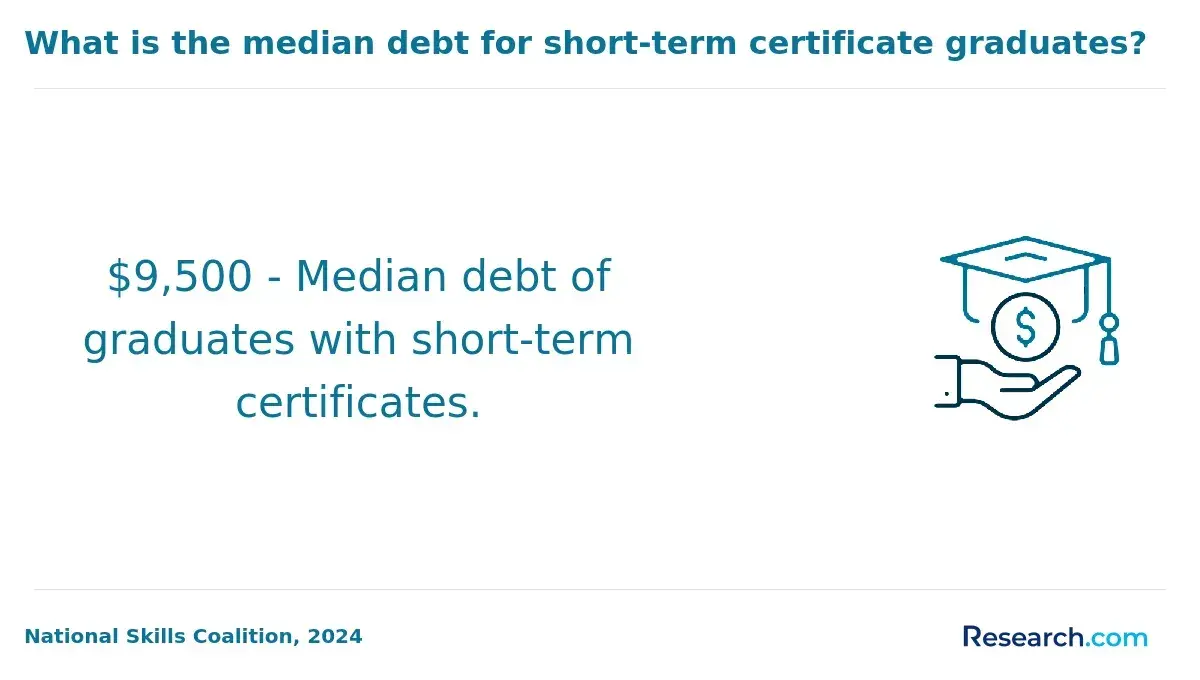
| Certificate | A shorter focused program, sometimes for academic credit and sometimes noncredit | Upskilling, career changes, technical preparation, or stackable education |
| Certification | A professional credential usually awarded by an industry or licensing body | When employers require proof of competency beyond a college transcript |
Degree-versus-certificate decisions should start with the target job, not the shortest path. A certificate may be enough for some technical, administrative, healthcare support, IT, or skilled roles. A degree may be necessary when employers expect broader preparation or when graduate study, licensure, or long-term advancement is part of the plan.
A common mistake is choosing a program because the title sounds career-focused. "Business administration," "health sciences," "criminal justice," and "information technology" can lead to very different outcomes depending on coursework, internships, certifications, employer demand, and transfer options. Always connect the credential name to real job postings and program outcomes.
Which financial aid and tuition terms impact the real cost of a college program?
Financial aid and tuition terminology can change the real price of a college program more than many students expect. The key is to compare total cost after aid, not just the advertised tuition rate.
The federal maximum Pell Grant for 2024-25 is $7,395, according to Federal Student Aid. That amount can substantially reduce costs for eligible students, but it may not cover the full price of attendance. Students still need to account for fees, books, transportation, housing, childcare, technology, and lost work hours.
When comparing affordability and return on investment, students often focus on the degree name but overlook cost structure. Career-minded learners may also want to compare program price with earnings potential by field, including research on highest paying online degrees, while remembering that outcomes vary by region, experience, and occupation.
These terms are the ones most likely to affect what you actually pay.
- Cost of attendance: The school's estimate of tuition, fees, books, supplies, housing, food, transportation, and personal expenses.
- Direct costs: Charges billed by the school, such as tuition, required fees, housing, and meal plans when applicable.
- Indirect costs: Education-related costs not always billed by the school, such as commuting, rent, internet, childcare, or equipment.
- Net price: Cost of attendance minus grants and scholarships, which is usually more useful than sticker price.
- Grant: Aid that usually does not need to be repaid if eligibility rules are met.
- Scholarship: Aid commonly based on merit, need, identity, field, employer, or community criteria.
- Loan: Borrowed money that must be repaid, often with interest.
- Satisfactory academic progress: Academic standards students must meet to keep federal aid eligibility.
A practical comparison should use the same formula for every school: total cost of attendance minus grants and scholarships, plus expected borrowing, plus time away from work. A cheaper tuition rate is not always the cheapest option if the program has high fees, limited transfer credit, required travel, or a longer completion timeline.
Common red flags include unclear fee disclosures, pressure to borrow before receiving an aid offer, scholarship language that applies only to the first term, and programs that advertise monthly payments without explaining total cost. Ask for a written financial aid package and a term-by-term cost estimate before enrolling.
How do program length, course load, and academic year terms affect time to graduate?
Program length, course load, and academic year terms affect how long it takes to graduate and how manageable the program feels each week. Two students in the same degree can finish at different times because they enroll in different numbers of credits, transfer different courses, or pause for work and family responsibilities.
Federal rules generally define full-time undergraduate enrollment as at least 12 credit hours in a term for financial aid purposes. However, many bachelor's degrees require around 120 credits, so taking only 12 credits in fall and spring may extend the timeline beyond four academic years unless students also use summer courses, transfer credits, or heavier terms.
The table below explains planning terms that affect graduation speed and weekly workload.
| Term | Typical meaning | Planning impact |
| Full-time | Usually at least 12 undergraduate credits in a term for aid purposes | Can support aid eligibility but may still require careful planning to graduate on time |
| Part-time | Fewer credits than full-time status | Can improve work-life balance but may lengthen the program and affect aid |
| Accelerated term | A shorter class session, often 5 to 8 weeks | Can speed completion but compresses assignments and exams |
| Academic year | The school's annual instructional cycle | May include semesters, quarters, trimesters, or year-round terms |
| Residency requirement | Credits that must be completed at the institution granting the credential | Can limit how many transfer credits apply toward graduation |
| Catalog year | The requirement set tied to a student's admission or enrollment period | Can determine which degree rules a student must satisfy |
Students should choose a course load by calculating time, not just credits. A three-credit course can require several hours of reading, assignments, projects, labs, or discussion each week. Accelerated courses are not automatically easier because they fit into fewer weeks.
Before enrolling, map your expected timeline with an advisor. Include prerequisites, course sequencing, transfer evaluation, term availability, summer options, clinicals, internships, capstones, and any minimum grade rules. This is the best way to avoid discovering late that a required course is offered only once per year.
Which curriculum and credit terminology matters when mapping your career pathway?
Curriculum and credit terminology helps students connect college choices to career pathways. The most important question is not just "What degree will I earn?" but "Which courses, experiences, and competencies will this program document?"
Course catalogs often contain terms that shape whether a program is broad, specialized, transferable, or career-aligned. Understanding these terms helps students avoid taking unnecessary credits and helps career changers choose programs that build the right skills.
The table below shows curriculum terms that matter when planning a career pathway.
| Term | Meaning | Career relevance |
| General education | Broad courses in areas such as writing, math, science, social science, and humanities | Builds transferable skills and often supports transfer to four-year programs |
| Prerequisite | A course or requirement that must be completed before another course | Can delay progress if not planned early |
| Core course | A required course within a major or program | Usually contains essential career or graduate school preparation |
| Elective | A course chosen from approved options | Can strengthen a specialization if selected strategically |
| Concentration | A focused track inside a major | Helps align the degree with a field such as cybersecurity, finance, data analytics, or public health |
| Capstone | A final project or course integrating program learning | Can provide portfolio evidence for employers or graduate programs |
| Internship or practicum | Supervised work-based learning | Can provide experience, references, and field exposure |
Students should map curriculum terms to job requirements. Review several job postings for your target role and note repeated skills, software, certifications, field experiences, and degree requirements. Then compare those requirements with the program's courses and learning outcomes.
For career planning, electives are especially important. A student pursuing marketing might use electives in analytics, consumer behavior, or digital media. A psychology major planning graduate school might prioritize statistics, research methods, and supervised experience. A computer science student may choose electives in cloud computing, cybersecurity, or artificial intelligence depending on career goals.
A common mistake is treating all credits as equally useful. Credits count toward graduation, but not all credits support transfer, licensure, graduate admission, or employment equally. Ask whether courses are transferable, whether they meet prerequisites, and whether they build evidence you can show employers.
What licensing and certification terms are essential for regulated professional careers?
Licensing and certification terminology is essential for regulated careers because the wrong program can block or delay eligibility. Fields such as nursing, teaching, counseling, social work, accounting, engineering, law, and many allied health professions often have state-specific rules.
Licensure is legal permission to practice in a regulated profession. Certification is usually a professional credential showing that a person meets standards set by an organization or industry body. Some certifications are optional but valuable, while others are effectively required by employers. Certificates are educational programs and should not be confused with professional certification.
The stakes can be high in licensed fields. For example, BLS May 2024 data reported a median annual wage of $93,600 for registered nurses, but entry into that occupation depends on approved education, exam eligibility, and state licensure. The salary figure helps show why students are drawn to regulated careers, but it does not remove the need to verify program approval before enrolling.
Students considering shorter career training should separate academic certificates from licensing pathways. Some 12 month certificate programs that pay well may support strong career entry, but students still need to check whether employers require an exam, clinical hours, apprenticeship, background check, or state credential.
These terms are especially important for regulated careers.
- Licensure: State authorization to practice a legally regulated profession.
- Certification: A credential from a professional or industry body showing competence in a defined area.
- Board-approved program: A program recognized by a state licensing board for eligibility purposes.
- Exam eligibility: Permission to sit for a required licensing or certification exam after meeting education or experience rules.
- Clinical hours: Supervised practice hours required in healthcare, counseling, social work, education, or therapy fields.
- Reciprocity: A process that may allow a license from one state to be recognized in another, depending on rules.
Before enrolling in a regulated-career program, contact the relevant state board or official licensing authority. Do not rely only on admissions materials, especially if you live in one state and plan to complete an online program based in another state.
How can students use college glossaries and advisors to decode confusing terminology?
College glossaries and advisors are useful, but students should use them actively rather than passively. A glossary can define a term, while an advisor can explain how that term applies to your record, your aid package, your transfer plan, and your career goal.
The best approach is to build your own decision glossary as you compare schools. This is not just vocabulary study. It is a way to prevent misunderstandings before they become lost credits, unexpected bills, or delayed graduation.
Use this step-by-step process when you encounter confusing terminology.
- Write down the exact term and copy the sentence where the school uses it.
- Check the school catalog, financial aid page, program handbook, and glossary for the official definition.
- Ask an admissions or academic advisor how the term affects your specific program, transfer credits, aid, and timeline.
- Request written confirmation for anything involving cost, accreditation, licensure, transfer credit, or graduation requirements.
- Compare the answer with at least one independent source, such as a state licensing board, federal aid resource, or recognized accreditor database.
- Update your program comparison spreadsheet so each school is evaluated using the same definitions.
Advisors can be especially helpful when terms overlap. For example, an admissions counselor may explain application steps, while a financial aid counselor explains aid eligibility, a registrar explains transfer credits, and a program director explains clinical placement or licensure rules. Asking the right office matters.
Bring specific questions instead of asking whether a program is "good" or "affordable." Better questions include: How many of my credits apply to the major? Which fees are mandatory? What happens if I enroll part time? Does this program meet licensure requirements in my state? Are clinical placements guaranteed or student-arranged? What course is most likely to delay graduation if I miss it?
The biggest red flag is when a school cannot clearly explain its own terminology. If staff give inconsistent answers about accreditation, cost, transfer credit, or licensure, pause before enrolling and request documentation.
Other Things You Should Know About
It helps you understand cost, admission requirements, credit transfer, accreditation, financial aid, program length, and career eligibility. Misunderstanding one term can lead to extra debt, delayed graduation, or a credential that does not fit your goal.
Accreditation is one of the most important. Confirm institutional accreditation for school legitimacy and federal aid eligibility, then check programmatic accreditation if your field requires it for licensure, certification, or graduate study.
A certificate is usually an educational program completed through a school or training provider. A certification is typically awarded by a professional or industry organization after meeting requirements such as an exam, experience, or continuing education.
Ask about total cost, transfer credit, required course sequence, full-time or part-time options, online attendance rules, accreditation, licensure eligibility, refund policies, and whether required internships, clinicals, or practicums are arranged by the school.
References
- Keys To Your Future: College And Career Readiness https://everfi.com/courses/k-12/college-career-readiness/
- uAspire https://www.uaspire.org/news-events/how-to-calculate-the-cost-of-college-a-guide-to-financial-aid-terms
- Certificates, Diplomas, Degrees: Choosing the Right Path for Your Future https://sundancecollege.com/blog/certificate-diploma-degree-key-differences/
- Decoding College Jargon: A Family’s Guide to Understanding Common https://angelo.campusesp.com/posts/1392
- Glossary of Terminology in Prior Learning Recognition https://academyone.com/glossary
- One surprising barrier to success in college: Understanding higher education lingo https://hechingerreport.org/one-surprising-barrier-to-success-in-college-understanding-higher-education-lingo/
- College Admissions Terminology https://www.greenville.k12.sc.us/Parents/main.asp
- Abstract https://jedm.educationaldatamining.org/index.php/JEDM/article/download/826/242
- CDI Framework https://www.thecdi.net/resources/cdi-framework