2027 What Is a Full-Time Student in College?

Co-Founder and Chief Data Scientist
Choosing between full-time and part-time college affects your financial aid, tuition bill, work schedule, insurance eligibility, and graduation timeline. The stakes are real, the National Center for Education Statistics reported that 15.2 million undergraduate students were enrolled in U.S. colleges in fall 2024, meaning millions of students face this status decision each term.
This guide explains what full-time student status means, how credits are counted, and how to compare the academic, financial, and career trade-offs before you register.
Key Things You Should Know
- Most U.S. colleges define full-time undergraduate enrollment as at least 12 credit hours per semester, while many graduate programs use 9 credit hours, though the school's official policy controls.
- Full-time status can affect Pell Grant enrollment intensity, scholarships, campus housing, dependent tax rules, health insurance eligibility, and how quickly you complete a degree.
- A 15-credit semester is often the better pace for on-time bachelor's degree completion because 12 credits usually keeps aid eligibility but may not add up to 120 credits in four years.
What does "full-time college student" mean and how is it officially defined?
A full-time college student is generally someone enrolled in enough credit hours during an academic term to meet the institution's full-time enrollment standard. For most undergraduate students, that benchmark is 12 credits in a semester or quarter-equivalent term. However, the exact definition can vary by school, academic level, program structure, and the purpose for which the status is being used.
This distinction matters because "full-time" is not just a classroom label. It can determine how financial aid is calculated, whether you can live in campus housing, how soon loans enter repayment after dropping credits, whether you qualify for certain scholarships, and whether a parent may claim education-related tax benefits. Schools typically publish enrollment-status definitions in the catalog, registrar's policy, or financial aid handbook.
Different organizations may use different definitions for the same student. A college may treat you as full-time for registration at 12 credits, a graduate department may require 9 credits, and a scholarship may require continuous full-time enrollment with a minimum GPA. For international students, veterans' benefits, athletic eligibility, and employer tuition assistance, the rules can be even more specific.
The table below shows how full-time status is commonly interpreted across the systems students interact with most. Use it as a guide, then confirm the exact rule with your registrar or aid office before changing your schedule.
| Context | Common full-time standard | Why it matters |
| Undergraduate college enrollment | Usually 12 or more credits per semester | Determines academic load, aid status, housing, and student services eligibility |
| Graduate enrollment | Often 9 or more credits, but varies | Used for assistantships, loans, insurance, and academic progress rules |
| Federal student aid | Enrollment intensity is based on credit load and program rules | Can change Pell Grant amounts, loan eligibility, and satisfactory academic progress expectations |
| Scholarships and institutional awards | Often 12 credits for undergraduates, sometimes higher | Dropping below the threshold can reduce or cancel an award |
| Tax and insurance purposes | May rely on school certification or separate legal standards | Affects dependent status, education credits, and family health-plan eligibility |
How many credit hours do you need to be considered a full-time student?
For most undergraduate students, 12 credit hours in a semester is the minimum full-time load. A typical three-credit class meets for about three classroom or online contact hours per week, with additional study time outside class. That means a 12-credit schedule often includes four standard courses, while a 15-credit schedule usually includes five.
The difference between 12 and 15 credits is important. Many bachelor's degrees require about 120 credits. If you take only 12 credits in each fall and spring semester, you would complete about 24 credits per academic year, which may require summer courses or an extra year to finish. A 15-credit pace more closely aligns with a four-year graduation plan, assuming you pass your classes and meet all program requirements on schedule.
Students comparing programs should look beyond the minimum full-time threshold and ask how many credits are needed to graduate on time. If you are exploring flexible online options, guides to the easiest bachelor degree to get online can help you compare majors that may be more manageable for full-time study, especially if you are balancing work or family responsibilities.
Here is a practical way to think about undergraduate credit loads and the trade-offs behind each option.
| Credit load | Typical status | Best fit | Main caution |
| 1 to 5 credits | Less than half-time at many schools | Students testing one course or completing a final requirement | May not qualify for many aid or loan deferment benefits |
| 6 to 8 credits | Half-time at many schools | Working adults who need a lighter schedule | Slower progress and possibly reduced aid |
| 9 to 11 credits | Three-quarter time at many schools | Students easing into college or handling demanding labs or clinicals | Usually not full-time for undergraduates |
| 12 credits | Minimum full-time undergraduate load | Students who need full-time status but want a manageable course load | May not support four-year completion without summer or extra terms |
| 15 credits or more | Full-time, often on-time completion pace | Students aiming to graduate faster or stay on a four-year plan | Higher workload and greater risk if work hours are heavy |
Before registering, estimate the weekly time commitment. Many colleges advise students to plan two to three hours of study for every credit hour. A 15-credit schedule can therefore function like a full-time job once reading, assignments, labs, group projects, and exam preparation are included.
How does full-time vs part-time status affect financial aid and scholarships?
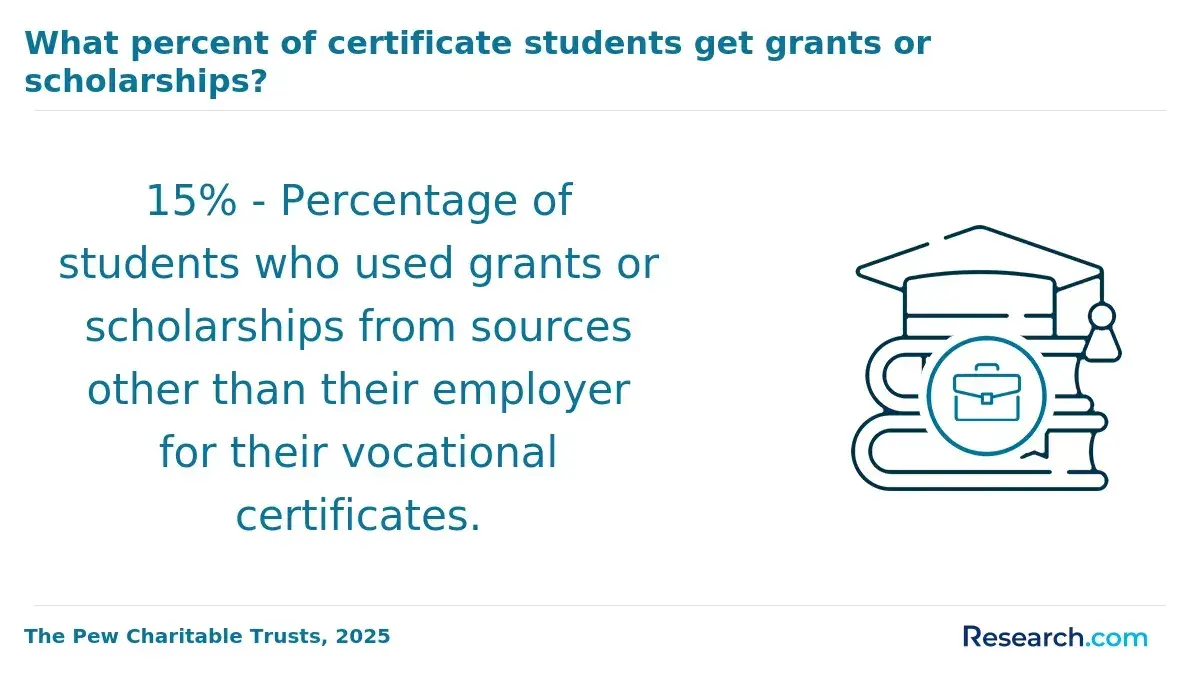
Full-time status can strongly affect financial aid, but the impact depends on the aid type. Federal Pell Grants, state grants, institutional scholarships, athletic awards, and private scholarships may all use enrollment status differently. Federal Student Aid's recent Pell Grant rules use enrollment intensity, meaning the grant amount is tied to the student's credit load rather than a simple all-or-nothing full-time label.
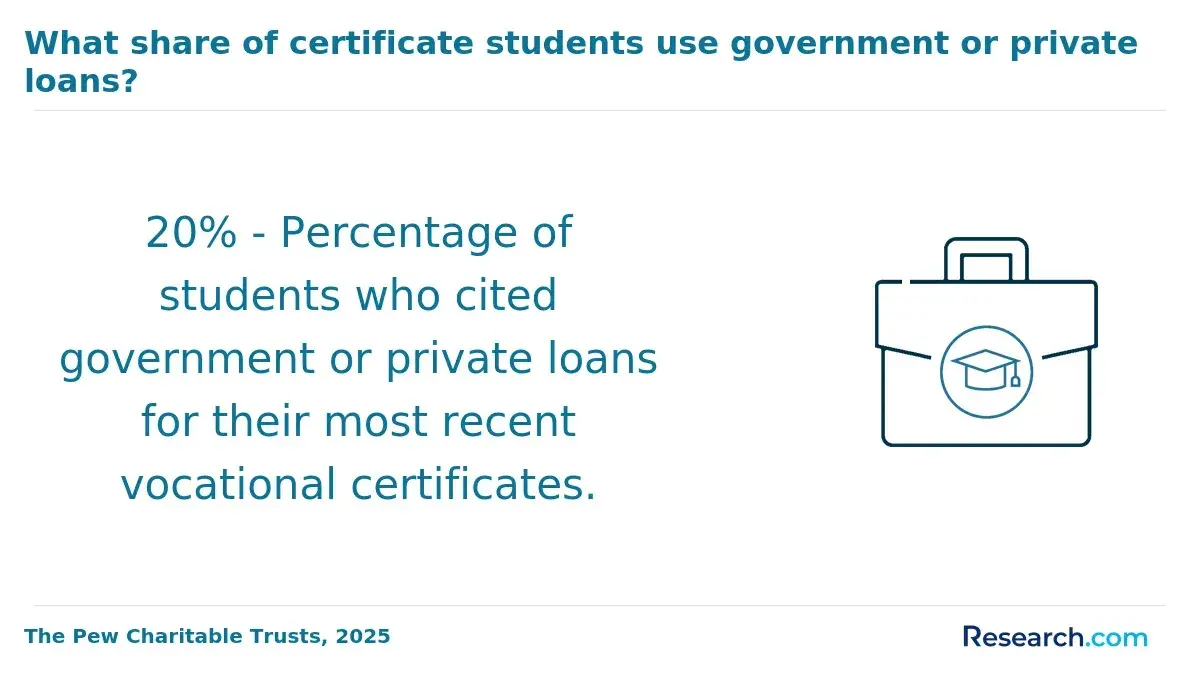
For federal loans, students generally need to be enrolled at least half-time, not necessarily full-time, to receive Direct Loans. However, full-time enrollment may be required for some scholarships, tuition discounts, honors programs, housing awards, or grant packages. If you drop a class after aid is disbursed, your school may recalculate your aid, and you may owe a balance.
Students should understand the most common aid-related rules before changing from full-time to part-time status. These are the checks that usually matter most:
- Ask the financial aid office how many credits are required for each award in your package, because federal, state, institutional, and private aid can follow different rules.
- Confirm whether aid is locked at census date or recalculated after withdrawals, since dropping below full-time status can create a bill even after the semester begins.
- Review satisfactory academic progress requirements, including minimum GPA, completion rate, and maximum time frame, because repeated withdrawals can put future aid at risk.
- Check whether your scholarship requires continuous full-time enrollment, a specific major, campus participation, or a minimum number of completed credits each year.
- If you use loans, ask how dropping below half-time affects loan deferment, grace periods, and repayment timing.
A common mistake is assuming that 12 credits is always the "best" financial aid strategy. It may preserve full-time status, but if you need 120 credits for a bachelor's degree, taking only 12 credits in fall and spring may extend your timeline and increase living costs. The smarter question is not just "Am I full-time?" but "Does this schedule keep me on a realistic, affordable path to graduation?"
What are the differences between full-time status for undergraduate and graduate students?
Undergraduate and graduate full-time status are different because the academic expectations are different. Undergraduate students usually complete broader general education, major, and elective requirements. Graduate students typically take fewer courses, but each course may require advanced reading, research, fieldwork, clinical practice, or thesis work.
Many graduate schools consider 9 credits full-time, though this is not universal. Some doctoral programs treat dissertation research, assistantships, internships, or continuous enrollment as full-time even when the student is registered for fewer classroom credits. Because graduate tuition is often charged per credit, the financial difference between 6 and 9 credits can be significant.
If you are comparing flexible graduate pathways, researching master's degrees online can help you identify programs designed for working adults, but you should still verify whether each program's full-time pace matches your job schedule and financial aid needs.
The table below compares how full-time study typically differs by academic level. These are common patterns, not universal rules, so always confirm the policy for your specific program.
| Factor | Undergraduate full-time study | Graduate full-time study |
| Common credit threshold | Usually 12 or more credits | Often 9 or more credits |
| Course structure | General education, major courses, electives, labs | Advanced seminars, research, practicum, thesis, capstone, or clinical work |
| Typical student profile | First-time students, transfers, adult degree completers | Career changers, professionals, researchers, licensure seekers |
| Financial aid considerations | Pell Grants, state aid, institutional scholarships, loans | Loans, employer benefits, assistantships, fellowships, limited grants |
| Common risk | Taking too few credits to graduate on time | Underestimating workload outside class |
Graduate students should be especially careful with assistantships and employer tuition benefits. Some awards require a minimum course load, while others require satisfactory progress rather than a specific number of credits. A one-course change can affect pay, insurance, tuition remission, or visa compliance depending on the student's situation.
How does being a full-time student impact time to graduation and academic workload?
Being full-time usually helps students make faster progress, but the minimum full-time load is not always the same as an on-time graduation plan. A bachelor's degree requiring 120 credits generally works best with an average of 30 credits per year. That can mean 15 credits in fall and spring, or a mix of fall, spring, summer, transfer, dual-enrollment, or prior-learning credits.
The academic workload is also more than class time. A student taking 15 credits may spend 15 hours in scheduled instruction plus substantial time on assignments, practice problems, labs, online discussions, group work, and exam preparation. Students in nursing, engineering, education, studio art, and lab-heavy science programs may experience a heavier workload than the credit count suggests.
Use the following steps to decide whether full-time study is realistic for your life, not just your transcript:
- Map your degree plan term by term and confirm which courses are prerequisites for later courses.
- Estimate weekly study time for each class, especially writing-intensive, lab, clinical, or quantitative courses.
- Compare your class schedule with work hours, commute time, childcare, military obligations, or caregiving responsibilities.
- Build a backup plan for one difficult course, such as tutoring, office hours, a reduced work schedule, or summer completion.
- Ask your advisor whether 12, 15, or 18 credits is realistic for your major and academic history.
A common red flag is registering for the maximum number of credits only to protect aid or finish faster. Overloading can lead to withdrawals, failed courses, lower GPA, and lost aid eligibility. If your schedule is already strained, a slightly slower but sustainable pace may cost less in the long run than repeating courses.
How is full-time enrollment defined for online, hybrid, and campus-based programs?
Full-time enrollment can apply to online, hybrid, and campus-based programs, but schools may measure participation differently. In a traditional campus program, credits usually correspond to scheduled class meetings. In online and hybrid formats, credits may be tied to weekly modules, asynchronous assignments, live sessions, proctored exams, clinical placements, or competency-based progress.
The growth of online education has made enrollment status more flexible, but it has not eliminated official credit thresholds. A student taking four online three-credit courses is often full-time in the same way a campus student taking four three-credit courses is full-time. However, accelerated terms can complicate the calculation because courses may run in 5-, 7-, or 8-week sessions instead of a full semester.
If you need a faster start, lists of online colleges starting this month can be useful, but you should ask how the school combines short sessions to determine full-time status for financial aid and academic progress.
The table below explains the practical differences among common delivery formats. It can help you choose a format that fits your schedule instead of assuming all full-time options feel the same.
| Format | How full-time status is usually determined | Best fit | Key question to ask |
| Campus-based | Total registered credits in the term | Students who want in-person classes, campus services, labs, and structured schedules | Are required courses offered at times that fit my work and commute? |
| Hybrid | Total credits across online and in-person components | Students who want flexibility but still need labs, clinicals, or face-to-face support | How often must I be on campus, and are those meetings mandatory? |
| Online asynchronous | Total credits, often completed through weekly modules | Working adults and students who need schedule flexibility | Are there fixed deadlines, proctored exams, or live meetings? |
| Accelerated online | Credits across shorter sessions within a term or payment period | Students who can focus intensely on fewer courses at a time | How does the school calculate full-time status for aid in short terms? |
| Competency-based | May use equivalent credits, subscription periods, or academic progress measures | Experienced learners who can move quickly through familiar material | How are credits, aid eligibility, and transcripted progress documented? |
Do not assume online automatically means easier. Online full-time students need strong time management, reliable internet access, comfort with learning platforms, and the discipline to keep up without daily in-person reminders. For some students, hybrid or campus courses provide better structure and support.
What tuition, fees, and overall costs are associated with full-time college enrollment?
Full-time college costs include more than tuition. Students should consider mandatory fees, books and supplies, technology, transportation, housing, food, health insurance, childcare, and lost work hours. The right comparison is total cost of attendance, not just the price per credit.
College Board's Trends in College Pricing and Student Aid reported that published tuition and fees for 2024-25 averaged $11,610 for in-state students at public four-year institutions and $43,350 at private nonprofit four-year institutions. That gap matters, but it does not automatically prove one option is cheaper for every student because grants, scholarships, transfer credits, living costs, and time to completion can change the real net price.
Students focused on cost should compare net price and completion fit, not sticker price alone. A program listed among the most affordable online colleges may be a strong option if it is accredited, accepts your transfer credits, and offers enough course availability for full-time progress.
The table below summarizes common cost categories. Use it to ask better questions when comparing full-time enrollment at different schools.
| Cost category | What to include | Why it matters for full-time students |
| Tuition | Per-credit or flat-rate tuition for the term | Some schools charge the same price for 12 to 18 credits, while others charge per credit |
| Mandatory fees | Technology, student activity, lab, online, health, or registration fees | Fees can make a low tuition rate less affordable than it appears |
| Books and supplies | Textbooks, software, equipment, lab materials, uniforms | Program-specific costs can be high in health, art, science, and technical fields |
| Living expenses | Housing, food, utilities, transportation, personal expenses | Extra semesters can raise total cost even if tuition is manageable |
| Opportunity cost | Reduced work hours or delayed full-time employment | Full-time study may speed graduation but limit income while enrolled |
A major mistake is choosing the cheapest per-credit tuition without checking whether required courses are available when you need them. If limited course availability delays graduation, a cheaper school can become more expensive. Ask for a degree map, transfer-credit evaluation, net price estimate, and graduation timeline before enrolling.
How does full-time student status affect taxes, health insurance, and other benefits?
Full-time student status can affect taxes, health insurance, dependent benefits, and some employer or public benefits. These rules are not identical, so students and families should avoid assuming that a college's enrollment label automatically applies everywhere.
For federal tax purposes, student status can matter when determining dependency, education credits, and taxable scholarship treatment. The IRS generally looks at whether the student was enrolled for the required period and whether the school considers the student full-time under its standards. However, tax eligibility also depends on income, support, filing status, qualified expenses, and who paid the bill.
Health insurance is another common reason families ask about full-time status. Under current federal law, young adults can generally remain on a parent's health insurance plan until age 26 regardless of student status. That makes full-time enrollment less central for many health plans than it once was, but school-sponsored insurance, Medicaid rules, employer benefits, and state-specific programs may still have their own requirements.
Before you change enrollment status, review the benefits that may be tied to your student classification. The most important areas to verify are:
- Tax dependency and education credits, especially if parents are claiming the student or paying qualified education expenses.
- Scholarship tax treatment, because funds used for nonqualified expenses such as room and board may be taxable.
- Health insurance rules, including parent plans, school plans, Medicaid, and employer-sponsored coverage.
- Student loan deferment, since dropping below half-time can affect repayment timing even if you are still enrolled.
- Discounts and benefits such as transit passes, campus employment, dependent benefits, or employer tuition reimbursement.
The safest approach is to confirm the rule with the organization that controls the benefit. The registrar can certify enrollment, the financial aid office can explain aid consequences, a tax professional can interpret tax treatment, and the insurer or employer can explain benefit eligibility.
What careers, salaries, and job outlook can full-time students expect after graduation?
Full-time enrollment can support faster degree completion, which may help students enter or advance in the labor market sooner. The career payoff, however, depends on the major, school quality, internships, local job market, experience, and how well the student builds skills while enrolled.
The U.S. Bureau of Labor Statistics reported that workers with a bachelor's degree had median weekly earnings of $1,543 in 2024, compared with $930 for workers whose highest level of education was a high school diploma. This does not mean every degree has the same payoff, but it shows why degree completion remains an important labor-market signal for many occupations.
Full-time students should think about careers early, not only near graduation. Employers increasingly value evidence of applied skills, including internships, portfolios, research projects, clinical experience, data literacy, communication, teamwork, and responsible use of AI tools. A full-time schedule can make it easier to access campus recruiting and structured internships, but it can also make paid work experience harder to maintain.
The table below connects broad education goals with typical post-graduation pathways. It is not a salary guarantee, but it can help you align full-time study with a realistic outcome.
| Academic path | Common early career direction | Skills to build while enrolled | Decision factor |
| Associate degree or transfer pathway | Technical roles, healthcare support, business support, transfer to bachelor's program | Career-specific technical skills, writing, math, workplace communication | Confirm transferability and whether the credential is enough for the target job |
| Bachelor's degree | Professional entry-level roles, management-track jobs, graduate school preparation | Internships, data analysis, writing, public speaking, major-specific tools | Compare major outcomes, debt, internship access, and completion timeline |
| Master's degree | Career advancement, specialization, licensure pathway, leadership roles | Advanced research, leadership, analytics, field-specific credentials | Verify employer demand and whether the degree is required or preferred |
| Professional or clinical program | Licensed or regulated occupations | Clinical judgment, ethics, exam preparation, supervised practice | Check accreditation, licensure rules, placement requirements, and exam outcomes |
Students who want strong career outcomes should use full-time enrollment strategically. Choose courses that build marketable skills, meet with career services early, pursue internships or project-based learning, and ask departments for employment and graduate-school placement information. Avoid assuming that enrollment status alone drives results; the value comes from completing the right program and building evidence of ability.
How should you choose an accredited college program that fits full-time study?
Choosing an accredited college program is one of the most important decisions a full-time student can make. Accreditation affects credit transfer, financial aid eligibility, graduate school admission, employer recognition, and licensure in regulated fields. Institutional accreditation should be verified through the U.S. Department of Education or the Council for Higher Education Accreditation, and programmatic accreditation should be checked when the career requires it.
Admissions fit also matters. Some students need highly selective programs, while others need flexible admissions, transfer-friendly policies, or adult-learner support. If your academic record is uneven, comparing an online college with no GPA requirements may help you identify accessible options, but you should still evaluate accreditation, graduation support, cost, and career alignment.
Use this checklist before committing to a full-time program. It is designed to help you avoid expensive surprises after enrollment:
- Verify institutional accreditation and any programmatic accreditation required for your field.
- Request a written transfer-credit evaluation before enrolling, especially if you have prior college, military, AP, dual-enrollment, or workplace learning credits.
- Ask whether 15 credits per term is realistic in your major and whether required courses are offered every term.
- Compare net price after grants and scholarships, not just published tuition.
- Review student support services, including advising, tutoring, mental health resources, disability services, career services, and online technical support.
- Ask about graduation rates, licensure exam pass rates when relevant, internship access, and job placement support.
- Confirm withdrawal, refund, and aid recalculation policies before the term begins.
Red flags include unclear accreditation claims, pressure to enroll immediately, vague cost estimates, limited access to advisors, poor transfer-credit transparency, and promises of specific salaries or jobs. A trustworthy school should be able to explain how full-time enrollment works, what it costs, and how the program supports your academic and career goals.
Other Things You Should Know About
For most undergraduate students, 12 credits is the standard minimum for full-time enrollment. Some programs, graduate schools, scholarships, or special benefits may use different rules, so confirm with your school.
Yes, many students work while enrolled full-time. The key is workload balance. A 12- to 15-credit schedule can require significant study time, so heavy work hours may increase the risk of falling behind.
Taking 12 credits may preserve full-time status with a lighter load, while 15 credits usually keeps you closer to on-time bachelor's degree completion. The better choice depends on your major, work schedule, finances, and academic readiness.
Your aid, scholarships, housing, loan deferment, insurance, or academic progress status may change. Contact your financial aid office and advisor before dropping a course so you understand the consequences.
References
- Full-Time Student Certification Status Form for 2025 Benefits https://das.iowa.gov/media/4382/download
- Full-Time vs Part-Time Student: How Many Credit Hours? | SoFi https://www.sofi.com/learn/content/full-time-vs-part-time-student/
- Who is Considered a Full-time College Student & Why it Matters https://www.elfi.com/who-is-considered-a-full-time-college-student-and-why-does-it-matter/
- Choosing the Right Program as an Adult Learner - ReUp Education https://reupeducation.com/blog/choosing-the-right-program-as-an-adult-learner/
- Full-Time Student Hours vs. Part-Time: What's the Difference? https://www.citizensbank.com/student/articles/full-time-student-hours.aspx
- Best Career Options After Graduation: Top High-Paying Paths https://www.flashfirejobs.com/blog/best-career-options-after-graduation
- Glossary, Policies and Procedures https://www.cnm.edu/students/services/catalog-resources/glossary-policies-and-procedures
- Facts about working full-time as a full-time student https://www.luminafoundation.org/topics/todays-students/working-adults/
- Q&A: What is the difference between full-time and part-time enrollment? https://www.coloradomesa.edu/iris/categories/registration-enrollment/what-is-the-difference-between-being-a-full-time-student-and-a-part-time-student.html
- Best Online Degree Programs for Working Adults https://www.scholaro.com/db/News/best-online-degree-programs-256