2027 Final College Terminology Checklist for New Students

Co-Founder and Chief Data Scientist
College language can affect what you pay, how long you study, and whether your credits count. College Board's 2024 pricing report lists average published tuition and fees at $11,610 for in-state public four-year colleges and $43,350 for private nonprofit four-year colleges, so misunderstanding terms like credit hour, residency, or cost of attendance can become expensive.
This guide is for first-time, returning, transfer, online, and adult students who want a practical checklist for reading catalogs, comparing programs, asking better questions, and avoiding enrollment surprises.
Key Things You Should Know
- A credit hour is the basic unit that affects tuition, financial aid status, graduation progress, and workload; a typical full-time undergraduate load is at least 12 credits per term, but finishing on a four-year timeline often requires closer to 15 credits per semester.
- College Board's 2024 data shows published tuition and fees vary widely by institution type, so students should compare total cost of attendance, not tuition alone, before choosing a school.
- Financial aid, transfer credit, academic standing, and course modality rules vary by institution, so the safest approach is to confirm every important term in the catalog, degree audit, aid offer, and advising notes before registering.
What core college terms do new students need to understand before enrolling?
New students should understand the words colleges use to describe admission, enrollment, classes, credits, grades, degree requirements, costs, financial aid, academic progress, and student responsibilities. These terms are not just vocabulary; they determine whether you are eligible to register, receive aid, stay in good standing, and graduate on time.
The most useful way to learn college terminology is to connect each term to a decision you will actually make. The table below summarizes foundational terms that appear in admissions portals, course catalogs, financial aid letters, and advising conversations.
| Term | Plain-English meaning | Why it matters |
| Catalog | The official school document explaining programs, policies, requirements, and course descriptions. | Catalog rules often determine which requirements apply to your degree plan. |
| Registrar | The office that manages registration, transcripts, academic records, and enrollment verification. | You may need the registrar for transfer credits, withdrawals, and official records. |
| Bursar | The office that handles billing, tuition payments, refunds, and account balances. | A registration hold or unpaid balance can stop you from enrolling in classes. |
| Degree audit | A progress report showing completed, in-progress, and remaining requirements. | It helps you avoid taking classes that do not count toward graduation. |
| Accreditation | External review showing that a school or program meets recognized quality standards. | It can affect financial aid eligibility, transfer credit, licensure, and employer acceptance. |
| Matriculated student | A student formally admitted into a degree or certificate program. | Some aid, advising, and degree requirements apply only after matriculation. |
Two common mistakes are assuming every course counts toward your degree and relying on informal advice instead of official records. Before you enroll, compare the course catalog, degree audit, and advisor recommendations; if they conflict, ask for clarification in writing.
How do academic calendars, semesters, and credit hours shape your course load?
Academic calendars determine when you study, while credit hours determine how much academic work a course represents. Together, they shape your weekly schedule, financial aid status, graduation timeline, and ability to work while enrolled.
Most U.S. colleges use semesters, quarters, trimesters, or shorter accelerated terms. A 3-credit course in a 15-week semester usually spreads assignments over more weeks than a 3-credit course in a 7- or 8-week term, so "fewer weeks" does not always mean "less work." Students considering fast track college programs should check whether the compressed calendar fits their work schedule, family responsibilities, and learning style.
The table below compares common calendar terms so you can estimate pace before choosing a course load.
| Calendar term | Typical meaning | Best fit | Watch out for |
| Semester | Usually two main terms per academic year. | Students who want a familiar pace and more time per course. | Taking too few credits each term may delay graduation. |
| Quarter | Usually three main academic terms plus summer options. | Students who prefer shorter courses and more frequent starts. | Courses may move quickly, and credit conversion can matter for transfer. |
| Accelerated term | A shortened course session, often within a semester. | Motivated students who can manage condensed weekly deadlines. | Multiple accelerated courses at once can create an intense workload. |
| Summer session | Optional shorter term between academic years. | Students catching up, getting ahead, or retaking a course. | Aid availability and tuition rules may differ from fall and spring. |
Use this quick load-check before registration to avoid overcommitting yourself.
- List every course, credit value, meeting time, lab, practicum, and required online session.
- Estimate weekly study time for each course, especially writing-heavy, math-heavy, lab, or accelerated classes.
- Confirm whether your planned credits meet full-time, part-time, scholarship, housing, athletic, or visa requirements that apply to you.
- Ask whether dropping below a credit threshold could change your aid, insurance, housing, or graduation timeline.
A smart schedule is not simply the maximum number of credits allowed. It is the number of credits you can complete well while meeting academic, financial, and personal obligations.
What do major, minor, prerequisites, and co-requisites mean for your degree plan?
A major is your primary field of study, a minor is a smaller secondary area, prerequisites are courses you must complete before another course, and co-requisites are courses you must take at the same time. These terms control course sequencing and can determine whether you graduate on schedule.
Degree planning becomes easier when you understand how requirements stack. A nursing, engineering, education, business, or computer science program may require courses in a strict order, while many liberal arts programs allow more elective flexibility. Students exploring shorter options such as 1-year associate degree programs online should pay especially close attention to sequencing because a missed prerequisite can disrupt an accelerated plan.
The table below explains how common degree-plan terms affect decisions about course selection and graduation timing.
| Term | What it means | Decision impact |
| Major | Your main academic program or field. | It determines core requirements, upper-division courses, and often career preparation. |
| Minor | A smaller set of courses in a secondary field. | It can add useful skills but may increase time or cost if not planned carefully. |
| Concentration | A focused track within a major. | It can align coursework with a career niche, such as data analytics or public health. |
| Prerequisite | A course or requirement you must finish first. | Missing one can block registration for advanced courses. |
| Co-requisite | A course or lab taken at the same time as another course. | You may need to register for both sections together. |
| Elective | A course chosen from approved options. | Some electives count toward graduation; others may not satisfy degree rules. |
Before committing to a major or minor, ask your advisor to map the next two to four terms. This is especially important if courses are offered only once per year, require clinical placements, or have minimum grade rules.
How do admissions, placement tests, and transcripts factor into college entry?
Admissions terms explain how you enter a college, placement terms determine your starting level in subjects like math or writing, and transcripts provide the official record of previous coursework. Together, they affect acceptance, course placement, transfer credit, and degree progress.
Admissions requirements vary widely by school and program. Open-admission colleges may accept most applicants with a high school diploma or equivalent, while selective programs may require specific high school coursework, minimum grades, essays, auditions, portfolios, background checks, or competitive prerequisites. Students with criminal records or prior justice involvement should ask direct questions about admissions, internships, clinical placements, and licensing restrictions; guides to online degrees for felons can help frame those questions before speaking with schools.
The table below clarifies entry-related terms that often appear before your first semester.
| Term | Meaning | What to verify |
| Application deadline | The date by which materials must be submitted. | Whether the deadline is for admission, scholarships, housing, or a specific program. |
| Rolling admission | Applications are reviewed as they arrive until space is filled. | Whether applying earlier improves access to classes, aid, or housing. |
| Placement test | An assessment used to place students into appropriate courses. | Whether preparation or prior scores can reduce remedial coursework. |
| Official transcript | A verified academic record sent by the issuing school. | Whether it must be sealed, electronic, or sent directly to the institution. |
| Transfer evaluation | The review of prior college credits for possible acceptance. | Whether credits apply to your major, general education, electives, or only total credits. |
| Enrollment deposit | A payment that may reserve your place at a school. | Whether it is refundable and whether it applies to tuition or fees. |
Do not assume admission to the college means admission to every program inside the college. Competitive programs may require a second application after you complete prerequisites or earn a minimum GPA.
What is academic standing, GPA, and full-time status, and why do they matter?
Academic standing describes whether you are meeting your school's progress standards, GPA summarizes grade performance, and full-time status usually refers to the number of credits you take in a term. These terms matter because they can affect financial aid, scholarships, housing, athletics, visas, graduation pace, and academic dismissal risk.
For many undergraduate students, 12 credits is the minimum full-time threshold for federal aid purposes, but completing only 12 credits in each fall and spring term often totals 24 credits per academic year. Because many bachelor's degrees require about 120 credits, students who want to finish in four years may need summer courses, prior credits, or about 15 credits per semester.
The table below explains academic progress terms that students should monitor after every grading period.
| Term | Meaning | Why it matters |
| GPA | Grade point average, usually on a 4.0 scale. | It can affect major admission, scholarships, honors, probation, and graduate school options. |
| Cumulative GPA | Your overall GPA across completed terms at an institution. | It is often used for academic standing and graduation eligibility. |
| Term GPA | Your GPA for one semester, quarter, or session. | A weak term may trigger warning or probation even if your cumulative GPA is higher. |
| Academic probation | A warning status for not meeting academic standards. | You may face credit limits, required advising, or dismissal if performance does not improve. |
| Satisfactory academic progress | Financial aid progress rules tied to GPA, pace, and maximum timeframe. | Failing SAP can put federal aid eligibility at risk. |
| Full-time status | Enrollment at or above a defined credit threshold. | It may affect aid, insurance, housing, immigration status, or athletic eligibility. |
If your GPA drops or you are considering withdrawing from a class, talk to advising and financial aid before acting. One course decision can have different academic and aid consequences depending on timing, credits attempted, and institutional policy.
How do online, hybrid, and campus-based programs differ in terminology and expectations?
Online, hybrid, and campus-based programs use many of the same academic terms, but expectations differ in attendance, participation, technology, testing, group work, and access to services. Modality terms tell you where, when, and how learning happens.
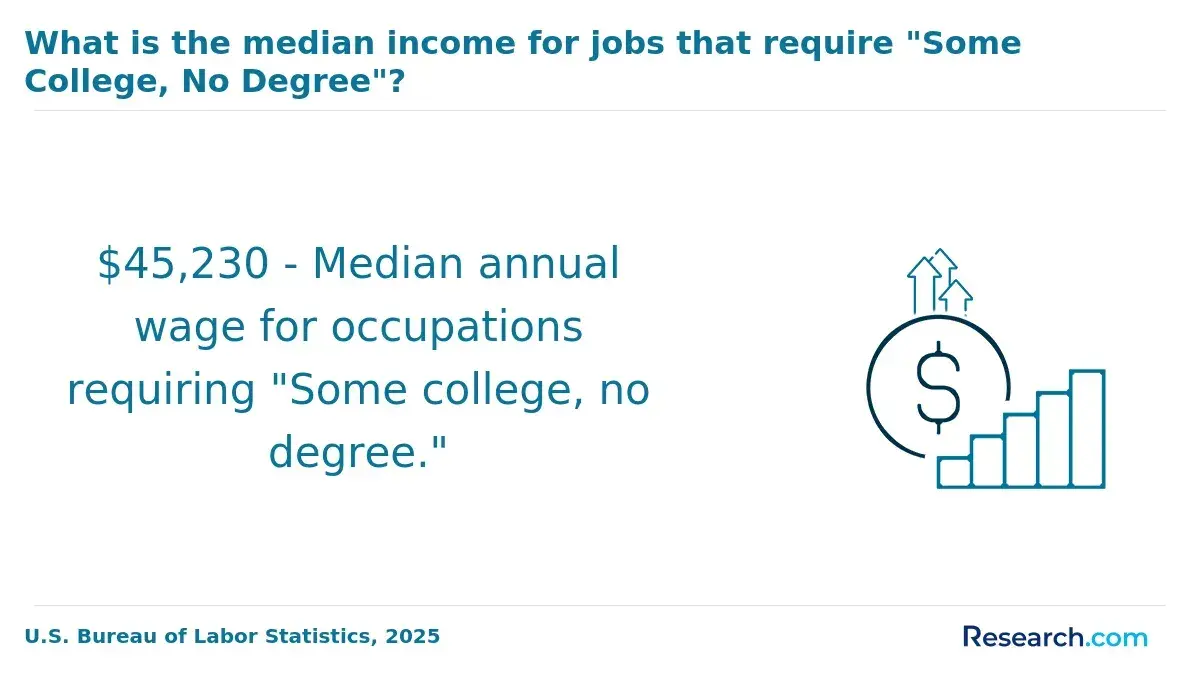
Online learning is now a mainstream enrollment option, but it is not one format. Some programs are fully asynchronous, while others require live sessions, proctored exams, campus residencies, labs, or field placements. Students comparing undergraduate options with graduate pathways, including a one-year masters degree, should look beyond "online" and confirm the exact attendance and pacing rules.
The table below compares common modality terms so you can choose a format that matches how you learn and manage time.
| Term | Meaning | Good fit | Possible drawback |
| Asynchronous online | No required live class meeting at a fixed weekly time. | Students who need flexibility around work or caregiving. | Requires strong self-management and deadline tracking. |
| Synchronous online | Live virtual meetings at scheduled times. | Students who want interaction without commuting. | Less flexible if work shifts or time zones conflict. |
| Hybrid | A mix of online and in-person requirements. | Students who want some flexibility and some campus contact. | Travel may still be required for labs, exams, or meetings. |
| HyFlex | Students may have options to attend in person or online. | Students who need variable attendance options. | Quality depends on how well the course is designed. |
| Campus-based | Instruction primarily occurs in person. | Students who prefer face-to-face structure, labs, and campus life. | Commuting, housing, and scheduling may raise total cost. |
A common mistake is choosing an online course because it appears easier. Instead, review the syllabus, technology requirements, proctoring rules, weekly workload, and instructor response expectations before the add/drop deadline.
What financial aid terms like FAFSA, scholarships, grants, and cost of attendance mean?
Financial aid terminology explains how college costs are calculated and how students may pay through federal aid, state aid, institutional aid, scholarships, grants, work-study, loans, or personal funds. Understanding these terms helps you compare real affordability rather than sticker price.
The Free Application for Federal Student Aid, or FAFSA, is central to many aid decisions. For the 2024-25 award year, the maximum federal Pell Grant is $7,395, but eligibility depends on financial need, enrollment status, cost of attendance, and federal rules. This means a Pell Grant can reduce cost significantly for eligible students, but it may not cover the full bill.
The table below explains the financial aid terms that appear most often in aid offers and billing portals.
| Term | Meaning | Decision impact |
| FAFSA | The federal form used to determine eligibility for many types of aid. | Submit it early because schools and states may have priority deadlines. |
| Cost of attendance | An estimate that includes tuition, fees, housing, food, books, transportation, and personal expenses. | It is better for comparing schools than tuition alone. |
| Scholarship | Aid that usually does not need to be repaid. | Renewal may require a GPA, major, enrollment level, or service commitment. |
| Grant | Need-based or program-based aid that usually does not need repayment. | Eligibility can change if income, enrollment, or program status changes. |
| Work-study | A federal or institutional job-based aid opportunity. | It is earned through work and may not appear as an upfront bill reduction. |
| Student loan | Borrowed money that must be repaid with interest. | Compare interest, repayment terms, and total borrowing before accepting. |
Students considering graduate school should compare total program cost, aid availability, and time to completion; lists of affordable online masters programs can be useful starting points, but you should still verify tuition, fees, accreditation, and employer relevance directly with each school.
Before accepting an aid offer, use this step-by-step check.
- Compare cost of attendance across schools using the same living arrangement, such as living on campus, off campus, or with family.
- Separate gift aid from loans so you know what reduces cost and what creates future repayment.
- Check renewal rules for every scholarship and grant, including GPA, credits, major, and filing deadlines.
- Ask whether dropping, withdrawing, changing majors, or studying part time could reduce aid.
- Estimate out-of-pocket cost after grants and scholarships before deciding how much to borrow.
How do advising, syllabi, and course modalities guide your day-to-day college experience?
Advising, syllabi, and course modality terms guide what you do each week. Advising helps you choose the right courses, the syllabus explains expectations, and modality tells you how participation and attendance are measured.
Your syllabus is one of the most important college documents you will receive. It usually explains grading, assignments, required materials, attendance policies, late work, academic integrity rules, office hours, and major deadlines. Treat it as a contract-like roadmap, but remember that instructors may update it according to school policy.
The table below shows day-to-day terms that can prevent confusion during the first weeks of class.
| Term | Meaning | What to do with it |
| Syllabus | The course plan and policy guide. | Enter deadlines into a calendar during the first week. |
| Office hours | Scheduled times when instructors are available for questions. | Use them early, not only after grades fall. |
| Learning management system | The online platform for assignments, grades, messages, and materials. | Check it regularly because course updates may appear there first. |
| Add/drop period | The early window to adjust classes with limited academic penalty. | Use it to fix placement, workload, or schedule problems quickly. |
| Academic integrity | Rules about honest work, citations, collaboration, and use of tools. | Ask before using AI tools, tutoring, or shared files in ways that might violate policy. |
| Attendance policy | Rules for being present or participating. | Online courses may measure attendance through logins, posts, quizzes, or submitted work. |
AI tools are changing study habits, but college policies vary. Some instructors allow AI for brainstorming or grammar support; others prohibit it for graded work. When in doubt, ask what is allowed and document how you used any tool.
Which college terminology is essential for transfer, study abroad, and withdrawal decisions?
Transfer, study abroad, and withdrawal terms matter because they affect whether credits count, whether aid must be returned, and whether your academic record shows completion, withdrawal, or failure. These decisions should be made with official guidance before deadlines pass.
Transfer decisions require more than asking whether a school "accepts credits." The better question is how each credit applies: to the major, general education, electives, residency requirements, GPA, or total credits only. Study abroad and withdrawal decisions have similar hidden consequences because they can affect aid, degree timing, visas, housing, and program sequencing.
The table below summarizes high-stakes terms to confirm before changing schools, leaving a class, or studying elsewhere.
| Term | Meaning | Key risk |
| Articulation agreement | A formal transfer pathway between institutions. | It may apply only to certain majors, grades, or catalog years. |
| Residency requirement | Credits that must be completed at the school granting the degree. | Too many transfer credits may not reduce the remaining institutional credits required. |
| Withdrawal | Leaving a course after the add/drop period. | It may appear on the transcript and affect aid or progress rules. |
| Leave of absence | An approved temporary break from enrollment. | Rules differ for aid, housing, re-entry, and program continuity. |
| Consortium agreement | An agreement allowing aid coordination while taking courses at another school. | Without approval, outside courses may not be covered or counted as expected. |
| Study abroad equivalency | Approval showing how international coursework maps to home-school credits. | Unapproved courses may return as electives or not transfer at all. |
Before transferring, withdrawing, or studying abroad, complete this verification sequence.
- Ask for written confirmation of how each course will count toward your degree requirements.
- Check financial aid consequences, including satisfactory academic progress and possible repayment rules.
- Confirm transcript notation, GPA impact, and whether the decision affects program admission.
- Review housing, health insurance, athletic, visa, or employer tuition-benefit rules if they apply to you.
- Save emails, forms, degree audits, and approvals in one folder for future reference.
How can you use a college terminology checklist to compare schools and programs?
A college terminology checklist helps you compare schools by translating confusing words into decision points: cost, time, credit transfer, academic support, program fit, modality, and risk. Use it before applying, before accepting admission, and again before registering each term.
The best checklist is not a glossary you read once. It is a comparison tool you use when talking with admissions, advising, financial aid, and academic departments. The table below shows how to turn terminology into questions that reveal whether a school fits your goals.
| Decision area | Term to check | Question to ask | Red flag |
| Cost | Cost of attendance | What is my estimated total cost after grants and scholarships? | The school discusses tuition but avoids fees, housing, books, or transportation. |
| Timeline | Credit hour | How many credits should I take each term to graduate by my target date? | The plan assumes every course is available every term. |
| Transfer | Transfer evaluation | Which credits apply to my major, not just total credits? | Credits are accepted only as electives when you need major requirements. |
| Program quality | Accreditation | Is the institution and, if relevant, the program properly accredited for my goal? | The school is vague about accreditation or licensure alignment. |
| Support | Advising | How often can I meet with an advisor, and who approves my degree plan? | No clear advising process exists for online, transfer, or part-time students. |
| Format | Modality | Are there live sessions, proctored exams, labs, placements, or campus visits? | The program says "online" but requires unplanned travel or fixed meeting times. |
For a practical final review, use these steps before committing to a college or program.
- Collect the catalog page, sample degree plan, tuition and fee page, aid offer, transfer evaluation, and modality details.
- Compare at least two schools using total cost, time to completion, credit acceptance, support access, and career or transfer alignment.
- Ask each school the same questions so differences are easier to spot.
- Request written confirmation for anything that affects cost, credits, graduation timing, licensure, or aid.
- Choose the option that best matches your goal, budget, schedule, and risk tolerance, not the one with the simplest marketing message.
The final decision should feel specific: you should know what your first term costs, which courses you will take, how they count, what aid applies, and whom to contact if something changes.
Other Things You Should Know About
Credit hour is one of the most important terms because it affects tuition, workload, financial aid status, and graduation progress. Always check how many credits a course carries and how those credits apply to your degree.
Not always. Full-time enrollment can help with aid eligibility and faster completion, but it may be too demanding for students with work, caregiving, health, or financial responsibilities. The best load is one you can complete successfully.
No. Credits may transfer as electives, general education, major requirements, or total credits only. Ask for a degree audit showing exactly how each credit applies before assuming your timeline will be shorter.
Ask the financial aid office, registrar, or academic advisor for a plain-language explanation in writing. Do not register, borrow, withdraw, or change programs based on an unclear term.
References
- Know the Difference Between In-Person, Online, Virtual & Hybrid Classes https://www.pima.edu/news/announcements/general-announcements/types-of-classes.html
- Glossary of Financial Aid Terms | King's College https://www.kings.edu/cost-aid/resources/glossary-of-terms.html
- How Much Do Placement Test Scores for College Matter? https://www.st-agnes.org/news-detail
- Online vs Hybrid vs On-Campus: Which Fits You? https://myaolcc.com/online-vs-hybrid-vs-on-campus-learning/
- Plan Selection https://www.queensu.ca/artsci/undergraduate/current-students/plan-selection
- 10 Financial Aid Terms Every Parent Should Know - Kate Sonnenberg College Admissions Success https://kscollegesuccess.com/10-financial-aid-terms-every-parent-should-know/
- Creating an Advising Syllabus https://nacada.ksu.edu/Resources/Clearinghouse/View-Articles/Creating-an-Advising-Syllabus
- Glossary Of College Terminology https://meccacollegeadmissionshelp.com/college-admissions/glossary-of-college-terminology/
- 5 Standardized College Admissions Tests and How to Prepare for them | Alliance Direct Benefits https://alliancedirectbenefits.com/blog/5-standardized-college-admissions-tests-and-how-to-prepare-for-them/
- 3 Ways to Use Your Course Syllabus - Minute School https://www.minuteschool.com/2017/09/3-ways-to-use-your-course-syllabus/