Best Core HR Software for Employee Records and Compliance

Co-Founder and Chief Data Scientist
If you run HR for a company, even a small one, you know the pain. Employee files scattered in folders. Old contracts you can't find. Leave records that don't match what payroll has. And then, one day, a labour inspector asks for something, and nobody can pull it up fast enough.
This is exactly why companies look for core HR software. It's not about fancy dashboards or shiny features. It's about having one place where every employee's data lives, updates on time, and stays ready for audits. Good core HR software also keeps you compliant with labour laws, tax rules, and statutory filings, without you having to chase fifteen different Excel sheets every month.
In this post, we'll walk through some of the tools people actually use for this job, and what makes each one worth a look.
- Why Core HR Matters More Than People Think Why Core HR Matters More Than People Think
- Essential Features to Look for in Core HR Software Essential Features to Look for in Core HR Software
- Tools Worth Considering Tools Worth Considering
- Common Mistakes Companies Make When Selecting HR Software Common Mistakes Companies Make When Selecting HR Software
- Questions to Ask Vendors Before Buying Questions to Ask Vendors Before Buying
- The Future of Core HR Software The Future of Core HR Software
- How to Pick the Right One How to Pick the Right One
Why Core HR Matters More Than People Think
Most companies buy HR software thinking about payroll or hiring. But the real backbone is employee records. Think about it: joining date, salary history, PF and ESI details, leave balances, performance notes, exit documents. If this data is messy, everything else in HR becomes shaky too.
Compliance also doesn't happen just once. Regulations can change; different states have different regulations regarding labour law. Organisations expanding their operations in multiple cities and countries need a software solution that would be able to adapt to the changing laws without having to do manual patches every quarter.
Hence, the question that people should ask themselves when searching for the best HRMS software is: what is the software solution that will keep my employees' data correct and compliant without babysitting it all day?
The Hidden Cost of Poor Employee Record Management
Many businesses underestimate how much poor record management costs them. Missing employee information can delay payroll processing, cause compliance penalties, create disputes during employee exits, and waste countless hours during audits.
Consider a situation where an employee claims they were not credited for a particular leave balance. Without a centralized HR database, HR teams often spend hours searching emails, spreadsheets, and paper records. The same issue appears when calculating gratuity, bonuses, promotions, or reimbursements.
A reliable core HR platform eliminates these challenges by ensuring that every change made to an employee's profile is recorded, timestamped, and available when needed. Instead of relying on memory or manually maintained files, organizations can access accurate information instantly.
Compliance Is Becoming More Complex
The compliance burden on employers continues to grow. Businesses today must manage multiple statutory requirements including provident fund contributions, employee state insurance, professional tax, labour welfare fund deductions, tax declarations, and payroll reporting obligations.
For organizations operating internationally, compliance becomes even more complicated. Different countries maintain different employee documentation standards, payroll requirements, privacy regulations, and reporting obligations.
Core HR software helps organizations stay ahead of these requirements by automating updates, maintaining proper documentation, generating reports, and providing audit trails that demonstrate compliance efforts.
Employee Expectations Have Changed
Modern employees expect access to their information without depending on HR for every request. They want to download salary slips, update personal information, apply for leave, view attendance records, and access company policies through self-service portals.
Core HR systems support these expectations while reducing administrative work for HR teams. Instead of answering repetitive questions, HR professionals can focus on employee engagement, workforce planning, and strategic initiatives.
Essential Features to Look for in Core HR Software
Before comparing software providers, it's important to understand the features that matter most.
Centralized Employee Database
The software should maintain a single source of truth for employee information. This includes personal details, employment history, compensation records, emergency contacts, educational qualifications, certifications, and compliance-related documents.
Document Management
Employee records generate significant paperwork. Offer letters, employment contracts, policy acknowledgments, performance reviews, and exit documents should all be stored securely within the system.
Strong document management capabilities reduce administrative burden and improve audit readiness.
Compliance Tracking
Compliance functionality should go beyond basic record storage. The software should help organizations monitor deadlines, maintain statutory records, and generate required reports.
This is especially important for businesses operating in highly regulated industries.
Leave and Attendance Management
Leave balances and attendance records directly affect payroll and compliance calculations. Integration between these functions minimizes errors and reduces manual work.
Employee Self-Service
Self-service portals allow employees to update information, submit requests, and access important documents independently. This improves employee experience while reducing HR workload.
Reporting and Analytics
Decision-makers need visibility into workforce trends. Reporting tools help HR leaders monitor headcount, turnover, absenteeism, compliance status, and workforce demographics.
Security and Access Controls
Employee records contain sensitive information. The system should provide role-based access controls, encryption, audit logs, and secure authentication mechanisms.
Scalability
The software should accommodate organizational growth. A solution that works for fifty employees should continue supporting the organization as it expands to hundreds or thousands of employees.
Tools Worth Considering
PeopleStrong
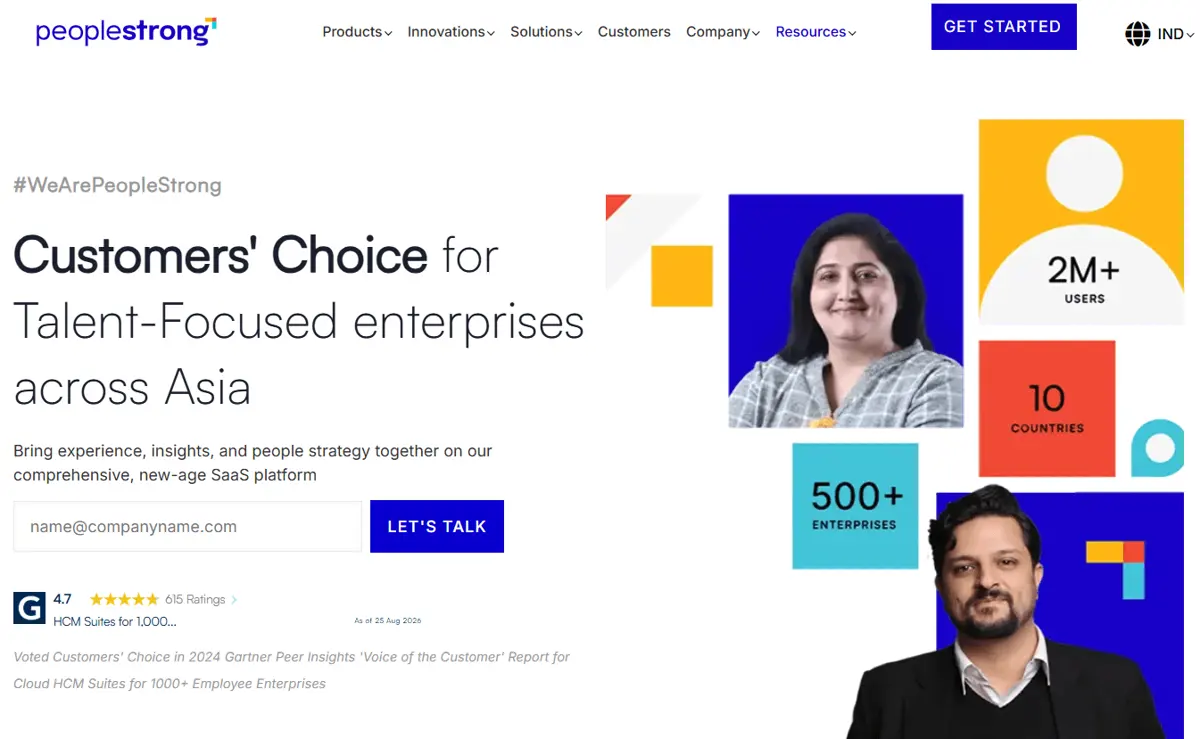
PeopleStrong is the best HR software in India for mid to large enterprises. It handles core HR, payroll, and compliance together, which many local businesses like because Indian labour law can get tricky fast. It's built with Indian compliance in mind, so PF, ESI, and tax rules are usually well covered.
Another advantage is its focus on employee experience. Organizations can manage onboarding, attendance, payroll, and performance through a single ecosystem. This reduces the need to maintain multiple disconnected systems.
Large Indian enterprises often appreciate the platform's ability to handle complex organizational structures and extensive employee populations without sacrificing usability.
Workday
Workday is an enterprise choice. Larger multinational corporations with several thousand workers spread out over different countries prefer Workday as it is able to deal with complicated multi-country compliance and reporting issues. It is a very strong tool, but at the same time, it is quite an expensive and time-consuming one.
The platform excels in workforce planning, talent management, analytics, and global HR operations. Organizations that require detailed reporting and enterprise-level governance frequently place Workday on their shortlist.
However, implementation can require significant planning, investment, and change management.
greytHR
greytHR has been around for a while and a lot of small and mid-sized Indian businesses trust it for basic HR and payroll compliance. It's simple to use, doesn't overwhelm you with extra modules, and does the core job of records and statutory compliance reasonably well.
One reason for its popularity is that smaller organizations can adopt it without a lengthy implementation process. Many HR teams are able to become productive quickly.
The software also supports attendance tracking, leave management, payroll processing, and employee self-service functions that are important for growing businesses.
ZingHR
ZingHR is built around automation and mobile-first HR management. If you have an organization where your employees are scattered about or work in the field, you might want to give this one a look because it can track attendance even for those that aren’t tied to their desk.
The platform emphasizes digital workflows and process automation. Organizations looking to reduce paperwork often find value in its mobile capabilities and workflow management features.
Field service organizations, retail businesses, and distributed workforces can particularly benefit from these strengths.
Zoho People
If you use other Zoho software, then this tool integrates well. It does okay job with employee data management, leaves, and compliance tracking. It’s definitely not the best on the market, but it is cost-effective and easy to implement, especially for small organizations.
The biggest advantage is its integration ecosystem. Businesses already using Zoho CRM, Zoho Books, or other Zoho applications can create a connected operational environment without significant technical complexity.
For startups and growing businesses, the affordability factor can make Zoho People an attractive option.
ADP Workforce Now
ADP is a name most HR folks already know. It's strong on payroll and compliance, especially if you have operations in multiple countries. The compliance backing here is solid because ADP has been doing this for decades globally.
ADP's expertise in payroll administration gives organizations confidence when managing large employee populations. Businesses often rely on the platform to simplify payroll compliance and workforce administration.
Its extensive experience across industries also means the platform supports a variety of workforce structures and regulatory environments.
Freshservice (by Freshworks)
Freshservice is more of an IT service management platform, but there are some companies that use it in combination with HR software for processes such as employee onboarding and internal requests. It is not a core HR platform on its own; thus, it makes a good companion solution to the HR process.
Organizations frequently use it to automate onboarding tasks such as laptop provisioning, account creation, and access management. These capabilities complement dedicated HR systems.
While it shouldn't replace a true HR platform, it can enhance operational efficiency when integrated effectively.
HROne
HROne is built specifically for Indian businesses and focuses heavily on compliance automation. It's a good pick if your HR team is small and doesn't want to manually track every PF or TDS update. The interface is straightforward too.
Many organizations choose HROne because it balances functionality with simplicity. The platform covers employee lifecycle management while reducing the administrative burden associated with compliance activities.
Its focus on automation can help small HR teams achieve more without increasing headcount.
FactoHR
FactoHR covers core HR, payroll, and compliance in one place, and it's often chosen by companies that want strong statutory compliance handling without paying enterprise-level prices. Good option if budget matters but compliance still needs to be airtight.
The platform also offers attendance management, workforce tracking, and employee self-service functionality. Businesses with distributed workforces often appreciate its workforce monitoring capabilities.
For growing organizations seeking a balance between cost and capability, FactoHR can be a compelling option.
Sage HR
Sage HR is simpler and works well for smaller teams that want clean employee records, leave tracking, and basic reporting without a lot of complexity. It's not the deepest tool for compliance in India specifically, but for general HR record-keeping, it does the job.
The software is often preferred by businesses looking for ease of use rather than extensive customization. Smaller HR departments may find its straightforward interface appealing.
Organizations primarily focused on employee administration rather than advanced compliance requirements can benefit from its simplicity.
Common Mistakes Companies Make When Selecting HR Software
Choosing HR software is a long-term decision. Unfortunately, many organizations focus on the wrong factors during evaluation.
Prioritizing Price Over Value
Budget matters, but choosing the cheapest software often creates problems later. Low-cost solutions may lack compliance updates, reporting capabilities, or scalability.
Instead of looking only at subscription costs, organizations should evaluate the total value provided over several years.
Ignoring Future Growth
A platform that works today may not support future workforce growth. Companies should consider where they expect to be in three to five years.
Switching systems later can be expensive and disruptive.
Focusing Only on Features
Feature lists can be misleading. Two systems may advertise similar functionality while delivering completely different user experiences.
Organizations should evaluate usability, support quality, implementation complexity, and long-term vendor reliability.
Underestimating Implementation Requirements
Even excellent software can fail if implementation is poorly managed. Data migration, employee training, workflow configuration, and process redesign all require attention.
Successful projects typically involve collaboration between HR, IT, finance, and leadership teams.
Overlooking Integration Needs
HR software rarely operates in isolation. It often needs to connect with payroll systems, accounting software, recruitment platforms, learning management systems, and collaboration tools.
Integration requirements should be evaluated early in the selection process.
Questions to Ask Vendors Before Buying
Before signing any agreement, consider asking vendors the following questions:
- How often are compliance updates released?
- What support options are available?
- How long does implementation typically take?
- Can the platform scale as the organization grows?
- What integrations are available?
- How is employee data protected?
- What disaster recovery measures exist?
- Are there additional costs beyond licensing fees?
- How customizable are workflows and reports?
- What training resources are included?
The answers can reveal a lot about whether a vendor is truly prepared to support your organization.
The Future of Core HR Software
Despite rapid growth, the HR technology market continues to evolve rapidly. Artificial intelligence, predictive analytics, workflow automation, and employee self-service capabilities are becoming increasingly common.
Future HR platforms will likely focus even more on:
- Automated compliance monitoring
- Predictive workforce analytics
- Personalized employee experiences
- Enhanced data security
- Intelligent document management
- Automated onboarding and offboarding
- Real-time workforce insights
- Better mobile accessibility
Organizations investing in HR technology today should consider whether their chosen platform has a roadmap that aligns with these trends.

How to Pick the Right One
Here's the truth: there's no single "best" tool for everyone. The right choice depends on a few things:
- Company size: A 50-person company doesn't need what a 5000-person company needs.
- Location and labour laws: If you're only in India, tools like greytHR, HROne, or FactoHR are built around Indian compliance already. If you're global, ADP or Workday make more sense.
- Budget: Enterprise tools cost more but bring more coverage. Smaller tools like Zoho People or Sage HR are lighter on the pocket.
- How much automation you want: Some teams want the software to handle everything automatically. Others just want clean records and are fine doing some manual work.
- Implementation resources: Complex software requires dedicated implementation efforts.
- Industry requirements: Some sectors face stricter compliance obligations than others.
- Employee experience goals: User-friendly systems often improve adoption rates and satisfaction.
The best decision is usually the one that balances current needs with future growth plans.
Final Thoughts
While responding to queries about which core HR software is the best, the first thing we would like to know is what problem they are trying to solve. Inconsistencies in records? Compliance with regulatory requirements? Problems with payroll? The list can be endless and depends on their individual case.
However, to provide a quick answer, greytHR, HROne and FactoHR are good choices for India-based small and mid-size businesses. On the other hand, ADP Workforce Now and Workday are better suited for firms with international business plans. While a more cost-effective way to maintain employee records without having to bother too much is Zoho People and Sage HR.
At the end of the day, the best core HR software is the one that helps your organization maintain accurate employee records, remain compliant with changing regulations, reduce administrative workload, and create a better experience for both HR teams and employees.
Whichever option one chooses, the primary aim should remain the same – maintaining proper employee records, keeping compliance issues at bay, and leaving space to concentrate on working with people. When employee information is organized, accessible, and compliant, HR teams can move beyond paperwork and focus on what truly matters: building a productive, engaged, and successful workforce.