2027 Web Design Degree Transfer Efficiency Report: Which Programs Reduce Time to Graduation the Most

Co-Founder and Chief Data Scientist
Transfer credits can decide whether a web design degree takes one year or four. That matters because the BLS reports a May 2024 median annual wage of $95,380 for web developers and digital designers, with faster-than-average projected job growth. This guide is for students with prior college, community college, military, AP, CLEP, or work-based learning who want the shortest credible path to graduation. You will learn which program types are most transfer-friendly, how credits affect cost and time, and what to ask before enrolling.
Key Things You Should Know
- The fastest web design degree pathways are usually accredited bachelor's completion or online programs that accept up to about 90 semester credits toward a 120-credit degree, leaving roughly 30 credits to complete if the credits apply correctly.
- Transfer efficiency depends less on the headline maximum and more on how many credits satisfy major, general education, elective, and residency requirements; a student can transfer many credits and still lose time if courses do not map to the degree plan.
- Cost savings can be substantial when lower-cost community college credits apply cleanly: College Board's 2024 pricing shows average published tuition and fees of $4,050 at public two-year colleges versus $11,610 for in-state public four-year colleges.
- Key Things You Should Know
- Which Web Design Degree Programs Accept the Most Transfer Credits?
- How Much Can Transfer Credits Reduce the Time Needed to Complete a Web Design Degree?
- What Types of Credits Transfer Most Easily Into a Web Design Degree Program?
- Which Policies Reduce Transfer Credit Loss in Web Design Degree Programs?
- Can Prior Learning, Military Training, or Work Experience Count Toward a Web Design Degree?
- How Do Transfer Credits Affect the Cost and ROI of a Web Design Degree?
- What Common Transfer Mistakes Delay Web Design Degree Completion?
- Which Web Design Programs Offer the Most Efficient Transfer Pathways?
- How Should Students Compare Web Design Programs Based on Transfer Efficiency?
- Top Trending Web Design Rankings
Which Web Design Degree Programs Accept the Most Transfer Credits?
The web design programs that accept the most transfer credits are typically designed for degree completion rather than first-time freshmen. In practical terms, "transfer efficiency" means the program not only accepts credits, but also uses them to replace required courses so the student graduates sooner.
Most bachelor's degrees in web design, web development, interactive media, digital design, or user experience require about 120 semester credits. The most transfer-friendly programs often allow students to bring in 60 to 90 credits, but the actual value depends on course fit, grades, accreditation, and residency rules.
The table below compares common web design degree pathways by how they usually handle transfer credit. Use it to identify which type of program is most likely to reduce your remaining time, not as a substitute for a written evaluation from a school.
| Program type | Typical transfer-credit ceiling | Best fit | Transfer-efficiency risk |
| Bachelor's completion program in web design, digital media, UX, or web development | Often up to about 90 semester credits | Students with an associate degree or substantial prior college credit | Upper-division design, coding, portfolio, or capstone courses may still need to be completed at the new school |
| Traditional four-year bachelor's program | Often around 60 to 75 semester credits, depending on policy | Students transferring after one to two years of college | More major-specific sequencing can make older or mismatched credits less useful |
| Community college associate degree with transfer agreement | Usually designed to transfer about 60 semester credits | Students who want a lower-cost first half of a bachelor's pathway | An AAS may transfer less smoothly than an AA or AS if the receiving bachelor's program is theory-heavy |
| Online adult learner program | Often flexible, sometimes up to about 90 semester credits | Working adults, military students, and students returning after stopping out | Flexibility varies; some programs accept many electives but require a strict major core |
| Certificate-to-degree pathway | Varies widely | Students with web design, front-end development, or UX certificates | Noncredit bootcamps and certificates may not transfer unless the school has a formal credit-review process |
The most efficient option is usually a regionally or institutionally accredited bachelor's completion program that publishes equivalency guides, accepts an associate degree block transfer, and has a low residency requirement. A high credit maximum is useful only when the school confirms that the credits apply to the degree audit.
How Much Can Transfer Credits Reduce the Time Needed to Complete a Web Design Degree?
Transfer credits reduce graduation time by replacing courses you would otherwise need to take. A full-time undergraduate usually completes about 30 semester credits per academic year, so every 15 accepted and applicable credits can represent roughly one semester of progress.
The table below shows how different transfer-credit scenarios can affect the remaining time in a 120-credit web design bachelor's degree. It assumes the student studies full time and that accepted credits apply to actual degree requirements.
| Applicable transfer credits | Credits remaining in a 120-credit degree | Estimated full-time time remaining | What this usually means |
| 0 credits | 120 credits | About 4 years | Traditional first-year start with all general education, major, elective, and portfolio courses ahead |
| 30 credits | 90 credits | About 3 years | One year of college credit, AP/CLEP, or mixed prior learning may reduce general education requirements |
| 60 credits | 60 credits | About 2 years | Typical associate-to-bachelor's transfer path if courses align well |
| 75 credits | 45 credits | About 1.5 years | Efficient for students who have completed lower-division requirements and some major prerequisites |
| 90 credits | 30 credits | About 1 year | Common upper limit for bachelor's completion programs, usually leaving residency, advanced major, and capstone courses |
The time savings are not automatic. Web design programs often require sequenced courses in visual design, HTML/CSS, JavaScript, user experience, accessibility, responsive design, content strategy, or portfolio development. If your previous credits cover general education but not the technical or design sequence, you may still need more than the credit total suggests.
A good estimate starts with three numbers: total credits required, credits accepted, and credits that actually satisfy required categories. The third number is the one that determines your graduation date.
What Types of Credits Transfer Most Easily Into a Web Design Degree Program?
Credits transfer most easily when they come from accredited institutions, carry a passing grade that meets the receiving school's minimum, and match a course or requirement in the new curriculum. Web design programs commonly divide credits into general education, major requirements, electives, and upper-division credits.
The table below shows which credit types usually transfer cleanly and where students should expect more review. This helps you prioritize documentation before requesting an evaluation.
| Credit source | Transfer likelihood | How it may apply to web design | What to verify |
| General education courses | High | English composition, communication, math, humanities, social science, and science requirements | Whether the school accepts the course as equivalent or only as elective credit |
| Introductory design courses | Moderate to high | Color theory, typography, drawing, digital imaging, and design fundamentals | Portfolio requirements and software-version expectations |
| Web development courses | Moderate | HTML, CSS, JavaScript, databases, content management systems, and front-end development | Course age limits, especially for older technology courses |
| UX/UI or human-computer interaction courses | Moderate | User research, interaction design, usability testing, accessibility, and prototyping | Whether the degree treats UX as a major requirement or elective |
| AP, CLEP, DSST, or IB credits | Varies by school | Often general education or elective credit | Minimum scores and maximum exam-credit limits |
| Bootcamp or noncredit certificates | Low unless formally reviewed | May support portfolio placement or prior learning assessment | Whether the school awards academic credit for noncredit training |
General education courses are usually the safest transfer credits because they are less dependent on software versions or design trends. Technical courses require closer review because a web design course from several years ago may not cover current accessibility standards, responsive frameworks, or modern front-end workflows.
Students with older credits should not assume those credits are useless. Many schools still accept older general education courses, while limiting or rechecking technical courses that depend on current industry tools.
How Do Web Design Schools Evaluate and Award Transfer Credits?
Web design schools evaluate transfer credits by comparing your previous coursework with their own degree requirements. The process usually involves admissions, the registrar, academic departments, and sometimes faculty in design, computer science, or digital media.
Before you enroll, ask for a written transfer credit evaluation, not just an informal estimate. Programs in highly structured fields, such as online masters in marriage and family therapy, show why this matters: schools must map prior coursework to defined learning outcomes, and web design programs use a similar logic when deciding whether a course replaces a requirement or only counts as elective credit.
The evaluation process is usually more predictable when you prepare complete records. The following steps help schools evaluate your credits quickly and accurately:
- Request official transcripts from every college, testing agency, or military education record source you have used.
- Collect syllabi for web design, coding, UX, media production, and software-based courses, especially if course titles are vague.
- Prepare a portfolio or sample work if the school uses faculty review for design or development placement.
- Ask whether credits will count toward general education, major requirements, electives, upper-division requirements, or only total credits.
- Request the evaluation in writing before committing to a deposit, enrollment agreement, or course schedule.
A strong evaluation should show your remaining required courses, not just the number of accepted credits. If a school accepts 80 credits but leaves you with 60 credits of required major work, the transfer outcome is not as efficient as it first appears.
Which Policies Reduce Transfer Credit Loss in Web Design Degree Programs?
The policies that reduce transfer credit loss are the ones that make credit application predictable. Students should look for rules that protect completed coursework and minimize duplicated classes.
These policies are especially important for web design because the degree often blends art, technology, communication, and portfolio requirements. A student may have strong credits in one area but still need careful planning to avoid gaps in another.
- Associate degree block transfer: The receiving school accepts a completed AA, AS, or approved transfer associate degree as satisfying lower-division general education requirements.
- Published course equivalency database: Students can see how previous courses have transferred before applying.
- Formal articulation agreement: A community college and bachelor's institution agree on a course-by-course pathway into a specific web design or digital media degree.
- Low residency requirement: The school requires a smaller final set of credits, often around 30 semester credits, to be completed in-house.
- Flexible elective category: Prior courses that do not match exact requirements can still apply toward graduation instead of becoming unusable excess credits.
- Prior learning assessment policy: Students may earn credit for documented professional learning, certifications, military training, or portfolio-based work.
Public institutions often have strong transfer systems within a state because community colleges and universities coordinate pathways. Private nonprofit and online institutions may be highly transfer-friendly too, especially when serving adult learners, but students should verify accreditation, residency, and major-course rules rather than relying on institution type alone.
Can Prior Learning, Military Training, or Work Experience Count Toward a Web Design Degree?
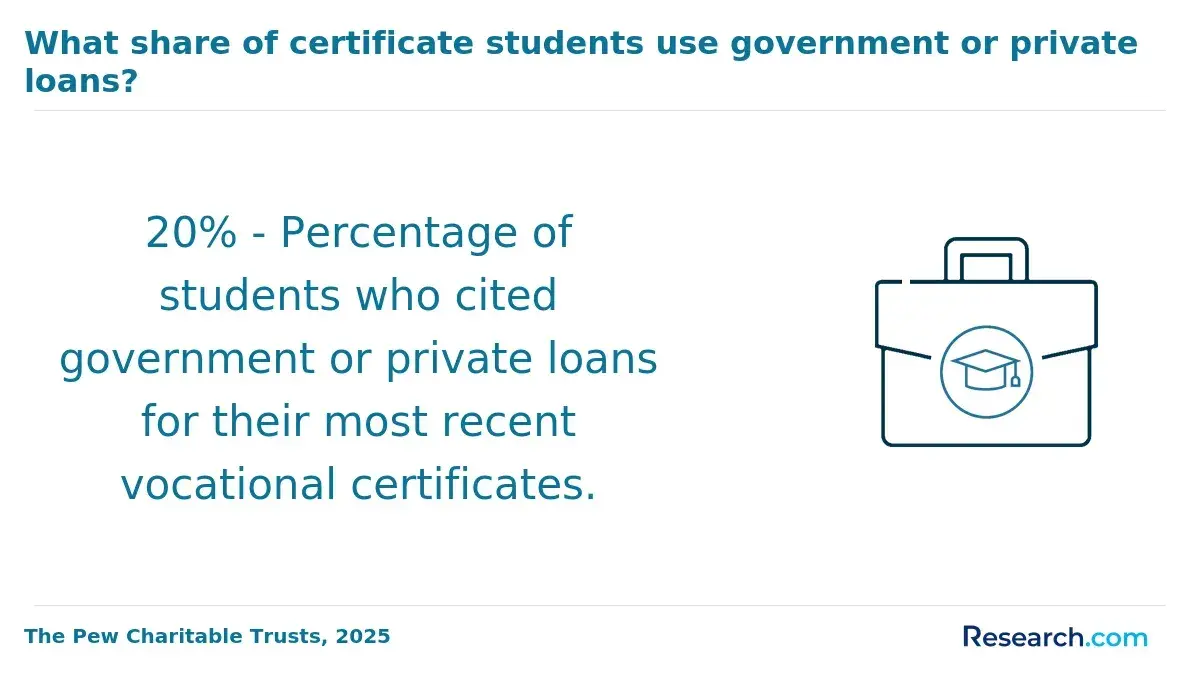
Prior learning can sometimes count toward a web design degree, but it is rarely automatic. Schools may award credit for military training, standardized exams, professional certifications, portfolio review, or documented work experience if the learning matches college-level outcomes.
This can be especially valuable for adult learners who already build websites, manage content systems, create digital assets, or support UX projects at work. Students returning to school later in life may also want to compare flexible pathways across fields, including degrees for older adults, because transfer and prior learning policies can affect both cost and confidence.
Prior learning works best when it is documented in academic language. The following credit sources are worth asking about if you have nontraditional experience:
- Military training: Schools may review Joint Services Transcript recommendations and apply credits to technology, communication, leadership, or elective categories.
- Standardized exams: CLEP, DSST, AP, or IB credits may satisfy general education or elective requirements if scores meet school policy.
- Professional certifications: Some schools review certifications in areas such as web development, project management, cloud tools, digital marketing, or accessibility.
- Portfolio assessment: Faculty may evaluate websites, design systems, prototypes, usability reports, or front-end projects for course equivalency or placement.
- Employer training: Structured training may qualify if it has learning objectives, contact hours, assessments, and documentation.
How Do Transfer Credits Affect the Cost and ROI of a Web Design Degree?
Transfer credits affect ROI by reducing tuition, fees, time away from full-time work, and the number of semesters before a student can apply for degree-aligned roles. The strongest savings usually come from applying lower-cost credits to a higher-cost bachelor's program without repeating courses.
College Board's 2024 data lists average published tuition and fees of $4,050 for public two-year colleges and $11,610 for in-state public four-year colleges. For a web design student, the takeaway is straightforward: credits earned at a lower-cost institution can improve ROI only if the receiving school applies them toward graduation requirements.
The table below shows how transfer efficiency changes the financial picture. It does not predict your actual bill, but it shows the cost logic students should test with each school's tuition rate and transfer evaluation.
| Scenario | Likely effect on tuition | Likely effect on time | ROI interpretation |
| 60-credit associate degree transfers cleanly into a bachelor's program | Can reduce the number of four-year institution credits needed by about half | May leave about 2 years full time | Often strong value if the student avoids duplicated general education and prerequisite courses |
| 90 credits accepted into a bachelor's completion program | Can limit paid credits at the new school to the residency and upper-division core | May leave about 1 year full time | Often the fastest path, but only if remaining courses are offered frequently enough |
| Many credits transfer only as electives | May reduce total credit count but not required courses | May still require several semesters | Weak ROI because the student pays for repeated or newly required coursework |
| Student transfers without completing an associate degree | Can save time if courses align | Can also create general education gaps | Depends on whether the new school accepts individual courses as planned |
Students comparing web design with other online career-focused programs, such as a masters in human resources, should use the same ROI test: compare total remaining credits, tuition per credit, fees, aid eligibility, time to completion, and realistic career value for the credential.
Do not choose a program only because it accepts the most credits. A lower-cost program with slower course availability may delay graduation, while a slightly more expensive program with an exact transfer map and frequent course starts may produce a better time-to-completion outcome.
What Common Transfer Mistakes Delay Web Design Degree Completion?
The most common transfer mistakes happen before enrollment, when students rely on assumptions instead of documented degree audits. In web design, even small mismatches can delay graduation because upper-division studio, coding, UX, and portfolio courses may be offered in a sequence.
Watch for these mistakes before choosing a school. Each one can turn a transfer-friendly promise into extra semesters:
- Assuming all credits transfer: A school may accept credits but not apply them to required courses, which limits time savings.
- Ignoring course equivalencies: A "web design" course at one school may match an elective, not the required front-end development course at another.
- Transferring before checking an articulation agreement: Students can miss a cleaner associate-to-bachelor's pathway already approved between institutions.
- Overlooking residency requirements: A school may require the final 30 credits, upper-division major courses, or a capstone to be completed there.
- Forgetting course age limits: Older technology credits may need review because web standards, accessibility practices, and development tools change.
- Enrolling before receiving a written evaluation: Verbal estimates can change once official transcripts and faculty reviews are complete.
- Choosing based only on transfer maximums: A 90-credit cap is less useful if most credits become electives and major requirements remain unmet.
The safest approach is to compare programs using the remaining-course list, not just the accepted-credit count. Ask each school to show exactly which courses you still need, when they are offered, whether they are online or campus-based, and whether prerequisites could slow your sequence.
Which Web Design Programs Offer the Most Efficient Transfer Pathways?
The most efficient web design pathways are usually not a single brand-name category. They are programs with the right combination of accreditation, credit acceptance, curriculum fit, course availability, and advising quality.
For most transfer students, the strongest options fall into a few recognizable models. Use these categories to narrow your search before comparing individual schools.
| Efficient pathway | Why it can reduce time | Best for | When to be cautious |
| AA or AS transfer degree to a bachelor's in web design, digital media, or UX | Often clears lower-division general education and foundational coursework | Students starting at community college or near completion of an associate degree | If the associate degree is not part of an approved transfer map |
| AAS in web design to applied bachelor's program | Technical courses may match applied major requirements | Students with hands-on web, media, or development training | If transferring into a more theory-based BA or BS with different general education requirements |
| Online bachelor's completion program | Often accepts large transfer blocks and serves working adults | Students with 60 to 90 prior credits | If course rotations are limited or the major core is highly prescribed |
| Public statewide transfer pathway | Course equivalencies and general education blocks may be clearly defined | Students who plan to stay within one state system | If switching states or moving from quarter credits to semester credits complicates the audit |
| Prior-learning-friendly adult program | May award credit for exams, military training, certifications, or portfolio learning | Experienced designers, developers, veterans, and working adults | If prior learning credits count only as electives and do not reduce major requirements |
A student with no prior credits may get the best value from starting at a community college with a formal transfer agreement. A student with 75 or more usable credits may finish faster in an online bachelor's completion program. A student with strong work experience but few transcripts should look for prior learning assessment, but should confirm how many credits can apply to the major.
How Should Students Compare Web Design Programs Based on Transfer Efficiency?
To compare web design programs based on transfer efficiency, focus on the degree you can actually complete, not the marketing claim. The best program is the one that gives you the shortest credible path to a recognized credential while preserving quality, affordability, and career relevance.
Use a structured comparison process before applying or enrolling. This sequence helps you compare schools on the factors that most directly affect graduation time:
- Confirm institutional accreditation and make sure the credential is a degree, not only a certificate, if your goal requires a bachelor's credential.
- Request a preliminary transfer review using unofficial transcripts, then request a formal written evaluation before enrolling.
- Compare credits accepted, credits applied to the major, credits applied to general education, elective credits, and remaining upper-division requirements.
- Ask whether the program has course age limits for web development, software, or UX courses.
- Check whether courses are available every term, because accepted credits do not help if the remaining sequence is offered only once a year.
- Calculate total remaining tuition, fees, technology costs, portfolio costs, and expected time to completion.
- Ask about career support, portfolio review, internships, accessibility training, UX research practice, and front-end development depth.
If you may continue into graduate study later, also consider whether the bachelor's program has enough academic depth for future admissions. Students exploring long-term online education pathways can review how advanced programs, including online PhD programs, often use strict transfer, residency, and research-readiness rules that differ from undergraduate degree completion.
The most transfer-efficient web design program is usually the one that gives you a written plan showing fewest remaining required credits, predictable course scheduling, acceptable total cost, and a curriculum aligned with your target role. For aspiring UX designers, that may mean stronger research and prototyping coursework. For front-end developers, it may mean deeper JavaScript and accessibility training. For visual designers, it may mean portfolio, typography, branding, and interactive media depth.
Other Things You Should Know About Web Design
Many bachelor's programs allow up to about 60 to 90 semester transfer credits, but the usable amount depends on how those credits apply to the degree. Ask for a written degree audit that shows remaining requirements.
It often helps if the associate degree is part of an approved transfer pathway. If there is no articulation agreement, transferring earlier may be better when your target bachelor's program has specific design or coding prerequisites.
Sometimes, but not automatically. Most colleges require a formal prior learning assessment, ACE-style recommendation, institutional partnership, or faculty portfolio review before noncredit bootcamp learning can become academic credit.
They can be, especially when designed for adult learners or degree completion students. However, format alone does not guarantee efficiency; compare accreditation, residency rules, course equivalencies, and remaining major requirements.
Top Trending Web Design Rankings
References
- Top Online Schools That Accept Transfer Credits https://www.edvisorly.com/student-guides/online-schools-that-accept-transfer-credits
- Full Transfer Guide - OnlineDegree.com https://www.onlinedegree.com/full-transfer-guide/
- The Most Popular Accredited Online Colleges https://www.onlineu.com/online-schools/most-popular
- Navigating Barriers to Success for Community College Science Students: A Review of Transfer Challenges https://articlegateway.com/journals/index.php/JHETP/article/view/7342
- The Importance of Understanding Transfer Credit Policies https://www.sophia.org/blog/higher-education/understanding-transfer-credit-policies/
- Most Popular Online Courses https://www.straighterline.com/online-college-courses/most-popular/
- Accountability Report 2025 https://accountability.universityofcalifornia.edu/2025/chapters/chapter-3.html
- How long do freshmen really take to graduate at top universities? https://talk.collegeconfidential.com/t/how-long-do-freshmen-really-take-to-graduate-at-top-universities/386780
- More Data on Credit Transfer (Part 3) | HESA https://higheredstrategy.com/more-actual-data-on-credit-transfer-part-3/
- Findings (Beyond Transfer) - Public Agenda https://publicagenda.org/resource/beyond-transfer/findings/