2027 Web Design Degree Specialization Pay Report: Which Academic Tracks Lead to the Highest Earnings

Co-Founder and Chief Data Scientist
Choosing a web design specialization can shape whether you move toward visual design, UX strategy, front-end engineering, product leadership, or e-commerce work. The pay gap matters: the U.S. Bureau of Labor Statistics reports a 2024 median salary of $95,380 for web developers and digital designers, while related technical and management roles can pay more.
This guide helps students, career changers, and working designers compare academic tracks by earnings signals, employer demand, degree level, skills, location, and education cost so they can choose a path with stronger career fit and better return on investment.
Key Things You Should Know
- The strongest earning signals usually appear in technical and product-oriented tracks, especially front-end engineering, web application development, UX/product design, accessibility engineering, and design leadership rather than purely visual web design.
- BLS data places the 2024 median salary for web developers and digital designers at $95,380, but specialization pay varies by role, industry, location, portfolio quality, technical depth, and experience level.
- The best-paying track is not always the best choice; students should compare expected outcomes against tuition, time to completion, internship access, portfolio support, regional demand, and whether the curriculum builds marketable skills such as JavaScript, UX research, design systems, analytics, and accessibility.
- Key Things You Should Know
- Which Web Design Degree Specializations Lead to the Highest Earnings?
- How Does Web Design Specialization Pay Vary by Degree Level?
- Which Industries Pay the Most for Different Web Design Academic Tracks?
- Which Web Design Degree Tracks Have the Strongest Long-Term Advancement Potential?
- How Do Location and Remote Work Affect Web Design Specialization Pay?
- What Skills and Courses Make a Web Design Specialization More Marketable?
- How Should Students Compare Web Design Specialization Pay Against Program Cost?
- Do Certifications, Licensure, or Graduate Study Change Web Design Specialization Earnings?
- How Should Students Choose the Best Web Design Degree Specialization for Their Career Goals?
- Top Trending Web Design Rankings
Which Web Design Degree Specializations Lead to the Highest Earnings?
The highest-paying web design specializations tend to be the ones that connect design decisions to business performance, software delivery, product usability, or technical architecture.
A general web design degree may prepare students for many roles, but a focused academic track can signal deeper preparation for specific jobs such as UX designer, front-end developer, UI engineer, product designer, or web systems specialist.
Because national salary datasets rarely report pay by college concentration, the most reliable way to compare specializations is to map each track to related U.S. occupations. The table below uses 2024 BLS salary proxies where available and explains how students should interpret them:
| Web design specialization | Common career direction | Best salary proxy | 2024 median pay signal | Earnings outlook |
| Front-end engineering or UI engineering | Building interactive websites, web apps, component libraries, and performance-focused interfaces | Software developers | $133,080 | Often strongest when the program includes JavaScript, TypeScript, React, APIs, testing, and performance optimization |
| Web application development or full-stack web design | Designing and coding websites, web platforms, and database-connected user experiences | Web developers and digital designers | $95,380 | Strong for students who want broader technical flexibility across agencies, SaaS firms, e-commerce, and in-house digital teams |
| UX/UI design or product design | Improving usability, user flows, prototypes, research insights, and product interfaces | Web developers and digital designers | $95,380 | Can pay well when paired with research, analytics, product strategy, and portfolio evidence of business impact |
| Accessibility and inclusive design | Making digital products usable for people with disabilities and compliant with accessibility standards | Web developers and digital designers | $95,380 | Rising demand because employers need accessible websites, procurement-ready products, and lower legal risk |
| Digital product management or design leadership | Leading product roadmaps, design teams, user research priorities, and cross-functional decisions | Computer and information systems managers | $171,200 | Highest long-term ceiling, but usually requires experience beyond the degree |
| Visual web design, branding, or motion design | Creating layouts, brand systems, digital graphics, animations, and marketing assets | Graphic designers | $61,300 | Can be fulfilling and commercially valuable, but earnings often depend heavily on portfolio niche, client base, and industry |
For most students, the highest-earning academic track is not simply "web design" but web design plus a technical, product, or business specialization. Front-end engineering and web application development generally provide the clearest salary upside because they qualify graduates for technical roles, while UX/product design can be strong when the student builds research, prototyping, and analytics skills.
Students should be careful with salary rankings that treat every graduate in a concentration as if they enter the same job. A student in a UX track who builds a strong portfolio, completes internships, and learns analytics may have better prospects than a student in a technical track who graduates without real projects or code samples.
How Does Web Design Specialization Pay Vary by Degree Level?
Degree level affects web design pay because it changes the roles a student can reasonably target. An associate degree may support entry-level production, CMS, or junior front-end roles; a bachelor's degree is more common for UX, product design, and software-adjacent jobs; graduate study is usually most useful for leadership, research, teaching, or specialized human-computer interaction work.
The table below compares degree levels by typical fit rather than promising a specific salary. This matters because a lower-cost credential with strong portfolio support may beat a more expensive degree if both lead to the same entry-level job market:
| Degree level | Typical length | Best-fit web design tracks | Common career targets | Pay and ROI considerations |
| Certificate or undergraduate minor | Several months to one year | CMS design, UI basics, responsive design, accessibility basics | Web content assistant, junior designer, freelance site builder | Lower cost and fast entry, but may be less competitive without a strong portfolio or prior degree |
| Associate degree | About two years | Web design, front-end basics, digital media, e-commerce site production | Junior web designer, web production specialist, CMS coordinator | Often practical for local or entry-level work, especially when transfer pathways reduce bachelor's costs |
| Bachelor's degree | About four years | UX/UI, front-end development, product design, interactive media, web development | UX designer, front-end developer, digital designer, web developer | Usually the strongest all-around option for students seeking competitive roles in larger employers |
| Master's degree | One to three years | Human-computer interaction, information architecture, design leadership, digital product strategy | UX researcher, senior product designer, design strategist, product lead | Most useful when it unlocks a specific career move, not when it repeats undergraduate coursework |
| Doctoral study | Varies widely | HCI research, design education, accessibility research, learning technology | Research scientist, professor, advanced UX researcher | Rarely required for standard web design jobs; best for research-heavy or academic goals |
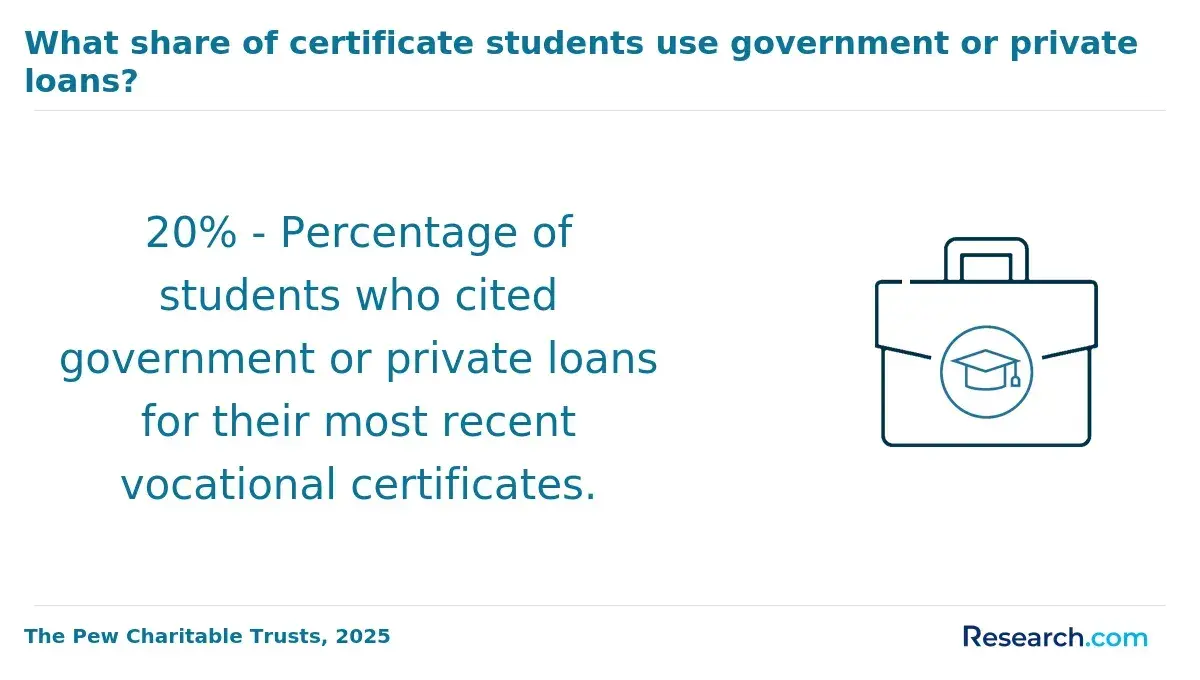
Students should also compare how much debt they would need to take on. Federal undergraduate direct loans first disbursed in the 2024-2025 award year carry a 6.53% fixed interest rate, which makes cost control more important when two programs lead to similar job options.
Graduate study can make sense when it builds a clear specialty, but students should not assume more education automatically means better pay. Those exploring research-heavy or teaching-oriented digital design paths may want to compare formats and timelines for online PhD programs before committing to a long academic route.
Which Industries Pay the Most for Different Web Design Academic Tracks?
Industry can influence web design pay as much as the specialization itself. The same UX, front-end, or visual design skill set may command different compensation in software, finance, healthcare, higher education, retail, nonprofit organizations, or small agencies.
The table below summarizes where different academic tracks tend to have stronger earning potential and why. It is meant to help students connect concentrations to employer demand, not to rank industries as guaranteed outcomes:
| Academic track | Industries with stronger pay signals | Why employers pay for it | Important trade-off |
| Front-end engineering | Software, fintech, SaaS, enterprise technology, cybersecurity platforms | Interactive interfaces affect product quality, speed, accessibility, and customer retention | Requires ongoing coding practice and comfort with technical interviews |
| UX/product design | Technology, healthcare technology, financial services, e-commerce, consulting | Usability and conversion improvements can directly affect revenue and customer satisfaction | Portfolio must show research decisions, not just polished screens |
| Accessibility and inclusive design | Government contractors, education technology, healthcare, enterprise software, public-facing services | Accessible digital products reduce user barriers and compliance risk | Students need standards knowledge and testing methods, not only empathy-focused coursework |
| E-commerce web design | Retail, consumer brands, marketplaces, subscription businesses, digital marketing agencies | Better web experiences can improve product discovery, checkout flow, and campaign performance | Pay varies widely between small merchants and large digital commerce teams |
| Visual web design and branding | Advertising, media, entertainment, direct-to-consumer brands, agencies | Strong visual systems support brand recognition and campaign performance | Competition can be high, and compensation may depend on portfolio reputation |
| Design management | Large technology firms, consulting, enterprise product companies, digital transformation teams | Leaders coordinate designers, engineers, researchers, and business stakeholders | Usually not an immediate post-graduation role |
The strongest pay often appears where web design is tied to measurable business outcomes: product adoption, conversion, retention, operational efficiency, accessibility compliance, or software quality. That is why a student interested in visual design may improve earnings prospects by adding analytics, user testing, conversion optimization, or front-end implementation skills.
One common mistake is choosing a specialization because it sounds creative without checking where the employers are. Students should review job postings in their target city or remote market and count how often employers request specific tools, frameworks, research methods, accessibility knowledge, or product collaboration experience.
Which Web Design Specializations Offer the Best Entry-Level Earnings?
Entry-level earnings are usually strongest when graduates can contribute to production work quickly. Employers hiring junior candidates often look for evidence that the applicant can ship usable, responsive, accessible, and well-documented web experiences-not just complete coursework.
The best entry-level tracks usually combine portfolio clarity with skills that hiring managers can evaluate. Students comparing specializations should look for programs that help them build proof in the following areas:
- Front-end development tracks should include HTML, CSS, JavaScript, responsive layouts, version control, accessibility testing, and at least one modern framework or component-based workflow.
- UX/UI tracks should include user research, wireframing, prototyping, usability testing, information architecture, design systems, and case studies that explain design decisions.
- E-commerce tracks should include CMS platforms, product page design, checkout usability, analytics, SEO basics, conversion testing, and marketing technology integrations.
- Accessibility tracks should include WCAG concepts, keyboard navigation, screen reader testing, semantic HTML, color contrast, form usability, and documentation for engineering teams.
For students who need to work quickly after graduation, front-end and web development concentrations may provide more immediate job-market clarity because technical skills are easier to screen. UX/UI can also be strong at the entry level, but junior UX roles are competitive and often require polished case studies that show research, iteration, and impact.
A practical way to compare entry-level tracks is to review 20 to 30 junior job postings and identify repeated requirements. If a program's curriculum does not teach the tools and methods that keep appearing in those postings, the advertised specialization may be less marketable than it sounds.
Which Web Design Degree Tracks Have the Strongest Long-Term Advancement Potential?
Long-term advancement usually depends on whether a specialization can grow into senior individual contributor, technical lead, product strategist, management, consulting, or entrepreneurship pathways. A track with moderate entry pay may still be valuable if it builds skills that compound over time.
The table below compares advancement potential by track. Students should use it to think beyond the first job and consider how each specialization might evolve over five to ten years.
| Track | Possible advancement path | What raises the ceiling | When it may be limiting |
| Front-end engineering | Senior front-end developer, UI engineer, technical lead, design systems engineer | Deep JavaScript knowledge, architecture, performance, accessibility, testing, mentoring | If the student dislikes coding or avoids technical problem-solving |
| UX/product design | Senior product designer, UX lead, design strategist, product manager | Research maturity, metrics literacy, stakeholder communication, product thinking | If the portfolio only shows visuals without evidence of user or business outcomes |
| Accessibility design | Accessibility specialist, inclusive design lead, accessibility consultant | Standards knowledge, audit experience, remediation planning, legal and procurement awareness | If the program treats accessibility as a single course rather than a repeated practice |
| E-commerce design | Conversion optimization specialist, digital experience manager, e-commerce product lead | Analytics, experimentation, SEO, merchandising systems, checkout optimization | If the student learns only template customization without strategy or data analysis |
| Visual and brand-centered web design | Senior designer, art director, creative director, independent studio owner | Distinctive portfolio, client strategy, campaign results, brand systems, presentation skills | If the student does not add business, motion, UX, or implementation depth |
Management-oriented students should look for programs that include collaboration, project planning, stakeholder communication, and business metrics. A designer who eventually wants to lead digital teams may also compare web design training with broader management pathways such as a masters in human resources if their long-term goal is people leadership rather than hands-on product work.
AI is also changing advancement expectations. Employers increasingly expect designers to use AI-assisted tools for drafting, prototyping, content variation, and code support, but higher-value roles still require judgment, accessibility awareness, user research, systems thinking, and the ability to explain why a design choice matters.
How Do Location and Remote Work Affect Web Design Specialization Pay?
Location still matters in web design pay, even when remote work is available. Employers may set salaries based on headquarters, employee location, market bands, contract type, or whether the role is tied to a local client base.
Remote work can expand opportunities for students outside major tech markets, but it also increases competition. A student in a smaller city may be able to apply for national UX or front-end roles, while also competing with applicants who have internships, polished portfolios, and experience with distributed teams.
Students comparing locations should evaluate the market in a structured way before choosing a specialization. The following steps can help reveal whether a track is realistic for a particular region or remote-first plan:
- Search job postings for the exact specialization title, such as junior front-end developer, UX designer, web accessibility specialist, or e-commerce web designer.
- Separate local, hybrid, and remote roles because each market may reward different skills and experience levels.
- Record the tools and qualifications that appear repeatedly, including frameworks, design platforms, CMS systems, analytics tools, and accessibility standards.
- Compare posted salary ranges when available, but treat them as employer-specific signals rather than guaranteed outcomes.
- Ask program career services where recent students completed internships or contract projects in that specialization.
High-cost regions may show higher advertised salaries, but students should compare compensation against rent, commuting costs, taxes, and debt payments. Remote roles can improve access, but they usually reward candidates who can show independence, documentation skills, asynchronous communication, and a portfolio that makes their value easy to understand.
What Skills and Courses Make a Web Design Specialization More Marketable?
The most marketable web design programs do more than teach software tools. They help students understand users, code or collaborate with developers, test assumptions, improve accessibility, measure outcomes, and present decisions clearly.
Students should compare curricula by skill clusters, not just course titles. The strongest programs usually include a practical mix of the following:
- Technical foundations: Semantic HTML, modern CSS, JavaScript, responsive design, Git, browser testing, web performance, APIs, and basic security awareness.
- UX and product methods: User interviews, personas used carefully, journey mapping, wireframes, prototypes, usability testing, information architecture, and product metrics.
- Accessibility and inclusive design: WCAG concepts, color contrast, keyboard navigation, ARIA basics, screen reader testing, readable content, and accessible forms.
- Visual and interaction design: Typography, layout, color systems, motion principles, microinteractions, design tokens, and reusable component libraries.
- Business and analytics: Conversion funnels, SEO fundamentals, web analytics, A/B testing concepts, stakeholder presentations, and documentation of design impact.
- Professional proof: Portfolio reviews, capstone projects, internships, client work, code repositories, case studies, and critiques with industry professionals.
Course depth matters. A single "intro to UX" class may not prepare a student for UX roles, just as one coding class may not be enough for front-end engineering. Students should look for repeated practice across multiple courses and a capstone that resembles real workplace collaboration.
A red flag is a program that emphasizes trendy tools but ignores durable fundamentals. Tools change quickly, but employers continue to value clear problem definition, accessible design, maintainable code, research-informed decisions, and the ability to work across design, engineering, content, and business teams.
How Should Students Compare Web Design Specialization Pay Against Program Cost?
Pay potential is only useful when compared with program cost, time, and risk. A high-earning specialization may not produce a good return if the program is expensive, lacks employer connections, or does not help students build a portfolio that matches hiring expectations.
College pricing data gives students a baseline for comparison. The College Board reported 2024-2025 average published tuition and fees of $11,610 for in-state students at public four-year institutions and $43,350 at private nonprofit four-year institutions, before grants and scholarships. This gap means the same specialization can have very different ROI depending on school type and aid package.
Before enrolling, students should calculate the full cost of the specialization rather than focusing only on the advertised tuition. A practical ROI review should include the following:
- Total tuition and fees after scholarships, grants, employer tuition assistance, and transfer credits.
- Required technology costs, including laptop specifications, design software, hosting, testing devices, and portfolio platforms.
- Opportunity cost, especially if the student must reduce work hours or delay full-time employment.
- Internship access, career services strength, employer partnerships, alumni outcomes, and portfolio review support.
- Loan repayment pressure, including interest rate, monthly payment estimates, and whether the expected entry-level role can support repayment comfortably.
- Alternative routes, such as starting with a community college, certificate, bootcamp-style supplement, or lower-cost online bachelor's completion program.
Nontraditional students should also weigh flexibility, pacing, and support services. Learners returning to school later in life may find it useful to compare web design pathways with broader degrees for older adults when evaluating online format, transfer credit, and career-change timelines.
The safest approach is to compare net cost against realistic job targets. If two programs teach similar skills, the better value is often the one with stronger portfolio outcomes, internship access, lower debt, and better alignment with the student's target specialization.
Do Certifications, Licensure, or Graduate Study Change Web Design Specialization Earnings?
Web design generally does not require state licensure in the way nursing, teaching, or clinical counseling may. However, certifications, graduate study, and specialized credentials can still influence earnings when they help candidates qualify for higher-responsibility roles or demonstrate skill in areas employers value.
Certifications are most useful when they support a specific specialization rather than decorate a resume. Students should prioritize credentials that connect directly to job postings in their target track:
- Front-end and web development students may benefit from credentials or portfolio proof related to JavaScript frameworks, cloud platforms, version control, testing, and web performance.
- UX/UI students may benefit from structured training in UX research, product analytics, design systems, or usability testing, especially when paired with case studies.
- Accessibility students may benefit from recognized accessibility training and audit experience that shows they can test and document issues responsibly.
- E-commerce students may benefit from platform-specific credentials in major CMS, analytics, advertising, or commerce systems used by employers.
- Design leadership students may benefit more from project management, product management, analytics, or business coursework than from another basic design certificate.
Graduate study can improve marketability when it fills a clear gap, such as human-computer interaction research, advanced UX research, data-informed product strategy, accessibility research, or academic teaching. It is less useful when the curriculum repeats skills a student could build through projects, internships, or targeted certificates.
How Should Students Choose the Best Web Design Degree Specialization for Their Career Goals?
The best web design specialization is the one that fits the student's strengths, target role, market demand, and budget. A higher-paying track can be a poor choice if the student dislikes the daily work, while a creative track can be more valuable if the student builds a strong niche and client-ready portfolio.
Students can make a better choice by narrowing the decision through a structured process. The steps below are designed to prevent common mistakes such as choosing based only on salary lists, school marketing, or a trendy job title:
- Choose a target role first, such as front-end developer, UX designer, accessibility specialist, e-commerce designer, visual web designer, or product designer.
- Review current job postings for that role and identify repeated requirements across tools, methods, degree expectations, and portfolio examples.
- Compare the curriculum against those requirements and look for multiple courses that build the same core skill, not a single introductory class.
- Ask the program for recent internship examples, capstone formats, portfolio review processes, and employer relationships in the specialization.
- Estimate total net cost and likely debt, then compare that against realistic entry-level job options rather than the highest salary you can find online.
- Check whether the specialization supports long-term growth into senior design, engineering, product, management, consulting, or freelance pathways.
- Pick the track that combines market demand with work you can see yourself doing repeatedly, improving at, and explaining confidently to employers.
If the decision is really about changing fields rather than choosing among web design tracks, students should compare the opportunity cost of staying in digital design against a true career pivot. For example, someone drawn more to counseling and family systems than digital products may be better served researching an online masters in marriage and family therapy instead of forcing a web design specialization to fit unrelated goals.
For most students seeking the strongest earning potential, the safest shortlist is front-end engineering, web application development, UX/product design, accessibility, or e-commerce experience design. The final choice should depend on whether the student wants to code, research users, optimize digital sales, build inclusive products, or eventually lead product and design teams.
Other Things You Should Know About Web Design
Technical and leadership-oriented tracks usually show the strongest earning signals. Front-end engineering, web application development, UX/product design, accessibility engineering, and design management tend to offer more salary upside than purely visual web design, especially when paired with strong portfolio evidence and industry experience.
UX design can be a higher-paying path when the role involves research, product strategy, usability testing, and measurable product improvement. However, junior UX roles can be competitive, so students should choose programs that produce strong case studies rather than only attractive interface mockups.
Not always, but a bachelor's degree can improve access to competitive UX, product, and technical roles. Students with certificates or associate degrees may still succeed if they build a strong portfolio, gain internships or freelance experience, and match the skills employers request.
Compare net tuition, required technology costs, debt, time to completion, internship access, portfolio support, and the types of jobs the curriculum realistically prepares you for. A lower-cost program with strong projects and employer connections may offer better value than a more expensive program with weak career support.
Top Trending Web Design Rankings
References
- The web designer salary (and career) guide https://slickplan.com/blog/web-design-salary-guide
- How Much Does a Freelance Graphic Designer Make Around the World | Buzzcube https://www.buzzcube.io/freelance-graphic-designer-income-by-country/
- Design and Multimedia Degree Careers and Salary in Europe - StudyinEurope.eu https://www.studyineurope.eu/design-multimedia/design-multimedia-degree-careers-salary-europe/
- Graphic Designer Salary Guide: Skills, Certifications and Career Tips https://www.dice.com/career-advice/graphic-designer-salary-skills-and-tips-for-taking-it-higher
- What is the starting salary for someone who just got their Web Design degree? https://www.topwebdesignschools.org/faq/what-is-the-starting-salary-for-someone-who-just-got-their-web-design-degree/
- The Most Lucrative Graphic Design Specializations https://www.tops-int.com/blog/the-most-lucrative-graphic-design-specializations
- How Attaining Industry-Recognized Credentials in High School Shapes Education and Employment Outcomes https://fordhaminstitute.org/national/research/industry-recognized-credentials
- Where are they now? https://www.sciencespo.fr/carrieres/en/recruit/recruit-students-graduates/graduates-survey/
- Web Designer Salary: A Detailed Guide https://trainings.internshala.com/blog/web-designer-salary/