2027 Accounting Degree Payback Report: Which Programs Deliver the Best Cost-to-Salary Return

Co-Founder and Chief Data Scientist
Choosing an accounting degree is really a payback decision: how much will you spend, and how quickly can the credential help you move into better-paid work? The U. S. Bureau of Labor Statistics projects 6% growth for accountants and auditors from 2023 to 2033, faster than the average for all occupations.
This guide is for students comparing associate, bachelor's, master's, online, and CPA-focused pathways. You will learn how costs, salaries, accreditation, transfer credits, and employer demand affect ROI so you can choose a program that fits your budget and career goal.
Key Things You Should Know
- The strongest accounting degree payback usually comes from low-cost accredited bachelor's pathways, especially community-college-to-university transfer routes and public in-state programs that still qualify graduates for accounting and CPA-track roles.
- BLS May 2024 wage data places the median annual wage for accountants and auditors at $81,680, but actual outcomes vary by state, industry, CPA eligibility, internship experience, and whether the graduate enters public accounting, corporate accounting, government, tax, or audit.
- Tuition matters as much as salary: College Board 2024-25 published tuition and fees show public two-year colleges at $4,050 and public four-year in-state colleges at $11,610, while private nonprofit four-year colleges list $43,350 before aid.
- What Is the Return on Investment of an Accounting Degree?
- Which Accounting Programs Deliver the Best Cost-to-Salary Return?
What Is the Return on Investment of an Accounting Degree?
Return on investment for an accounting degree compares the financial benefit of the credential with the total cost of earning it. In practical terms, the question is whether the degree helps you qualify for roles, promotions, CPA eligibility, or higher compensation that would be difficult to reach without it.
A useful ROI calculation starts with three numbers: your net education cost after grants and employer assistance, the income you expect to earn while studying or after graduating, and the salary difference between your likely accounting role and your realistic alternative. The formula is simple, but the inputs are personal.
Simple payback period = total net degree cost ÷ annual earnings gain attributable to the degree.
For example, if a degree improves access to staff accountant, audit associate, tax associate, or financial reporting roles, the payoff can be meaningful. BLS May 2024 wage data reports a median annual wage of $81,680 for accountants and auditors. That figure should not be treated as a promise; it is a national median across experience levels, industries, and locations. Still, it shows why accounting remains a financially practical major when students control tuition and graduate with marketable experience.
The table below summarizes how accounting credentials typically differ for ROI purposes. It is not a ranking of every school; it is a decision framework for matching the credential level to the role you want.
| Pathway | Best fit | Typical ROI logic | Main caution |
| Accounting certificate | Career changers or bookkeepers adding focused skills | Low cost and short timeline can be valuable for entry-level accounting support roles | May not qualify for staff accountant or CPA-track positions by itself |
| Associate degree in accounting | Students seeking bookkeeping, payroll, accounts payable, or transfer options | Often strong first-step value when credits transfer cleanly to a bachelor's program | Career ceiling may be lower without completing a bachelor's degree |
| Bachelor's degree in accounting | Students targeting staff accountant, audit, tax, corporate accounting, or government accounting | Usually the core ROI credential because many accounting roles expect a bachelor's degree | High tuition or weak recruiting support can reduce the payoff |
| Master's in accounting | Students who need additional credits for CPA eligibility or want advanced technical training | Can pay off when it fills a specific CPA or advancement gap | Lower ROI if it duplicates undergraduate coursework without improving career access |
| MBA with accounting concentration | Professionals moving toward management, finance leadership, or operations roles | May support broader advancement beyond technical accounting | Not always the best route for CPA-focused technical accounting roles |
A degree has the best return when the credential is required or strongly preferred for the job you want. It has weaker return when you overpay for a brand name, lose credits during transfer, or choose a program that does not align with CPA rules in your state.
Which Accounting Programs Deliver the Best Cost-to-Salary Return?
The accounting programs with the best cost-to-salary return are usually not the most expensive programs. They are programs that combine recognized accreditation, low net price, strong transfer or internship pathways, CPA-aligned coursework, and access to employers that hire entry-level accounting talent.
The strongest ROI profile often comes from a public, regionally accredited bachelor's program with accounting major requirements that support CPA eligibility planning. However, the "best" program depends on your starting point: a first-time student, a working adult, a transfer student, and a CPA candidate may need different routes.
The table below ranks common accounting program models by likely cost-to-salary return. Use it as a screening tool before comparing individual schools.
| ROI rank | Program model | Why the return can be strong | Who should consider it |
| 1 | Community college plus transfer to an accredited public bachelor's program | Lower early coursework cost, broader access, and a clear path to bachelor's-level accounting roles | Cost-conscious students who can verify transfer agreements before enrolling |
| 2 | In-state public bachelor's in accounting | Often balances recognized degree value with moderate tuition and local employer recruiting | Students who want traditional campus recruiting, internships, and CPA-track advising |
| 3 | Accredited online bachelor's in accounting from a public or nonprofit institution | Can reduce relocation and commuting costs while allowing students to keep working | Working adults, parents, military learners, and students outside major metro areas |
| 4 | Employer-supported bachelor's completion program | Tuition assistance can lower out-of-pocket cost and shorten payback | Employees already working in finance, payroll, operations, or administration |
| 5 | Master's in accounting designed for CPA credit gaps | Can be high value when it directly satisfies CPA education needs and improves recruiting access | Bachelor's graduates who need additional accounting credits or a structured CPA pathway |
| 6 | High-cost private program without clear accounting recruiting outcomes | May offer quality instruction, but ROI depends heavily on scholarships and placement strength | Students receiving large grants or targeting a school with proven employer connections |
Students comparing accounting with broader business leadership should also look carefully at whether a specialized accounting degree or an MBA better fits the target role. If your goal is management rather than CPA-track accounting, comparing easy online MBA programs can help clarify whether a broader business credential is a better fit.
Accreditation is especially important. At minimum, the institution should be regionally accredited. Programmatic business or accounting accreditation, such as AACSB or ACBSP, can add credibility, but it should be weighed alongside cost, CPA alignment, faculty support, internship access, and graduate outcomes.
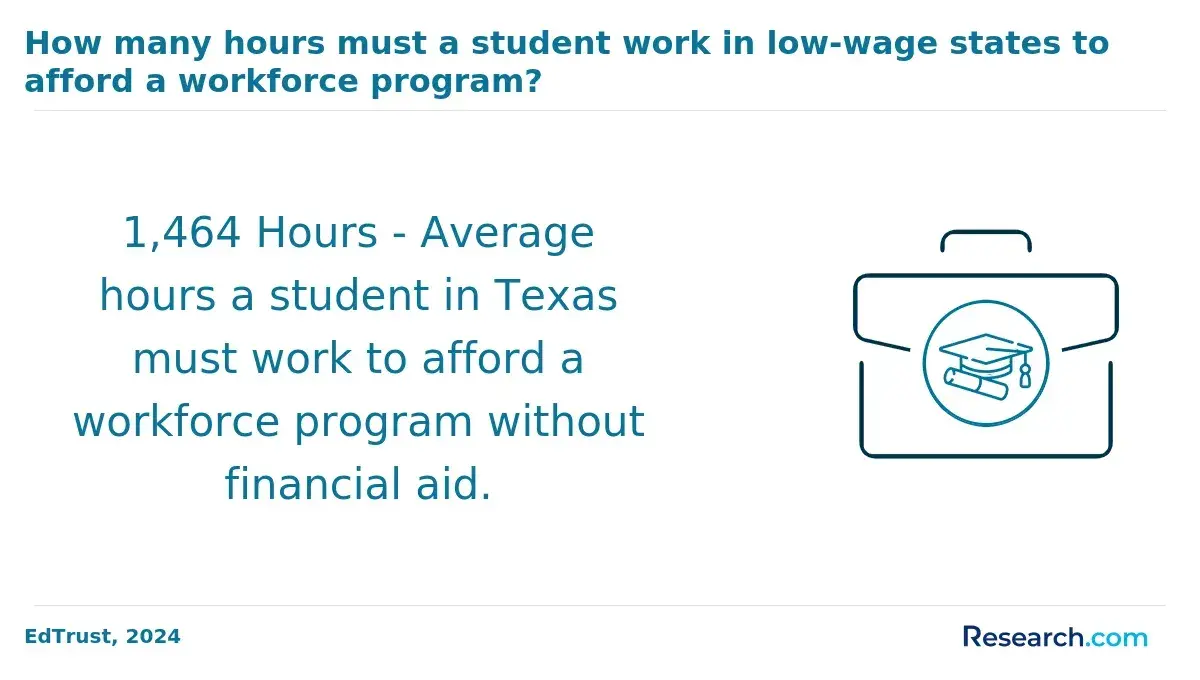
Tuition affects accounting degree payback more directly than almost any other factor because entry-level accounting salaries are not unlimited. A student who pays substantially more for the same labor-market access needs either stronger scholarships, better recruiting outcomes, faster completion, or a clear reason the added cost is justified.
Published tuition is not the same as net price, but it is a useful starting point. The following College Board 2024-25 figures show why program type can dramatically change the payback period before grants, scholarships, housing, books, transportation, and lost work time are considered.
| Institution type | Published tuition and fees | ROI implication for accounting students |
| Public two-year, in-district | $4,050 | Often the lowest-cost way to complete general education and introductory accounting courses if credits transfer |
| Public four-year, in-state | $11,610 | Frequently a strong value for bachelor's-level accounting roles and local recruiting |
| Public four-year, out-of-state | $30,780 | Can weaken payback unless the program offers major scholarships or exceptional employment access |
| Private nonprofit four-year | $43,350 | Can be worthwhile with grants or strong placement, but sticker price alone may create a longer payback period |
The most important number is your net cost, not the advertised price. A private nonprofit college with a large grant can cost less than a public option, while an out-of-state public program can become expensive quickly. Students should ask each school for a net price estimate, accounting major fees, online course fees, transfer-credit rules, CPA advising support, and required internship expectations.
Online accounting programs can improve ROI when they allow students to keep earning income, avoid relocation, or accelerate through transfer credits. They can hurt ROI if the program has weak advising, unclear CPA alignment, poor employer recognition, or limited access to internships.
The break-even timeline for an accounting degree depends on net cost, debt, time out of the workforce, and the salary increase the credential helps unlock. A low-cost bachelor's completion route can pay back much faster than a high-cost program that leads to the same entry-level job.
The cleanest way to estimate break-even is to use your own numbers. Students should calculate net cost after aid, then compare expected post-graduation earnings with the best realistic alternative available without the degree.
- Estimate total net cost, including tuition, fees, books, software, exam preparation, commuting, and any added borrowing costs.
- Subtract grants, scholarships, employer tuition assistance, military benefits, and transferable credits that reduce what you must pay.
- Estimate the annual earnings difference between your likely accounting role and your realistic no-degree or lower-credential option.
- Divide net cost by the annual earnings difference to estimate how many years of added earnings are needed to recover the cost.
- Recalculate using conservative, moderate, and optimistic salary assumptions because entry-level outcomes vary by region and employer.
For a quick rule of thumb, every additional $10,000 in net education cost requires $10,000 in additional career earnings to break even. That does not mean you need to recover the amount in one year. It means unnecessary borrowing, repeated courses, lost transfer credits, and delayed graduation can materially lengthen the payback period.
The table below shows how different cost profiles affect payback logic without assuming a guaranteed salary.
| Cost profile | Typical situation | Payback implication |
| Low net cost | Community college transfer, in-state tuition, high transfer credit, grants, or employer assistance | Often the strongest financial case if the program leads to bachelor's-level accounting opportunities |
| Moderate net cost | Public university, accredited online bachelor's, or master's used to meet CPA education needs | Can be reasonable when the credential clearly supports job access or advancement |
| High net cost | Out-of-state tuition, limited aid, private sticker price, or repeated credits after transfer problems | Needs stronger evidence of recruiting, scholarships, CPA alignment, or career mobility to justify the cost |
| Uncertain net cost | Program has unclear fees, weak transfer review, or vague credit requirements | Risky because students cannot estimate payback accurately before enrolling |
Break-even estimates should include opportunity cost. A full-time student who stops working may finish faster, but lost income matters. A part-time student may keep earning, but a longer timeline can delay access to higher-level roles. The better choice is the one that produces the strongest total financial outcome, not simply the fastest graduation date.
The biggest ROI drivers for an accounting degree are not only tuition and salary. Program structure, state CPA rules, work experience, employer access, and student behavior all shape the final return.
Before enrolling, students should evaluate the following factors because each can materially change the payback period.
- Accreditation: Choose a regionally accredited institution and confirm whether the accounting or business program has additional accreditation that employers recognize.
- CPA alignment: CPA education rules vary by state, so students should verify required accounting credits, business credits, total credits, and ethics requirements with the state board of accountancy.
- Transfer credit policy: Losing credits during transfer can add semesters of tuition and delay earnings, weakening ROI.
- Internship access: Internships help students test accounting fields, build references, and compete for full-time roles after graduation.
- Employer recruiting: Programs with active relationships in public accounting, corporate finance, government, and regional firms can improve job-search efficiency.
- Technology training: Employers increasingly expect comfort with Excel, accounting systems, data tools, audit platforms, and automation-supported workflows.
- Debt level: Borrowing can be manageable when tied to a strong career plan, but high debt for a low-differentiation program can reduce long-term value.
Common mistakes include choosing a school based only on rankings, assuming online programs automatically meet CPA requirements, ignoring fees beyond tuition, and enrolling in a master's program before knowing whether it is actually needed. Students interested in compliance-heavy work should also compare adjacent paths carefully; for example, legal support roles may lead some students to evaluate the cheapest ABA-approved paralegal programs instead of an accounting degree.
A strong accounting program should be able to answer specific questions about graduate outcomes, internship support, CPA exam preparation, transfer mapping, and course sequencing. If admissions staff cannot explain how the curriculum connects to your target role, treat that as a red flag.
Employer demand supports the value of an accounting degree because organizations continue to need professionals who can interpret financial data, prepare reports, support audits, manage tax compliance, and maintain internal controls. Automation is changing the work, but it is not eliminating the need for judgment, ethics, documentation, and communication.
The BLS projects 6% employment growth for accountants and auditors from 2023 to 2033 and reports about 130,800 openings each year on average over the decade. For students, the key takeaway is that accounting remains a broad labor market, but the best opportunities may go to graduates who pair accounting fundamentals with technology and communication skills.
Current trends affecting accounting degree value include AI-assisted bookkeeping, automated reconciliations, data analytics in audit, growing compliance demands, and employer interest in graduates who can explain numbers to non-accountants. This shifts the ROI question: students should not choose programs that only teach manual processes. They should look for coursework in analytics, accounting information systems, internal controls, tax research, financial reporting, and professional communication.
Employer demand also varies by geography. Large metro areas may offer more public accounting and corporate headquarters opportunities, while smaller markets may have strong demand in regional firms, local government, healthcare, manufacturing, and small business advisory services. Online students should ask whether the school has employer relationships in their region or whether career services mainly support students near campus.
Students can improve the financial value of an accounting degree before they ever enroll. The goal is to reduce avoidable cost while increasing the chance that the degree leads to a relevant role.
Use the following steps to make a stronger ROI decision and avoid expensive misalignment.
- Decide whether you want bookkeeping, staff accounting, audit, tax, government accounting, corporate finance, controllership, or CPA licensure.
- Check state CPA rules early if licensure is part of your plan, because credit requirements vary and can affect whether you need graduate study.
- Ask for a written transfer evaluation before committing, especially if you have community college, military, prior university, or work-based credits.
- Compare net price, not sticker price, and include fees, books, software, exam prep, commuting, childcare, and lost work time.
- Prioritize internships, co-ops, or accounting-related part-time work because experience can make the degree more valuable at graduation.
- Build technical skills in Excel, data analysis, accounting systems, tax software, audit documentation, and business communication.
- Avoid over-credentialing too early; do not pay for a master's degree unless it fills a CPA requirement, advancement gap, or clear employer expectation.
If your long-term goal is leadership rather than technical accounting, compare accounting graduate options with broader business degrees. An accounting master's may be best for CPA preparation, while an MBA may be more useful for management, operations, or executive tracks.
Students aiming for academic research or university teaching should be careful not to confuse doctorate marketing with accounting career ROI. Doctoral study is a very different path from CPA practice, and readers exploring research-focused credentials may want to compare 1 year PhD programs online free only after confirming whether such options are credible, accredited, and relevant to their field.
An accounting degree often compares well with business-adjacent fields because it leads to a clearly defined occupational category and a practical skill set. However, the best ROI depends on whether the student wants regulated accounting work, broader finance, analytics, legal support, management, or a people-focused profession.
The table below compares accounting with nearby or commonly cross-shopped options from an ROI perspective. The purpose is to clarify fit, not to claim one field is universally better.
| Field | Typical credential | ROI strengths | When another path may fit better |
| Accounting | Bachelor's degree; CPA eligibility for many advancement paths | Clear employer demand, defined technical skills, broad industry use, and multiple advancement routes | Less ideal for students who dislike detail, deadlines, compliance, documentation, or quantitative work |
| Finance | Bachelor's degree in finance, economics, business, or related field | Can lead to higher upside in investment, corporate finance, and analysis roles | May be more competitive and market-dependent than accounting roles |
| Business administration | Bachelor's or MBA | Flexible credential for management, operations, sales, and entrepreneurship | May be less specialized for entry-level accounting or CPA-track roles |
| Business analytics or information systems | Bachelor's or master's degree | Strong fit for students interested in data, systems, automation, and reporting | May not satisfy accounting or CPA coursework needs without careful planning |
| Paralegal or legal studies | Certificate, associate, or bachelor's depending on role and employer | Lower-cost options may fit students interested in legal documents, compliance, and research | Does not typically lead to accounting, audit, or CPA-track roles |
| Marriage and family therapy | Graduate degree plus state licensure | Better fit for students seeking counseling and client-centered work | Licensure timelines, supervised hours, and emotional labor are very different from accounting |
Students comparing accounting with counseling or human-services careers should weigh licensure timelines and personal fit as much as salary. For example, MFT online programs serve a very different career goal than accounting, even if both require careful attention to accreditation and state requirements.
Accounting is usually a stronger fit for students who like structured problem-solving, financial records, compliance, tax rules, audit evidence, and business reporting. Students who want less deadline-driven work, less regulation, or more client counseling may prefer another field even if accounting has a strong labor-market case.
An accounting degree is worth it when the credential is connected to a realistic role, the program is affordable, the credits support your state and employer requirements, and you are willing to build experience before expecting higher-level pay. It is less attractive when the student chooses an expensive program without clear outcomes or pursues accounting only because it seems "safe" without interest in the work.
The degree is most likely to make sense if you want a career involving financial reporting, tax, audit, budgeting, internal controls, business analysis, or compliance. It is especially practical for students who value a skill set that applies across industries and who are open to earning additional credentials such as the CPA, CMA, or enrolled agent designation when relevant.
It may not be the best fit if you strongly dislike detailed documentation, recurring deadlines, spreadsheets, regulatory rules, or explaining financial information to others. Accounting can be stable and valuable, but it requires accuracy, ethics, persistence, and comfort with systems.
Before deciding, ask each school direct questions. The answers will reveal whether the program supports a strong cost-to-salary return.
- Is the institution regionally accredited, and does the business or accounting program hold additional recognized accreditation?
- Will the curriculum help meet CPA education requirements in my state, or will I need extra coursework?
- What is my estimated net price after grants, scholarships, employer assistance, and transfer credits?
- How many of my previous credits will apply directly to the accounting degree?
- What internships, employer partnerships, career fairs, and accounting-specific career services are available?
- What software, analytics, tax, audit, and accounting information systems tools are included in the curriculum?
- What roles do recent graduates commonly enter, and how does the school verify that information?
The bottom line: an accounting degree can deliver strong payback when you control costs and choose a program that leads to the job you actually want. The smartest choice is not necessarily the cheapest school or the highest-ranked school; it is the accredited program that gives you the required coursework, career access, and financial flexibility at the lowest reasonable net cost.
Accounting graduates can pursue several salary paths, and the payback depends on which path is realistic for the student's credential, location, experience, and licensure plan. A bachelor's degree generally opens more opportunities than an associate degree, while CPA eligibility can strengthen access to audit, tax, financial reporting, and advancement roles.
BLS May 2024 wage data reports a median annual wage of $81,680 for accountants and auditors. The median is useful because it reflects the middle of the national wage distribution, but it includes both newer and experienced professionals. Entry-level offers may be lower, while experienced CPAs, managers, controllers, and specialists in high-cost markets may exceed the median.
The table below shows common accounting-related career directions and how each connects to degree ROI. It focuses on role fit rather than promising a specific salary outcome.
| Career direction | Typical starting credential | Common work | ROI considerations |
| Bookkeeping, payroll, and accounting support | Certificate or associate degree | Transaction recording, reconciliations, payroll, invoices, and basic reports | Lower education cost can make ROI strong, but advancement may require a bachelor's degree |
| Staff accountant | Bachelor's degree | Journal entries, reconciliations, month-end close, financial statements, and internal reporting | Often a practical target for bachelor's graduates seeking stable return |
| Tax associate | Bachelor's or master's degree | Tax preparation, research, compliance, documentation, and client support | Seasonal workload can be intense, but experience may build specialized value |
| Audit associate | Bachelor's degree plus CPA eligibility planning | Audit testing, controls review, documentation, and client interviews | Public accounting can provide strong early-career training, especially for CPA candidates |
| Government accountant or auditor | Bachelor's degree | Budget review, compliance, audits, grants, and public reporting | May offer stable employment and benefits, though salary growth varies by agency |
| Controller or accounting manager | Bachelor's degree, experience, often CPA or graduate study | Financial reporting leadership, close process management, controls, and team supervision | Higher ROI usually comes after several years of experience and demonstrated leadership |
Accounting salaries are also shaped by industry. Public accounting firms, corporate finance departments, healthcare systems, government agencies, banks, insurance companies, nonprofits, and technology firms all hire accounting talent, but they may value different skills. Data analytics, enterprise resource planning systems, tax software, audit tools, Excel, communication, and regulatory knowledge can influence progression.
Other Things You Should Know About Accounting
Yes, for many students, but the best value comes from programs that teach more than manual bookkeeping. AI can automate routine tasks, while employers still need people who understand financial reporting, tax rules, audit evidence, controls, ethics, and business judgment.
An associate degree can be a cost-effective entry point for bookkeeping, payroll, or transfer. A bachelor's degree usually has stronger long-term ROI because many staff accountant, audit, tax, and advancement roles expect it.
Not always. CPA education rules vary by state. Some students meet the required credits through a bachelor's degree plus extra undergraduate courses, while others use a master's in accounting to complete missing accounting or business credits.
They can be, especially when the school is regionally accredited, the curriculum aligns with CPA or employer expectations, and the student gains relevant experience. The format matters less than accreditation, coursework quality, career support, and outcomes.
See What Experts Have To Say About Studying Accounting
Read our interview with Accounting experts

John Wermert, Ph.D., CPA
Accounting Expert
Associate Professor of Accounting
Middle Tennessee State University

Yaw M. Mensah
Accounting Expert
Professor and Interim Vice Dean for Strategic Partnerships
Rutgers Business School

- Why Scholarships Are An Important Source of Financial Aid https://www.cfsww.org/blog/why-scholarships-are-an-important-source-of-financial-aid
- Pros and cons of working in public accounting vs. private accounting https://www.becker.com/blog/career/pros-and-cons-of-working-in-public-accounting-vs-private-accounting
- Four Ways Scholarships and Financial Aid Can Make a Bigger Impact - Scholarship America https://scholarshipamerica.org/blog/four-ways-scholarships-and-financial-aid-can-make-a-bigger-impact/
- Average Starting Salary For Acco… | CPA Exam Forum https://forum.another71.com/forum/welcome-cpa-exam-forum/the-forum/topic/average-starting-salary-for-accounting-graduate-is-53000/page/2/
- MS in Accounting in USA: Top Colleges, Fees & Scope | Amber https://amberstudent.com/blog/post/ms-in-accounting-in-usa
- Accounting Scholarships and Grants | Accounting.com https://www.accounting.com/resources/financial-aid/
- Accounting Graduates Achieve 100 Percent Employment Rate | News https://news.bushnell.edu/2024/06/27/accounting-graduates-achieve-100-percent-employment-rate/
- ROI Of College Majors By Early And Mid-Career Salaries | Bankrate https://www.bankrate.com/loans/student-loans/roi-mid-career-by-major/
- Choices Abound: Private vs Public Accounting – Which is Right for You? | ACCPE https://accpe.com/blog/private-vs-public-accounting
- How Scholarships Ease Financial Burdens for Australian Students https://www.cihe.edu.au/how-scholarships-ease-financial-burdens-for-australian-students/