# 1 position
Most Affordable Pharmacy Technician Schools & Training in San Juan for 2027
Audited and Verified:
Our Editorial and Data Verification Process
Research.com uses government datasets, official education statistics and primary institutional information to support its career and degree guides. Our review process checks factual accuracy, occupational definitions, source dates and the requirements associated with the credentials discussed.
How This Article Was Fact-Checked
Our editorial team verifies salary estimates, employment projections, education requirements and program information against original data providers and official organizations. Salary figures are checked against the relevant occupational definitions and reporting periods. Information about licensure, accreditation and required in-person training is reviewed separately.
Fact-checked and verified on:

Co-Founder and Chief Data Scientist

Reviewed by Karolina Broda
Fact-Checker and Data Verification
Choosing the cheapest pharmacy technician program can be costly if it does not prepare you for the credential and practical work you need. The U.S. Bureau of Labor Statistics reports a $45,750 national median annual wage for pharmacy technicians in May 2025, but that is not a San Juan starting salary. The Research.com team of data scientists created a Most Affordable Pharmacy Technician Trade Schools in San Juan for 2027 ranking to help students identify programs worth considering. This guide explains how to compare their full costs, training and career-entry requirements.
Key findings about pharmacy technician degrees in San Juan
- Compare job-ready cost, not tuition alone. Ask San Juan programs for fees, supplies, required in-person training and the costs of any Puerto Rico credentialing steps; a defensible citywide program-cost average is not established here.
- Verify the occupational pathway before paying. A school credential, national certification and permission to practice under Puerto Rico's rules are different things. Confirm the current requirements with the Puerto Rico Pharmacy Board and each program.
- Use wages as context, not a promise. The U.S. median for pharmacy technicians was $45,750 in May 2025, and national employment is projected to grow 6.4% from 2025 to 2035 (U.S. Bureau of Labor Statistics); neither figure describes a new hire's pay or openings in San Juan.
Table of Contents
- Most Affordable Pharmacy Technician Schools & Training in San Juan for 2027
- What can I expect from a pharmacy technician trade school program in San Juan?
- Where can I work with a pharmacy technician trade school training in San Juan?
What can I expect from a pharmacy technician trade school program in San Juan?
Expect instruction in dispensing workflow, medication names, calculations, inventory, records and patient privacy, followed by opportunities to practice those tasks under supervision. Pharmacy technicians assist pharmacists; they do not independently make clinical decisions (U.S. Bureau of Labor Statistics). Ask how much practice takes place in a lab and whether a supervised pharmacy placement is included. Two programs with similarly named certificates may offer very different access to real dispensing systems and worksites.
The main choice is between a shorter occupational certificate or diploma, a longer associate-degree pathway, and employer-based training where available. A longer program may offer more structured coursework, but it is not automatically the better investment. In San Juan, compare its schedule and placement sites with your ability to commute to them; an unpaid placement can change both your costs and the time you can keep working.
Where can I work with a pharmacy technician trade school training in San Juan?
Retail and hospital pharmacies are distinct targets. Retail work emphasizes prescription intake, insurance transactions, stock and customer service; hospital work can involve medication distribution and preparation under tighter institutional procedures (U.S. Bureau of Labor Statistics). San Juan applicants should ask whether a program's supervised experience matches the setting they want. A retail-only placement, for example, is useful experience but should not be presented as hospital training.
Employers may also train eligible entrants on the job. Before choosing school over that route, compare the employer's training, pay while learning and credential expectations with the school's practical experience and total price.
The national median annual wage for pharmacy technicians was $45,750 in May 2025 (U.S. Bureau of Labor Statistics). A median covers experienced and entry-level workers across the United States; it is neither a San Juan wage estimate nor a likely first offer. Request recent, occupation-specific local wage information from Puerto Rico's labor-market agency and compare actual job postings by setting and shift before estimating what you could earn.
For an investment decision, compare your expected change in earnings with tuition, debt, time away from work and the probability of finishing. Do not use a national median as the sole return-on-investment calculation.
Completion time depends on the credential, course schedule and availability of required in-person practice. A short certificate can be a better fit for someone seeking occupational entry promptly; an associate-degree program generally takes longer and should be justified by training or opportunities the shorter route does not provide. Ask for the program's published calendar, clock or contact hours, lab hours and placement schedule rather than relying on an advertised "finish fast" date.
Articles about quick degrees for high paying jobs can offer broader career context, but pharmacy technician applicants should judge speed against supervised practice and Puerto Rico eligibility. Employer training may let you earn while learning, although time to independent duties still depends on the employer's process and applicable rules.
Online instruction can cover terminology, calculations and regulations; handling medications, practicing workflow and completing any required supervised placement need an appropriate in-person setting. A hybrid program can reduce trips to class, but not necessarily trips to a lab or pharmacy. Before enrolling from San Juan, get written confirmation of where practical training occurs, who arranges it and whether it meets the requirements applicable in Puerto Rico.
Directories of top online colleges with national accredited status do not establish that a particular pharmacy technician program supplies local hands-on training or meets occupational rules. Choose online study for flexibility only after verifying those separate points.
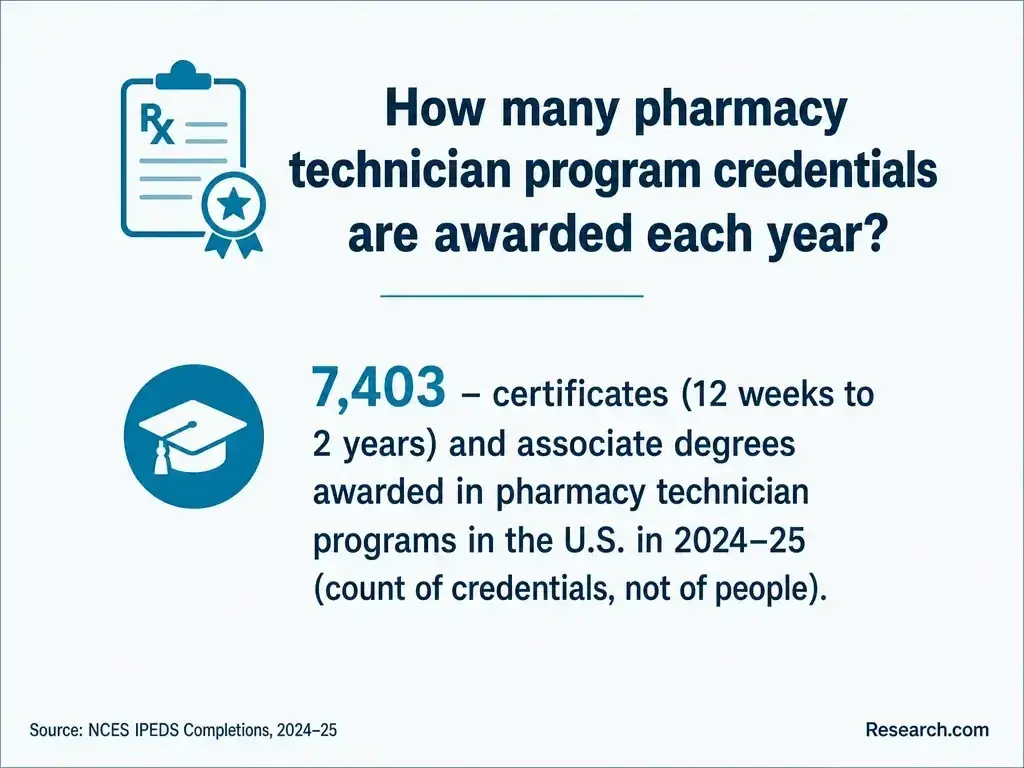
There is no verified, comparable San Juan-wide average program price presented here. A quoted tuition figure may exclude mandatory fees, books, uniforms, screening, examination or application charges, and travel to a placement. Ask each provider for a written total cost to become job-ready, including which charges are payable after classes end. Compare the same credential and training scope across quotes.
Federal aid, if available, depends on the institution and program's eligibility and your circumstances; confirm this with the school's aid office and Federal Student Aid. Also ask about Puerto Rico workforce assistance and paid employer training. An affordable online associate's degree comparison may help frame a longer pathway, but its listed price cannot replace a San Juan-specific quote that includes practical training.
The award may be a school certificate, diploma or, for a longer academic pathway, an associate degree. These establish what the school awarded; they are not the same as professional certification or Puerto Rico authorization to work. Obtain the exact award name and curriculum in writing, then ask the Puerto Rico Pharmacy Board whether it satisfies the education component of the current occupational requirements.
National certification is a separate process governed by the certifying organization's eligibility and examination rules. If a school advertises certification preparation, ask which examination it means and whether graduates meet that organization's current eligibility criteria. Broader guides to healthcare certifications that pay well can help you explore alternatives, not substitute for that check.
Requirements vary by provider and by placement site. Ask admissions whether you need a secondary-school credential, prerequisite coursework, a background check, health documentation or proof of language proficiency, and identify which conditions apply before admission versus before supervised practice. Do not assume that admission means you can enter a placement or qualify for an occupational credential.
If you have relevant prior training or pharmacy work, ask whether documented experience earns credit or changes your course sequence. Confirm how any credit affects tuition, required practical hours and occupational eligibility before accepting an accelerated plan.
A useful curriculum connects dosage calculations and medication terminology to accurate prescription processing, inventory control, records, privacy and communication with pharmacists and patients (U.S. Bureau of Labor Statistics). Ask to see the course outline and a description of the lab or placement tasks. For hospital work, look specifically for supervised exposure relevant to institutional medication workflows rather than assuming every pharmacy placement teaches them.
Technology matters as well: technicians use pharmacy information systems to enter and track prescriptions. Practical instruction should make clear when a technician must stop and refer a question or potential error to the supervising pharmacist.
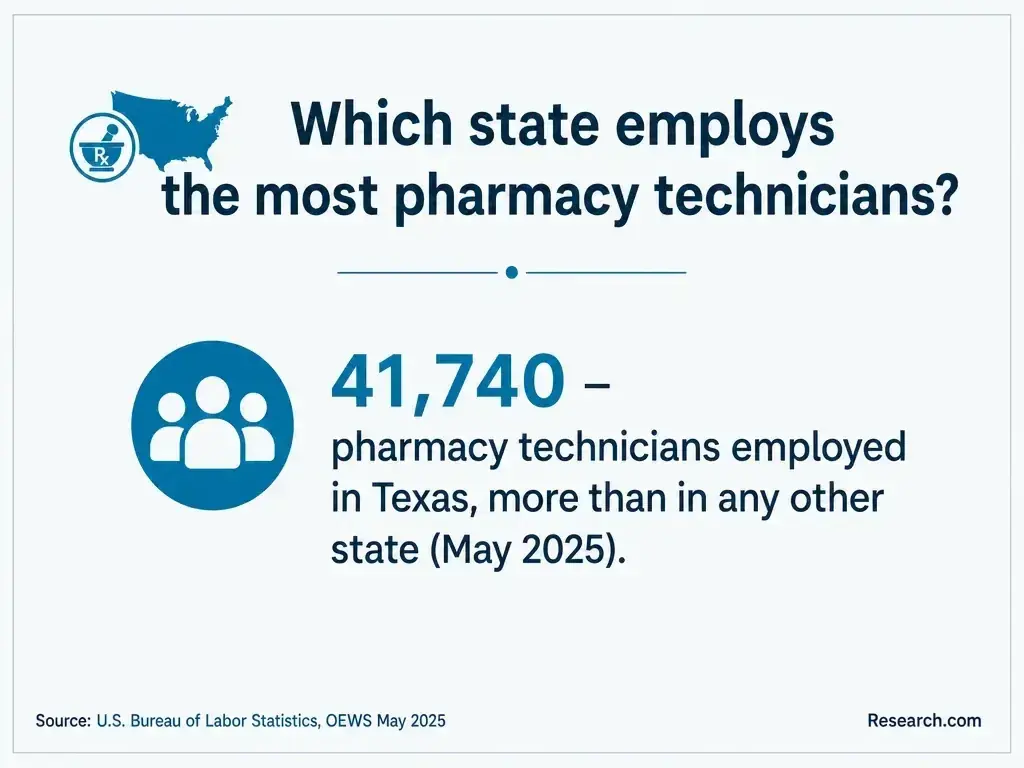
Puerto Rico's occupational rules, not a school's advertising, determine what authorization is needed to perform pharmacy technician duties in San Juan. Confirm the current credential category, education or experience prerequisites, examination steps and application process directly with the Puerto Rico Pharmacy Board and the Puerto Rico Department of Health's professional-regulation office before paying a deposit. Requirements for a national certification examination are separate and come from its certifying organization.
Institutional accreditation addresses the school; state authorization addresses permission to offer education; programmatic accreditation, where applicable, evaluates a program. None automatically confers an occupational license or certification. Ask the school to identify precisely which requirement its training satisfies and to provide the authority for that claim.
Start with the occupation and work setting you want, then compare only pathways that can plausibly get you there. A cost ranking is a useful shortlist, but the least expensive option is poor value if you cannot complete its schedule, obtain practical experience or meet Puerto Rico's occupational requirements.
Use these checks when speaking with each program; request written answers so you can compare like with like.
- Confirm the exact credential, Puerto Rico eligibility pathway and any separate national certification claims with the relevant authorities.
- Request total charges, aid eligibility, the completion schedule and the location and supervision of every practical component.
- Ask for program-specific completion, placement and debt information, including the period measured and whether figures cover pharmacy technician students.
- Compare the quote with any paid employer-training option, including wages you would forgo while attending classes.
Be wary of promises that an online course alone guarantees authorization or that an occupational median predicts your first paycheck. Even comparisons of easy master's degrees that pay well answer a different education question; keep this decision focused on the shortest eligible pharmacy technician route that provides the practice you need.
Entry-level work may lead to more specialized responsibilities in retail or hospital pharmacy as an employer permits and as the technician gains experience. Supervisory or specialized roles depend on demonstrated competence, employer needs and any additional credential requirements; finishing an entry program alone does not confer them. Compare programs by the setting in which you want to start, because relevant supervised experience may be more useful than a broader-sounding credential with limited practice.
If your goal is to make independent clinical decisions, pharmacy technician training is not that pathway. A prospective student who primarily wants immediate paid work should also investigate employer-sponsored entry routes before committing to school.
U.S. pharmacy technician employment is projected to grow 6.4% from 2025 to 2035 (U.S. Bureau of Labor Statistics). This national projection indicates continuing demand but cannot establish the number or quality of openings in San Juan. Check current local postings for the settings you want and note whether employers request practical experience, particular credentials or schedules you can work.
Electronic dispensing and record systems make technical accuracy and the ability to work within pharmacist-supervised procedures important (U.S. Bureau of Labor Statistics). A program's value therefore rests partly on whether its practice resembles the work employers actually advertise, not just on its course title.
Most Affordable Pharmacy Technician Schools & Training in San Juan for 2027
Education is a significant investment. Research.com created the affordability ranking to help readers compare pharmacy technician programs with other reported options in the same location and occupation, rather than with unrelated schools elsewhere. The team checks multiple datasets for credible, consistent information; only programs with completions reported to IPEDS qualify for this ranking.
The most affordable ranking scores tuition, cost of attendance, median student debt and federal loan default rate. Its weights use an entropy-based method, under which indicators that differ more across programs receive more weight. Accreditation and other quality measures do not enter the affordability score. That differs from Research.com's best-program rankings, which also assess student outcomes, earnings, support and recognition. Readers should therefore use the affordability ranking as a cost-focused shortlist, not proof of licensing eligibility or program quality.
The team consulted the following data sources in its ranking work. Some are relevant to other healthcare or trade occupations rather than pharmacy technician training specifically; their inclusion does not imply that they accredit or approve the programs discussed here.
- IPEDS database - reported program completions and institutional data.
- National Center for Education Statistics - federal education data and definitions.
- College Scorecard database - available institutional cost, debt and outcomes data.
- Peterson's database - supplemental institutional information.
- Commission on Accreditation of Allied Health Education Programs - allied-health accreditation reference.
- Accrediting Bureau of Health Education Schools - health-education accreditation reference.
- Commission on Dental Accreditation - dental-program accreditation reference.
- Dental Assisting National Board - dental credential reference.
- National Center for Construction Education and Research - construction-training reference.
- Apprenticeship.gov Partner Finder - apprenticeship-provider reference.
IPEDS and College Scorecard do not cover every employer training route or occupational provider. See Research.com's methodology for more on how rankings are created, and verify current program details directly before enrolling.
# 2 position
Inter American University of Puerto Rico-Metro - Pharmacy Technician/Assistant.
certificate or diploma# 3 position
Universidad Ana G. Mendez-Cupey Campus - Pharmacy Technician/Assistant.
associate# 4 position
Universidad Ana G. Mendez-Cupey Campus - Pharmacy Technician/Assistant.
certificate or diploma# 5 position
CEM College-San Juan - Pharmacy Technician/Assistant.
associateFrequently asked questions about pharmacy technician programs in San Juan
Is the cheapest pharmacy technician program the best choice?
Not necessarily. Compare total cost, completion time, supervised practice and Puerto Rico occupational eligibility. A lower tuition price may exclude expenses or training you still need.
Can I complete pharmacy technician training entirely online?
Some coursework can be remote, but practical competencies require an appropriate in-person setting. Confirm placement arrangements and Puerto Rico requirements before enrolling.
Will a school certificate let me work immediately?
Do not assume so. A school award, national certification and Puerto Rico occupational authorization are separate; verify the current entry requirements with the Puerto Rico Pharmacy Board.
Should I choose a certificate or an associate-degree program?
Choose based on the credential and practical training your intended job requires. Ask what the longer program adds and whether that benefit justifies its extra cost and time.
Can I train while earning a paycheck?
Employer-sponsored training may be an option. Ask prospective employers whether they accept entrants without prior school training, what instruction they provide and which occupational requirements you must meet.
- U.S. Bureau of Labor Statistics - Pharmacy Technicians
Used to verify salary, employment outlook, and typical education requirements.
https://www.bls.gov/ooh/healthcare/pharmacy-technicians.htm - NCES College Navigator (IPEDS)
Used to verify programs offered and institutional accreditation.
https://nces.ed.gov/collegenavigator/ - NHA - ExCPT Pharmacy Technician
Professional certification reference for graduates of this occupation.
https://www.nhanow.com/certifications/pharmacy-technician - Inter American University of Puerto Rico-Metro - official website
Official school website (programs, tuition, admissions).
https://metro.inter.edu/ - Universidad Ana G. Mendez-Cupey Campus - official website
Official school website (programs, tuition, admissions).
https://uagm.edu/ - CEM College-San Juan - official website
Official school website (programs, tuition, admissions).
https://www.cemcollege.edu/cem/