# 1 position
Most Affordable Pharmacy Technician Schools & Training in North Dakota for 2027
Audited and Verified:
Our Editorial and Data Verification Process
Research.com uses government datasets, official education statistics and primary institutional information to support its career and degree guides. Our review process checks factual accuracy, occupational definitions, source dates and the requirements associated with the credentials discussed.
How This Article Was Fact-Checked
Our editorial team verifies salary estimates, employment projections, education requirements and program information against original data providers and official organizations. Salary figures are checked against the relevant occupational definitions and reporting periods. Information about licensure, accreditation and required in-person training is reviewed separately.
Fact-checked and verified on:

Co-Founder and Chief Data Scientist

Reviewed by Karolina Broda
Fact-Checker and Data Verification
The cheapest pharmacy technician program is not necessarily the least expensive route to a job: registration requirements, practical training, fees, and time away from work all matter. The U.S. Bureau of Labor Statistics projects 6.4% national growth in pharmacy technician employment from 2025 to 2035. For prospective students and career changers, this guide explains how to compare North Dakota training routes, costs, and job prospects. It will also feature the Most Affordable Pharmacy Technician Trade Schools in North Dakota for 2027 ranking, created by the Research.com team of data scientists to help students make an informed choice about programs worth considering.
Key findings about pharmacy technician degrees in North Dakota
- The least expensive route depends on total job-entry cost, not tuition alone: compare fees, required practical training, transportation, and any wages available through employer training.
- North Dakota pharmacy technicians must account for state Board of Pharmacy registration; a school credential, institutional accreditation, and national certification are different things (North Dakota Board of Pharmacy).
- The national median annual wage for pharmacy technicians was $45,750 in May 2025, but that figure describes workers across experience levels, not expected starting pay in North Dakota (U.S. Bureau of Labor Statistics).
Table of Contents
- Most Affordable Pharmacy Technician Schools & Training in North Dakota for 2027
- What can I expect from a pharmacy technician trade school program in North Dakota?
- Where can I work with a pharmacy technician trade school training in North Dakota?
What can I expect from a pharmacy technician trade school program in North Dakota?
Expect training for work under a pharmacist's supervision: preparing prescriptions, managing inventory, using pharmacy software, and protecting patient information. Classroom or online lessons alone do not show whether a student can perform these tasks accurately in a dispensing workflow. Compare the amount and setting of supervised practice, especially if you hope to work in a hospital rather than a retail pharmacy (U.S. Bureau of Labor Statistics; North Dakota Board of Pharmacy).
The main routes differ in what you pay, earn, and receive at completion. This comparison helps identify which route is worth investigating before committing to a school.
| Route | Typical credential or outcome | Best fit and main trade-off |
| College or career-school program | Certificate or diploma; an associate degree only if the specific program awards one | Fits students seeking structured instruction and arranged practice; compare full charges and placement support. |
| Employer-sponsored training | Workplace training, potentially alongside a separate certification pathway | Fits applicants who can secure a qualifying position; pay while learning may reduce cost, but training scope and scheduling vary. |
| Registered apprenticeship, if locally available | Paid, structured work-based training and an apprenticeship completion credential | Fits learners seeking paid practice; availability and entry requirements depend on the sponsor. |
A similarly named certificate does not prove two programs offer equivalent practice or satisfy the same state requirements. Request a written curriculum, practical-training plan, and explanation of the registration pathway before enrolling.
Where can I work with a pharmacy technician trade school training in North Dakota?
Pharmacy technicians work in retail pharmacies, hospitals, and other healthcare settings; duties depend on the workplace and the pharmacist's supervision (U.S. Bureau of Labor Statistics). A retail position may emphasize customer transactions and prescription volume, while a hospital position may involve medication distribution and additional preparation procedures.
Location changes the training decision. A student outside a larger North Dakota service center should check not only whether a program can be studied remotely, but also where required practice takes place and whether a nearby employer will consider trainees. An inexpensive program can become costly if its practical site requires repeated long-distance travel.
The U.S. Bureau of Labor Statistics reports a $45,750 national median annual wage for pharmacy technicians in May 2025. This is a useful occupation-wide benchmark, not a North Dakota wage or a prediction for a new trainee. Before estimating repayment or lost earnings, check the latest North Dakota pharmacy-technician wage estimates from the Bureau of Labor Statistics' Occupational Employment and Wage Statistics and ask local employers about their actual entry-level range.
Compare offers on more than hourly pay. Hospital schedules, evening or weekend shifts, benefits, commuting distance, and whether an employer pays for training or certification can change the value of a position. Use a prospective starting offer - not the national median - as the conservative earnings figure in a personal cost calculation.
There is no single program length to assume from the words "pharmacy technician." A school certificate, an associate-degree program, and employer-based training have different schedules and completion requirements. Ask each provider for its published calendar, required contact hours, practical-training hours, and the earliest realistic date you could meet North Dakota's applicable registration requirements (North Dakota Board of Pharmacy).
Shorter study is not automatically a faster route to paid work if a practical placement is delayed. Likewise, broad searches for associate degrees in 6 months online should not be treated as evidence that a particular pharmacy technician program - or its hands-on component - can be completed in that time. Compare the date of likely job eligibility, not just the last day of classes.
Online coursework can make terminology, calculations, and pharmacy-law lessons easier to schedule around work. On-campus or hybrid training may offer more direct access to dispensing equipment, instructor feedback, and supervised practice. Neither format should be judged by its label alone: ask exactly where students demonstrate practical skills and who arranges any workplace experience.
For a rural student, the deciding expense may be travel to a lab or practice site rather than the delivery format. Comparing best accredited online schools with free application may help identify an application-cost question to ask, but a waived application fee and institutional accreditation do not establish that a pharmacy technician program meets North Dakota registration requirements. Confirm those requirements with the North Dakota Board of Pharmacy before paying a deposit.
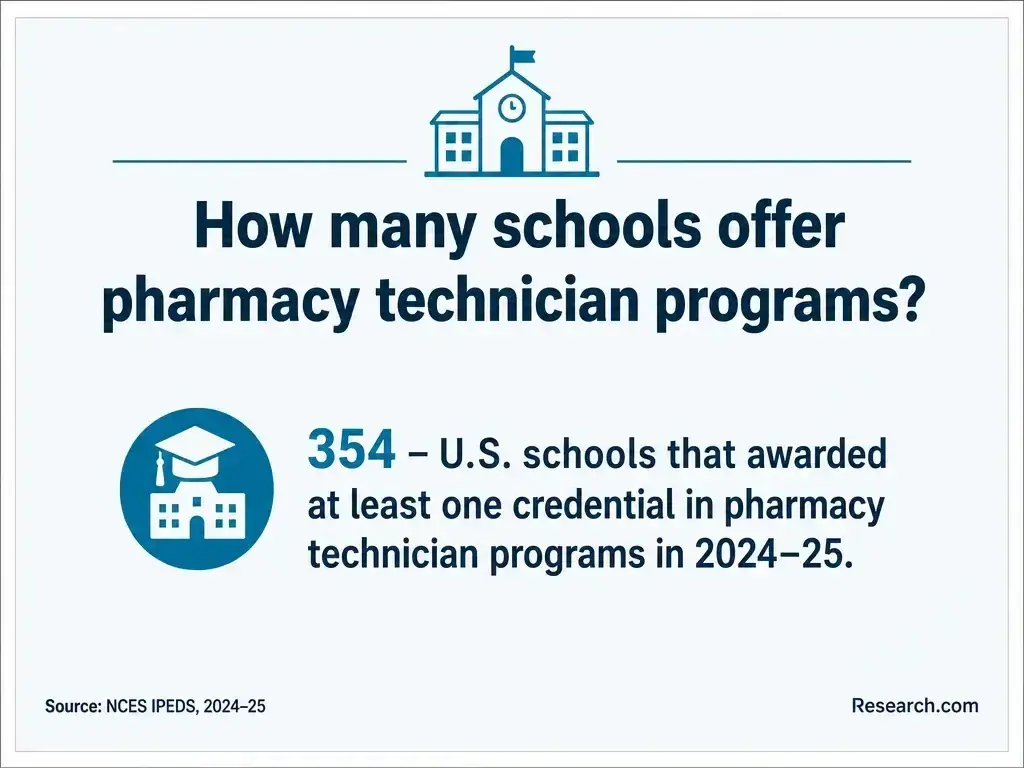
No single statewide average reliably describes the cost of every school, employer-sponsored route, and work-based training option. Published tuition is only the starting point. Ask each provider for an itemized, current cost to become job-ready: mandatory fees, books or software, uniforms, screening or health requirements if applicable, practical-site travel, and examination and registration charges. Add lost earnings if classes or placement reduce your work hours.
Then subtract only assistance you are actually eligible to receive, such as grants, scholarships, qualifying federal aid, workforce funding, or employer-paid training. Federal student aid eligibility depends on the institution, program, and student; do not assume every short course qualifies (Federal Student Aid). A paid training position may have a lower net cost than a lower-tuition school program, although its available hours and instruction may differ.
A provider may award a certificate or diploma; an associate degree is possible only where a particular program explicitly offers one. A school-issued credential documents completion of that program. It is not the same as national professional certification or registration with the North Dakota Board of Pharmacy.
National certification is awarded by a certifying organization after its eligibility and examination requirements are met. Before enrolling, ask the school which certification examination its curriculum prepares students for, whether graduates meet the certifier's current eligibility criteria, and what separate steps the Board requires for the role you intend to hold (Pharmacy Technician Certification Board; National Healthcareer Association; North Dakota Board of Pharmacy).
School admission and permission to work in a pharmacy are separate decisions. Providers may set their own entry rules and practical-site conditions; employers and the Board may impose additional requirements. Get those requirements in writing before paying nonrefundable charges, particularly if a background issue, schedule constraint, or distant placement could prevent completion (North Dakota Board of Pharmacy).
An accessible admissions process can be helpful, but lists of open enrollment online colleges do not establish eligibility for pharmacy practice. Ask the program whether admission guarantees access to required labs or practice placements - it may not - and which registration status a student needs before participating at a worksite.
Relevant instruction covers prescription interpretation, dosage calculations, drug names, inventory, dispensing technology, patient privacy, and error prevention. Practical training should let students apply accuracy checks and communication procedures under appropriate supervision, not merely memorize terms (U.S. Bureau of Labor Statistics; North Dakota Board of Pharmacy).
Match the curriculum to your target setting. If hospital work interests you, ask whether students encounter hospital medication-distribution workflows and how that experience is assessed. If you want an entry-level retail role quickly, a longer program is worthwhile only if its added practice, credential preparation, or employer connections justify the additional time and cost.
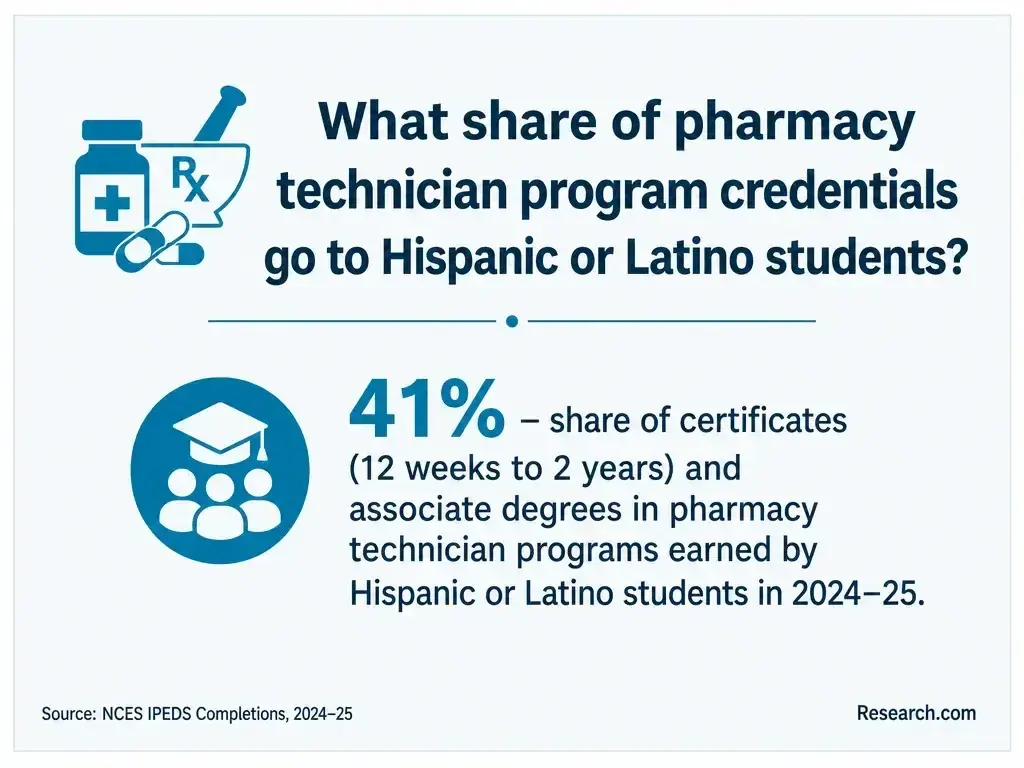
North Dakota regulates pharmacy technician work through its Board of Pharmacy registration system. Do not assume a certificate of completion authorizes you to work, or that a national certification automatically substitutes for state registration. The appropriate registration category and its training, examination, supervision, and renewal conditions depend on your stage of entry; verify the current rules directly with the Board before choosing a program or accepting a trainee position (North Dakota Board of Pharmacy).
Keep the distinctions clear: institutional accreditation concerns the school; programmatic accreditation concerns a particular program; certification comes from a professional certifier; and occupational registration is the state's authorization process. Ask a provider to identify each separately and to explain, with reference to current Board rules, how its graduates move from training into lawful employment.
Start with your intended job and work backward. A low-cost option is a sound investment only if you can finish it, obtain the necessary practical experience, meet state requirements, and pursue work without taking on disproportionate debt. A ranking can surface affordable candidates, but its price-based score is not a finding that every listed program fits your career goal.
Use the same questions with each school or training sponsor so that the answers are comparable:
- What exact credential is awarded, and what training and examination steps remain before North Dakota registration?
- How many supervised practical hours are required, where do they occur, and who secures the placement?
- What is the complete written cost after mandatory charges, travel, and likely lost work time?
- What aid or paid-training options apply to this specific program, and what happens financially if I withdraw?
- What completion and job-placement information can the provider document for this program?
To judge return on investment, compare net cost and debt with a realistic local starting offer, the probability of finishing, and how long it takes to enter paid work. Extend that comparison over the period you expect to work, rather than treating one year's pay as a guaranteed return. Search results for unrelated goals, including cheapest masters online, cannot answer whether a pharmacy technician pathway meets your occupational requirements.
An entry-level role can lead to greater responsibility in inventory, workflow coordination, or a specialized pharmacy setting as experience and employer requirements permit. National certification or additional employer training may strengthen an application for some roles, but neither should be confused with an automatic promotion or exemption from state rules (U.S. Bureau of Labor Statistics; North Dakota Board of Pharmacy).
Consider the daily work before choosing a setting. Retail pharmacy often includes frequent customer contact; other settings may place more emphasis on behind-the-scenes medication workflows, though teamwork and communication remain essential. Readers exploring best introvert careers should compare actual local job duties rather than assume all pharmacy technician positions offer the same level of interaction.
The U.S. Bureau of Labor Statistics projects 6.4% growth nationally from 2025 to 2035 for pharmacy technicians. That projection indicates a growing national occupation, but it does not establish how many openings will be available near a particular North Dakota student. Use current North Dakota labor-market projections and local employer postings to assess the market where you can realistically commute or relocate.
For a smaller community, the practical question may be whether nearby pharmacies hire trainees and support the registration pathway, not whether the national occupation is growing. Compare openings across retail and healthcare employers, including their schedules and certification preferences, before paying for training designed around a job setting that is difficult to access locally.
Most Affordable Pharmacy Technician Schools & Training in North Dakota for 2027
Investing in training is an important decision, especially when a low advertised tuition may leave out other costs. Research.com's most-affordable ranking compares pharmacy technician programs with other programs in the same occupation and location. It includes only programs with completions reported to the Integrated Postsecondary Education Data System (IPEDS); an employer-sponsored or other training route may still be worth considering even if it does not appear in the ranking.
To support the ranking's quality, credibility, and accuracy, the Research.com team draws on the following data sources. Some cover occupations beyond pharmacy technology; their inclusion as sources does not mean an unrelated accreditation or credential applies to a pharmacy technician program.
- IPEDS database - reported program completions and institution-level education data.
- National Center for Education Statistics - federal education data and documentation.
- College Scorecard database - available cost, debt, and outcomes information.
- Peterson's database - supplemental institution and program information.
- Commission on Accreditation of Allied Health Education Programs (CAAHEP) - allied-health program information where applicable.
- Accrediting Bureau of Health Education Schools (ABHES) - health-education accreditation information where applicable.
- Commission on Dental Accreditation (CODA) - dental-program information used across relevant occupational rankings.
- Dental Assisting National Board (DANB) - dental-assisting credential information used across relevant occupational rankings.
- National Center for Construction Education and Research (NCCER) - construction-training information used across relevant occupational rankings.
- Apprenticeship.gov Partner Finder - information on potential work-based training partners.
The most-affordable score uses tuition, cost of attendance, median student debt, and federal loan default rate, with weights distributed through an entropy-based method. Accreditation and other quality indicators do not enter that score. Research.com's separate best-programs methodology also considers outcomes, earnings, and quality; those measures should not be mistaken for components of this affordability ranking. Use the ranking to narrow a cost-conscious shortlist, then verify each program's current charges, hands-on training, and fit with North Dakota registration rules. Research.com explains its methods further on its methodology page.
# 2 position
North Dakota State College of Science - Pharmacy Technician/Assistant.
certificate or diploma# 3 position
Rasmussen University-North Dakota - Pharmacy Technician/Assistant.
associate# 4 position
Turtle Mountain Community College - Pharmacy Technician/Assistant.
certificate or diplomaFrequently asked questions about pharmacy technician programs in North Dakota
What is the cheapest way to train as a pharmacy technician?
Compare the net cost of school programs with any available employer-paid training. Include fees, travel, examination and registration charges, and earnings you would give up while studying; confirm that either route fits North Dakota Board requirements.
Can I become a pharmacy technician entirely online?
Online lessons may cover theory, but do not assume they replace supervised practical training or satisfy state requirements. Ask where skills are assessed and confirm the registration pathway with the North Dakota Board of Pharmacy.
Is a school certificate the same as national certification?
No. A school certificate records program completion. National certification is a separate credential with its own eligibility and examination rules; state registration is separate again.
Should I choose the shortest program?
Only if it provides the training and practical experience needed for your intended job. Compare the date you could realistically start working, including any wait for a placement or required registration steps.
Does the most-affordable ranking include every training option?
No. It includes programs with completions reported to IPEDS. Employer training and other routes may not appear, so compare them separately if they are available to you.
- U.S. Bureau of Labor Statistics - Pharmacy Technicians
Used to verify salary, employment outlook, and typical education requirements.
https://www.bls.gov/ooh/healthcare/pharmacy-technicians.htm - NCES College Navigator (IPEDS)
Used to verify programs offered and institutional accreditation.
https://nces.ed.gov/collegenavigator/ - PTCB - Certified Pharmacy Technician (CPhT)
Professional certification reference for graduates of this occupation.
https://www.ptcb.org/credentials/certified-pharmacy-technician - North Dakota State College of Science - official website
Official school website (programs, tuition, admissions).
https://www.ndscs.edu/ - Rasmussen University-North Dakota - official website
Official school website (programs, tuition, admissions).
https://rasmussen.edu/ - Turtle Mountain Community College - official website
Official school website (programs, tuition, admissions).
https://www.tm.edu/